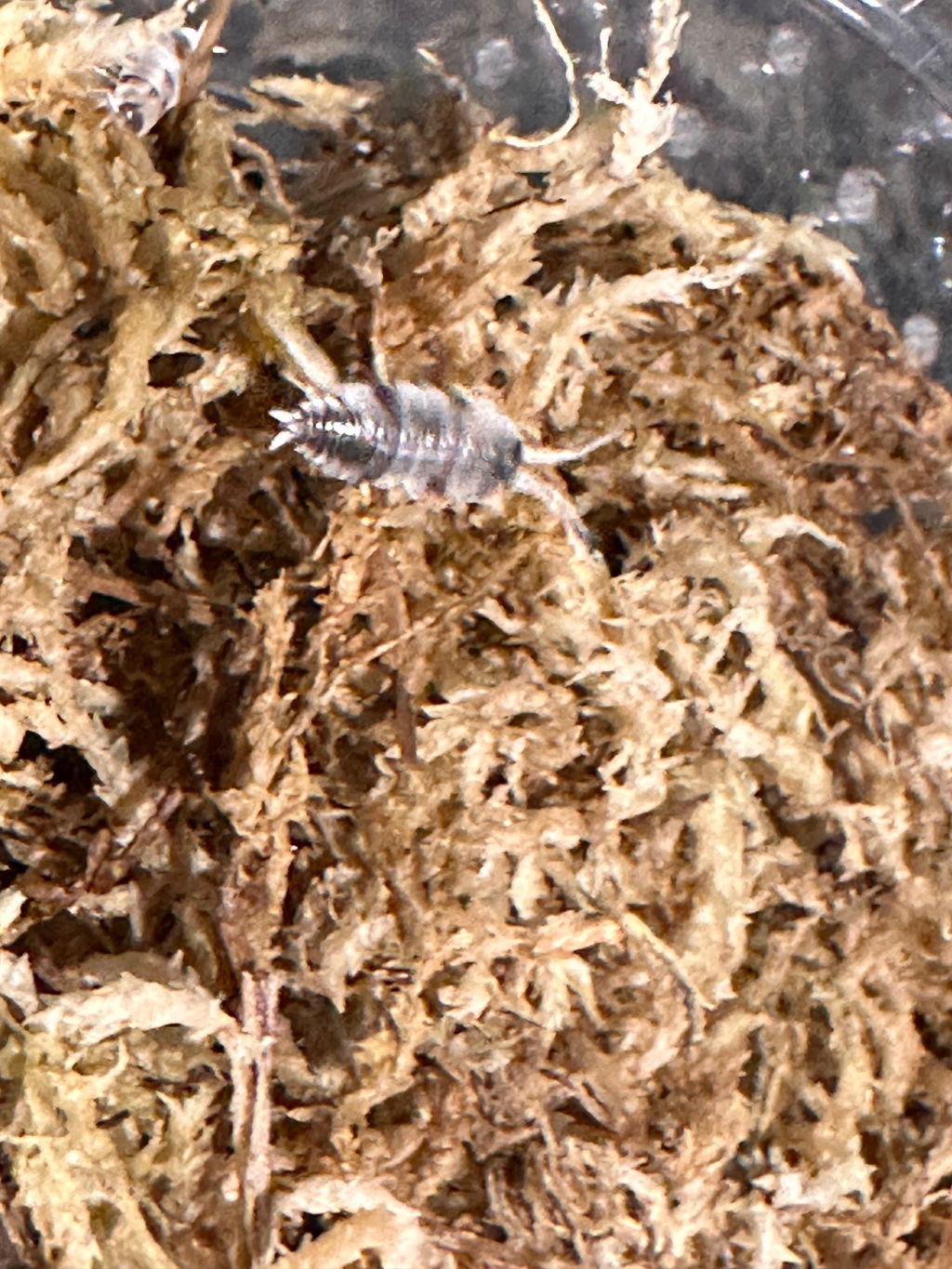
Powder Oreo Crumble Isopods (Porcellionides Pruinosus)
Care Info:
- Free shipping over £65
- Low stock - 8 items left
- Backordered, shipping soon
Porcellionides pruinosus 'Oreo Crumble' is one of the most charming and popular cleanup-crew isopods available in the UK hobby — a striking black-and-white pied morph named for its mottled colouration that genuinely resembles crumbled Oreo cookies. A white-to-cream base scattered with black piebald patterning, finished with the soft, waxy, powdery coating (pruinescence) that gives the "Powder" isopods their name, makes for a fun, distinctive, monochrome look that stands out beautifully against substrate and leaf litter. They're a lively, fast-moving, hardworking isopod that's as entertaining to watch as it is useful — and one of the best-loved morphs in the whole Porcellionides pruinosus range.
What makes the Oreo Crumble particularly worth keeping is the combination of fun looks, genuinely effortless care, and serious bioactive usefulness. P. pruinosus is one of the staple isopods of the hobby — exceptionally hardy, adaptable, prolific, and famously quick. Rated as easy as isopods get, they're a brilliant first species for newcomers (and children) while remaining a favourite cleanup crew for experienced keepers. Where many isopods amble, Oreo Crumbles are full of energy, darting across the surface and scrambling for cover when you lift a leaf or log. They're highly active and genuinely visible, making them both an entertaining display species and an efficient cleanup crew — and they're accomplished escape artists, so a secure, well-ventilated enclosure is a must.
The Oreo Crumble belongs to the famously diverse Porcellionides pruinosus, which has been selectively bred into a wonderful range of colour morphs — Powder Blue, Powder Orange, Orange Cream, and the Oreo Crumble's black-and-white pied form among them. It's the monochrome sibling of our Powder Orange Dalmatian, sharing identical care. Originally a Mediterranean species (the morph itself is a captive-bred designer line), it's hardy across a wide range of conditions and genuinely easy to keep.
One point worth noting: although they're often mistaken for Dairy Cow isopods (which share a black-and-white look), Oreo Crumbles are a different, smaller, faster species, and unlike Armadillidium they cannot conglobate (roll into a ball) — their flat, streamlined body is built for speed and squeezing into cover rather than rolling up.
Quick Care Summary
- Scientific Name: Porcellionides pruinosus 'Oreo Crumble'
- Common Names: Oreo Crumble, Powder Oreo Crumble, Oreo Crumbles
- Family: Porcellionidae
- Genus: Porcellionides
- Origin: Mediterranean (wild type); captive-bred designer morph
- Adult Size: Approximately 10–15 mm — small-to-medium
- Lifespan: 2–3 years typical
- Difficulty: Very Easy — one of the best beginner isopods
- Temperature: 20–28°C (warm-preferring; UK room temperature works)
- Humidity: Moderate (60–75%) with a clear moisture gradient
- Ventilation: High — good airflow needed; they're escape artists, so use fine mesh
- Conglobation: No — flat-bodied, relies on speed and cover
- Behaviour: Very fast, active day and night, surface-active, highly visible
- Breeding: Extremely prolific — fast, reliable colony growth
What Makes Oreo Crumble Isopods Special
Several factors have made the Oreo Crumble one of the best-loved cleanup-crew and display isopods:
The black-and-white "cookie crumble" colouration is genuinely charming. The white-to-cream base scattered with black piebald patterning makes for a fun, distinctive, monochrome look that genuinely earns its cookie-inspired name. Each isopod shows its own pattern, giving a colony real individuality and visual interest.
The signature powdery texture. The soft, waxy pruinescent coating that gives the "Powder" isopods their name lends them a dusted, frosted finish over the black-and-white base — especially noticeable on freshly-moulted individuals and adults. It's a distinctive genus feature that adds depth and beauty up close.
Genuinely fast and active. Unlike many slow, shy isopods, Oreo Crumbles are full of energy — among the fastest isopods, darting across the surface and highly active both day and night. This makes them genuinely entertaining to watch and means you'll actually see your cleanup crew at work rather than rarely glimpsing them.
As easy as isopods get. Rated one of the easiest species in the hobby, Oreo Crumbles will breed in almost any basic setup with substrate and a source of moisture. Hardy, adaptable, and forgiving, they're an ideal first isopod — genuinely suitable for people and children who've never kept pets before.
Prolific cleanup crew and feeders. They breed rapidly and build colonies quickly, making them both a self-sustaining cleanup crew and a renewable food source for dart frogs, small reptiles, and amphibians (their soft exoskeleton makes them readily edible). They process decaying matter efficiently and at pace, reducing mould and waste.
Brilliant for bioactive setups. Their speed, surface activity, hardiness, and efficient decomposition make them excellent bioactive cleanup crew, working alongside springtails and other microfauna to keep an enclosure healthy. They tolerate everything from semi-arid to tropical conditions, making them genuinely versatile workhorses.
How Oreo Crumble Compares to Other Cleanup Isopods
If you're choosing fast, characterful cleanup-crew isopods, here's how the Oreo Crumble fits in:
- vs Powder Orange Dalmatian: The closest comparison — both are pied morphs of the same Porcellionides pruinosus species with identical care. Powder Orange Dalmatians are orange-with-black-spots; Oreo Crumbles are black-and-white. Natural companions in a Powder-morph collection — choose based on colour preference.
- vs Dairy Cow (Porcellio laevis): Often confused, as both are black-and-white. Dairy Cows are larger, a different genus, and slower; Oreo Crumbles are smaller, faster Porcellionides with the powdery coating. Both prolific cleanup crew — Oreo Crumbles for the speedier, more compact option.
- vs Dwarf White Isopods: Dwarf Whites are tiny, plain, burrowing micro-cleanup crew; Oreo Crumbles are larger, bold, fast, and surface-active. Both prolific cleanup crew — different niches and very different visibility.
- vs Porcellio scaber Mix: P. scaber are classic hardy Porcellio in varied colours; Oreo Crumbles are faster, surface-active Porcellionides with the powdery coating and cookie-crumble pattern. Both easy beginner cleanup crew — different genus, pace, and look.
Browse the full Porcellionides collection for related morphs, or the broader isopods collection for comparison across genera.
Setting Up the Enclosure
A 6–10 litre plastic or glass container suits a starter colony, with room to expand as the prolific colony grows quickly. Crucially, secure the enclosure well — Oreo Crumbles are fast and accomplished escape artists. Use a container with many small ventilation holes rather than a few large ones, and cover holes with fine mesh to keep persistent jailbreakers contained. The 3L Braplast tub works well for starter colonies. A larger enclosure is beneficial, as mature males can be territorial and benefit from space and plenty of hides.
Good ventilation is important — they're surface-active and appreciate airflow — but balance it against maintaining the moisture gradient. Provide plenty of hiding spots and surface cover with cork bark, rotting wood, and leaf litter to minimise conflict between mature males, though as fast, bold isopods they'll spend plenty of time out in the open. Browse our accessories collection for appropriate enclosures, fine-mesh ventilation, and other essentials.
Substrate
Build a moisture-retentive substrate that supports a gradient:
- Organic topsoil base (pesticide-free) as the foundation
- Sphagnum peat moss mixed throughout for moisture retention
- Flake soil for added nutrition and structure
- Crushed limestone or eggshells distributed throughout for calcium
- Decaying hardwood pieces incorporated throughout
We recommend a topsoil and sphagnum-based mix rather than relying on coco coir, which lacks nutritional value and calcium. Substrate depth: 4–6 cm. As primarily surface-active isopods, Oreo Crumbles don't need the deep substrate dedicated burrowers require, though some depth helps maintain humidity and gives them options.
Top layer: Generous hardwood leaf litter — magnolia leaves and oak leaves work well for food and cover. Add cork bark and decaying wood (useful as territorial markers and hides for males), and keep a sphagnum moss patch on one side to anchor the moist zone of the gradient.
Humidity and Temperature
Maintain moderate humidity (60–75%) with a clear moisture gradient — this is how Porcellionides pruinosus prefer to live, and part of why they're so adaptable. Keep one side of the enclosure more humid (with sphagnum moss and damp leaf litter) while allowing the other side to stay drier, letting them move between zones as they choose. Their exoskeleton doesn't retain water especially well, so they need reliable access to the moist zone, but the enclosure shouldn't be uniformly wet. They're genuinely hardy and tolerate everything from semi-arid to more tropical conditions, but a gradient is ideal.
Provide moisture access, but don't waterlog. As one PostPods customer noted about following the website's care guidance, getting moisture right is the key to keeping isopods successfully. For Oreo Crumbles, the goal is a genuine gradient — a reliably damp side and a drier side — alongside good ventilation, rather than a soaking-wet enclosure.
Temperature should be 20–28°C — they prefer warmth, reflecting their Mediterranean origins, though they tolerate a wide range. Avoid extreme cold and heat, both of which can be harmful. UK room temperature works in heated homes, with supplementary heating possibly needed in winter. A low-wattage heat mat on the side of the enclosure (never underneath) connected to a thermostat keeps the colony stable and breeding briskly.
Diet
Oreo Crumbles are voracious detritivores with hearty appetites — constantly foraging:
- Primary diet (always available): Hardwood leaf litter (oak, beech, magnolia), decaying rotting wood, dried plant matter
- Vegetables (1–2x weekly): Carrot, courgette, sweet potato, cucumber, squash, pumpkin. Replace within 24–48 hours.
- Fruit (occasionally): Apple, banana, watermelon, mango — small amounts
- Protein (1–2x weekly): Fish flakes, dried daphnia, gammarus shrimp, freeze-dried insects. Supports their rapid breeding. Browse our accessories collection for the full range of protein supplements.
- Calcium (essential — always available): Cuttlefish bone, crushed limestone, oyster shell, eggshells. Provide as a constant source for healthy moulting.
Feeding approach: Their voracious appetites and fast metabolism mean they work through food quickly, but don't overfeed — provide what they'll consume in 24–48 hours and remove uneaten fresh foods to prevent mould. A springtail culture helps manage any mould in the moist zone.
Breeding
Oreo Crumbles are extremely prolific, fast breeders — one of their genuine strengths and a key reason they're so useful for cleanup crews and as feeders. They'll breed in almost any basic setup with substrate and moisture.
Breeding basics:
- Females carry developing young in a marsupium and release fully-formed mancae
- Sub-adults often begin breeding before reaching full size
- They establish quickly and reproduce rapidly
- Colonies become self-sustaining and grow fast under good conditions
- Juveniles develop the black-and-white pattern and powdery coating as they mature
For breeding success:
- Stable warm temperatures (24–26°C optimal)
- Moderate humidity (60–75%) with a clear moisture gradient
- Adequate calcium availability throughout
- Regular protein supplementation
- Leaf litter and cover for security and to reduce male territorial conflict
- A secure, well-ventilated enclosure to contain the growing (and escape-prone) colony
Colony growth: Once established, Oreo Crumble populations grow rapidly and sustain themselves, providing a reliable cleanup crew and a renewable food source for insectivorous pets. Their fast breeding makes them excellent value over time and forgiving of the occasional loss.
Pair With Springtails
Add a thriving springtail culture to any Oreo Crumble setup. Springtails handle mould and microbial growth at a scale isopods can't manage — particularly useful around protein foods and in the moist zone of the gradient. They coexist peacefully with the fast-moving Oreo Crumbles and form an essential cleanup partnership in bioactive setups.
Who Should Buy Oreo Crumble Isopods?
Ideal for:
- Complete beginners (and children) wanting their first, easiest isopod
- Keepers who want a fast, active, visible cleanup crew they'll actually see working
- Bioactive setup builders wanting efficient, hardy, speedy decomposers
- Dart frog and small reptile keepers wanting cleanup crew plus a feeder source
- Anyone attracted to the fun black-and-white cookie-crumble colouration
- Collectors of the diverse Porcellionides pruinosus morphs
- Those wanting reliable, fast colony growth
Not ideal for:
- Setups that can't be secured against fast, climbing escape artists (use fine mesh)
- Very dry or arid setups with no moisture access (they need a gradient)
- Keepers wanting conglobating ball-rolling species (Porcellionides can't roll)
- Anyone wanting slow, sedentary isopods (these are fast and busy)
Realistic Expectations
They're fast — genuinely fast. Oreo Crumbles are among the quickest isopods, darting for cover when disturbed and zipping around the enclosure. This is part of their charm, but it does mean they're quick to make a break for it when the lid's open — work carefully and keep the enclosure secure.
They're escape artists. Their speed and climbing ability mean a secure, fine-mesh-ventilated enclosure is essential. Many small holes are better than a few large ones, and a snug lid keeps persistent jailbreakers contained.
They need a moisture gradient, not a swamp. While they need reliable moisture access (their exoskeleton doesn't retain water well), they prefer a genuine gradient with both damp and drier areas rather than a uniformly wet enclosure. They're hardy and adaptable, but a gradient with good ventilation suits them best.
The powder shows best in adults. The signature powdery coating is most noticeable on freshly-moulted individuals and mature adults — juveniles look boldly patterned and develop the frosted sheen as they grow.
Expect rapid, prolific breeding. Once established, colonies grow fast and sustain themselves — genuinely satisfying for keepers wanting to see results, and dependable as cleanup crew and feeders. They really will breed in almost any basic setup.
Building Your Setup
A complete Oreo Crumble setup needs a secure, well-ventilated enclosure, moisture-retentive substrate, abundant calcium, generous leaf litter and cork bark cover, and occasional protein. Browse our accessories collection for everything you need — enclosures, fine-mesh ventilation, leaf litter, calcium (cuttlebone, limestone, oyster shell), and protein supplements.
Browse the full Porcellionides collection for related morphs like the Powder Orange Dalmatian, or the broader isopods collection for more options across all genera. New to bioactive keeping? Read our blog post on setting up and selecting your first isopods for guidance on building a thriving enclosure.
Use collapsible tabs for more detailed information that will help customers make a purchasing decision.
Ex: Shipping and return policies, size guides, and other common questions.