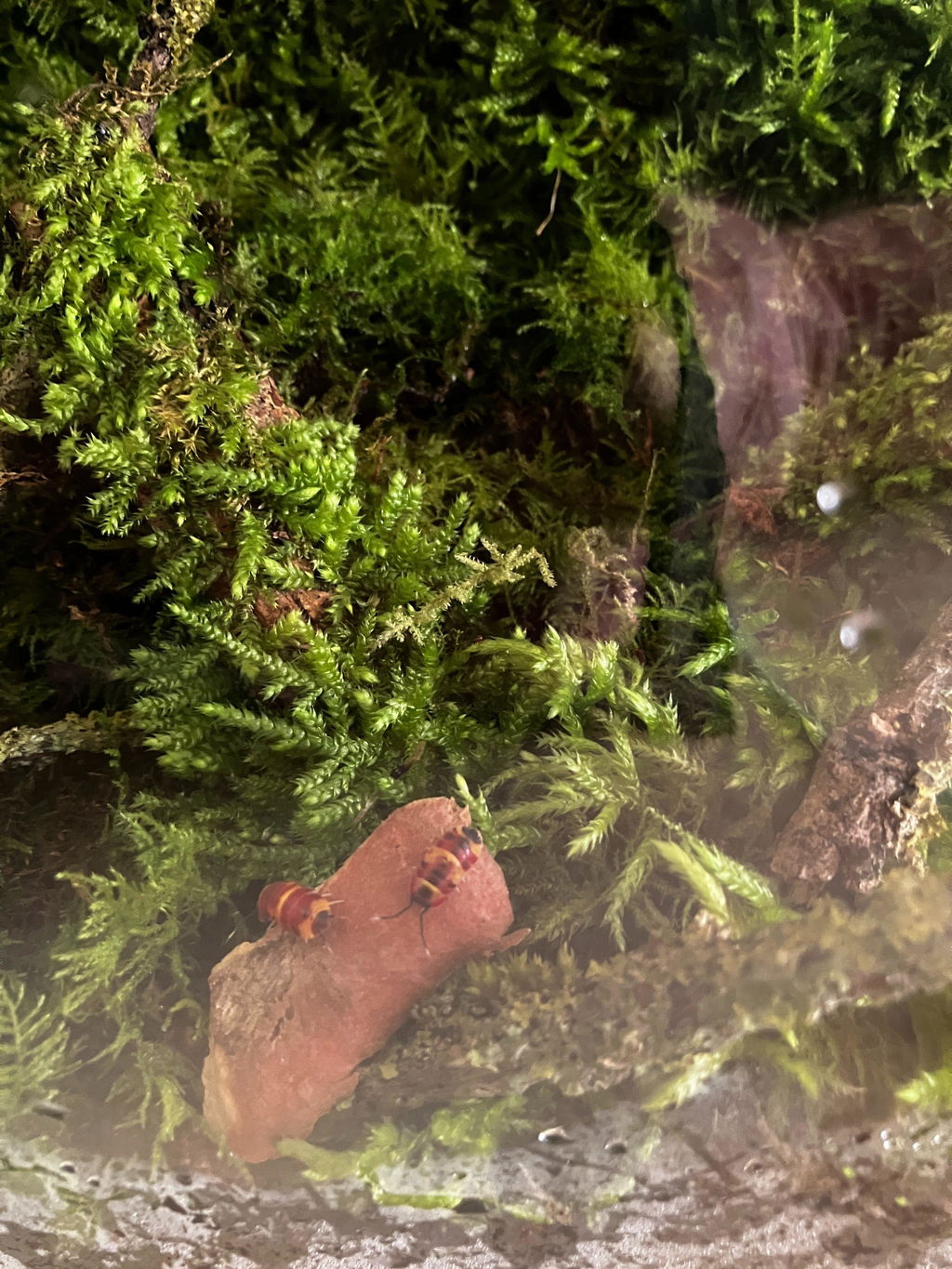
Ardentiella sp. "Red Diablo" (formerly Merulanella sp. "Red Diablo") is a striking Vietnamese isopod featuring bold red, yellow, and black colouration. They're active, surface-dwelling, and don't burrow—which means you'll actually see them. Combined with their vivid patterns, this makes them excellent display animals. However, they're not beginner isopods: they require stable conditions, lichen in their diet, and escape-proof enclosures as they can climb smooth surfaces.
A Glimpse
-
Origin: Vietnam (captive-bred)
-
Scientific Name: Ardentiella sp. "Red Diablo" (formerly Merulanella sp.)
-
Common Names: Red Diablo Isopod, Red Diablo Woodlouse
-
Maintenance required: Medium to high
-
Average Size: 15-20mm
-
Rarity: Very high
-
Temperature: 19-26°C (66-78°F)—prefer cooler end
-
Ventilation: High
-
Humidity: 60-75%
-
Favorite food: Leaf litter, lichen, mango, carrot, decaying wood
-
Supplements: Calcium, protein
Ardentiella Red Diablo Isopods: Introduction
The genus formerly known as Merulanella has been reclassified as Ardentiella. You'll see both names used interchangeably in the hobby—they're the same animals. Red Diablos are a colour variation of the standard "Diablo" morph, distinguished by their red and white skirting rather than other colour combinations.
Ardentiella species originate from tropical regions of Southeast Asia, particularly Vietnam and China. They've become highly sought-after among collectors for their dramatic colouration—few isopods match the visual impact of black bodies with red margins and yellow or white spots. Their surface-dwelling behaviour means this colouration is actually visible rather than hidden under substrate.
These are intermediate to advanced isopods. Wild-caught specimens have high mortality rates and require careful stabilisation. Captive-bred animals are significantly easier but still need more precise conditions than beginner species. They require lichen as part of their diet, good ventilation, escape-proof enclosures, and stable temperatures. Success requires attention to detail.
Ardentiella Red Diablo Isopods: Physical Traits and Characteristics
- Adults reach 15-20mm (up to 2cm)
- Predominantly black body/shell
- Red colouration on body margins ("skirting")
- Yellow or white spots scattered across body (varies between individuals)
- Segmented body with rounded shape
- Pair of antennae on head
- Each individual has unique spot patterns
The colour combination is genuinely striking—the black background makes the red and yellow pop dramatically. This is one of the most visually impressive isopod species available. Juveniles may show less intense colouration, developing their full patterns with maturity.
Behaviour
Ardentiella display distinctive behaviour that differs from many common isopods.
Surface-dwelling: They don't burrow. You'll find them at substrate surface level, under bark and leaf litter, but not dug into the substrate. This makes them more visible than burrowing species.
Arboreal tendencies: They prefer climbing and will utilise vertical space. Taller enclosures with climbing materials (branches, cork bark, bark pieces) suit them better than shallow setups.
Climbing ability: They can climb smooth vertical surfaces including plastic and glass—like roaches. This is critical: enclosures must be escape-proof with no gaps around lids. Standard ventilated containers may allow escapes, particularly of juveniles and mancae.
Activity: Active during both day and night, though most active at night. They're more active and visible than many isopod species—you'll see them moving about.
Speed: Fast runners when disturbed—notably quicker than typical isopods.
Social behaviour: Found in groups of 2-3 in the wild. They show territorial behaviour and may be aggressive toward other isopod species. Keep them as single-species colonies rather than mixing with other isopods.
Temperament: Can be defensive of territory. In initial days after introduction, they'll stay hidden while observing surroundings. Once acclimated, they become more interactive and visible.
Diet
Ardentiella have specific dietary requirements, particularly regarding lichen.
Primary foods:
- Leaf litter (essential staple)
- Decaying wood (white-rotted wood preferred)
- Forest moss
- Lichen (important—not optional for this genus)
Supplementary foods:
- Vegetables: carrot (a favourite)
- Fruits: mango (particularly enjoyed), other soft fruits
- They prefer slightly decayed vegetables and fruits over fresh
- Kinshi (fungus-colonised wood substrate)
- Reptile/invertebrate moults
Protein:
- Gammarus shrimp
- Fish food/flakes
- Dried protein sources
Calcium: Essential for healthy exoskeletons and moulting:
- Cuttlebone
- Crusite limestone
- Calcium powder
Other supplements:
- Nitrogen: Bat guano provides nitrogen supplementation
- Note: Exuvium reports they don't eat bee pollen (contrary to some care guides)
Critical note on lichen: Ardentiella species require lichen in their diet—this isn't optional. Without lichen access, colonies may decline or die. Include lichen-covered sticks or branches in the enclosure and maintain supply. This is one of the key differences from easier species that thrive on simple leaf litter diets.
Ardentiella Red Diablo Isopods: Breeding
Captive-bred Red Diablos breed prolifically under correct conditions.
Breeding characteristics:
- Prolific breeders when captive-bred and established
- Wild-caught specimens are challenging to breed
- "Pouch brooding"—females carry eggs in ventral brood pouch
- Young remain in pouch until fully developed
- Moderate breeding pace—steady rather than explosive
Wild-caught vs captive-bred: This distinction matters significantly:
-
Captive-bred: Moderate difficulty, prolific breeding, higher survival rates
-
Wild-caught: Challenging difficulty, low breeding success, high mortality—require extended stabilisation periods
When purchasing, confirm whether animals are captive-bred. Wild-caught animals should only be shipped after stabilisation by the seller.
Stabilisation: New arrivals need time to acclimate:
- Recreate natural habitat conditions
- Provide thick substrate with decaying matter
- Plenty of leaf litter and bark cover
- Regular feeding and calcium supplementation
- Don't introduce other animals until isopods are stabilised
- Allow 2-4 weeks minimum before expecting normal behaviour
Breeding success factors:
- Stable temperature (19-26°C)
- Consistent humidity (60-75%)
- Lichen availability
- Good ventilation
- Adequate food supply
- No disturbance during establishment
Ardentiella Red Diablo Isopods: Habitat Setup
These require more careful setup than beginner species.
Enclosure:
- Must be escape-proof—they climb smooth surfaces
- No gaps around lids or doors
- Taller enclosures preferred (arboreal species)
- Good ventilation required
- Terrariums, vivariums, or modified containers with secure mesh ventilation
Ventilation: High ventilation is important—more than many tropical isopods. Ensure airflow while maintaining humidity. Cross-ventilation with fine mesh (to prevent escapes) works well.
Substrate: They don't burrow, so extreme depth isn't necessary, but provide adequate substrate:
- Organic topsoil base (pesticide-free)
- Forest humus
- Sphagnum peat moss for moisture retention
- Decaying leaf litter layered on top
- Pieces of decaying wood
Humidity: 60-75%—moist but not wet:
- Keep substrate damp, not waterlogged
- Mist periodically to maintain humidity
- Maintain some drier areas for food placement
- Some sources suggest keeping them "wetter—like Cubaris" with layered setups
Temperature: 19-26°C (66-78°F)—notably cooler than some tropical species:
- They prefer the cooler end of this range
- Higher temperatures (above 78°F/26°C) can cause stress and rapid death
- Avoid temperature fluctuations
- Room temperature in UK homes often suitable without additional heating
Décor (important for this species):
- Cork bark or tree bark pieces (essential—they congregate underneath)
- Flat bark pieces for hiding
- Branches and climbing materials (utilise vertical space)
- Leaf litter (food and cover)
- Moss
-
Twigs with lichen attached (provides both climbing and food)
Setup approach: Think layered and vertical:
- Substrate base with moisture-retaining elements
- Decaying leaves and moss layer
- Bark pieces, lichen-covered twigs
- Cork bark or tree bark on top for cover
Bioactive Use
Red Diablos can work in bioactive setups but have limitations.
Considerations:
- High visibility makes them good display animals
- Don't burrow, so won't aerate substrate like some species
- Climbing ability means they need secure enclosures
- May be aggressive toward other isopod species
- Require lichen—bioactive setups must provide this
- Higher care requirements than typical cleanup crew species
Suitable applications:
- Display terrariums where they're the feature
- Tropical vivariums with appropriate conditions
- Not recommended as general-purpose cleanup crew for beginners
Tank mates:
- Best kept as single-species colonies
- Don't mix with other isopod species (territorial behaviour)
- Can coexist with small, non-aggressive invertebrates
- Monitor population density to prevent overcrowding
Suitability
Red Diablos suit intermediate to advanced keepers wanting dramatic display isopods.
Good choice for:
- Experienced isopod keepers wanting visually striking species
- Display colony enthusiasts
- Those who can provide stable conditions
- Keepers who want visible, active isopods
- Collectors building diverse collections
- Those prepared to source lichen regularly
Less suited for:
- Complete beginners (start with hardier species)
- Those wanting low-maintenance cleanup crews
- Mixed-species isopod setups
- Keepers unable to provide escape-proof enclosures
- Those in very warm environments (they prefer cooler temperatures)
Lifespan note: The original page mentions "up to three months" lifespan, which seems short. Other sources indicate 1-2 years under optimal conditions. The three-month figure may refer to wild-caught specimens under stress or be an error.
Value: At £80 for 5, £150 for 10, or £270 for 20, Red Diablos are premium-priced isopods. This reflects their rarity, visual appeal, and the care required to maintain breeding colonies. For collectors wanting dramatic display species, the cost is justified by their appearance. They're not cost-effective as functional cleanup crews—use cheaper species for that purpose.
What to expect: Expect visually stunning isopods with black, red, and yellow colouration that genuinely stands out. Expect them to be visible—they don't burrow and are active on the surface. Expect fast, active animals that use vertical space and will attempt to escape through any gaps. Expect to provide lichen as part of their diet—this isn't negotiable. Expect cooler temperature preferences than some tropical species. Expect territorial behaviour—they're best kept alone rather than with other isopod species. Expect that captive-bred animals are significantly easier than wild-caught. For keepers willing to meet their specific requirements, Red Diablos reward with some of the most dramatic colouration in the isopod hobby. They're not beginner animals, but they're achievable for keepers who research their needs and provide appropriate care.