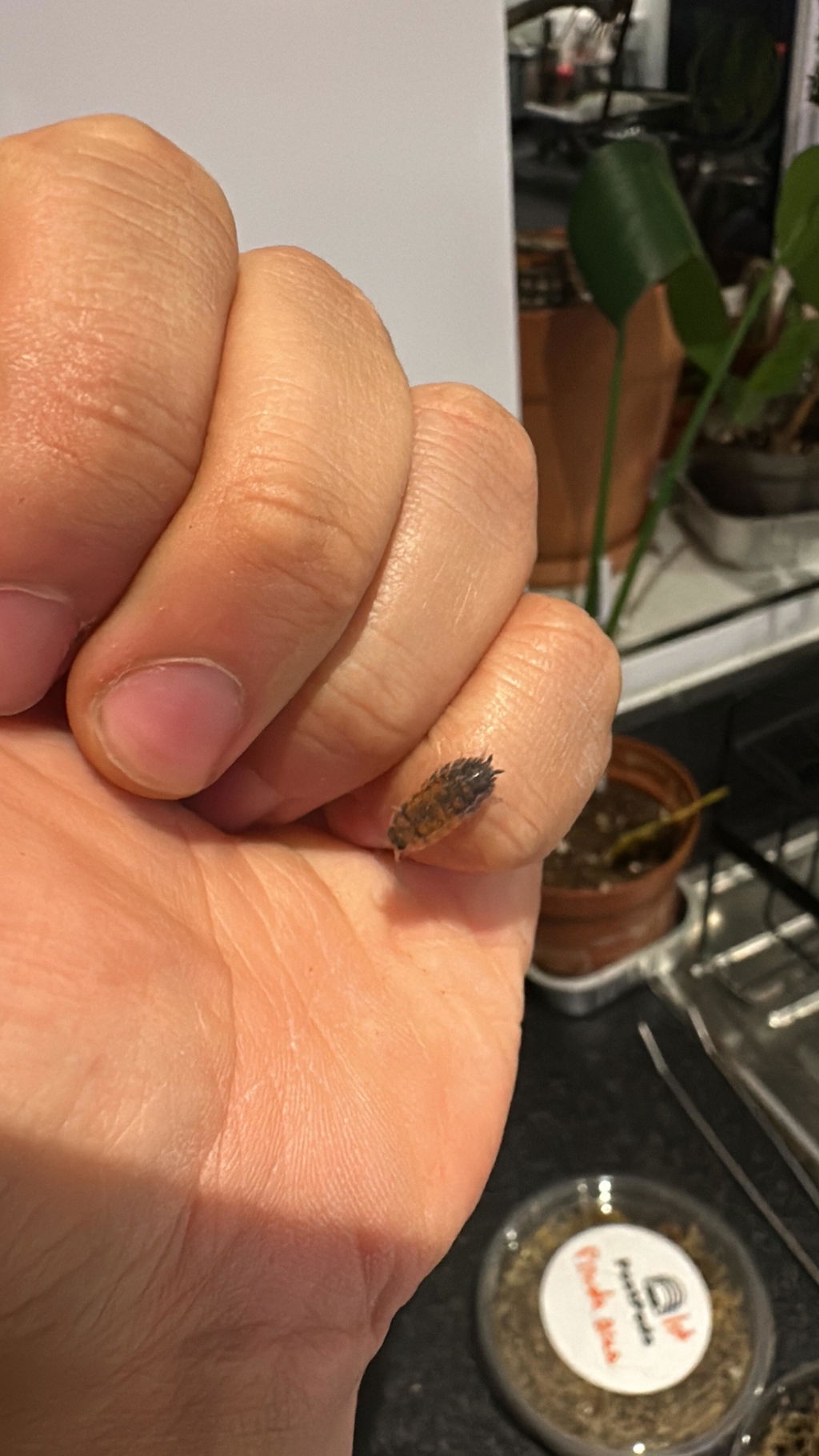
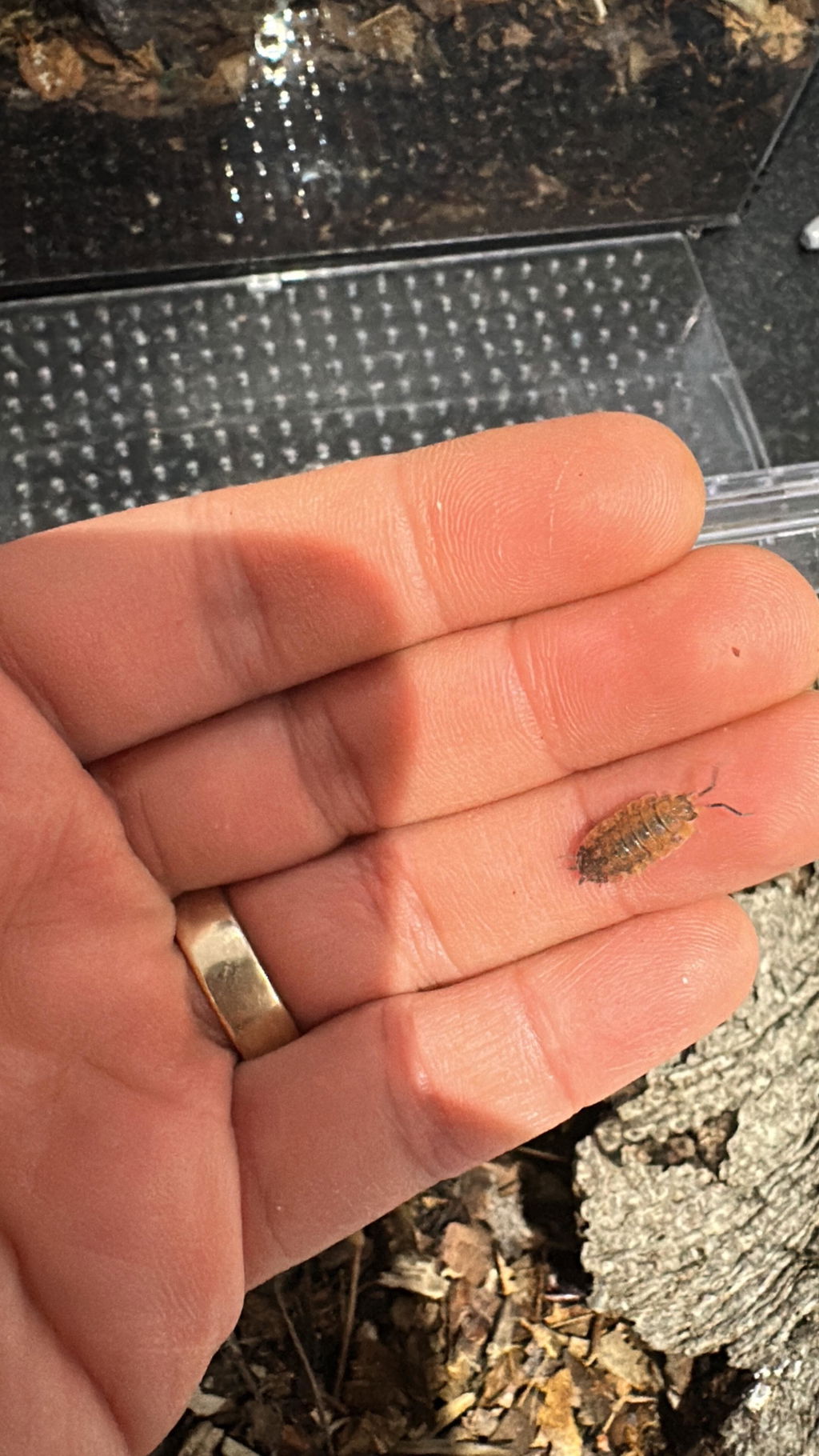
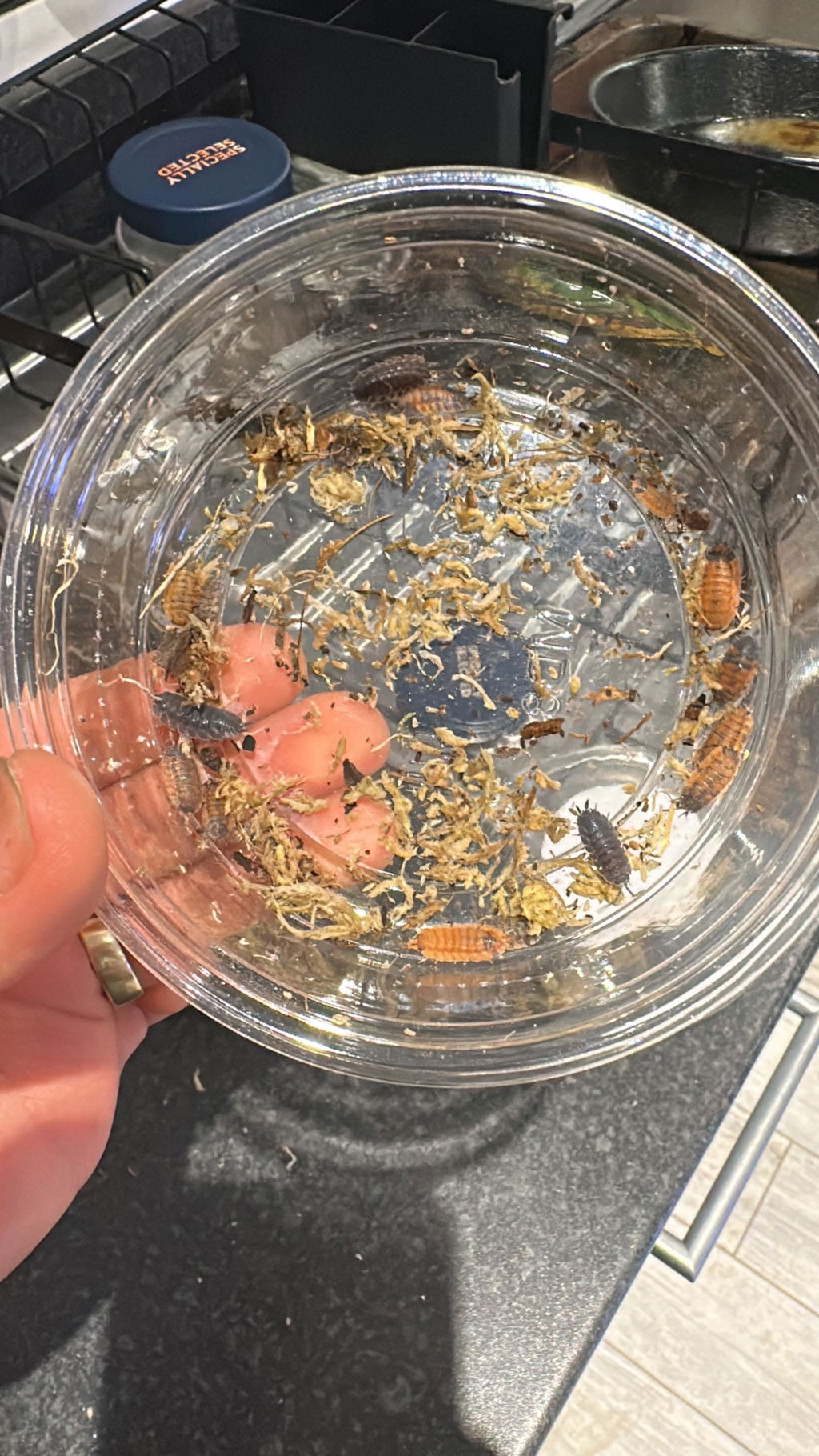
Porcellio scaber "Lava" is a colour morph of the common rough woodlouse displaying striking red, orange, and black patterning across their exoskeleton. The name comes from their resemblance to cooled lava flows—dark base colouration with fiery orange and red markings breaking through. Native to Europe and found commonly across Portugal and Spain, P. scaber is one of the hardiest isopod species available. The Lava morph adds genuine visual interest to this already dependable species, giving keepers an attractive option that retains all the bulletproof qualities scaber is known for.
A Glimpse
-
Origin: Europe (common across Portugal, Spain, and throughout the continent)
-
Scientific Name: Porcellio scaber "Lava"
-
Maintenance required: Low
-
Average Size: 1.5-1.7 cm
-
Rarity: Low to Medium
-
Lifespan: 2-3 years
-
Temperature: 21-29°C (70-84°F)
-
Ventilation: Medium
-
Humidity: 50-80% (tolerant of variation)
-
Favorite food: Leaf litter, vegetables, decaying wood, mushrooms
-
Supplements: Cuttlefish bone, calcium powder
Porcellio scaber Lava: Introduction
Porcellio scaber is the classic "rough woodlouse" found throughout Europe and now established across much of the globe. It's one of the first isopod species most people encounter—the grey, bumpy-textured woodlouse hiding under plant pots and logs in gardens everywhere. The species has proven itself incredibly adaptable, surviving in conditions ranging from damp cellars to relatively dry garden walls.
The "Lava" morph takes this reliable species and adds visual appeal. The patterning combines dark grey or black base colouration with varying amounts of red and orange—some individuals show subtle hints of warmth, others display bold fiery markings. The effect genuinely resembles volcanic rock, and a colony of mixed individuals creates an attractive display.
What makes Lava isopods particularly appealing is that you get the hardiness of standard scaber with actual visual interest. Many beginner-friendly species look fairly plain; Lava offers something you can show people without needing to explain why they should be impressed.
They breed well, tolerate a wide range of conditions, and forgive the kind of mistakes that would devastate sensitive species. If you're new to isopods or want a reliable species that actually looks good, Lava scaber tick both boxes.
Porcellio scaber Lava: Physical Traits and Characteristics
- Adults reach approximately 1.5-1.7 cm
- Distinctive rough, textured exoskeleton (the "scaber" means rough in Latin)
- Colour pattern combines black/dark grey with red and orange markings
- Pattern intensity and distribution varies between individuals
- 14 legs for movement
- Antennae used to sense environment
- Cannot fully conglobate (roll into a complete ball)—body shape prevents this
- Segmented body with visible plating
- Small, manageable size suits various enclosure types
The textured exoskeleton distinguishes scaber from smooth-bodied species like P. laevis. Combined with the lava colouration, they have a distinctive appearance.
Behaviour
Porcellio scaber Lava display typical scaber behaviour—active, adaptable, and easy to observe.
Activity patterns: Primarily nocturnal. They're most active during evening and night hours, though they'll move about during the day in dim conditions. During daylight, expect them to shelter under bark, leaves, and other cover.
Movement: They scuttle actively using their 14 legs, navigating over substrate and climbing vertical surfaces without difficulty. They're reasonably quick when disturbed.
Environmental response: They seek out appropriate humidity levels, moving between drier and damper areas of enclosures as needed. This self-regulation means they cope with humidity variation better than species requiring precise conditions.
Hiding behaviour: They'll find cover under leaves, bark, rocks, and other shelter during the day. Providing hiding spots helps them feel secure and behave naturally.
Survival skills: P. scaber has survived as a species by being adaptable. They handle temperature fluctuation, humidity variation, and less-than-perfect conditions better than most isopod species. This hardiness transfers directly to captive care.
Feeding: Not picky eaters. They'll consume most organic matter offered and don't require specialised diets.
Diet
Porcellio scaber Lava eat almost anything organic—they're genuine generalists.
Primary foods:
- Leaf litter (oak, beech, and other hardwoods)
- Decaying wood
- Rotting plant matter
- Bark
Vegetables:
- Carrots
- Potato
- Spinach and leafy greens
- Courgette
- Sweet potato
Fruits (occasional):
- Apple slices
- Pear
- Other soft fruits in moderation
Other foods:
- Mushrooms (they particularly enjoy these)
- Fish flakes for protein
- Dried shrimp
- Organic vegetable scraps
Calcium: Cuttlefish bone, crushed limestone, or calcium powder should be available constantly for healthy moulting.
Protein: Regular protein helps prevent cannibalism and supports colony health. Offer fish flakes, dried shrimp, or similar protein sources at least twice weekly.
Feeding approach: They're not fussy—most organic matter gets consumed. Maintain a base of leaf litter and supplement with vegetables and protein regularly. Their broad diet makes them easy to feed; you don't need specialised foods.
Porcellio scaber Lava: Breeding
Scaber breed reliably and consistently—one of their strongest points.
Breeding rate: Good. Colonies grow steadily under appropriate conditions. They're not explosive breeders like some Porcellio species, but populations build reliably over time.
Breeding requirements:
- Moderate humidity (50-80%)
- Stable temperatures within preferred range
- Adequate calcium for gravid females
- Sufficient protein in diet
- Basic hiding spots for security
Colony growth: Expect steady population increase rather than sudden booms. Colonies grow at a manageable rate, making it easy to track progress and maintain appropriate densities.
Tips: Protein availability affects breeding success. Colonies with adequate protein breed more reliably and show less cannibalistic behaviour. Don't neglect the protein supplementation.
Porcellio scaber Lava: Habitat Setup
Setting up for scaber is straightforward—they're not demanding.
Enclosure: Terrariums, plastic containers, or paludariums all work. A cover helps maintain humidity and prevent escapes. Size depends on colony goals—start smaller and upsize as populations grow.
Substrate: Use moisture-retaining substrate that supports burrowing:
- Organic topsoil as a base (pesticide-free)
- Sphagnum peat moss mixed in
- Crushed limestone or calcium powder incorporated
- Leaf litter layered on top
- Decaying wood pieces
- Bark pieces for structure
Depth of 5-8cm allows burrowing and maintains humidity gradients.
Humidity: 50-80%—they tolerate a wide range, which is part of their appeal:
- Maintain moist substrate without waterlogging
- Provide moisture gradient (one area damper, one drier)
- Mist regularly but don't oversaturate
- They'll move to preferred humidity zones themselves
They handle humidity fluctuation better than sensitive species, making them forgiving of imperfect conditions.
Ventilation: Medium ventilation. Some airflow prevents stagnation while maintaining adequate humidity. Standard ventilated containers work well.
Lighting: They're nocturnal and prefer dim conditions. Avoid harsh direct lighting. Some ambient room light is fine, but don't position enclosures in bright sunlight.
Décor and hides:
- Bark pieces (flat sections and tubes)
- Leaf litter coverage
- Cork bark
- Small pieces of decaying wood
- Multiple hiding spots distributed throughout
- Hides make them feel secure and encourage natural behaviour.
Temperature: 21-29°C (70-84°F). Room temperature in UK homes works for most of the year. They tolerate reasonable temperature variation—you don't need precise climate control.
Bioactive Use
Porcellio scaber Lava work well as bioactive cleanup crew.
Good applications:
- Reptile bioactive enclosures
- Amphibian setups with moderate humidity
- Planted terrariums
- Bearded dragon enclosures (specifically mentioned by keepers)
- General bioactive systems
Strengths:
- Hardy enough to survive varied conditions
- Breed reliably to maintain populations
- Tolerate the humidity ranges found in most setups
- Attractive appearance adds interest
- Affordable pricing allows generous starter populations
Considerations:
- Prefer moderate humidity—may struggle in very dry or very wet setups
- Nocturnal, so less visible during the day than some species
- Suitability
Porcellio scaber Lava suit almost any keeper.
Ideal for:
- Complete beginners learning isopod husbandry
- Bioactive setups needing reliable cleanup crew
- Keepers wanting hardy species with actual visual appeal
- Anyone who's killed sensitive species and wants something forgiving
- Display enclosures where the isopods contribute to aesthetics
- Those who want to build colonies without constant worry
Less suited for:
- Keepers specifically wanting high-humidity tropical species
- Those seeking rare collector's species
Care level: Very low difficulty. P. scaber is one of the most forgiving isopod species available. Temperature fluctuations, humidity variation, imperfect substrate—they survive conditions that would devastate Cubaris or other sensitive species. The Lava morph retains this hardiness completely.
Value: At £12.50 for 10, they offer good value for an attractive, dependable species. You get the visual interest of the lava colouration with the reliability of classic scaber genetics. They're more visually interesting than standard grey scaber at only modest price increase.
What to expect: Expect hardy isopods that survive your mistakes while you learn. Expect steady colony growth without drama. Expect attractive colouration that makes the enclosure more interesting to look at. Don't expect the exotic appearance of premium Cubaris—but do expect animals that actually thrive rather than mysteriously dying.
For beginners or anyone wanting reliable isopods that look good without demanding precise care, Lava scaber deliver exactly that.