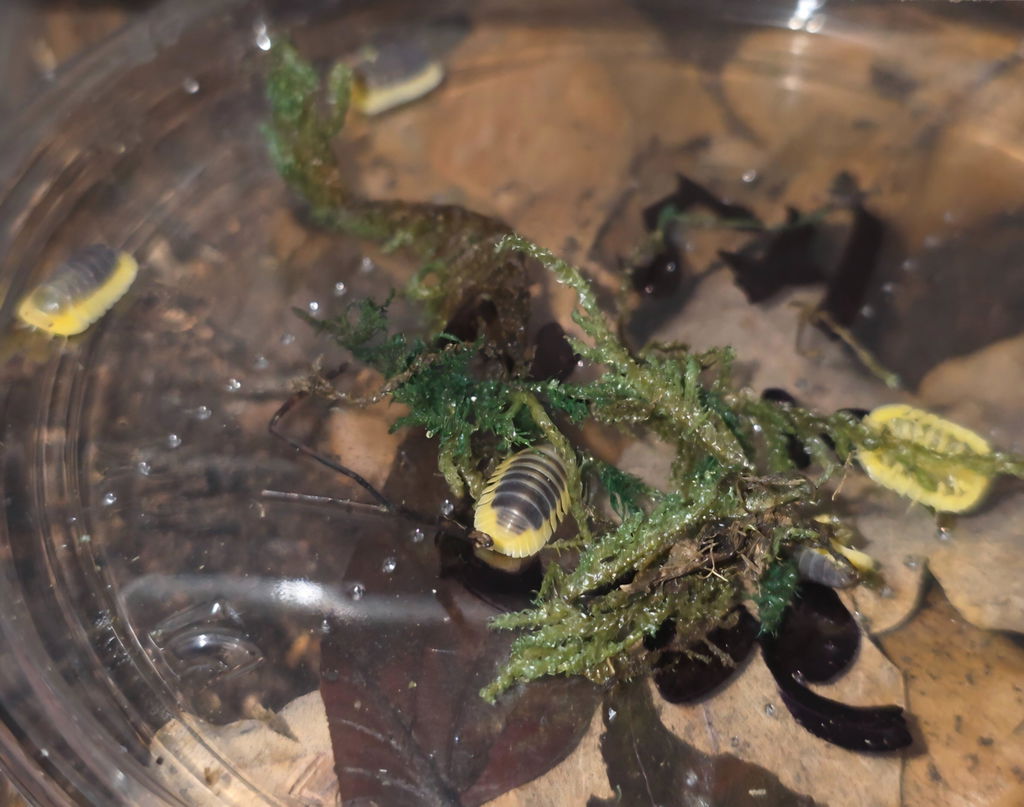
Lemon Blue Isopods (Cubaris sp.)
Care Info:
 ORIGIN
 TEMP
TEMP
 HUMIDITY
 LENGTH
 DIFFICULTY
 RARITY
- Free shipping over £65
- Low stock - 2 items left
Steel-blue bodies edged in bright lemon yellow, and a back that flashes distinctly blue when light catches it at the right angle. There are perhaps three or four isopods in the hobby that stop people mid-conversation and the Lemon Blue is one of them. It is also, and this needs saying plainly on a page that is trying to sell them, one of the more demanding animals we stock.
If you want the short version: they are slow, they are fussy about consistency, and they will punish a swinging enclosure. What they will not do is die on you for no reason. Everything about keeping them successfully comes down to setting the conditions once and then not letting them drift.
Names and origins
Sold as Cubaris sp. 'Lemon Blue', and also as the Lemon Blue Isopod or Cubaris Lemon Blue. Like most of the genus in the hobby, the species has never been formally described, so the trade name is all there is; the family is Armadillidae, and sellers give the origin as Thailand, though no collecting locality has been published.
The 20 mm in our care panel is a seller's figure for adults rather than a measurement. The colour deepens as they mature, so an established colony looks considerably better than a group of juveniles will when they first arrive.
The setup, and why consistency matters more than numbers
Warm and humid, with a moisture gradient rather than a uniformly wet tub. Keep roughly a third of the enclosure damp and let the rest run drier, and maintain ventilation throughout, because stagnant air is what turns a humid Cubaris enclosure into a mould problem.
Lay 7 to 10 cm of a nutritious forest-floor base such as our invertebrate substrate, deep enough that they can burrow to moult undisturbed. Work in plenty of decaying hardwood, add forest moss, and cover the surface generously with leaf litter; magnolia leaves last well and give them cover to feed under. Cork bark and a piece of limestone finish the job.
The part that actually separates success from failure is stability. This species reacts badly to parameters moving about, so a tub that swings between soaked and dry, or sits by a radiator that comes on and off, will stall the colony even if the average conditions look correct on paper. Pick a spot, set it up, and leave it alone.
Feeding, and the colour question
Decaying hardwood and leaf litter form the base. Protein matters here more than with hardier species, so offer dried shrimp or fish flake a couple of times a week rather than occasionally, and keep cuttlebone in permanently, since Cubaris are heavily calcified animals and will graze it steadily.
Now the thing this species is known for. Lemon Blues have a reputation for their yellow fading over generations in captivity, and the widely used remedy among keepers is a diet richer in carotenoids and astaxanthin, delivered through carrot, pumpkin, squash, sweet pepper, or the colour-enhancing foods sold for ornamental fish. I would be clear about the status of this: it is well-established practice with a lot of keeper experience behind it, but it has not been formally tested, and the mechanism is doubtful. In the woodlice whose skin pigments have been analysed, the colour comes mainly from pigments the animal makes itself rather than from carotenoids in its food. Feeding that way costs nothing and does no harm, but genetics and line quality are the likelier cause of fading, so keeping back your brightest animals as breeders is the surer remedy.
Breeding, and patience
Slow. Expect three to four months before a group settles into anything resembling a stable colony, and four to six months before you see the first small broods. Broods stay modest after that, and the population builds over a year rather than a season.
That is the realistic picture, and it is exactly why they cost what they do. It also means the most common way to lose a Lemon Blue colony is impatience: digging through the substrate to check for young, moving the tub, adjusting things. Resist all of it. They are mostly nocturnal and naturally retiring, so seeing very little of them for the first couple of months is normal rather than a warning sign.
Who they suit
Experienced keepers, and I would rather say so than sell one to somebody who will be disappointed. If you have kept Cubaris before and understand what a stable humid enclosure feels like, this is one of the most rewarding animals in the genus. If you are stepping up from hardy beginner species, the Panda King or the Penguin is the better first Cubaris, and the Amber Ducky, which most sellers find more forgiving than this one, teaches the same disciplines at a fraction of the cost.
Against the Rubber Ducky, the other premium name in the genus, both are slow and both demand consistency; the Ducky trades on shape and fame, the Lemon Blue on colour. See the full Cubaris collection to compare, or the wider isopod range.
Springtails from day one
Not optional with this species. The warm, humid, protein-fed conditions Lemon Blues need are also ideal for mould, and mould on uneaten food is a real risk to a slow colony that cannot outbreed a setback. Seed the enclosure with a springtail culture before the isopods go in: the springtails graze soft mould, which helps, but lifting uneaten food promptly matters more.
Arriving with you
Captive-bred in the UK from established colonies. Dispatch is Monday to Thursday by Royal Mail, Tracked 24 or Next Day as you prefer, keeping transit as short as possible, with the animals travelling in ventilated deli tubs on damp sphagnum moss inside a double-walled box. A 20% overcount and our live arrival guarantee apply as standard. Have the enclosure built, damp and settled before they arrive, and then give them several weeks of being left completely alone.