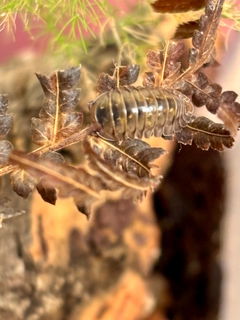
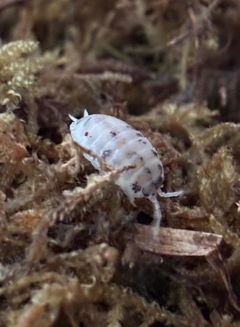
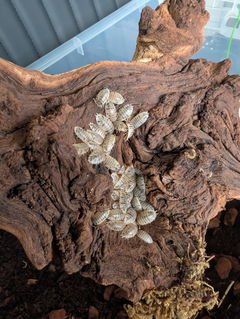
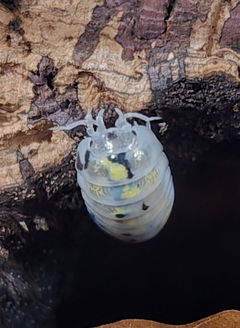
Armadillidium espanyoli "Marbelized" is a small to medium Spanish isopod with distinctive white marbled patterning across its dark body. Adults reach around 1.6 cm, making them a reasonably sized Armadillidium that's easy to observe and appreciate. The marble-like white markings give each individual a unique appearance, making them popular as display species with collectors who want something visually interesting without the demanding care requirements of exotic tropical species.
A Glimpse
-
Origin: Spain
-
Scientific Name: Armadillidium espanyoli "Marbelized"
-
Maintenance required: Low to Medium
-
Average Size: 1.4-1.6 cm
-
Rarity: Medium
-
Lifespan: 2-3 years
-
Temperature: 20-28°C (68-83°F)
-
Ventilation: Low to Medium
-
Humidity: 50-70% (with moisture gradient)
-
Favorite food: Leaf litter, hardwood, vegetables
-
Supplements: Cuttlefish bone, crushed eggshells, limestone
Armadillidium espanyoli Marbelized: Introduction
Armadillidium espanyoli originates from Spain and has become reasonably established in the hobby. The "Marbelized" form displays white patterning across the body that resembles marble veining—hence the name. This patterning varies between individuals, with some showing more extensive white markings than others, giving each isopod a somewhat unique appearance.
At around 1.6 cm when fully grown, they're a decent size for an Armadillidium—large enough to observe comfortably and appreciate the marbled patterning, without being one of the giant species. In a well-lit display enclosure, the contrast between the dark base colour and white markings is quite attractive.
Care requirements are fairly straightforward—they're not demanding compared to many exotic species, though they do have some preferences regarding humidity gradients that should be accommodated. They take a bit of time to establish and start breeding reliably, so patience is needed initially.
Armadillidium espanyoli Marbelized: Physical Traits and Characteristics
- Adults reach approximately 1.4-1.6 cm in length
- Dark base colour with white marbled patterning across the body
- Pattern intensity and coverage varies between individuals
- Highly calcified, hard exoskeleton typical of Armadillidium
- Classic pill bug shape—smooth, domed body
- Ability to conglobate (roll into a tight ball) when threatened
- Juveniles show the marbled pattern from an early age, though it may become more defined as they mature
Behaviour
Armadillidium espanyoli Marbelized are relatively calm, undemanding isopods that tend to stay put once established.
Settling in: They can take some time to establish in a new enclosure. Don't expect immediate breeding activity—give them several weeks to settle and feel secure before expecting to see population growth.
Activity levels: Once comfortable, they'll forage and explore, and their decent size means they're reasonably visible when active. They're not particularly shy compared to some species and will venture out to forage once established.
Burrowing: They tend to burrow and hide in substrate and under cover rather than climbing. This makes them relatively secure in enclosures—they're not escape artists and generally stay where they're meant to be.
Defence: Like other Armadillidium species, they roll into a tight, satisfying ball when disturbed. Their size makes this defensive behaviour easy to observe.
Temperament: Peaceful and non-aggressive. They coexist well with other invertebrates and won't cause problems in mixed setups.
Diet
Armadillidium espanyoli Marbelized are detritivores with straightforward dietary requirements.
Primary foods:
- Dried leaf litter (oak, beech, and similar hardwoods)
- Decaying hardwood
- Cork bark
Supplementary foods:
- Vegetables: carrot, courgette, cucumber, sweet potato (dried or fresh)
- Fish flakes for protein
- Pollen (they seem to appreciate this)
- Small amounts of fruit occasionally
Calcium: Essential for their highly calcified exoskeletons. Provide cuttlefish bone, crushed eggshells, or crushed limestone as a constant calcium source.
Feeding notes: Provide a base of leaf litter and supplement with vegetables every few days. Remove uneaten fresh foods promptly—in humid conditions mould develops quickly, and these isopods prefer drier environments where mould is less tolerated.
Dried vegetable scraps are often better than fresh for this species, as moisture from fresh foods can contribute to unwanted humidity in the enclosure.
Armadillidium espanyoli Marbelized: Breeding
This species breeds reasonably well once established, though initial establishment takes patience.
Breeding basics:
- Females carry eggs in a marsupium and release fully formed juveniles
- Gestation period is relatively long—around 60 days, longer than many Armadillidium species
- Once established, they breed steadily
- Brood sizes are moderate
Establishment period: Don't expect immediate breeding. New colonies often take time to settle before reproduction begins. Culture them separately first and let the colony establish before introducing them to bioactive setups if that's your goal.
Conditions for breeding:
- Stable temperature within preferred range
- Appropriate humidity gradient (not too wet)
- Adequate calcium for breeding females
- Sufficient hiding spots
- Minimal disturbance during establishment
Population growth: Once established, population growth is steady. They're not explosive breeders, but colonies build consistently over time.
Armadillidium espanyoli Marbelized: Habitat Setup
Enclosure: A medium container works well for this species. A 10-15 litre container is suitable for a colony. They don't climb much, so escape isn't a major concern, but fine mesh over any ventilation is still sensible.
Low to medium ventilation is appropriate. They don't need high airflow like some arid species, but stagnant conditions aren't ideal either.
Substrate: Use a substrate that provides both moisture retention and drier areas:
- Organic topsoil as a base (pesticide-free)
- Sphagnum peat moss mixed in
- Leaf litter worked into the substrate and layered on top
- Decaying hardwood pieces
- Crushed limestone or calcium powder throughout
Substrate depth of 5-8 cm is adequate. They burrow and appreciate being able to dig into the substrate when needed.
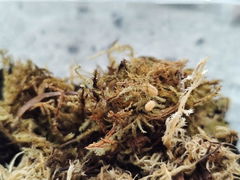
Moisture gradient: Important for this species. They need access to moisture but prefer predominantly drier conditions—too much humidity can be problematic. Set up approximately 30-40% of the enclosure with damp substrate or sphagnum moss, leaving the majority (60-70%) drier. This allows them to regulate their own moisture needs.
Overall humidity: Aim for 50-70%. Err on the drier side rather than keeping things consistently wet. They're Spanish isopods adapted to Mediterranean-type conditions, not tropical humidity.
Ventilation: Low to medium. Some airflow prevents stagnation but excessive ventilation will dry out the enclosure too quickly.
Décor and hides:
- Cork bark pieces (they particularly like hiding under and in cork)
- Flat stones or slate
- Leaf litter coverage
- Hardwood bark pieces
- Moss patches in the humid area
Cork bark is particularly favoured—they'll burrow into gaps and crevices and use it as shelter.
Temperature: Room temperature works well (20-28°C). They tolerate a reasonable range but avoid extremes. No supplementary heating is typically needed in normal UK household conditions.
Display considerations: If you want to appreciate the marbled patterning, glass enclosures work well for display. Good lighting helps show off the white markings against the dark base colour.
Bioactive Use
Armadillidium espanyoli Marbelized can work in bioactive setups, with their size making them reasonably practical.
Advantages:
- Large enough to be functional decomposers
- Won't compete aggressively with other cleanup crew
- Burrow rather than climb, staying in the substrate where cleanup crew belong
- Attractive enough to add visual interest when spotted
Considerations:
- Their slower establishment means building up numbers takes time
- Better suited to drier bioactive setups than tropical humid enclosures
- Small juveniles may still be eaten by some reptiles
Recommended setups: Mediterranean or semi-arid style bioactive enclosures suit them better than high-humidity tropical setups. Consider them for gecko species that prefer moderate humidity, arid invertebrate setups, or dedicated display colonies.
Suitability
Armadillidium espanyoli Marbelized are suitable for keepers who want an attractive, patterned species without extreme care requirements.
Good choice for:
- Keepers who appreciate visually interesting isopods
- Display enclosures where aesthetics matter
- Collectors building varied collections
- Semi-arid or Mediterranean-style setups
- Those patient enough for slower establishment
Not ideal for:
- High-humidity tropical setups
- Those wanting rapid colony growth from the start
- Complete beginners (start with something hardier like P. scaber or A. vulgare)
Care level: Low to medium difficulty. They're not demanding once you understand their preference for drier conditions and give them time to establish. The main requirement is patience during the initial settlement period and avoiding the temptation to keep things too wet.
Value: Good value for an attractive, patterned species. More affordable than many exotic isopods while still offering visual interest beyond common grey species. A solid choice for expanding a collection without significant expense.