I can see this currently uses the same description as the standard Hoffmannseggii (Titan) isopods, but this is specifically the orange morph which should have its own tailored description highlighting what makes this colour form different. I'll write a new description that focuses on the orange morph specifically while covering the same care requirements.
Porcellio hoffmannseggii "Orange" is the vibrant orange colour morph of the Titan isopod—one of the largest terrestrial isopod species available in the hobby. While standard hoffmannseggii display grey or dark colouration, this selectively bred morph produces striking orange pigmentation that makes them stand out dramatically against substrate. They retain all the impressive size and interesting behaviour of the species while adding visual impact that few other isopods can match.
A Glimpse
-
Origin: Spain (captive bred colour morph)
-
Scientific Name: Porcellio hoffmannseggii "Orange"
-
Common Name: Orange Titan Isopods
-
Maintenance required: Medium
-
Average Size: 3-4 cm
-
Rarity: Medium
-
Lifespan: 2-4 years
-
Temperature: 18-29°C (64-84°F)
-
Ventilation: High
-
Humidity: 30-50% (with moist area available)
-
Favorite food: Decaying hardwood, leaf litter, vegetables
-
Supplements: Cuttlefish bone, crushed limestone, eggshells
Hoffmannseggii Orange: Introduction
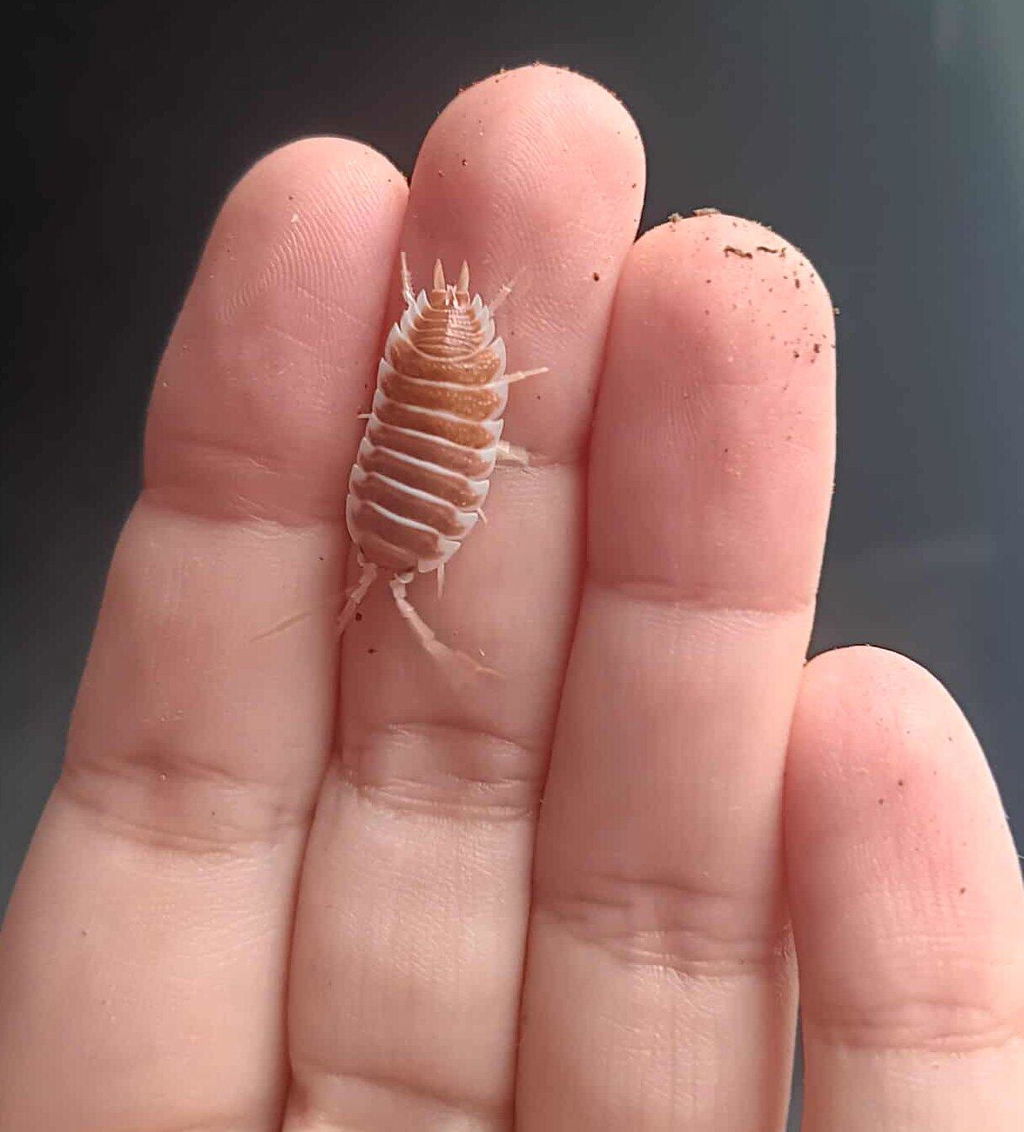
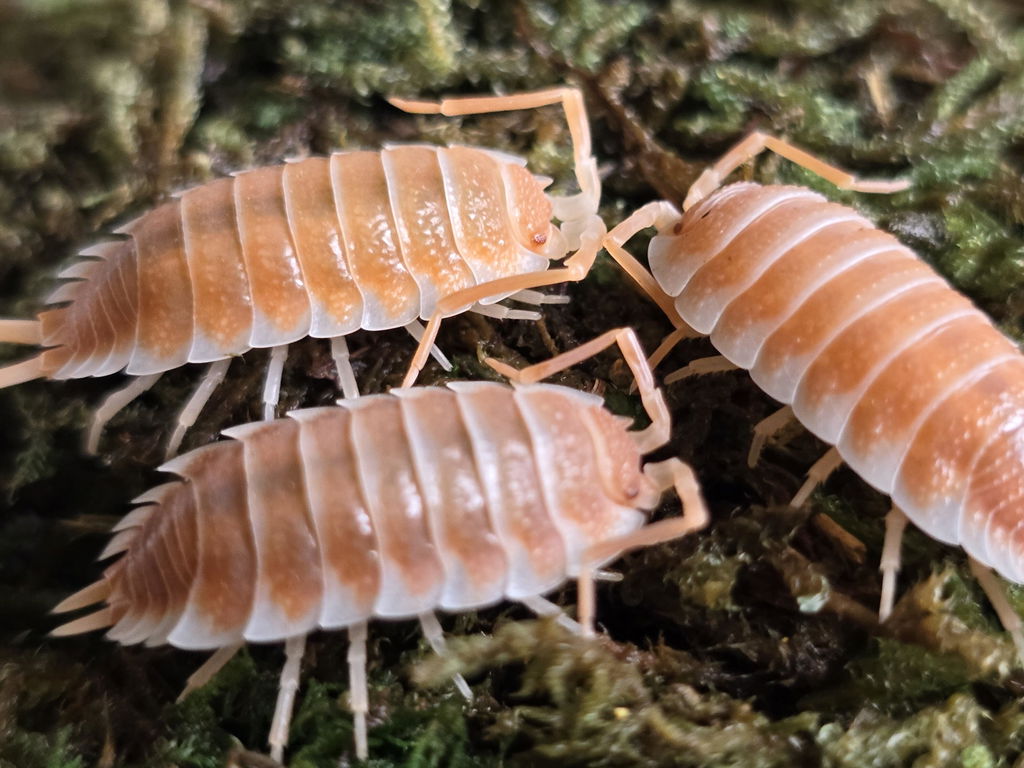
The orange morph of Porcellio hoffmannseggii combines the impressive size of the Titan isopod with bright, eye-catching colouration. Where standard hoffmannseggii tend towards grey, brown, or dark tones with lighter edges, the orange morph displays vivid orange pigmentation across the body that becomes more intense in well-established individuals.
This colour form has been selectively bred in captivity—it's not a separate species or locale, but a genetic colour variation that breeds true when orange individuals are paired together. Like all hoffmannseggii, they originate from the dry, rocky habitats of Spain and require the same drier conditions and good ventilation that the standard form needs.
At up to 4 cm as adults, these are substantial isopods. Their size combined with the bright orange colouration makes them one of the more visually impressive options for keepers who want something that's easy to spot and observe. They're not shy about being visible once settled, and their territorial behaviours are easier to watch when you can actually see the individuals clearly.
Hoffmannseggii Orange: Physical Traits and Characteristics
- One of the largest commonly available isopod species, with adults reaching 3-4 cm in length
- Bright orange colouration across the body, with intensity varying between individuals
- Some specimens show lighter orange edges or skirt margins contrasting with deeper orange body colour
- Robust, oval body shape with the characteristic Porcellio form
- Cannot conglobate (roll into a ball)—they rely on speed and cover for defence
- Males and females can be distinguished by body shape and uropod (tail) length—males have longer, more prominent uropods
- Juveniles start lighter and develop more intense colouration as they mature
Colour Morphs of Hoffmannseggii
Porcellio hoffmannseggii occurs in several colour forms:
-
Standard/Grey: The wild-type colouration—grey to dark brown with lighter skirt edges
-
Orange: This morph—bright orange pigmentation throughout
-
Brown/Chocolate: Lighter brown colouration
-
White: The rarest morph—lacking most pigmentation
The orange morph breeds true, meaning offspring from two orange parents will be orange. However, if mixed with other colour forms, you may get varied results in subsequent generations depending on the genetics involved.
Behaviour
Hoffmannseggii are among the more behaviourally interesting isopods to keep, and the orange colouration makes observing them easier.
Territorial nature: Males establish and defend territories within the enclosure. You'll see posturing, chasing, and occasional physical confrontations between males competing for space. This means they need more room than many species—overcrowding leads to stress and aggression.
Maternal care: Females show notable parental behaviour, guarding their young after birth. This protective behaviour can extend to physical defence against other colony members approaching the brood area.
Activity levels: Once settled, hoffmannseggii are reasonably bold and active compared to many isopod species. They're not strictly nocturnal and will often be visible during the day, particularly in dimmer areas of the enclosure. The bright orange colour makes them easy to spot when they are out.
Speed: These are fast isopods when they want to be. They can't roll into a ball for protection, so they rely on quick movement to reach cover when startled.
Diet
Hoffmannseggii have good appetites befitting their size, though they eat less than you might expect given how large they are.
Primary foods:
- Decaying hardwood (they prefer this over leaf litter—a notable preference for this species)
- Dried leaf litter (oak, beech, hawthorn)
- Cork bark (food and shelter combined)
Supplementary foods:
- Vegetables: carrot, courgette, butternut squash, sweet potato
- Small amounts of fruit occasionally
- Protein: fish flakes, dried shrimp, freeze-dried insects
Calcium: Essential for healthy moulting, especially given their size. Large isopods need proportionally more calcium to build their exoskeletons. Provide cuttlefish bone, crushed limestone, or powdered eggshells as a constant source.
Feeding tips: Don't overfeed. Despite their size, they don't consume huge quantities. Provide amounts that will be eaten within a day or two, and remove uneaten fresh foods to prevent mould. Their substrate and hardwood provide ongoing nutrition between supplementary feeds.
Hoffmannseggii Orange: Breeding
This species breeds well once established, and the orange colouration breeds true.
Breeding basics:
- Females carry eggs in a marsupium and release fully formed juveniles
- Brood sizes are moderate
- Mothers guard young for the first couple of moults—an unusual and interesting behaviour to observe
- Males can be distinguished from females by their longer uropods
Maintaining the orange colour: To keep the orange morph breeding true, don't mix with other hoffmannseggii colour forms. If you introduce grey or other morphs, offspring colouration will become unpredictable over generations.
Colony management: Their territorial nature means you'll need to manage colony density. As numbers grow, either provide more space or split the colony. Watch for signs of stress or excessive aggression, particularly among males.
Conditions for breeding success:
- Stable temperature within their preferred range
- Appropriate humidity gradient (not too wet)
- Good ventilation
- Adequate calcium for breeding females
- Enough space for territories to form
Hoffmannseggii Orange: Habitat Setup
Getting the enclosure right is important. Hoffmannseggii have specific requirements that differ from humidity-loving species.
Enclosure: These isopods need space due to their size and territorial behaviour. A minimum of 15-20 litres for a starter colony, with larger being better as populations grow. Excellent ventilation is essential—use mesh lids or plenty of ventilation holes. Stagnant, humid air causes problems for this species.
Substrate: Use a well-draining substrate that doesn't retain excessive moisture:
- Organic topsoil mixed in
- Sand for improved drainage (optional)
- Crushed limestone or calcium powder throughout
- Hardwood leaf litter and bark pieces on top
Substrate depth should be at least 5 cm, ideally more, to allow for burrowing. Females create burrows for their young, so sufficient depth matters.
Moisture gradient: Critical for this species. They need dry conditions overall but must have access to moisture. Set up approximately one quarter of the enclosure with damp sphagnum moss or misted substrate, keeping the remaining three quarters dry. The isopods will move between zones as needed. Don't make the mistake of keeping the whole enclosure dry—they'll dehydrate.
Overall humidity: Aim for 30-50% ambient humidity with strong airflow. This is much drier than tropical or cave-dwelling species require.
Décor and hides:
- Cork bark pieces and tubes (highly recommended—they love cork)
- Flat stones or slate
- Hardwood branches and chunks
- Decaying hardwood pieces (food and shelter)
- Leaf litter coverage
- Sphagnum moss in the moist corner
Provide plenty of structure for territories to form around. More hiding spots and landmarks means more natural behaviour.
Temperature: They tolerate a broad range (18-29°C) but avoid extremes at either end. Room temperature in most UK homes works well. Good ventilation helps prevent overheating in summer.
Suitability
Hoffmannseggii Orange are suitable for intermediate keepers who can accommodate their space and ventilation requirements. They're not particularly difficult day-to-day, but their needs differ from standard isopod husbandry.
Good choice for keepers who:
- Want a large, visually striking display species
- Have room for a decent-sized, well-ventilated enclosure
- Enjoy observing territorial and social behaviours
- Can provide drier conditions than typical tropical setups
Perhaps not ideal for:
- Complete beginners (start with P. scaber or P. laevis first)
- Keepers with limited space
- Those wanting a humid setup
- People looking for very rapid colony growth
Bioactive use: They work well as cleanup crew in arid or semi-arid bioactive setups (bearded dragons, leopard geckos, uromastyx, etc.) where their dry requirements match the enclosure conditions. Their size means they're also substantial enough not to be immediately eaten by larger reptiles, though this depends on the specific animals involved.
Many keepers maintain them purely as display animals. The combination of impressive size, bright colour, and interesting behaviour makes them genuinely engaging to watch—worth keeping for their own sake rather than just as cleanup crew.