
Terrestrial Isopod
If you've ever lifted a rock in your garden and spotted small, grey creatures scurrying away, you've encountered one of nature's most successful colonisers of land. Terrestrial isopods — commonly known as woodlice, or as pillbugs and roly polies across the Atlantic — represent a remarkable evolutionary achievement among crustaceans. These unassuming animals have transitioned from marine ancestors to become essential decomposers in ecosystems worldwide, and they've gained huge popularity as fascinating invertebrates in the hobby community.
Quick Overview of Terrestrial Isopods
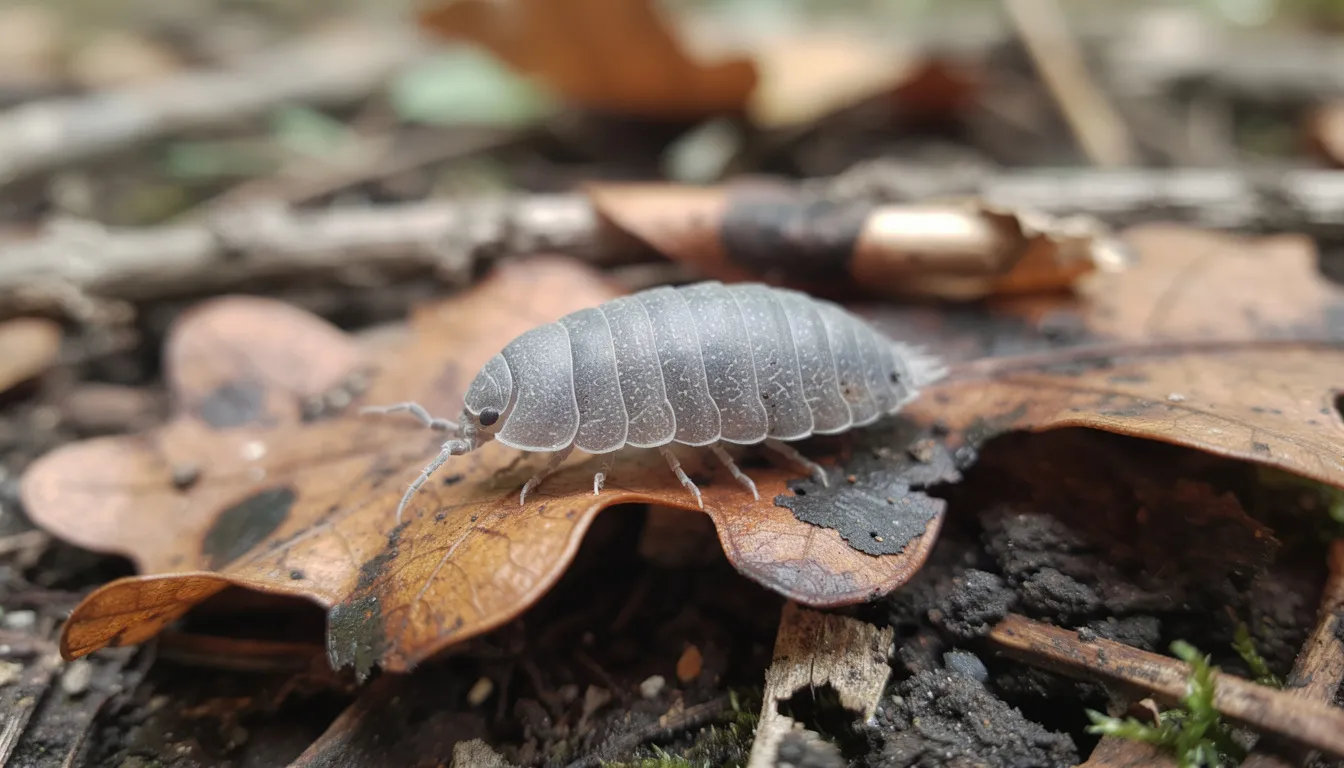
Terrestrial isopods are land-dwelling crustaceans belonging to the suborder Oniscidea, the group that includes all true woodlice. Unlike their aquatic relatives such as crabs, lobsters and shrimp, these creatures have fully adapted to life on land, making them one of the very few crustacean groups to achieve this feat. Their closest land-living crustacean relatives include certain amphipods like sandhoppers and some land crabs, but Oniscidea stands out as the most diverse and widespread terrestrial lineage.
Typical body size ranges from just a few millimetres in dwarf species to around 10–18 mm for common garden woodlice, with the giant Spanish Porcellio species exceeding 3 cm. They enjoy a cosmopolitan distribution across temperate and tropical regions, thriving wherever moisture and decaying organic matter are available.
Why do terrestrial isopods matter? They serve as major decomposers of dead plant material, mechanically fragmenting leaf litter and rotting wood to accelerate nutrient cycling in soil. By processing detritus they enhance microbial activity and contribute to soil formation — ecological services that benefit entire ecosystems. In recent years they've also become stars of modern bioactive terrariums, where hobbyists use them as clean-up crews alongside reptiles and amphibians.
Taxonomy and Diversity
Terrestrial isopods belong to the order Isopoda within the class Malacostraca, phylum Arthropoda. The suborder Oniscidea encompasses all fully land-adapted forms and is recognised as monophyletic, meaning all members share a common terrestrial ancestor.
- Global species count: over 10,000 isopod species have been described worldwide, with roughly 5,000 terrestrial (Oniscidea), around 4,500 marine, and about 500 in fresh water.
- Major terrestrial families: Armadillidiidae (the classic rolling pill woodlice), Porcellionidae (common woodlice), Oniscidae (skirted woodlice), and numerous tropical families still being described.
- Contrast with other isopods: marine species include the spectacular giant isopods of genus Bathynomus, which can reach up to 50 cm in the deep sea, while freshwater forms like the Asellidae occupy streams and groundwater systems.
- Regional diversity: European genera such as Armadillidium and Porcellio dominate gardens and compost heaps across the continent, while tropical leaf-litter specialists remain understudied — particularly in Thailand, Malaysia and Vietnam, where many taxa await proper description.
The taxonomy of these creatures remains an active field, with molecular methods increasingly used to resolve relationships among taxa that were historically misclassified on appearance alone.
Anatomy and Key Adaptations to Life on Land
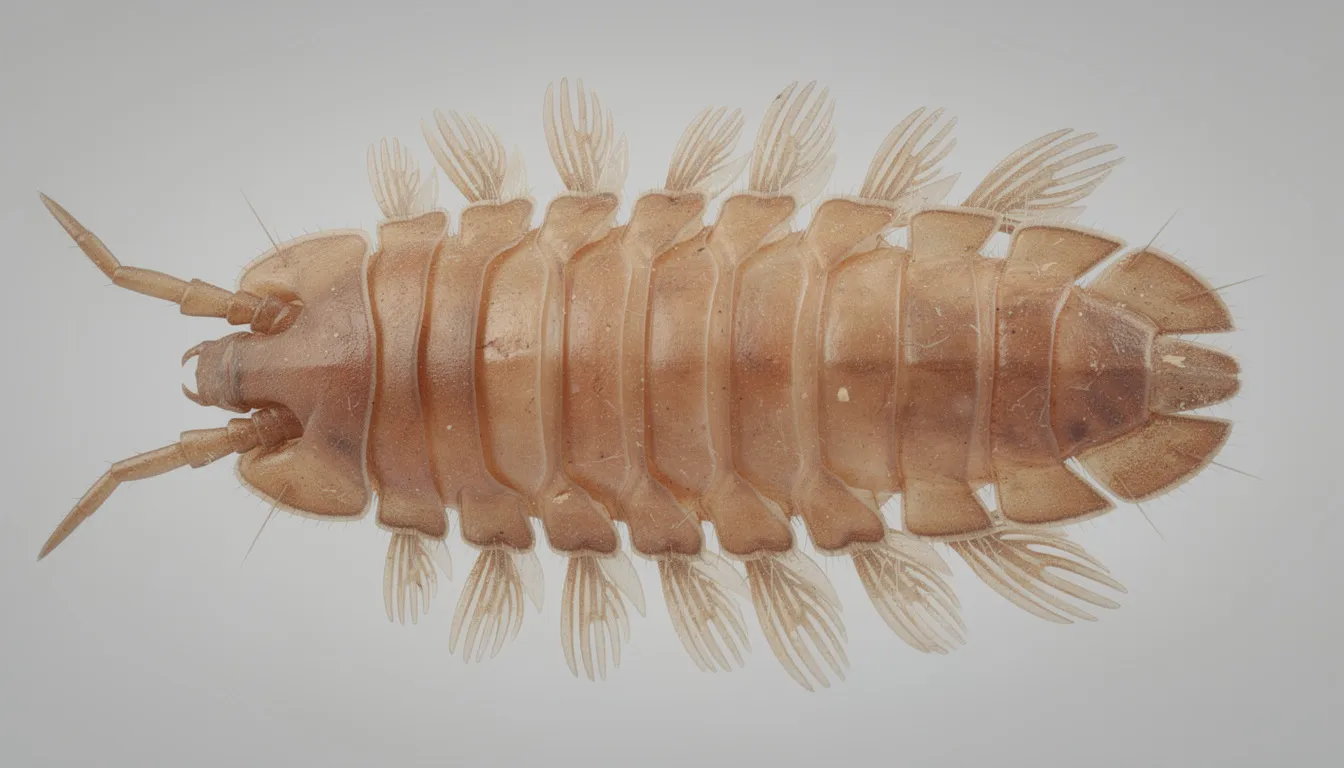
Terrestrial isopods display the characteristic isopod body plan: a segmented, flattened body divided into three main regions. The head (cephalon) bears the sensory organs, the thorax (pereon) carries the walking legs, and the abdomen (pleon) houses the respiratory structures and ends in tail-like appendages. A rigid exoskeleton of chitin and calcium carbonate protects the entire body.
- Compound eyes positioned on the sides of the head
- Two pairs of antennae, one pair highly reduced
- Seven pairs of similar jointed walking legs called pereopods — hence "Isopoda", meaning "equal foot" in Greek
- Rear uropods that vary by genus: long and visible in Porcellio, short and tucked away in Armadillidium
- Mouthparts adapted for scraping and shredding decaying material
Respiration is what truly sets terrestrial forms apart. In marine and freshwater isopods, gills on the pleopods (abdominal appendages) handle gas exchange underwater. Terrestrial species have modified these pleopods into pseudotracheae — white, lung-like patches visible on the underside of the abdomen. These structures require a thin film of moisture to function, which explains why woodlice seek humid microhabitats and are so vulnerable to drying out.
Defensive behaviour varies among genera. Conglobating genera like Armadillidium can curl into a tight protective ball — the classic pill woodlouse defence, protecting the vulnerable underside from predators. More elongated genera like Porcellio and Oniscus cannot roll completely and instead rely on speed and flattening against surfaces to escape threats.
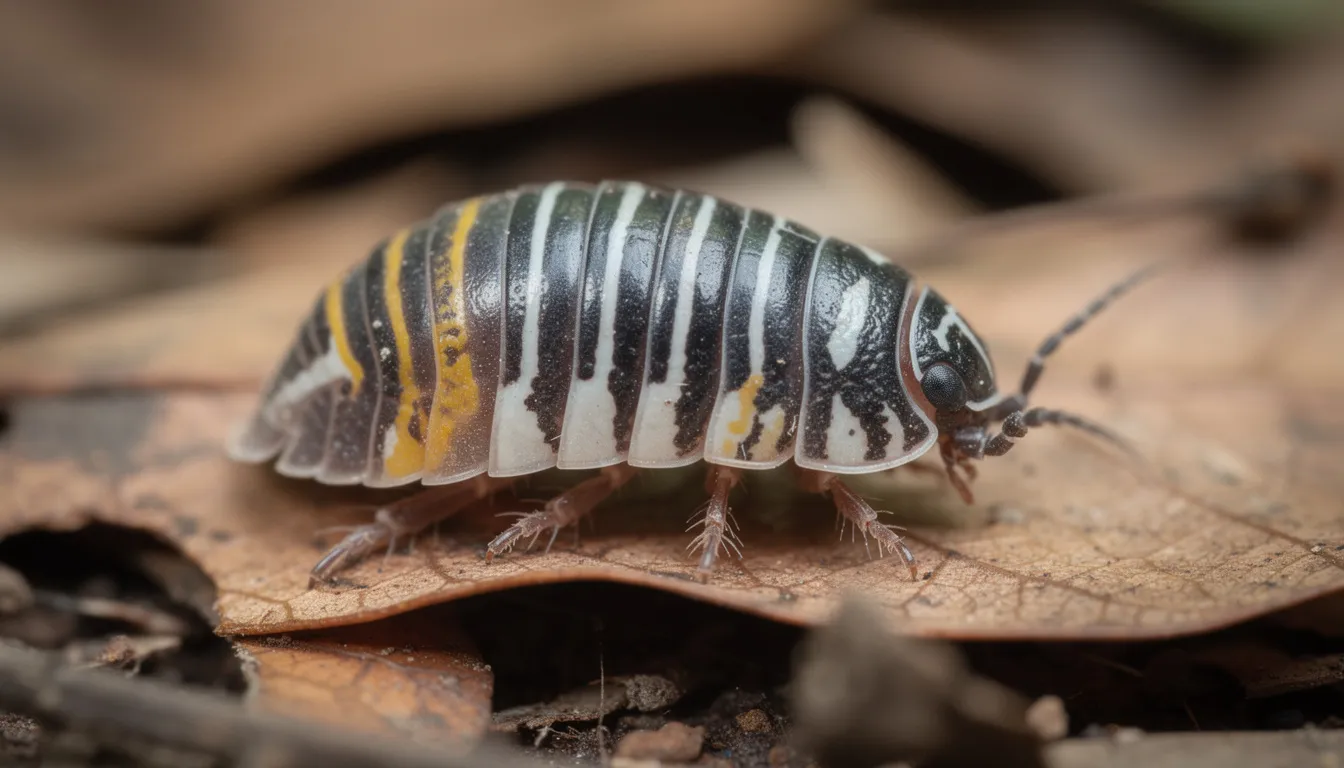
Colouration ranges dramatically. The plain grey Porcellio scaber is the ubiquitous garden woodlouse, while hobby morphs showcase striking patterns: the boldly striped Armadillidium maculatum (Zebra) and the white-and-grey patched Porcellio laevis "Dairy Cow". In the wild these patterns serve as camouflage; in the hobby they drive collector interest and careful breeding programmes.
Biphasic moulting is a particularly clever adaptation. Rather than shedding the entire exoskeleton at once like many arthropods, isopods moult the rear half first, wait several days, then shed the front portion. This keeps them mobile throughout the vulnerable moulting period, though they remain at heightened risk from predators while soft.
Habitats, Behaviour and Ecology
Terrestrial isopods occupy an impressive range of habitats but share one common requirement: moisture. From temperate woodland to tropical rainforest, coastal splash zones to cave systems, they thrive wherever humidity supports their breathing and decaying organic matter provides food.
The most productive places to find them include leaf litter on woodland floors, the soil beneath rocks and logs, rotting wood and bark crevices, compost heaps and garden mulch, coastal zones under driftwood and seaweed, and damp human structures like cellars and greenhouses. Many species aggregate strongly, clustering in large groups under favourable shelter — behaviour that conserves moisture and may offer safety in numbers.
Most are nocturnal or crepuscular, emerging to feed when humidity rises and light levels drop, and hiding in moist refuges by day. As decomposers they perform critical ecosystem services: mechanically fragmenting fallen leaves and dead wood, exposing fresh surfaces for fungi and bacteria, accelerating nutrient cycling through their droppings, and mixing organic matter into the soil. Their role parallels that of earthworms, though isopods work mainly in the surface litter layer rather than deeper soil.
They also occupy an important position in food webs as prey for shrews, mice, frogs, toads, lizards, spiders, centipedes and ground beetles — our guide to the predators of isopods in the wild covers this in detail. Occasionally woodlice become minor pests when populations boom in greenhouses, where they may nibble soft seedlings, but their ecological value as decomposers far outweighs any nuisance.
Some occupy genuinely extreme environments, reflecting their long evolutionary journey from water to land: Ligia sea slaters scavenge the splash zones of rocky shores, troglobitic cave species show reduced pigmentation and eyes, and urban-adapted species thrive in gardens and cellars far beyond their native ranges.
Feeding Habits and Diet
Terrestrial isopods are primarily detritivores, and their diet of decaying plant matter and supplements strongly influences growth and reproduction. In the wild they eat decaying leaf litter (preferring partially decomposed leaves colonised by fungi), rotting wood and bark, fallen fruit, fungi, algae on moist surfaces, the occasional tender living plant, and carrion and animal waste.
Their robust mandibles are adapted for scraping and shredding tough plant material, with environmental microbes — and possibly gut symbionts — assisting in breaking down cellulose and lignin.
In captivity, keepers provide a varied diet built around these staples:
- Leaf litter (oak, beech, magnolia, Indian almond) — the primary staple
- Decayed wood (rotten hardwood, cork bark) — fibre and micronutrients
- Protein supplements (fish flakes, dried shrimp, bee pollen) — fuels reproduction
- Calcium sources (cuttlebone, limestone, crushed eggshell) — exoskeleton development
- Vegetables (carrot, squash, cucumber) — moisture and nutrients
Requirements vary by genus: the large Spanish Porcellio species in particular demand more protein than smaller forms, and colonies receiving too little protein are more prone to cannibalism and plant damage — a good reminder that balanced feeding matters.
Reproduction, Life Cycle and Development
Unlike many crustaceans such as crabs and shrimp that release free-swimming larvae, terrestrial isopods have evolved direct development with parental care — an adaptation essential for life on land.
The sexes are separate, with males typically smaller than mature females, and fertilisation is internal. The female then carries her fertilised eggs in a fluid-filled brood pouch called the marsupium on the underside of her thorax — a key stage in the fascinating isopod life cycle. Clutch sizes range from a few dozen eggs in smaller species to over a hundred in large forms, and the marsupial fluid provides a moist, protected environment that essentially recreates aquatic conditions in miniature.
Hatchlings emerge as mancae: miniature versions of the adults that lack the seventh pair of legs and have six body segments rather than the adult seven. Through several moults over 3–12 months, depending on species and temperature, they develop into mature adults. Many common species live 2–3 years, with some individuals lasting longer in captivity under stable conditions.
A few species reproduce parthenogenetically, with females producing viable offspring without males — most famously Trichorhina tomentosa, the dwarf white woodlouse. These all-female lineages are especially valuable in terrarium culture, since every individual can reproduce and populations establish quickly. In temperate regions breeding peaks in spring and summer; tropical species may breed year-round where conditions stay stable.
Evolution and the Fossil Record
The story of how marine crustaceans conquered land stretches back hundreds of millions of years and represents one of the most successful land-colonisation events among arthropods.
Fossil evidence traces isopods to the Carboniferous period, over 300 million years ago, when they lived in shallow seas alongside early fish. The move to land likely proceeded in stages: fully aquatic ancestors, then amphibious coastal forms in splash zones, then semi-terrestrial species dependent on very moist habitats, and finally the fully terrestrial Oniscidea with their lung-like pleopods and water-resistant cuticles. The transition gave access to abundant land-plant detritus and an escape from aquatic predators, though it brought new challenges: sourcing calcium for the exoskeleton and the ever-present risk of drying out.
Baltic amber from the Eocene, roughly 44–49 million years ago, preserves early terrestrial isopods in remarkable detail, showing that woodlouse-like body plans and lung-like breathing structures were already well established by then. Today, patterns of diversity and endemism in isolated places — Mediterranean islands, cave systems, ancient rainforest fragments — reflect long histories of colonisation, isolation and adaptation.
Common Genera and Notable Species
A handful of genera dominate gardens, compost heaps and the pet trade. Each offers distinct characteristics in size, shape, colouration and care.
Armadillidium (Pill Woodlice)
- Armadillidium vulgare: the common pill woodlouse, widespread across Europe and introduced worldwide. Grey to brown with subtle patterning, hardy and tolerant of varied conditions.
- Armadillidium maculatum (Zebra): bold black-and-white stripes make this southern European species a hobby favourite.
- Armadillidium klugii varieties: multiple colour forms including "Montenegro" and "Dubrovnik", with striking orange, yellow or cream markings.
Porcellio
- Porcellio scaber: the common rough woodlouse found in gardens everywhere, with numerous captive morphs including Dalmatian, Spanish Orange and Calico.
- Porcellio laevis "Dairy Cow": a smooth-bodied species with dramatic white and grey patching, bred for terrarium display.
- Porcellio magnificus and Porcellio hoffmannseggii (the Spanish "Titans"): among the largest woodlice in the world, with Porcellio hoffmannseggii reaching up to 4 cm — prized for their sheer presence.
Porcellionides
- Porcellionides pruinosus: includes the Powder Blue, Powder Orange and White Out morphs. Tolerates warmer, drier conditions than many species and breeds prolifically, making it ideal for establishing quickly in vivariums.
Other Notable Species
- Oniscus asellus (common shiny woodlouse): a large, flattened European species with distinctive skirt-like lateral extensions.
- Trichorhina tomentosa (dwarf white): a tiny, pure white, parthenogenetic species, widely used in bioactive terrariums for reaching small spaces.
- Atlantoscia floridana: a small, notably quick species widespread across the Americas.
- Cylisticus convexus: able to curl but not into a complete ball, with unusual texture and colouration.
Terrestrial Isopods and People
From garden decomposers to prized collectables, woodlice have developed a surprisingly close relationship with human activity. In gardens they break down fallen leaves and debris, improve soil structure and convert organic matter into forms plants can use. Very large populations in greenhouses can occasionally damage tender seedlings, but this minor nuisance is far outweighed by their decomposition services.
Since the early 2000s, keeping isopods as pets has grown from a niche interest into a thriving community of breeders, online trading platforms and specialist suppliers. Selective breeding has produced spectacular morphs (Dairy Cow, Calico, Orange Dalmatian, High Yellow), and rare varieties command significant prices, driving careful breeding programmes and ever-deeper knowledge of genetics and care.
The biggest growth area is bioactive husbandry: using isopods as clean-up crews in naturalistic setups for reptiles and amphibians, where they consume waste and shed skin, process leaf litter, aerate the soil and even provide supplemental prey for some inhabitants. Success comes down to adequate leaf litter, hiding places like cork bark, and a moisture gradient that lets the isopods regulate their own hydration — all covered in our guide to creating the perfect bioactive clean-up crew with isopods and springtails.
Woodlice are also superb for education and citizen science: school projects on decomposition, local biodiversity surveys, and hobbyist records of new morphs and range expansions all contribute genuine value to our understanding of these animals.
Conservation and Research Outlook
Most widespread woodlice face no conservation concerns — common species like Armadillidium vulgare and Porcellio scaber have actually expanded their ranges through human activity. Specialised endemics tell a different story: island, cave and forest specialists with restricted ranges face threats from habitat loss, pesticides, soil contamination, shifting moisture regimes under climate change, and competition from introduced species.
Interestingly, woodlice are increasingly recognised as useful bioindicators of soil health: they accumulate heavy metals in their tissues, respond measurably to changes in moisture and organic matter, and are easy to sample and identify, making them practical tools for environmental monitoring.
Research continues across multiple fronts — molecular studies clarifying relationships within Oniscidea, microbiome work on how gut communities aid digestion, decomposition studies quantifying their role in nutrient cycling, and a steady stream of new species descriptions from understudied regions, caves and amber deposits. The future of the field rests on collaboration between professional scientists and engaged hobbyists, whose records of new localities, rare forms and breeding observations genuinely complement formal research.
Whether you're a researcher studying decomposition ecology, a hobbyist breeding colourful morphs, or simply someone who pauses to watch the creatures beneath your garden stones, terrestrial isopods offer endless fascination. These ancient crustaceans, having conquered land over millions of years of evolution, continue to play essential roles in ecosystems worldwide — and in the growing community of people who appreciate them.


Leave a comment