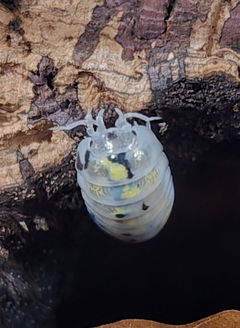
Albino Ducky Isopods (Cubaris sp.)

Albino Ducky Isopods (Cubaris sp.)

£120.00

Albino Ducky Isopods (Cubaris sp.)

£120.00

Albino Ducky Isopods (Cubaris sp.)

£120.00

Quantity

5 10 20

Products will be delivered between 1 and 5.

0 LEFT IN STOCK
0 watching this item.
0 have this item in their cart.

Care Info:

Origin icon ORIGIN
THAILAND
Temperature icon TEMP
22-28 ℃
Humidity icon HUMIDITY
70-85 %
Length icon LENGTH
15-20 mm
Difficulty icon DIFFICULTY
MEDIUM
Rarity icon RARITY
VERY RARE
Product description

    A Glimpse

    • Scientific Name: Cubaris sp.
    • Common Name: Albino Ducky (Rubber Ducky variant)
    • Family: Armadillidae
    • Origin: Thailand — limestone cave systems
    • Adult Size: 15–20 mm
    • Difficulty: Medium-Hard — not the hardest Cubaris, but not a beginner species either
    • Temperature: 22–28°C
    • Humidity: 70–85%
    • Ventilation: Medium — cross-ventilation important but enclosure should retain moisture well
    • Diet: Leaf litter, rotting wood, vegetables, protein supplements, moss, lichen
    • Supplements: Cuttlebone, crushed limestone — calcium is critical for this genus

    Albino Ducky: Overview

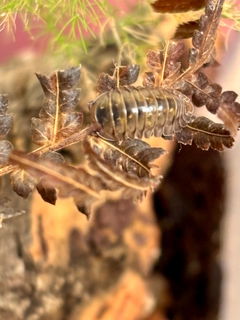
    The Rubber Ducky isopod is probably the most famous isopod in the hobby. Discovered in limestone caves in Thailand in 2017, the original Rubber Ducky Cubaris sp. kicked off what's sometimes called the "Cubaris craze" — a surge of interest in exotic isopod morphs that's still going strong. The distinctive duck-like face and warm yellow-brown colouration made them instantly iconic.

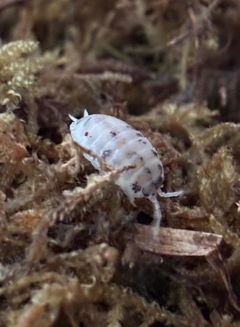
    Since then, a number of colour variants have emerged in the hobby: Blonde Ducky, White Ducky, Black Lip Ducky, Pink-Faced Ducky (Pak Chong), and others. The Albino Ducky is part of this family of variants — a lighter, paler form that lacks the typical pigmentation of the standard morph. In albino individuals, the dark body pigments are reduced or absent, leaving a much lighter overall appearance while retaining the characteristic Rubber Ducky body shape and proportions.

    As with many newer Cubaris variants, "Albino Ducky" is a trade name rather than a formal taxonomic designation. All Ducky variants share fundamentally the same care requirements, so whether you've kept standard Rubber Duckies, Blonde Duckies, or other variants before, the husbandry will be familiar.

    What Makes Rubber Ducky Types Different to Keep

    Rubber Ducky-type Cubaris have a few characteristics that set them apart from other Cubaris species and from isopods in general:

    Deep burrowers. These isopods spend significant periods fully submerged in the substrate, especially during moulting. This is normal behaviour, not a sign of stress. You may not see your isopods for days or even weeks at a time, particularly early on as they settle in. This is one of the most common sources of worry for new Ducky keepers — the temptation to dig them up to check on them is strong, but resist it. Disturbing a moulting isopod can kill it.

    Slow breeders. Even by Cubaris standards, Ducky-type isopods breed slowly. Brood sizes are small (typically 1–10 mancae), generation times are long, and colony growth is gradual. Some keepers report needing months for a colony to acclimate before breeding begins. This is the main reason Ducky variants remain expensive despite being well-established in the hobby — you simply can't produce them quickly.

    Limestone cave origins. Like other Thai Cubaris, Ducky-types originate from limestone cave environments. Providing limestone or calcium-rich materials in the enclosure isn't just a supplement — it mimics their natural habitat and seems to noticeably improve how settled and active the colony is.

    Enclosure

    A sealed plastic container (6–12 litre) with ventilation holes works well for a starter culture. Cross-ventilation is important — holes on opposite sides — but the enclosure should retain humidity well. A clip-lock tub with drilled ventilation is the standard approach.

    Ducky-types don't need large enclosures, and a smaller space can actually be easier to manage humidity-wise. A shoebox-sized container is fine for a group of 5 to start. As the colony grows (slowly), you can move up.

    Substrate

    This is arguably the most important element. Provide deep substrate — at least 8–10 cm, ideally deeper. Ducky-type Cubaris burrow extensively, and substrate depth directly affects their ability to moult safely and feel secure. If your substrate is too shallow, they can't exhibit natural behaviour and may fail to thrive.

    Use organic topsoil mixed with crumbled white rotten hardwood and leaf litter. Oak and beech leaves work well. The substrate and leaf litter are a major part of the diet, so quality matters — this isn't just bedding, it's food.

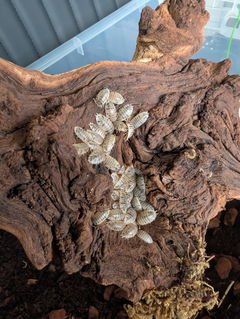
    Limestone is essential. Add pieces of limestone, crushed oyster shell, or cuttlebone throughout the enclosure. Some keepers use limestone cave stone or Texas holey rock as both hides and calcium sources. The isopods will graze on limestone surfaces and it helps with moulting. Cubaris from cave environments have evolved with constant access to calcium-rich rock, and providing it makes a noticeable difference to colony health.

    Create a moisture gradient: one end consistently damp (sphagnum moss patch), the other end drier. This lets the isopods choose their preferred humidity level. Cork bark pieces provide hides at the surface for animals that aren't currently burrowed.

    Temperature and Humidity

    22–28°C is the target range. In a UK house, room temperature in summer will often be sufficient. In cooler months, a heat mat on a thermostat may be needed — placed on the side of the enclosure, not underneath (you don't want to cook the substrate where isopods are burrowing and moulting).

    Humidity should be maintained at 70–85%. The sealed container approach helps hold humidity naturally. Mist lightly when the surface starts to dry, but don't waterlog the substrate. Soggy conditions promote mould and bacterial growth that can crash a colony. The deep substrate should hold moisture at the bottom even when the surface is relatively dry — this is the gradient the isopods need.

    Ventilation is a balancing act. Enough airflow to prevent stagnant air and mould, but not so much that the enclosure dries out rapidly. Start with fewer ventilation holes and add more if you see condensation covering every surface or mould developing.

    Diet

    The substrate itself (leaf litter and rotting wood) is the primary food source. Keep it well stocked.

    Supplement with:

    • Vegetables: Cucumber, courgette, sweet potato, carrot — in small amounts
    • Protein: Dried shrimp, fish flakes, freeze-dried bloodworm, or fish food pellets — Cubaris are protein-hungry compared to most other isopod genera. Offer protein once or twice a week
    • Calcium: Cuttlebone permanently available, plus limestone in the enclosure
    • Moss and lichen: Eaten and appreciated

    Some keepers report that Ducky-types are less interested in fresh vegetables than other Cubaris and prefer to graze on substrate, leaf litter, and protein supplements. Your mileage may vary — offer a variety and see what gets eaten.

    Remove uneaten fresh food within a day to prevent mould. In a warm, humid enclosure, food spoils quickly.

    Breeding

    Patience is the word. Ducky-type Cubaris can take months to acclimate to a new enclosure before breeding begins. Once established, they breed year-round but slowly — small broods, long intervals. A starting group of 5 gives a reasonable chance of both sexes being represented, but don't expect rapid colony growth.

    The keys to breeding success are the same as for general health: consistent warmth, appropriate humidity, deep substrate for burrowing, abundant calcium, and minimal disturbance. The last point is particularly important — repeatedly opening the enclosure, digging through substrate, or rearranging hides stresses Cubaris and can suppress breeding.

    A colony that is left alone, checked on weekly rather than daily, and kept consistently will outperform one that's fussed over constantly.

    Colour Stability in Albino Lines

    A note worth including: with any albino or reduced-pigment isopod line, there can be some variation in how strongly the albino trait expresses across individuals and generations. It's been observed across multiple Cubaris types that body colour in captivity can shift somewhat from what's seen in the wild or in breeding stock, possibly influenced by diet, environment, or genetics. If you're keeping Albino Duckies specifically for their reduced pigmentation, maintaining them as a separate line (not mixed with standard Duckies or other variants) preserves the trait most reliably.

    Being Realistic About the Price

    At £120 for 5, Albino Ducky is one of the most expensive isopods on the site. The price reflects genuine rarity — this is a less common variant of an already slow-breeding species.

    If you haven't kept Cubaris before, starting here would be a costly experiment. Standard Rubber Duckies or a more established Cubaris like Panda King would let you learn the genus at a lower financial risk. The care isn't dramatically harder than other Cubaris species, but the combination of slow breeding, burrowing behaviour (which can make it hard to assess colony health), and the financial stakes of getting it wrong means prior Cubaris experience is strongly recommended.

    If you have kept Ducky-type Cubaris before and you're adding the Albino variant to your collection, the care will hold no surprises. Set up identically to your existing colonies, keep conditions consistent, and give them time

    FAST DELIVERY

    Isopods are posted monday to thursday using royal mails next day by 1pm service

    LIVE ARRIVAL GUARENTEE

    plus 20% overcount sent with every order

    HERE TO CHAT

    24/7 livechat. We are always here and happy to chat! (subject to sleeping)