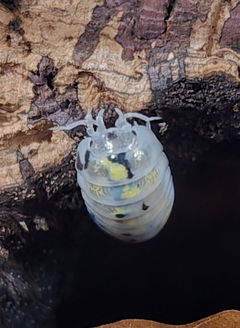
Armadillidium Klugii Giant "Omis" Isopods

Armadillidium klugii 'Giant Omiš' Isopods for Sale

Care Info:

Origin icon ORIGIN
CROATIA
Temperature icon TEMP
18-29 ℃
Humidity icon HUMIDITY
50-70 %
Length icon LENGTH
15 mm
Difficulty icon DIFFICULTY
EASY
Rarity icon RARITY
RARE
Regular price£10.00
/
Tax included. Shipping calculated at checkout.

Quantity
  • Free shipping over £65
  • In stock, ready to ship
  • Backordered, shipping soon

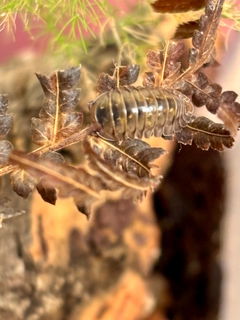
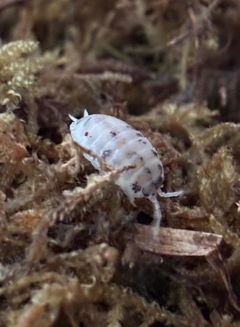
Armadillidium klugii 'Giant Omiš' is a properly substantial Croatian locality variant of one of the most famous Mediterranean Armadillidium in the hobby. Named after the Adriatic coastal city of Omiš in Dalmatia, this is the larger-bodied phenotype of A. klugii showing the species's classic spotted "clown" colouration, with bold yellow, orange, red, and white markings on a dark base. Properly distinctive in appearance, easy in care, and one of the more affordable serious-locality Armadillidium in our range.

The visual is the headline, but the science behind it is genuinely fascinating: the bold red and yellow spots on A. klugii aren't just decorative — they're a form of Batesian mimicry. The colour pattern resembles the red markings of the Mediterranean black widow (Latrodectus tredecimguttatus), a venomous spider that shares the species's Dalmatian coastal habitat. Predators that have learned to avoid the spider also avoid the harmless woodlouse that looks like it. Properly remarkable for an isopod — one of relatively few documented examples of mimicry in terrestrial isopods.

Like all Armadillidium, the Giant Omiš conglobates — rolling into a tight defensive ball. The brightly-spotted rolled ball is properly photogenic and makes the mimicry hypothesis even more striking visually. Browse the full Armadillidium collection for related localities and species.

Quick Care Summary

  • Scientific Name: Armadillidium klugii Brandt, 1833
  • Locality: 'Giant Omiš' — Omiš, Dalmatia, Croatia
  • Common Names: Clown Isopod, Croatian Clown Isopod, Yellow-Spotted Pillbug
  • Family: Armadillidiidae
  • Origin: Adriatic coast of Croatia (Dalmatian region); the broader species ranges across the Balkan Peninsula
  • Adult Size: Up to approximately 15 mm (with the species reaching 21 mm maximum per published sources — Omiš is at the larger end of the klugii range)
  • Lifespan: 2–3 years typical
  • Difficulty: Easy — forgiving of beginner mistakes
  • Temperature: 18–29°C (warm-preferring Mediterranean)
  • Humidity: 50–70% — drier-leaning with proper moisture gradient
  • Ventilation: Good — important; airflow over fussy humidity
  • Conglobation: Yes — rolls into a tight defensive ball
  • Appearance: Variable spotted "clown" pattern; bold yellow, orange, red, and white markings on a dark grey-brown base; significant variation between individuals within a single colony
  • Behaviour: Initially shy; becomes confident and visible in established colonies; sociable
  • Breeding: Reliable once established (typically 3–4 months to reach breeding pace)
  • Rarity: Rare in the UK hobby

What Makes Giant Omiš Special

Several factors make this locality variant a properly worthwhile keep:

The Latrodectus mimicry framing is genuinely remarkable. The bright spotted colouration that earned A. klugii its "clown isopod" nickname has a serious evolutionary explanation — it mimics the red warning markings of the Mediterranean black widow spider, a venomous predator that shares the species's habitat. Predators that avoid the spider also avoid the harmless mimic. For naturalists, this is one of the more interesting pieces of isopod natural history in the hobby.

Variable phenotype within the locality. Omiš is documented (in European keeper communities) as showing a particularly variable phenotype, with individuals ranging from nearly all-dark through to richly red-and-yellow specimens. Each animal in a colony shows slightly different patterning, making the collection genuinely interesting to display and observe.

The age-related colour change. A. klugii shows a known age-related colour development pattern — juveniles typically display three rows of white dots running front to back, with the central row often turning yellow as the animal matures. A small natural-history detail that adds depth for keepers paying attention.

Substantial size by Armadillidium standards. At up to 15 mm in our stock (and the species reaching 21 mm in published sources), the Giant Omiš is at the larger end of klugii size variation — properly substantial display animals, larger than typical A. vulgare.

Easy care, affordable pricing, real natural-history depth. The combination is unusual: most isopods with this level of scientific interest (Latrodectus mimicry, locality-specific genetics) sit at higher price points. The Omiš locality combines accessibility with substance.

The dry-leaning Mediterranean care suits UK rooms. A. klugii handles relatively dry conditions far better than tropical species, which makes it well-suited to keepers worried about overwetting, and a useful counterpoint species in a collection dominated by humid-tropical Cubaris.

About the "Giant" Designation

Honest framing: the "Giant" in the name refers specifically to the Omiš locality's larger-than-typical klugii phenotype, not to some genus-wide size record. The species itself reaches up to 21 mm at maximum (per peer-reviewed natural history sources), and individual Omiš specimens can sit at the upper end of that range — properly substantial by Armadillidium standards, but not "giant" in the sense of A. werneri (also 20–22 mm) or A. vulgare 'Big Italy'. Set expectations accordingly: noticeably larger and bulkier than standard A. klugii from other localities like Montenegro or Dubrovnik, but still a 15 mm Armadillidium, not a flagship-tier giant.

Setting Up the Enclosure

A 5–10 litre plastic container with a secure clip-lock lid suits a starter colony of 5–10 individuals, with larger setups as the colony grows. Drill ventilation holes on opposite sides for cross-ventilation, covered with fine mesh. Aim for good ventilation — the Giant Omiš handles drier conditions well and overwetting causes more issues than insufficient moisture.

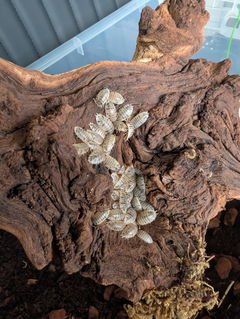
Cork bark flats are particularly important for this species — they're the preferred hiding spots that help initially shy individuals settle and feel secure. Add magnolia pods, decaying wood, and flat stones for additional cover. Substrate depth of 5–8 cm works well — enough for burrowing without being excessive.

Important husbandry note: A. klugii do not need a standing water dish. Misting and a moist corner provide all the moisture they need — open water risks drowning and encourages mould in a species that prefers drier conditions. Skip the water dish.

Substrate

Use a moisture-retentive substrate that drains well, reflecting the Mediterranean coastal origin:

  • Organic topsoil base (pesticide-free) as the foundation
  • Light sphagnum peat moss mixed throughout for moisture retention
  • Composted hardwood leaf litter (oak, beech, maple)
  • Flake soil mixed in for added nutrition
  • Crushed limestone or eggshells distributed throughout — particularly important for this species's calcified, brightly-coloured exoskeleton
  • Soft rotting wood pieces (nutrition source)
  • Aged bark pieces for structure

We recommend a topsoil and sphagnum-based mix. Create a clear moisture gradient with about one-third of the enclosure consistently damp using sphagnum moss, while the majority stays drier with leaf litter and bark coverage.

Humidity and Temperature

Maintain humidity around 50–70% with a clear moisture gradient. A. klugii are Mediterranean species adapted to coastal Dalmatian conditions — they handle the drier end of the isopod humidity range comfortably and dislike waterlogged setups. The damp zones should feel like a well-wrung sponge; the dry side should feel barely moist with good ventilation. Place protein foods exclusively on the dry side to prevent spoilage.

Temperature should be 18–29°C — they handle the warm end of this range well and breeding tends to pick up at 24–27°C. UK room temperature works year-round; gentle supplementary heat may help in cool months. Their Croatian coastal origins mean they're adapted to seasonal temperate-Mediterranean variation rather than constant tropical conditions.

Diet

Giant Omiš isopods are detritivores with broader-than-average appetites due to their substantial size and high-pigmentation colouration (which requires good calcium and protein intake):

  • Hardwood leaf litter (oak, beech, magnolia) — the dietary foundation, always available
  • Soft rotting wood pieces — important nutrition source
  • Vegetables 1–2x weekly: carrot, cucumber, squash, sweet potato. Replace within 24–48 hours.
  • Fruit occasionally (small amounts of soft fruit)
  • Protein twice weekly: fish flakes, freeze-dried shrimp, dried daphnia, occasional freeze-dried minnows. Feed protein exclusively on the dry side of the gradient.
  • Calcium (essential — always available): cuttlefish bone, crushed limestone, oyster shell, eggshells. Particularly important for healthy moulting and proper colouration development — provide multiple sources.

Higher calcium and protein than the average isopod requires supports both the substantial body size and the vivid colouration patterns. Skip copper-containing supplements — isopods get all the trace copper they need from natural diet, and supplementation risks toxicity.

Breeding

Giant Omiš isopods breed reliably under stable conditions, though they take longer to establish than most beginner-tier species. Most keepers report 3–4 months before colonies reach proper breeding pace, with patience rewarded by displays of colourfully-patterned offspring.

For breeding success:

  • Stable temperature in the warmer range (24–27°C is ideal for peak breeding)
  • Consistent moderate humidity with proper gradient
  • Abundant calcium for breeding females
  • Regular protein supplementation
  • Plenty of cork bark and hide structure for gravid females
  • Minimise disturbance during establishment
  • A larger starter group establishes faster and provides genetic diversity for the variable Omiš phenotype

The age-related colour development means juveniles look different from adults — expect to see the dot patterns develop and mature across successive moults, with the central white row often deepening toward yellow as individuals reach maturity.

Who Should Buy Giant Omiš Isopods?

Ideal for:

  • Keepers interested in serious natural history alongside their isopods (the Latrodectus mimicry is properly fascinating)
  • Display enthusiasts drawn to bold variable spotted colouration
  • Collectors building a klugii locality cluster (Giant Omiš + Yellow Fellow)
  • Anyone wanting an affordable, accessible-care, properly distinctive Armadillidium
  • Keepers worried about overwetting — klugii handles drier conditions than most
  • Naturalists who appreciate the variable individual colouration within a single colony

Not ideal for:

  • Complete beginners wanting fast results — Giant Omiš takes 3–4 months to establish (try Magic Potion for faster-establishing Armadillidium)
  • Keepers wanting flagship-sized animals — at 15 mm these are substantial but not giant in the absolute sense (try A. vulgare 'Big Italy' for larger European Armadillidium)
  • Wet humid tropical setups — they prefer Mediterranean drier-leaning conditions
  • Anyone wanting uniform appearance — the Omiš phenotype is genuinely variable

Realistic Expectations

The colouration varies between individuals. Don't expect uniform appearance — Omiš stock ranges from nearly all-dark through to richly red-and-yellow individuals. The variation is part of the appeal.

They're shy initially. Like most Armadillidium with serious display value, the Giant Omiš spends much of its early time hidden. Visibility increases as colonies establish over 3–4 months.

Breeding builds slowly. Don't expect explosive growth in the first few months. Patience is rewarded — established colonies become steady and visually rich over time.

The mimicry story is real. The Latrodectus mimicry hypothesis is genuinely documented in the natural history literature — not marketing language. Whether predators in your UK home will be deterred is academic; the evolutionary heritage is genuine.

"Giant" is locality-specific. Refers to the Omiš phenotype being larger than typical klugii from other localities, not to flagship-tier size. They're substantial 15 mm pillbugs, not Werneri-sized.

Use collapsible tabs for more detailed information that will help customers make a purchasing decision.

Ex: Shipping and return policies, size guides, and other common questions.

You may also like


Recently viewed