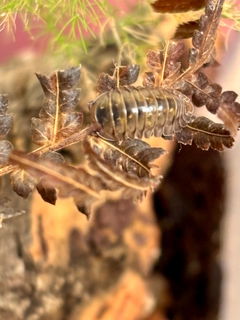
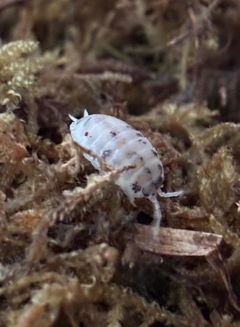
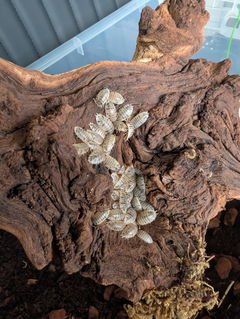
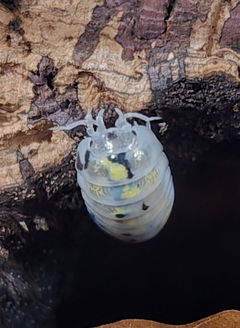
Gyna caffrorum is one of the more visually striking cockroaches available in the hobby. The common name "Chrome Cockroach" comes from their metallic, almost porcelain-like wing colouration—young adults display a distinctive blue-grey sheen that matures into silvery-white with mottled patterning. Combined with vivid orange legs and abdomen colouration that persists throughout life, they're genuinely attractive insects. Small, relatively easy to breed, and interesting to observe, they make an excellent introduction to the Gyna genus.
Species Information
-
Scientific name: Gyna caffrorum
-
Common names: Chrome Cockroach, Chrome Roach, Chrome Porcelain Roach, Ghost Porcelain Cockroach, Pink Cockroach
-
Origin: Southern Africa (South Africa, Mozambique, Zimbabwe, Botswana, Namibia, Angola, Swaziland)
-
Adult size: Males approximately 29–30mm, females approximately 34–35mm
-
Lifespan: Adults live 4–5 months; total lifecycle approximately 10–12 months
-
Difficulty: Easy
Appearance
Chrome Cockroaches go through a striking colour transformation as they develop:
-
Nymphs: Black and white peppered pattern, similar to the related species Gyna lurida
-
Young adults: Gorgeous blue-grey colouration with a metallic, almost chrome-like sheen
-
Mature adults: Silvery-white with mottled patterning on the wings
-
Throughout life: Vivid orange-red legs and abdomen colouration
-
Wings: Fully developed, patterned to camouflage with leaf litter
-
Body: Smooth, porcelain-like surface texture
Sexual dimorphism is noticeable—females are slightly larger and broader, while males are more slender and typically more active.
Behaviour
-
Burrowers: They spend much of their time buried in substrate—you won't always see them
-
Nymphs: Less shy than many Gyna species; more likely to be visible on the surface
-
Adults can climb: Smooth surfaces including glass and plastic (nymphs cannot climb)
-
Adults can fly: Capable of flight, especially when startled or at higher temperatures (nymphs cannot)
-
Fast: They're quick movers when disturbed
-
Nocturnal: Most active at night, though they may emerge during the day
-
Not heavy feeders: They eat less than you might expect for their size
The flight capability is worth emphasising—higher temperatures make adults more likely to take off. They're not constantly airborne, but an open enclosure at warm temperatures is asking for escapees.
Enclosure Setup
Escape Prevention
This is the single most important aspect of keeping Gyna caffrorum. Adults can both climb smooth surfaces and fly:
- Use containers with tight-fitting lids
- Apply a thick petroleum jelly (Vaseline) barrier around the top inside edge
- Some keepers prefer front-opening enclosures—when adults fly, they fly upward toward the ceiling rather than outward
- Be especially careful at higher temperatures when flight is more likely
The good news: escapees won't survive UK room conditions long-term. But preventing escapes is still essential.
Ventilation
Good airflow is important—they need moderate to high ventilation. This means:
- Multiple vents or mesh panels
- Avoid stagnant, overly humid conditions
- Balance ventilation with humidity retention
Substrate
As burrowers, they need adequate substrate depth:
- 5–10cm of substrate
- Coconut fibre (coco coir) works well as a base
- Mix with decaying hardwood leaves and rotten wood pieces
- Alternative: flake soil mixed with leaf litter (reported to increase breeding success and speed nymph development)
- Keep substrate slightly moist but not wet
Hides and Structure
- Cork bark pieces (horizontal and vertical)
- Leaf litter layer on top
- Branches for climbing and perching
- They use leaf litter both as cover and as food
Don't overcrowd the enclosure—they appreciate space. Containers developed more in length than height work well since they spend most time at substrate level.
Temperature
-
Range: 21–29°C (70–85°F)
-
Optimal for breeding: 25–28°C (77–82°F)
-
Room temperature: Acceptable—they're more tolerant than some Gyna species
-
Winter: Can be kept as low as 18–20°C during winter months without issues
Higher temperatures (upper 20s°C) encourage breeding activity but also make adults more likely to fly. Find the balance that works for your setup.
Humidity
-
Range: 50–70%
-
Substrate: Keep slightly moist, not wet
-
Important: Avoid excessively high humidity—this species doesn't thrive in very humid conditions and can experience moulting problems
-
Humidity gradient: Many Gyna keepers recommend keeping roughly half the substrate moist and half drier
-
Misting: Light misting once or twice weekly, allowing some drying between
Gyna caffrorum is more forgiving about humidity than some relatives like G. centurio, but "moderate" is the key word—they don't want constant dampness.
Diet
Chrome Cockroaches are omnivores and not particularly fussy eaters:
Staples:
- Leaf litter (main food source in the wild)
- Dry dog or cat food
- Fish flakes
Fresh foods:
- Fruits: banana, apple, mango (they particularly enjoy sweet, soft fruits)
- Vegetables: carrot, courgette, cucumber
Protein sources:
- Dog/cat biscuits
- Fish flakes
- Bee pollen
Avoid:
- Solanaceous plants (potato, tomato, pepper)
- Very acidic fruits (lemon, grapefruit, pomegranate)
They're not heavy eaters compared to some cockroach species. Protein is important—inadequate protein can slow development and may lead to cannibalism in some Gyna species, though caffrorum is less prone to this than some relatives.
Breeding
Gyna caffrorum breed readily in captivity—they're considered one of the easier Gyna species:
-
Reproduction: Ovoviviparous—females retain eggs internally and give birth to live nymphs
-
Litter size: Potentially large—some sources report up to 200 nymphs per clutch, though typical numbers are lower
-
Birth pattern: Females don't usually give birth to all nymphs at once; they produce several smaller litters from one ootheca over a few months
-
Ootheca: Females typically produce only one ootheca in their lifetime, which they retain internally
-
Development: Nymphs take approximately 4–6 months to reach adulthood
-
Adult lifespan: 4–5 months (females tend to live slightly longer than males)
Breeding Tips
- Keep temperatures in the optimal range (25–28°C)
- Ensure adequate protein in the diet
- Don't overcrowd—give them space
- Maintain the humidity gradient (half moist, half drier)
- Males typically mature before females—this is normal for the genus
Using flake soil in the substrate has been reported to increase breeding success and speed up nymph development, if you want to optimise production.
Care Summary
-
Temperature: 21–29°C (25–28°C optimal for breeding)
-
Humidity: 50–70%, moderate—avoid excess moisture
-
Substrate: 5–10cm deep, coconut fibre with leaves and rotten wood
-
Ventilation: Good airflow required
-
Diet: Leaf litter, fruits, vegetables, protein sources
-
Escape prevention: Critical—adults climb and fly
-
Breeding: Ovoviviparous, potentially large litters, 4–6 month development
-
Difficulty: Easy
Comparison with Other Gyna Species
Gyna caffrorum is often recommended as a starter species for the genus:
-
Easier than G. centurio: More forgiving of humidity and temperature variations
-
Easier than G. capucina: The "Pink Roach" is notoriously difficult; caffrorum is far more reliable
-
Similar to G. lurida: Both are relatively straightforward, with similar nymph colouration
If you're interested in the Gyna genus but haven't kept them before, caffrorum is a sensible starting point before moving to more demanding species.
Feeder Use
Chrome Cockroaches can work as feeders due to their manageable size and breeding rate. However:
- Their attractive appearance means many keepers prefer them as display animals
- Adult climbing and flight ability makes colony management more demanding than non-climbing species
- Other species (dubia, red runners) may be more practical for pure feeder production
They're popular in bioactive setups where their burrowing behaviour and appearance add interest beyond simple clean-up crew function.
Who Are They For?
Gyna caffrorum suit:
-
Beginners to the Gyna genus: More forgiving than most relatives
-
Display keepers: The colour progression from nymph to adult is genuinely attractive
-
Bioactive enthusiasts: Good size, interesting behaviour, visually appealing
-
Experienced keepers: Low-maintenance compared to many exotic species
The main requirement is secure housing—if you can prevent escapes, they're straightforward to keep and breed. Their tolerance for varying conditions makes them more suitable for UK room temperatures than some tropical species, though supplemental heating will encourage breeding.