Pak Chong Isopods (Cubaris sp.)
Care Info:
 ORIGIN
 TEMP
TEMP
 HUMIDITY
 LENGTH
 DIFFICULTY
 RARITY
- Free shipping over £65
- Low stock - 2 items left
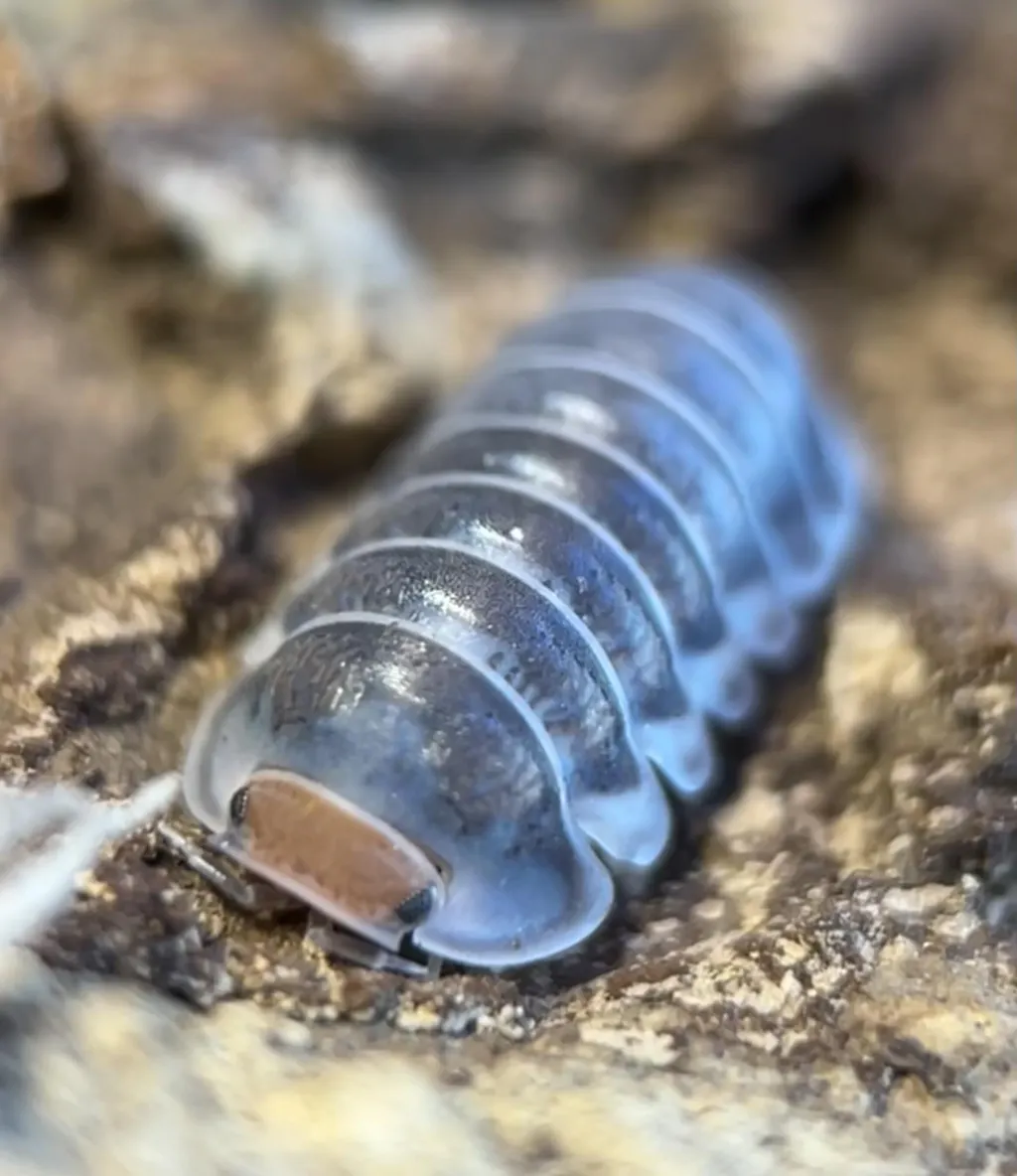
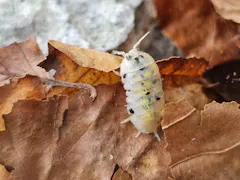
Cubaris sp. "Pak Chong" is one of the most distinctively-coloured Thai cave isopods in the UK hobby — a tricoloured species with blue-grey body tones, white frilled edges along each segment, and vivid orange-to-red colouration on the rear (and sometimes face) that creates a striking three-zone pattern. The colour scheme has been compared to Bernese mountain dog markings, which captures the distribution reasonably well: dark central body, white edging, and warm rust accents.
Named after their collection locality — the Pak Chong district in Nakhon Ratchasima Province in northeastern Thailand — these isopods originate from the limestone karst formations and caves of the region. What makes them particularly appealing in the UK hobby is the combination: genuinely striking visual appeal paired with relatively forgiving care compared to ultra-demanding Thai Cubaris like Rubber Duckies or White Tigers. They tolerate humidity variation better than the most sensitive species, breed more readily, and reward attentive husbandry without punishing minor mistakes the way premium-tier Cubaris can.
Available in groups of 5, 10, or 20. Captive-bred stock from established UK colonies. Currently on sale — exceptional value for an attractive Thai cave Cubaris. Mixed sizes included to give your colony immediate breeding potential.
Quick Care Summary
- Scientific Name: Cubaris sp. "Pak Chong"
- Common Names: Pak Chong Isopod, Cubaris Pak Chong
- Family: Armadillidae
- Origin: Pak Chong district, Nakhon Ratchasima Province, northeastern Thailand — limestone karst caves
- Adult Size: 15–18 mm
- Lifespan: 2–4 years typical
- Difficulty: Low to Medium — among the more forgiving Thai cave Cubaris
- Temperature: 21–32°C (UK room temperature works year-round)
- Humidity: 60–75% — moderate, tolerates more variation than ultra-sensitive Cubaris
- Ventilation: Medium — good airflow important (cave species require it)
- Conglobation: Yes — rolls into a tight ball when disturbed
- Behaviour: Social, primarily nocturnal, active climbers, complex interaction patterns
- Breeding: Reasonable to good for a Thai cave species — described as "great breeders" once established
What Makes Pak Chong Isopods Special
Several factors have made Pak Chong one of the more sought-after Thai Cubaris in the UK hobby:
The tricoloured appearance is genuinely striking. Where most isopods display uniform colouration or simple banding, Pak Chong show three distinct colour zones — blue-grey central body, crisp white frilled segment edges, and vivid orange-to-red on the rear segments. The Bernese mountain dog comparison isn't just marketing; the colour distribution genuinely resembles the dog breed's classic markings. Some individuals also display orange on the face for additional visual interest.
More forgiving than premium Thai Cubaris. This is the key practical advantage. Where species like Rubber Ducky and Lemon Blue can be notoriously sensitive to humidity variation, temperature fluctuations, and minor husbandry mistakes, Pak Chong handle conditions changes better and breed more readily. They're not bulletproof — they're still Cubaris requiring appropriate care — but they're among the more accessible Thai cave species available.
Reasonable breeding for a cave Cubaris. Customer feedback consistently describes Pak Chong as "great breeders" once established. They don't breed explosively like Cubaris murina, but they're noticeably faster than Rubber Duckies or other demanding cave species. A starter colony of 10–20 will produce visible mancae within 2–3 months under good conditions.
Complex social behaviour worth observing. Pak Chong display interesting interaction patterns — nudging each other with intense antenna flickering (apparent communication), moisture-sharing behaviour to help colony members maintain hydration, and grouping during defensive responses. This makes them more interesting to observe than typical isopods that mostly hide.
Interesting temperature adaptations. When enclosure temperatures rise, they slow movement to conserve energy. In cooler conditions, they become more active, moving quickly across longer distances seeking food and shelter. This behavioural plasticity helps them adapt to varying conditions and contributes to their relative hardiness.
Conglobation. Like all Cubaris, they roll into tight defensive balls when threatened — and may squeeze together in groups for added protection. The behaviour combined with their tricoloured pattern makes them genuinely engaging to observe.
Active climbers. They use vertical space in enclosures, scaling cork bark, branches, and even smooth surfaces. This means escape-proof lids are essential, but also means you can provide vertical habitat structure they'll genuinely use.
How Pak Chong Compare to Other Thai Cubaris
If you're choosing between Thai Cubaris species, here's how Pak Chong fit in:
- vs Rubber Ducky: Rubber Duckies are the iconic premium Thai Cubaris — larger, more expensive, slower-breeding, and more demanding. Pak Chong offer comparable Thai cave aesthetics at more accessible pricing with notably more forgiving care. For keepers wanting Thai Cubaris without ultra-premium husbandry, Pak Chong are the more sensible choice.
- vs Panda King: Both are accessible Cubaris with reasonable breeding rates. Panda Kings have bold black-and-white panda patterning; Pak Chong have tricoloured blue-grey/white/orange. Similar difficulty and pricing — choose based on visual preference.
- vs Cappuccino Isopods: Cappuccinos have marbled coffee-and-cream patterning at larger size (20 mm). Pak Chong are slightly smaller with the tricoloured cave Cubaris look. Both sit in the "more advanced but rewarding" tier — different aesthetics for different preferences.
- vs Red Panda King: Red Panda Kings have vivid red-and-white banding (recessive morph). Pak Chong have the natural blue/white/orange tricoloured pattern. Different visual styles with similar care difficulty.
Browse the full Cubaris collection to compare all options.
Setting Up the Enclosure
A terrarium or sealed container with good ventilation works well for a starter colony of 5–10. Unlike some humidity-dependent Cubaris, Pak Chong are cave species that genuinely need airflow — restricted ventilation causes more problems than it solves for this species.
Secure lid is essential. Pak Chong climb effectively and will escape through any gaps in the enclosure. Use a properly fitted lid with covered ventilation holes. They're not as climbing-aggressive as Ardentiella mancae, but they're persistent enough that any escape route gets exploited.
Living soil terrariums or vivariums suit them well. Browse our accessories collection for appropriate enclosures, ventilation, and other essentials.
Substrate — Limestone Essential
Like other Thai cave Cubaris, Pak Chong originate from limestone karst environments. Calcium-rich substrate isn't optional — it directly affects moulting health, breeding success, and overall colony performance.
Substrate depth: At least 8 cm (3 inches). Pak Chong burrow into substrate for security and humidity regulation, typical of cave-dwelling Cubaris.
Substrate composition:
- Organic topsoil base (pesticide-free)
- Sphagnum peat moss mixed in for structure and moisture retention
- Generous crushed limestone incorporated throughout — essential for cave species
- Decaying hardwood pieces and rotting white wood
- Calcium sources mixed throughout (eggshells, limestone, oyster shell)
- Optional protein additions: bat guano, shrimp meal
Top layer: Generous leaf litter is essential — they love it. Multiple cork bark hides spread throughout, flat stones or limestone pieces for additional cover, and moss patches for moisture retention.
Humidity and Ventilation Balance
This is where Pak Chong care differs most clearly from typical Cubaris. Maintain humidity at 60–75% — moderate rather than the very high humidity most Cubaris require.
Critical balance: As cave species, Pak Chong need good ventilation alongside their humidity. Restricted airflow causes mould growth and breeding problems even when humidity is technically correct. Provide approximately 5 cm of space above substrate for air circulation, plus adequate ventilation holes on the enclosure sides.
Moisture gradient: Maintain a moisture gradient — one side damper with moss patches, the other side drier. Don't let the enclosure become uniformly wet (causes mould) or completely dry (causes moulting failures). Pak Chong handle humidity variation better than ultra-sensitive species, but they still benefit from gradient choice rather than uniform conditions.
Keep the enclosure in dim conditions reflecting their cave origins — away from direct sunlight and bright light sources.
Temperature
21–32°C is the comfort range — notably wider than many Cubaris species. Room temperature in UK homes typically works year-round without supplementary heating. They tolerate higher temperatures better than some sensitive Cubaris but extreme heat or cold can be harmful — maintain moderate, stable temperatures.
Their behavioural temperature response is worth noting: warmer conditions slow them down (energy conservation), cooler conditions make them more active. Use this as a husbandry indicator — if your colony seems unusually sluggish, check whether your enclosure has drifted warmer than usual.
Diet
Pak Chong are detritivores with straightforward but important dietary needs:
- Primary diet (always available — abundance is key): Hardwood leaf litter (their main dietary staple — provide generously), decaying hardwood, rotting wood, cork bark
- Vegetables (1–2x weekly): Potato, carrot, squash, courgette, fresh moss (they particularly enjoy this), mushrooms
- Protein (essential — 1–2x weekly): Fish flakes, freeze-dried shrimp (reportedly a favourite), shrimp meal, dried daphnia, bat guano. Browse our accessories collection for the full range of protein supplements.
- Calcium (essential — non-negotiable for cave species): Cuttlefish bone, crushed limestone, eggshells, oyster shell. Incorporate calcium sources into the substrate as well as offering them separately. Their cave origins mean they're adapted to calcium-rich environments.
Feeding approach: Provide food in multiple locations to ensure all colony members can access nutrition. Abundant leaf litter forms the foundation; protein and fresh vegetables supplement weekly. Don't overfeed — uneaten food spoils quickly and attracts pests.
Breeding
Pak Chong are described by experienced keepers as "great breeders" for a Thai cave Cubaris — better than many of their demanding relatives. Once established, colonies reproduce frequently and reliably.
Breeding rate: Moderate. Not as explosive as Cubaris murina, but noticeably faster than Rubber Duckies or similar demanding species. A starter colony of 10–20 will typically produce visible mancae within 2–3 months under good conditions.
For breeding success:
- Stable temperatures within the comfort range
- Moderate humidity (60–75%) with good ventilation balance
- Adequate calcium availability throughout the enclosure
- Regular protein supplementation
- Deep substrate (8+ cm) for security and burrowing
- Minimal disturbance during establishment
- Larger starter groups (10+) provide better genetic diversity
Key reminder: Cave species require good ventilation — stagnant overly-humid conditions inhibit breeding even when other conditions are correct. The balance between adequate moisture and airflow is what separates successful Pak Chong colonies from failed ones.
Pair With Springtails
Add a thriving springtail culture to any Pak Chong setup. Even though their moderate humidity is less mould-prone than tropical Cubaris setups, springtails handle the microbial cleanup that supports healthy colony conditions. They coexist peacefully with Pak Chong and form an essential cleanup partnership.
Bioactive and Display Use
Pak Chong work well in bioactive setups suited to their requirements:
Best suited for:
- Tropical vivariums with moderate humidity (60–75%)
- Terrariums with good ventilation
- Setups where attractive cleanup crew adds visual interest
- Display-focused enclosures showcasing tricoloured isopods
Less ideal for:
- Arid setups (too dry for cave species)
- Extremely humid tropical setups with poor ventilation (need airflow)
- Open-top enclosures (they climb and escape)
- Mixed setups with very aggressive species
Who Should Buy Pak Chong Isopods?
Ideal for:
- Keepers with basic Cubaris experience ready to step up to Thai species
- Anyone wanting visually striking Thai cave isopods at moderate prices
- Collectors building Thai Cubaris collections wanting a more accessible option
- Bioactive setup owners needing attractive cleanup crew
- Patient keepers willing to maintain proper ventilation/humidity balance
- Those preferring natural tricoloured patterns over selectively-bred morphs
Not ideal for:
- Complete beginners with no isopod experience — start with hardier species first
- Keepers wanting either very dry or very humid conditions
- Those unable to provide good ventilation
- Open enclosures (they climb and escape)
- Anyone expecting bulletproof care like hardy Porcellio species
Realistic Expectations
Pak Chong require some establishment time before breeding really takes off. Allow 1–2 months for new colonies to settle before expecting significant breeding activity. Don't panic during this initial period — focus on stable conditions and let them adapt.
Pattern intensity varies between individuals. Some specimens show particularly vivid tricoloured contrast; others are more subtly marked. This variation is natural and gives serious keepers something to selectively breed for if they want to push the morph in a particular direction.
Don't expect the explosive breeding of hardy Porcellio or the extreme sensitivity of demanding cave species like Rubber Duckies. Pak Chong sit in the comfortable middle ground — manageable as a stepping stone into Thai Cubaris keeping, or simply enjoyable isopods in their own right.
Customer reviews consistently mention them as "super active" and "great breeders" — both positive signs that Pak Chong reward proper husbandry with engaged, observable, reproductively-active colonies.
Building Your Setup
A complete Pak Chong setup needs proper substrate components, abundant calcium-rich materials (especially limestone), generous leaf litter, and varied protein supplements. Browse our accessories collection for everything you need — enclosures, ventilation, leaf litter, calcium (cuttlebone, limestone), and protein supplements (daphnia, freeze-dried shrimp, fish flakes, Repashy gel premixes).
For a deeper guide to Cubaris species, see our blog post on 23 different types of Cubaris isopods you should know about. Browse the full Cubaris collection for more options.
Use collapsible tabs for more detailed information that will help customers make a purchasing decision.
Ex: Shipping and return policies, size guides, and other common questions.