Multicolored isopod on a dark surface

R13 Ducky Isopods (Cubaris sp.)

Care Info:

Origin icon ORIGIN
ROUTE 13 MALAYSIA
Temperature icon TEMP
18-26 ℃
Humidity icon HUMIDITY
70-85 %
Length icon LENGTH
10-12 mm
Difficulty icon DIFFICULTY
MEDIUM
Rarity icon RARITY
RARE
Regular price£100.00
/
Tax included. Shipping calculated at checkout.

Quantity
  • Free shipping over £65
  • Low stock - 1 item left
  • Backordered, shipping soon

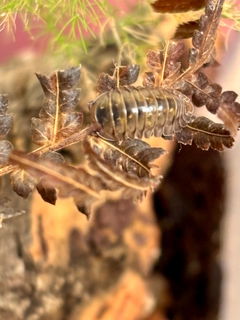
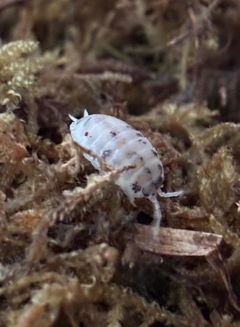
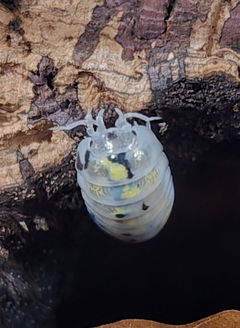
R13 Rubber Isopods are properly one of the more sought-after Cubaris Rubber Ducky lineages in the UK hobby — a specific Malaysian bloodline named after Route 13 in Negeri Sembilan state, Malaysia, where the original collection was made. R13 Ducky are smaller and more variably-coloured than the famous standard Thai Rubber Duckies, with bold yellow "head" markings, compact body proportions, and properly variable tri-colouration that genuinely lives up to the lineage's reputation. For collectors building a focused Rubber Ducky display covering different geographic lineages and bloodlines, R13 represents one of the more distinctive Malaysian options.

This is part of our wider Cubaris collection and sits alongside our other Rubber Ducky and premium Cubaris products — including the famous Helios Rubber Ducky, Albino Rubber Ducky, and other premium Cubaris morphs like Cherry Blossom, Rose Quartz, Black Diamond, and Crazy Horse. For keepers familiar with the standard Rubber Ducky and wanting to explore lineage diversity, R13 offers genuinely different visual character within the same iconic morph family.

One honest framing point worth understanding up front. Despite the broad "Rubber Ducky" branding, R13 are properly an intermediate-to-advanced keeper species rather than beginner-friendly. Like most premium Cubaris, they breed more slowly than common isopods, demand stable husbandry, and reward attention to ventilation, humidity gradient, and dietary variety. We recommend prior experience with hardier Cubaris (like our beginner-friendly Cubaris options) before stepping into R13 Ducky territory. To set things up properly from the start, browse our accessories collection for substrate components, calcium sources, and other items this species depends on.

Quick Care Summary

  • Scientific Name: Cubaris sp. "R13 Ducky" — sold at genus level only. Species-level identification of the underlying biological species isn't formally established (typical for the Cubaris hobby trade)
  • Common Names: R13 Rubber Isopod, R13 Ducky, R13 Rubber Ducky, Route 13 Ducky
  • Family: Armadillidae (order Isopoda, suborder Oniscidea)
  • Genus context: Cubaris Brandt, 1833 — properly the most prominent genus in the premium isopod hobby. Contains at least 100 described species; many hobby morphs (including all Rubber Duckies) are undescribed species sold at genus level. The Cubaris hobby has expanded rapidly since the original Rubber Ducky was discovered in 2017
  • Origin: Malaysia — specifically Negeri Sembilan state, alongside Route 13 (hence the lineage name). Captive-bred lineages in the UK hobby trace back to Malaysian source populations
  • Adult Size: Approximately 15–18 mm — smaller than many other Rubber Ducky varieties
  • Lifespan: 2–3 years typical in good captive conditions
  • Difficulty: Medium to advanced — not a beginner species. Prior experience with premium Cubaris recommended
  • Temperature: 18–26 °C — slightly cooler end of Cubaris range. UK ambient room temperature works properly well most of the year
  • Humidity: 75–85% with strong ventilation. Stagnant humid air is properly the primary cause of Cubaris colony failures
  • Ventilation: Medium to high cross-directional ventilation
  • Appearance: Variable tri-colouration with bold yellow "head" markings. Compact body shape. The duck-like face with prominent yellow facial markings gives the lineage its character. Individual variation is properly normal and genuinely part of the appeal
  • Behaviour: Standard Cubaris — surface-active in low light, hide during day, social/gregarious in colonies
  • Diet: Leaf litter, rotting hardwood, vegetables, fruit; protein supplements (notably Cubaris are more protein-hungry than many other genera); constant calcium access
  • Breeding: Slower than common isopods — smaller broods, longer intervals, slower growth to maturity. Properly the standard Cubaris reproductive pattern
  • Rarity: Rare in UK hobby — distinct Malaysian bloodline less commonly available than standard Thai Rubber Duckies

What Makes R13 Special

The Route 13 heritage. The "R13" name is properly geographic — derived from Route 13, the road in Negeri Sembilan state of Malaysia where the original collection was made. This is genuinely different from the standard "Rubber Ducky" which was discovered in 2017 in Thai limestone caves. The R13 lineage represents a properly distinct Malaysian bloodline rather than a colour variant of the standard Thai species — different geographic origin, different population genetics, different visual character.

The variable tri-colouration. R13 Ducky show genuinely variable colouration across individuals — the "tri-colour" character means each animal can show somewhat different patterns and colour expressions. The bold yellow "head" markings are the diagnostic feature (this is what creates the "rubber duck face" appearance), but body colouration and pattern vary properly across the colony. For keepers who appreciate individual variation as part of the hobby interest, R13 delivers — no two animals look exactly identical.

The compact body proportions. R13 Ducky are properly smaller than many other Rubber Ducky varieties — adult size around 15–18 mm vs the larger 18–22 mm of standard Thai Rubber Duckies. The compact proportions give the morph its "compact endearing appearance" character that specialist breeders specifically highlight. The smaller body emphasises the proportionally prominent yellow head markings.

The position in the Rubber Ducky lineage family. Within the broader Rubber Ducky morph cluster, R13 occupies a properly distinctive niche:

  • Standard Rubber Ducky: Thai limestone cave origin, discovered 2017, larger body, bold yellow face markings
  • R13 Ducky (this lineage): Malaysian Route 13 origin, smaller compact body, variable tri-colouration with prominent yellow head markings
  • Helios Rubber Ducky: Selectively-bred line with enhanced colouration
  • Albino Rubber Ducky: Pigment-reduced morph variation

For collectors building a focused Rubber Ducky display covering geographic lineages, R13 represents the Malaysian variant within the broader morph family. Keepers familiar with standard Rubber Ducky will find R13 properly different — same iconic morph family, distinct individual character.

The Malaysian biogeography. Most premium Cubaris in UK hobby trade originate from Thailand (Pak Chong region, limestone caves). The R13 lineage opens up Malaysian source population territory — properly different geographic origin from the standard Thai species. Negeri Sembilan state in Peninsular Malaysia has distinct ecological character from Thai limestone karst zones, even within the broader Southeast Asian Cubaris biogeography. For keepers interested in geographic origins of hobby species, R13 represents proper diversity within the Cubaris catalogue.

The collector value. As a SUPER RARE designation per specialist breeders, R13 Ducky represent established but uncommon stock in the UK hobby. Less widely-bred than standard Rubber Duckies, the lineage maintains its rarity and visual distinctiveness within the broader Cubaris market.

The day-and-night observability. Like all Cubaris, R13 Ducky are properly social/gregarious — colonies show natural foraging and gathering behaviour. With proper setup and gentle low-light conditions, the animals are observable during evening hours and after misting. The bold yellow head markings catch the eye even in low light, making this one of the more visually distinctive observation experiences in the Cubaris hobby.

About the Name and the R13 Lineage

The naming situation properly deserves transparency.

  • Cubaris sp. "R13 Ducky": Sold at genus level only with lineage designation. The species-level identification of the underlying biological species isn't formally established — typical for Cubaris hobby trade
  • "R13" designation: Geographic reference to Route 13 in Negeri Sembilan state, Malaysia — the location where the original captive-breeding stock was collected. Not a formal taxonomic designation; the lineage name reflects collection locality rather than scientific classification
  • "Rubber Ducky" common name: References the duck-like face created by the bold yellow head markings. The original Cubaris sp. "Rubber Ducky" was discovered in 2017 in Thai limestone caves and became the species that single-handedly transformed the isopod hobby — Wikipedia describes it as the species that drove the rapid expansion of premium isopod keeping. The R13 lineage shares the iconic "rubber duck face" appearance but represents a distinct geographic population
  • Distinguishing R13 from standard Rubber Ducky:
    • Standard Rubber Ducky: Thai limestone caves, larger body (~20 mm), more uniform yellow head markings
    • R13 Ducky (this product): Malaysian Route 13 origin, smaller body (~15–18 mm), variable tri-colouration with prominent yellow head markings
  • Genus Cubaris Brandt, 1833: Type species Cubaris murina. Contains at least 100 described species plus many undescribed hobby morphs. Wikipedia describes the genus as a "wastebasket taxon" in recent years — many species placed in the genus despite not fitting the original description. Researchers have recommended comprehensive revision of the genus. For UK keepers, this means accepting that many "Cubaris sp." morphs may eventually be reclassified to other genera as taxonomy catches up with hobby practice
  • Family Armadillidae: Shared with our Ardentiella products. Most premium tropical isopods in the UK hobby belong to this family

Should You Start Here?

Honestly — probably not, if this is your first isopod. R13 Rubber Isopods are properly an intermediate-to-advanced commitment in both setup complexity and species sensitivity. While the difficulty rating is sometimes described as "Medium," in practice the Cubaris husbandry approach (humidity gradient, strong ventilation, dietary variety, calcium availability, slow breeding tolerance) is properly demanding compared to beginner species.

If you've kept Cubaris species successfully — including more accessible Cubaris morphs — you have the right experience for R13 Ducky. The husbandry overlaps substantially with other premium Cubaris.

If you're coming from Porcellio scaber or Armadillidium and want to step up, consider starting with a more affordable Cubaris morph first to learn the tropical-setup approach before committing to R13 Ducky.

For beginners, our guide to setting up and selecting your first isopods covers starter species and setup basics. We also have a dedicated R13 Rubber Ducky care guide with additional husbandry detail.

Setting Up the Enclosure

A modest enclosure works for R13 Ducky — a 5–10 litre plastic tub or small glass enclosure suits a starter group of 5–10 animals comfortably. Both plastic and glass enclosures work; the humidity requirements are properly achievable in either.

Strong ventilation is properly essential. Cross-ventilation through mesh panels on opposing sides creates the airflow that prevents stagnant humid conditions. Don't compromise ventilation to maintain humidity — for Cubaris, ventilation needs to be balanced rather than sacrificed.

Provide proper structure:

  • Cork bark slabs in various sizes — both flat hide pieces and vertical surfaces
  • Pieces of decaying hardwood — both food and habitat
  • Generous layer of hardwood leaf litter on the surface — properly essential
  • Limestone or sedimentary rock pieces — provides calcium and matches natural Southeast Asian karst zone habitat
  • Sphagnum moss patch in one corner — provides a moisture refuge with humidity gradient

Browse our accessories range for cork bark, leaf litter, and natural cover options.

Substrate

Standard premium Cubaris substrate approach works properly well for R13 Ducky:

  • Coconut fibre (coir) or organic topsoil as the moisture-retaining foundation
  • Flake soil mixed in for nutrition
  • Crumbled decaying hardwood mixed throughout
  • Generous surface layer of hardwood leaf litter — magnolia and oak both work properly well
  • Springtails inoculated to consume excess moisture and prevent mould — properly important alongside Cubaris
  • Calcium sources — cuttlebone, crushed eggshell, limestone. Our calcium options cover the full range. Limestone is particularly relevant given the Cubaris natural habitat association with limestone formations

Substrate depth: 5 cm minimum. Maintain a humidity gradient — properly damp at one end, moderate at the other. Animals choose their preferred moisture level.

Humidity and Temperature

Maintain humidity at 75–85% with strong ventilation. The substrate should hold moisture without dripping when squeezed. The gradient approach (damper at one end, drier at the other) is properly more important than uniform humidity — gives animals choice of microclimate.

Temperature should be 18–26 °C — properly within UK ambient room temperature throughout most of the year. R13 Ducky tolerate the slightly cooler end of Cubaris range better than some Thai morphs, properly practical for UK keepers without specialist heating.

Through UK winters, if your home runs below 18 °C, a low-wattage heat mat on a thermostat, mounted on the side of the enclosure (not underneath), provides supplementary warmth.

Diet

R13 Ducky accept a standard premium Cubaris diet:

  • Hardwood leaf litter — the dietary foundation. Browse our accessories collection for ready-prepared leaf litter
  • Rotting hardwood — both food and habitat
  • Fresh vegetables — cucumber, courgette, sweet potato, carrot — small amounts. Notably Cubaris prefer some fresh foods over others; offer variety
  • Protein — fish flakes, dried shrimp, freeze-dried bloodworm. Cubaris are properly more protein-hungry than most other isopod genera — offer protein once or twice a week rather than the less-frequent approach used for other genera
  • Moss and lichen — properly eaten and appreciated
  • Calcium — properly essential. Cuttlebone, limestone, oyster shell, crushed eggshell. Our calcium options cover the full range

Remove uneaten fresh food within 24 hours — in warm humid Cubaris enclosures, food spoils quickly and can attract pest invertebrates.

Breeding

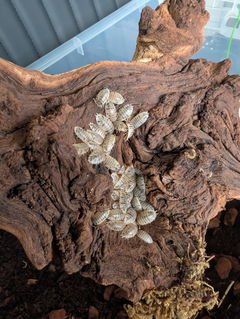
R13 Ducky breed more slowly than common isopods — properly the standard Cubaris pattern. Expect smaller broods (often just a few mancae at a time), longer intervals between broods, and slower growth to sexual maturity. This is normal — it's part of why Cubaris morphs command premium pricing in the hobby, and it's why starting with 5+ animals gives you a properly reasonable foundation without expecting rapid colony growth.

Established R13 Ducky colonies become genuinely self-sustaining over 12–18 months with patient husbandry. Don't expect overnight colony expansion.

For breeding success:

  • Stable conditions — temperature, humidity gradient, ventilation
  • Mixed-age starter group of 5+ animals — provides best chance of both sexes being represented
  • Continuous leaf litter and decaying wood supply
  • Regular protein supplementation (Cubaris are more protein-hungry than other isopod genera)
  • Calcium consistently available — properly essential
  • Springtail cleanup crew established from day one
  • Minimum disturbance — settled colonies breed more reliably
  • Maintain pure lineage if you want to preserve the R13 character — don't mix with standard Rubber Ducky or other Cubaris morphs

How R13 Ducky Compares to Other Cubaris Morphs

Within our Cubaris catalogue, R13 Ducky occupies a properly distinct position. Compared to other Cubaris morphs in our range:

vs Helios Rubber Ducky: Both Rubber Ducky morphs. Helios is a selectively-bred line with enhanced colouration; R13 is a geographic lineage from Malaysian Route 13 with variable tri-colouration. Different origin philosophy — colour-line selective breeding vs locality-based bloodline.

vs Albino Rubber Ducky: Both Rubber Ducky morphs. Albino is pigment-reduced variation; R13 is full-colour Malaysian lineage with bold yellow head markings against variable body colouration. Properly different visual aesthetic.

vs Cherry Blossom and Rose Quartz: Different Cubaris morph families entirely — these are Red Pak Chong-derived lineages with pink colouration. R13 is Rubber Ducky family with yellow head markings. Different visual character, similar husbandry requirements.

vs Crazy Horse and Black Diamond: Different Cubaris morph families. Crazy Horse and Black Diamond are pattern-focused morphs; R13 is colour-and-pattern combined with the iconic Rubber Ducky face. Properly distinct visual options within the same genus.

Who Should Buy R13 Rubber Isopods?

Ideal for:

  • Experienced isopod keepers with established success in premium Cubaris
  • Display enthusiasts drawn to the iconic Rubber Ducky face with R13's distinctive Malaysian character
  • Collectors building a focused Rubber Ducky display covering geographic lineages and bloodlines
  • Anyone interested in Malaysian invertebrate biodiversity and Southeast Asian Cubaris diversity
  • Keepers in cooler UK homes — the 18–26 °C preference suits standard UK ambient
  • Patient keepers comfortable with slow Cubaris breeding rather than fast-growing colonies
  • Setups with established ventilation engineering and humidity gradient capability
  • Anyone who appreciates individual variation as part of the hobby interest — R13 shows genuine tri-colour variability

Not ideal for:

  • First-time isopod keepers — start with easier species before stepping into premium Cubaris
  • Anyone expecting fast-breeding colonies — Cubaris reproductive pace is properly slow
  • Setups with poor ventilation or no humidity gradient
  • Anyone unable to maintain consistent calcium availability and protein-rich diet
  • Keepers wanting uniform appearance across the colony — R13 shows genuine individual variation

Realistic Expectations

The variable tri-colouration is genuinely real. R13 Ducky show meaningful colour variation across individuals — this isn't uniformity, and individual differences are properly part of the lineage's character. Across the colony as a whole, the bold yellow head markings are consistent; body colouration and pattern variation are genuine and normal.

They're smaller than standard Rubber Duckies. Adult R13 Ducky top out around 15–18 mm vs the 18–22 mm of standard Thai Rubber Duckies. The compact proportions emphasise the proportionally prominent yellow head markings, properly delivering the "rubber duck face" character but at smaller scale.

Colony establishment takes time. Even CB R13 Ducky need an adjustment period when settling into a new enclosure. Expect 4–8 weeks for the colony to acclimate before active breeding begins. Don't panic if you don't see immediate reproduction; the species needs time to settle into specific conditions.

Cubaris breeding is properly slow. Don't expect rapid colony growth. Starting with 5 animals gives you a reasonable foundation; expecting noticeable population growth within 6 months is genuinely unrealistic. Established colonies become self-sustaining over 12–18 months — patience is properly part of the Cubaris keeping experience.

Protein-hungry biology is real. Cubaris are properly more protein-dependent than other isopod genera. Skipping protein supplementation leads to slower growth, reduced breeding success, and potential health issues over time. This isn't optional supplementation — it's part of meeting the species's nutritional needs.

Ventilation matters. Stagnant humid air kills more Cubaris colonies than any other husbandry issue. The strong-ventilation-plus-humidity-gradient approach isn't optional for premium Cubaris — it's properly the foundation of successful keeping.

Lineage purity requires deliberate breeding. If you mix R13 Ducky with standard Rubber Ducky or other Cubaris morphs, offspring colouration becomes unpredictable. Maintaining the R13 character requires keeping the lineage separate from other morphs — proper consideration for collectors who want to preserve the Malaysian heritage.

UK escape isn't an environmental risk. UK outdoor conditions are too cool and seasonally variable for Malaysian-origin tropical Cubaris to establish wild populations. Recapture escapees promptly as colony preservation rather than environmental concern.

Use collapsible tabs for more detailed information that will help customers make a purchasing decision.

Ex: Shipping and return policies, size guides, and other common questions.

You may also like


Recently viewed