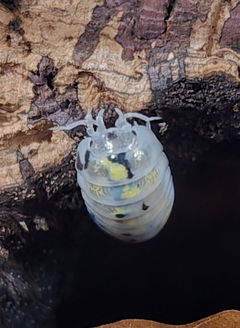
Sapphire Flower Cockroach (Eucorydia Yasumatsui)

Sapphire Flower Cockroach (Eucorydia yasumatsui) for Sale

Care Info:

Origin icon ORIGIN
YAEYAMA ISLANDS, OKINAWA PREFECTURE, JAPAN
Temperature icon TEMP
22-28 ℃
Humidity icon HUMIDITY
60-75 %
Length icon LENGTH
12-15 mm
Difficulty icon DIFFICULTY
MEDIUM
Rarity icon RARITY
UNCOMMON
Regular price£10.00
/
Tax included. Shipping calculated at checkout.

Quantity
  • Free shipping over £65
  • Low stock - 2 items left
  • Backordered, shipping soon

The Sapphire Flower Cockroach is one of the most genuinely jewel-like invertebrates available in the UK hobby — a small Japanese species with a solid metallic sapphire-blue body offset by bright orange markings on the wing covers. The colour is striking enough that the species is frequently mistaken at first glance for an ornamental beetle rather than a cockroach. Combined with its diurnal habits, manageable size, and gentle non-climbing nature, this is a properly approachable entry into the genus Eucorydia — the so-called "flower roaches" of East Asia, named for their tendency to visit flowering plants in the wild.

This is part of our wider cockroach collection and pairs naturally with our larger Giant Flower Cockroach (E. dasytoides) for keepers building a focused Eucorydia cluster. For collectors drawn to iridescent metallic species, both Eucorydia species belong alongside our Emerald Cockroach (Pseudoglomeris magnifica) as a curated jewel-roach trio. Among them, E. yasumatsui is the smallest and the most accessible — the right starting point for the genus.

One honest framing point up front. E. yasumatsui is genuinely manageable but it isn't a quick-establishing species. Larval development is properly slow — published data show 18–22 months from hatching to adult in some conditions, though warmer setups (24–28 °C) move things along noticeably. This is a long-term display species rather than a fast-breeding colony. To set things up properly from the start, browse our accessories collection for the cork bark, leaf litter, decaying wood, and supplementary foods this species depends on.

Quick Care Summary

  • Scientific Name: Eucorydia yasumatsui Asahina, 1971
  • Common Names: Sapphire Flower Cockroach, Sapphire Cockroach, Yasumatsu's Flower Roach
  • Family: Corydiidae (subfamily Corydiinae); historically classified under Polyphagidae
  • Origin: Yaeyama Islands, Okinawa Prefecture, Japan (subtropical Ryukyu Archipelago)
  • Adult Size: 12–15 mm — the smallest of the Eucorydia in UK culture
  • Lifespan: Adults live a few months after maturity; full life cycle including larval development spans 18–22 months in published studies (faster in warmer setups)
  • Difficulty: Medium — manageable husbandry, but ventilation balance and patience with slow development matter
  • Temperature: 22–28 °C; warmer end (25–28 °C) supports faster development and better breeding
  • Humidity: Moderate — substrate kept lightly moist with significant dry zones; air humidity around 60–70%
  • Ventilation: High — this is critical and often underestimated; poor ventilation can collapse a colony
  • Climbing: Non-climbing — does not scale smooth vertical surfaces
  • Flying: Adults are technically capable of flight but rarely fly in captivity
  • Activity: Diurnal (day-active) — unusual for cockroaches and a real display advantage
  • Appearance: Solid metallic sapphire-blue body and pronotum; bright orange band markings on the wing covers (tegmina); legs and antennae black
  • Sexual dimorphism: Males show more vibrant metallic colouration and slightly longer wings; females are slightly larger and less brilliantly coloured
  • Reproduction: Oothecae (egg cases) containing 5–10 eggs; partially buried in substrate or attached to bark
  • Rarity: Uncommon in the UK hobby; relatively well-established internationally

What Makes the Sapphire Flower Cockroach Special

The metallic sapphire colouration is genuinely striking. Adults emerge with a solid, mirror-finish blue body that catches light at every angle. Combined with the contrasting bright orange band on the wing covers, the visual impact is closer to an ornamental beetle than a typical cockroach. Under good lighting, the metallic finish properly shimmers. For keepers used to brown utilitarian roaches, the visual difference is genuinely transformative.

The diurnal activity. Most cockroaches are strictly nocturnal — they hide all day and emerge only after dark, making them properly difficult to observe. E. yasumatsui breaks the mould: it's diurnal, active during daylight hours, and surface-visible during the morning and afternoon. This combined with the jewel-like colouration makes the species genuinely rewarding as a display animal. You'll actually see them using the enclosure rather than just knowing they're in there somewhere.

The flower-visiting heritage. The "Flower Cockroach" common name isn't marketing — wild Eucorydia are observed visiting flowering plants, especially fruit-tree blossoms, in their native subtropical habitats. This unusual ecology explains both the visual colouration (likely linked to flower-visiting behaviour, though not formally adopted as part of any mimicry hypothesis) and the dietary preferences for fruit, pollen, and similar plant-derived foods. In captivity this translates to a feeding programme more like a sap-feeding beetle than a typical scavenger roach.

The non-climbing nature. Unlike the Emerald Cockroach or the Simandoa Cave Roach, E. yasumatsui doesn't scale smooth surfaces. This makes enclosure design and maintenance considerably less stressful — a properly fitted lid handles escape risk, no foam seals or specialist climbing-proof setups required. For keepers worried about cockroach escape risks generally, this is one of the more reassuring species in the hobby.

The Eucorydia cluster. Within our roach catalogue, E. yasumatsui is the smallest and most approachable Eucorydia. Alongside the larger Giant Flower Cockroach (E. dasytoides), the pair show the range within the genus. Both share the metallic blue-green base with orange accents, but differ in size and the timing of the colour transformation — E. dasytoides has dull brownish juveniles that emerge as iridescent adults, while E. yasumatsui juveniles already show some colouration that intensifies through moults. For Eucorydia-focused collectors, keeping both is the natural progression.

About the Name

A brief clarification on the species's various names.

  • Eucorydia yasumatsui: The scientific binomial. The species epithet honours Japanese entomologist Keizō Yasumatsu (1908–1983).
  • Sapphire Flower Cockroach / Sapphire Cockroach: The standard hobby trade names, referencing the metallic blue body and the genus's "Flower" association.
  • Family Corydiidae vs Polyphagidae: The species is currently placed in family Corydiidae following revised taxonomy. Older literature classifies it under Polyphagidae — both names refer to the same family-level group; the name change reflects accepted reclassification rather than a different organism.
  • Genus context: Eucorydia contains 23 known species across Asia, distinguished by metallic green-blue colouration and orange markings on the wings and/or abdomen. E. yasumatsui is the most commonly kept in international hobby culture.
  • Original description: Asahina, 1971, in Kontyû (Tokyo Entomological Society journal), based on a holotype male collected from the Ryukyu Islands.

Setting Up the Enclosure

A 5–10 litre plastic container or glass terrarium suits a starter group of 5–10 nymphs. Drill ventilation holes generously — high ventilation is one of the central requirements for this species, and undersizing it is a documented colony-killer. Mesh-covered ventilation on opposing sides and across the lid works best. Don't try to retain humidity at the expense of airflow; E. yasumatsui tolerates moderate humidity fluctuations far better than it tolerates stagnant air.

Provide multiple hides distributed across the enclosure. Cork bark in both horizontal and vertical orientations, lotus pods, decaying hardwood pieces, and small branches all work well. The species appreciates structure for moulting and resting; nymphs in particular use cover during the long development phase. Browse our accessories range for cork bark, lotus pods and other natural cover options. The non-climbing nature of the species means a standard secure lid is enough — no foam seals or special escape-proofing required.

Lighting matters more than for most cockroaches. As a diurnal species, E. yasumatsui benefits from a clear day/night light cycle. Standard ambient room light works; direct bright lighting isn't necessary but a visible day-night rhythm supports natural behaviour and breeding cues.

Important husbandry note: Skip the standing water dish. Light misting and the substrate's natural moisture provide all the hydration this species needs. Open water is unnecessary and adds mould risk in a setup that should lean dry rather than wet.

Substrate

Use a moderately moist forest-soil-style substrate that drains well:

  • Organic topsoil or coco humus (pesticide-free) as the foundation
  • Composted hardwood leaf litter mixed throughout and layered generously on top — properly prepared options are available in our accessories collection
  • White rotten hardwood pieces — important for nymph hides and supplementary nutrition
  • Orchid bark or fine wood chips for structure and drainage
  • A small amount of sphagnum moss for moisture retention in one corner — available in our accessories range
  • Springtails inoculated into the substrate are highly recommended — they consume droppings and food waste, preventing mould

Substrate depth around 5–7 cm gives nymphs room to burrow during development and supports females laying oothecae in the substrate. Avoid coco coir as the only substrate; a mixed soil-and-leaf-litter blend works better.

Top layer: a generous covering of hardwood leaf litter — oak, beech, magnolia — plus cork bark and lotus pods for surface cover.

Humidity and Temperature

Maintain moderate humidity around 60–70% with the substrate kept lightly damp rather than wet. Mist every 2–3 days, allowing the enclosure to dry noticeably between mistings. This is a properly important point: E. yasumatsui performs better in drier, well-ventilated conditions than in stagnant humid ones. Keeper experience consistently shows that overly wet, poorly ventilated setups can wipe out colonies within months. If you're erring in one direction, err on the side of drier and better-ventilated rather than the reverse.

Temperature should be 22–28 °C. The warmer end of this range (25–28 °C) supports faster development through the long larval period and better breeding rates; the cooler end works fine for steady maintenance but slows development noticeably. UK room temperature in winter can drop below the species's optimum — a low-wattage heat mat on a thermostat, mounted on the side of the enclosure rather than underneath, provides ideal supplementary warmth. Side-mounted heating creates a thermal gradient and avoids overheating the substrate where nymphs spend much of their time.

The species tolerates brief temperature dips into the high teens without serious issue, but sustained cool conditions (below 18 °C for long periods) slow development to a crawl and reduce breeding. UK keepers should plan for supplementary winter heating.

Diet

E. yasumatsui have a properly different dietary profile from typical cockroaches, reflecting their flower-visiting ecology:

  • Fresh fruit — the dietary mainstay. Apple, pear, melon, banana, soft pears in particular work well. Replace within 24–48 hours.
  • Bee pollen — a particularly important supplementary food for this species; offer constantly or refresh weekly. The flower-visiting ecology means pollen is genuinely part of the natural diet.
  • Beetle jellies (the type used for stag beetles) — readily accepted and clean, providing balanced nutrition without the mould risk of fresh fruit. Honey jellies and protein-enriched jellies both work.
  • Dried hardwood leaves and dead flowers (particularly from fruit trees) — eaten and useful as cover. Browse our accessories collection for properly prepared leaf litter.
  • Rotting hardwood — used as cover and slowly consumed
  • Fish flakes occasionally for protein, ground fine for nymphs. Our accessories range covers the full protein selection.
  • Calcium sources — cuttlebone, crushed limestone as background availability. Our calcium options cover the full range.

Position fresh food on dishes or leaves rather than directly on substrate to make removal of uneaten portions easier. The combination of fruit, pollen, and jelly products is the right baseline; pure leaf-litter feeding (suitable for many cockroach species) doesn't work as well for Eucorydia.

Breeding

Breeding E. yasumatsui is genuinely a long-term project. Females are oothecae-laying — they produce egg cases containing 5–10 eggs which they partially bury in substrate or attach to bark. Incubation takes 4–6 weeks at optimum temperatures. The notable feature is what happens next: hatched larvae go through 8–10 instars (developmental stages) before reaching adulthood, and published studies record the full larval period as 562–679 days under cool conditions. Warmer setups (24–28 °C) speed this up substantially — some keepers report nymph-to-pre-adult in roughly 6 months — but development is properly slow by cockroach standards regardless.

For breeding success:

  • Stable temperature in the warmer half of the range (25–28 °C is ideal for development speed and breeding rates)
  • Consistent moderate humidity without wet swings — let the enclosure dry between mistings
  • High ventilation maintained — this is the husbandry feature most often missed
  • Mixed-age colony — given the long development cycle, maintaining nymphs at multiple instars alongside adults supports continuous breeding
  • Springtails inoculated to manage waste and prevent mould during the long development phase
  • Pollen and jelly products available consistently — these support both adult breeding condition and nymph development
  • Minimal disturbance — the species is reclusive enough that frequent enclosure checks set back progress
  • Patience — accept that colony expansion takes a year or more before becoming reliable

Nymphs are tiny (around 2–3 mm) and require finely-ground foods — powdered pollen, finely-crushed fish flake, and similar small particles. The long nymph stage is the reason this species is uncommon in culture despite being relatively hardy as adults; not many breeders have the patience to wait for productive colonies to establish.

Who Should Buy Sapphire Flower Cockroaches?

Ideal for:

  • Display enthusiasts drawn to small, jewel-like species rather than large or active animals
  • Keepers interested in the Eucorydia genus generally — pair with our Giant Flower Cockroach for the full genus experience
  • Anyone interested in diurnal, day-active species rather than nocturnal hiders
  • Long-term project keepers comfortable with slow development and modest colony expansion
  • Keepers nervous about cockroach escape risks — the non-climbing nature makes E. yasumatsui meaningfully easier to contain than climbing species
  • Planted terrarium enthusiasts — the small size and daytime activity make them well-suited to display setups with live plants

Not ideal for:

  • Keepers wanting a hardy beginner cockroach — Madagascar Hissers or Cuban Banana are easier starting points
  • Setups that can't reliably maintain high ventilation — this is the most common reason colonies fail
  • Anyone expecting fast colony growth — the 6+ month nymph development means establishing a productive colony takes a year or more
  • Keepers without supplementary warmth in colder UK homes during winter
  • Anyone needing feeder insects — this is a slow-developing display species, far too valuable to use as feed

Realistic Expectations

Ventilation is the husbandry detail that most often gets missed. Keeper accounts of catastrophic Eucorydia colony losses consistently point to inadequate ventilation as the cause. Treat ventilation as more important than humidity — this species is genuinely better off slightly dry and well-ventilated than properly humid and stuffy.

Development is properly slow. New keepers used to fast-breeding cockroaches like Dubia or Hissers can be surprised by how long Eucorydia take to mature. Published data put the larval period at 18–22 months in cool conditions; in warmer keeper setups it's faster but still measured in months rather than weeks. Don't panic if nymphs seem to be making slow progress — that's just how the species works.

Colour develops with maturity. Nymphs aren't drab but they aren't the showpiece either — the full sapphire metallic colouration develops through successive moults, with the final adult colour appearing only after the final moult. If you're starting with young nymphs, expect to wait many months before the full display colouration emerges.

Adults can technically fly. The wings are functional, and in theory adults can fly short distances. In practice they almost never do in captivity — but a properly fitted lid is still standard practice. Don't rely on the "rarely flies" caveat as a substitute for a secure enclosure.

They're delicate compared to feeder roaches. E. yasumatsui is hardier than its delicate appearance suggests, but it's still meaningfully more sensitive than typical cockroaches to pesticides, treated wood, and chemical residues. Source leaf litter, cork bark, and substrate carefully — anything that's been near garden treatments or wood preservatives is a risk to the colony.

The non-climbing claim is genuinely reliable. Unlike the cave roach and Emerald roach where climbing ability creates real escape risks, E. yasumatsui doesn't scale smooth surfaces. A properly fitted standard lid handles containment. This is a real practical advantage for keepers worried about cockroach escape generally.

Use collapsible tabs for more detailed information that will help customers make a purchasing decision.

Ex: Shipping and return policies, size guides, and other common questions.

You may also like


Recently viewed