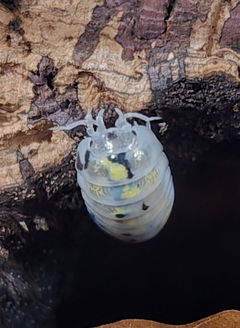
Scarlet Isopods (Ardentiella sp.)

Scarlet Isopods (Ardentiella sp. "Scarlet")

Care Info:

Origin icon ORIGIN
VIETNAM
Temperature icon TEMP
19-26 ℃
Humidity icon HUMIDITY
60-75 %
Length icon LENGTH
18-20 mm
Difficulty icon DIFFICULTY
HARD
Rarity icon RARITY
VERY RARE
Regular price£80.00
/
Tax included. Shipping calculated at checkout.

Quantity
  • Free shipping over £65
  • Low stock - 1 item left
  • Backordered, shipping soon

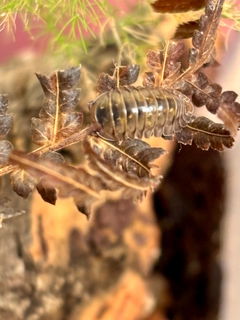
Scarlet isopods are one of the most genuinely vivid species available in the UK hobby — a selectively-bred Vietnamese morph with predominantly fiery red bodies marked with yellow and black accents, producing a colour combination that's properly arresting in person. The aesthetic sits firmly in the "stop and stare" category that the Ardentiella genus is known for. Combined with the genus's signature surface-active behaviour and day-visible habits, Scarlets deliver the rare combination of striking colouration and reliable display value — you actually see them, which is more than can be said for many premium isopods.

This is part of our wider Ardentiella collection (formerly Merulanella — see the taxonomy note below) and represents one of the more recent selectively-bred morphs within the genus's broader Tricolor lineage. For collectors building a focused Ardentiella display, Scarlet pairs naturally with our other morphs from the same broader genus — the famous Red Diablo as the genus standard-bearer, and sister morphs Blister and Pink Lemonade (the high-yellow morph developed directly from Scarlet stock) when available. The Ardentiella cluster is where the hobby's most visually striking woodlice live.

One honest framing point up front. Scarlets are not a beginner species. They're rated hard difficulty for genuine reasons — temperature sensitivity (they prefer cooler than most tropical isopods), specific humidity-ventilation balance, and proper climbing ability that requires escape-proofing. Combined with the premium price point, mistakes here are properly expensive. For experienced keepers with successful tropical isopod colonies already running, this is a manageable next step; for newer keepers, we'd recommend gaining experience with hardier species first. For comprehensive Ardentiella husbandry beyond this overview, see our detailed care guide at Ardentiella (Merulanella) Red Diablo Care Guide.

Quick Care Summary

  • Scientific Name: Ardentiella sp. "Scarlet" (formerly Merulanella sp. "Scarlet")
  • Common Name: Scarlet Isopod
  • Family: Armadillidae
  • Genus established: Ardentiella Kästle & Regalado Fernández, 2025 — the name derives from Latin "ardens" (burning, fiery) referencing the vivid red, yellow, and black colours displayed by many genus members
  • Origin: Selectively-bred morph isolated from Ardentiella sp. "Tricolor" stock; Tricolor lineage originates from Vietnam
  • Adult Size: 18–20 mm — properly substantial for a display isopod
  • Lifespan: 2–3 years typical with established colonies maintaining ongoing turnover
  • Difficulty: Hard — requires consistent attention to temperature, humidity-ventilation balance, and escape-proofing
  • Temperature: 19–26 °C; properly prefers the cooler end (around 20 °C); sustained temperatures above 26 °C cause stress and rapid colony decline
  • Humidity: 60–75% with substrate moist (not wet) and high ventilation maintained
  • Ventilation: High — this is critical; stagnant air kills colonies regardless of humidity levels
  • Conglobation: Yes, but typically less reflexively than the more pill-shaped Armadillidium
  • Behaviour: Surface-dwelling — they don't burrow extensively; instead congregate in leaf litter and under bark
  • Activity: Active day and night — properly unusual for an isopod and one of the genus's strongest display features
  • Climbing: Adults and juveniles can climb smooth surfaces (glass, plastic) — escape-proofing is non-negotiable
  • Social: Often found in small groups of 2–3 in the wild; peaceful in captivity
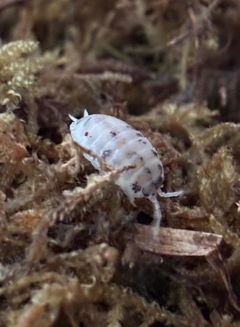
  • Appearance: Predominantly red body with yellow and black splotching across segments; individual pattern variation is normal; the high-red colouration distinguishes Scarlet from the broader Tricolor stock
  • Breeding: Medium rate — steady once established but not prolific
  • Rarity: Very rare in UK culture; premium-tier species

What Makes Scarlet Isopods Special

The colouration is genuinely striking. Most premium isopod morphs lean on subtle pattern variation or single dominant colours; Scarlet takes the opposite approach — vivid red as the dominant colour, with high-contrast yellow and black accents creating a properly bold combination. The genus name itself (Ardentiella) derives from the Latin word for "burning" or "fiery" precisely because of this colour profile. For collectors wanting the most visually arresting isopods available in the hobby, the Ardentiella morphs as a whole — and Scarlet in particular — are where the colour story is.

The surface-active behaviour. Unlike most premium isopods which are cryptic burrowers spending the majority of their time underground, Ardentiella are surface-dwellers — they congregate in leaf litter, on cork bark, and under decaying wood rather than disappearing into substrate. This combined with their day-night active pattern means Scarlets are properly visible in their enclosure. For keepers paying premium prices for animals they actually want to observe, the visibility is genuinely valuable.

The day-night activity pattern. Most isopods are strictly nocturnal — they hide during daylight and emerge only at night for feeding. Ardentiella break this pattern entirely; they're active throughout the day and night, with no clear nocturnal preference. Combined with the surface-dwelling habit, this means you'll see Scarlets at any time you check the enclosure rather than only during late-night observation sessions.

The selectively-bred lineage. Scarlet was isolated from the broader Ardentiella sp. "Tricolor" stock for its enhanced red pigmentation — making it a stable colour line rather than a wild-type variant. The lineage is well-established internationally and has spawned its own sister morphs (Blister, Pink Lemonade) through further selective breeding. For collectors building a focused Ardentiella display, Scarlet represents one of the key "milestone" morphs in the genus's selective-breeding history.

The Ardentiella cluster. Within our Ardentiella collection, Scarlet sits alongside the broader genus options that share the genus-defining characteristics — surface-active behaviour, day-visible habits, vivid colouration, and shared husbandry requirements. For keepers already running other Ardentiella colonies, the husbandry transfers directly; the temperature, ventilation, and substrate setup that works for Red Diablo works for Scarlet.

About the Name and Taxonomy

The genus name has changed recently — a few notes on the current state of Ardentiella taxonomy.

  • Ardentiella sp. "Scarlet": The current correct scientific designation. The species epithet "Scarlet" is a hobby trade name rather than a formal species description — many Ardentiella in the hobby remain undescribed at species level.
  • Formerly Merulanella: Until 2025, all the Vietnamese and Southeast Asian "Merulanella" in the hobby — Red Diablo, Tricolor, Scarlet, Ember Bee, Phoenix, Pink Lambo, and others — were classified in the genus Merulanella. In March 2025, Kästle and Regalado Fernández published a major taxonomic reassessment that restricted Merulanella to three New Caledonian species (none of which are in the hobby) and moved all the hobby species to new genera. The Vietnamese, Thai, and Southeast Asian species are now in Ardentiella.
  • Both names still in circulation: The taxonomic change is recent enough that "Merulanella" continues to appear in older sources, social media posts, and even some current retailers. Both names refer to the same animals; the scientifically current designation is Ardentiella.
  • Genus etymology: "Ardentiella" derives from the Latin "ardens" — meaning burning, fiery, or ardent — chosen specifically to reference the vivid red, yellow, and black colouration that defines many genus members. Scarlet exemplifies this naming logic particularly well.
  • Other Vietnamese isopods affected: The 2025 revision also moved Cubaris caerulea into Ardentiella, and erected two further new genera (Floresiodillo for Indonesian species, Acutodillo for Afrotropical species) from the former Merulanella.
  • Tricolor lineage: Scarlet is derived from Ardentiella sp. "Tricolor" stock through selective breeding for enhanced red pigmentation. Sister morphs from the same Tricolor lineage include Blister and Pink Lemonade (a high-yellow morph developed from Scarlet stock specifically).

Setting Up the Enclosure

A 5–10 litre plastic container or glass terrarium suits a starter group of 5–10 Scarlets; larger setups support better humidity gradients and reduce colony stress. Both juveniles and adult Scarlets can climb vertical smooth surfaces — including glass and plastic — so escape-proofing is genuinely necessary rather than a precaution.

The right escape-proofing setup combines several features: a properly tight-fitting lid with no gaps; fine mesh covering all ventilation holes (nymphs are small enough to squeeze through surprisingly small openings); and ideally a smooth climbing barrier inside the rim of the enclosure (petroleum jelly or a strip of smooth plastic) as additional insurance. Don't underestimate the climbing ability — mancae (newly-released juveniles) are particularly small and adventurous.

Ventilation is the most important practical setup feature for this species. Ardentiella require high air humidity but are properly sensitive to stagnant air — the combination of moisture and poor airflow is the most common documented cause of colony collapse. Multiple ventilation holes (at least 3–4 across opposing sides of the enclosure) with fine mesh covering provide the right balance. Cross-ventilation between sides works particularly well.

Provide layered surface cover. Cork bark slabs in horizontal and vertical orientations, decaying hardwood pieces, twigs with lichen attached, and forest moss patches all support the species's surface-dwelling behaviour. Browse our accessories range for cork bark, lichen sticks, leaf litter and other natural cover options. Scarlets congregate in 2–3-animal groups under cover rather than dispersing as isopods of more solitary species do.

Important husbandry note: Skip the standing water dish. Substrate moisture and light misting provide all the hydration this species needs. Open water risks drowning small mancae in a setup that already needs careful moisture management.

Substrate

Unlike Cubaris and many tropical isopods, Ardentiella don't burrow extensively — they're surface-dwellers rather than substrate-feeders. The substrate setup reflects this:

  • Base layer of moisture-retaining substrate — organic topsoil or sphagnum peat moss (pesticide-free)
  • Decaying hardwood leaf litter mixed throughout and layered generously on top — oak, beech, magnolia. Browse our accessories collection for properly prepared options.
  • Forest moss patches as ground cover
  • Twigs with lichen attached — Ardentiella consume lichen actively and the twigs provide both food and climbing structure
  • Cork bark and decaying hardwood pieces on top for hiding
  • Springtails inoculated into the substrate — they consume droppings and food waste, preventing mould

Substrate depth around 3–5 cm is sufficient — Ardentiella don't need deep substrate since they don't burrow extensively. The emphasis should be on the surface layer: generous leaf litter, multiple bark hides, and varied surface texture that supports the species's natural exploration behaviour.

Keep substrate moist but not waterlogged. Squeeze a handful — it should hold its shape briefly without dripping water. The key balance is high air humidity around the cover and substrate layer, not soggy substrate underneath.

Humidity and Temperature

Maintain humidity at 60–75% with substrate moist rather than wet. The critical balance for this species is "humid but fresh" — high moisture in the air combined with proper airflow. Stagnant humid conditions kill colonies; properly ventilated humid conditions maintain them. Spray periodically rather than continuously soaking the substrate; mist one side of the enclosure more heavily to maintain a moisture gradient.

Temperature should be 19–26 °C, with around 20 °C being the species's preferred range. This is genuinely important and is the most common point of failure for new Ardentiella keepers. Despite the Vietnamese origin, these are not heat-loving isopods — they prefer cooler conditions than Cubaris, Pseudoglomeris, or many other tropical species. Sustained temperatures above 26 °C cause documented stress and rapid colony decline. UK average room temperature actually works well for this species — Ardentiella are one of the few tropical isopods where heated supplementary warmth often isn't necessary.

If your room temperature consistently exceeds 25 °C, consider keeping Ardentiella in a cooler part of the house, or using thermostatically-controlled cooling rather than heating. Summer temperature management may matter more than winter heating for this species — the reverse of most tropical isopods.

Diet

Ardentiella have varied dietary preferences with some specific requirements that differ from most isopods:

  • Decaying hardwood leaf litter — oak, beech, magnolia. The dietary mainstay. Browse our accessories collection for ready-prepared leaf litter.
  • Lichen — properly important for Ardentiella generally. Offered on twigs or bark. Our accessories range includes lichen sticks specifically.
  • Rotting white hardwood — used as cover and slowly consumed
  • Forest moss — readily eaten as supplementary food
  • Fresh vegetables — cucumber, courgette, sweet potato, carrot. Replace within 24–48 hours.
  • Fresh fruit — mango is particularly well-received (multiple keeper accounts report excellent uptake); also apple, pear, melon. Replace within 24–48 hours.
  • Leafy greens — various, in moderation
  • Protein supplements 2–3 times weekly — fish flakes, dried gammarus shrimp, high-protein powder foods. Browse the protein options in our accessories collection.
  • Calcium sources — cuttlebone, crushed eggshells, oyster shell, limestone. Our calcium options cover the full range.
  • Alternative foods — kinshi (fungus-colonised wood substrate), moultings from other invertebrates or reptiles

Notable absence: Ardentiella reportedly don't eat bee pollen — don't rely on that as a food source. The species has properly specific dietary preferences compared to more generalist isopods.

Position fresh food on dishes or leaves rather than directly on substrate to make removal of uneaten portions easier. Remove uneaten fresh food within 24–48 hours to prevent mould in the humid setup.

Breeding

Scarlets breed at a medium rate — steadier than the slow-breeding premium Cubaris but properly less prolific than Porcellio or Armadillidium species. Success depends on maintaining the correct husbandry consistently; the breeding rate is genuinely tied to whether you're hitting the temperature and ventilation balance correctly.

For breeding success:

  • Stable temperature in the species's preferred range (around 20 °C) — sustained warmer conditions reduce breeding significantly
  • Proper humidity-ventilation balance — humid but fresh, not humid and stagnant
  • Varied diet with adequate protein, calcium, and lichen availability
  • Multiple hiding spots — gravid females need sheltered locations for releasing mancae
  • Minimal disturbance — Ardentiella are properly stressed by frequent enclosure intervention
  • Mixed-age colony — maintaining juveniles alongside adults supports continuous turnover
  • Springtails inoculated to manage waste during the relatively slow population establishment phase
  • Don't cross-breed with other Ardentiella morphs — the distinctive Scarlet colouration needs pure-line breeding to maintain

Expect a learning curve. New Ardentiella keepers commonly underestimate the temperature sensitivity or undersize ventilation, and breeding rates respond poorly to either mistake. Once you've got the husbandry properly dialed in, breeding becomes reliable; until then, expect modest results.

Who Should Buy Scarlet Isopods?

Ideal for:

  • Experienced tropical isopod keepers with successful Ardentiella, Cubaris, or other premium species colonies
  • Collectors building a focused Ardentiella display alongside other morphs from the genus
  • Display-focused keepers who specifically want visible, surface-active isopods
  • Anyone drawn to bold red-yellow-black colouration rather than subtle pastel morphs
  • Keepers in cooler UK homes where the species's preference for around 20 °C is naturally accommodated
  • Long-term project keepers comfortable with medium breeding rates and selective-line maintenance

Not ideal for:

  • Beginner isopod keepers — start with Armadillidium species or hardy Porcellio lines before stepping into Ardentiella
  • Setups in warm rooms or homes that exceed 25 °C consistently — temperature management is critical
  • Anyone unable to maintain proper escape-proofing — Scarlets climb readily
  • Keepers wanting fast colony expansion or production-scale breeding
  • Setups where humidity-ventilation balance can't be properly maintained — stagnant humid air collapses colonies
  • Anyone looking for budget-friendly entry — the premium price means mistakes are expensive

Realistic Expectations

Temperature is the critical factor. The single most common mistake with Ardentiella is keeping them too warm. New keepers used to Cubaris or other tropical species often default to mid-to-high 20s Celsius, which is properly too warm for Scarlets. Aim for around 20 °C as the steady-state target; treat anything above 24 °C as warm-end exposure that should be brief rather than sustained. UK keepers without supplementary heating are often in the right range naturally.

Ventilation matters as much as humidity. Don't get the balance wrong. High humidity in a poorly-ventilated enclosure is the documented colony-killer for this species, and getting the moisture levels right won't save a colony if the air is stagnant. Multiple ventilation holes with fine mesh, distributed across opposing sides of the enclosure, plus a moisture gradient that lets animals choose their preferred conditions — that's the right setup, not a sealed humid box.

The climbing ability is genuine. Both juveniles and adults can scale smooth vertical surfaces, and the species is curious enough to actively explore. Don't underestimate this — escape-proofing must be properly thorough rather than just adequate. Petroleum jelly barriers, fine mesh on every ventilation hole, and gap-free lid seals are non-negotiable.

Colour expression varies. Individual Scarlets show natural variation in the proportion of red vs. yellow vs. black colouration. Some animals lean heavily red with minimal patterning; others show more obvious yellow and black accents. This variation is normal and is part of the appeal of selectively-bred morphs — each colony has individual character rather than uniform appearance. Don't expect every animal to look identical.

Population dynamics are properly modest. Even well-maintained Scarlet colonies expand slowly compared to fast-breeding isopod species. Expect 6–12 months before first visible breeding output from a starter group; meaningful colony expansion takes 12–18 months. The premium price reflects both the rarity and the slow productivity — this isn't a species you can rapidly multiply for resale.

The Ardentiella surface-active behaviour is a real practical advantage. For collectors paying premium prices, the day-visible activity means you actually see your investment. Compared to premium Cubaris which spend their lives burrowed, Scarlets deliver observable display value continuously. This is genuinely one of the strongest selling points of the genus generally.

The taxonomy update is recent. The 2025 reclassification from Merulanella to Ardentiella is still working through international hobby usage. Don't be surprised to see "Merulanella sp. Scarlet" appearing in older sources, social media posts, or even some current retailer listings — the genus name change is the only thing that's different; the animals themselves are unchanged.

Pure-line breeding matters. Scarlet is a selectively-bred morph rather than a wild-type species. Cross-breeding with other Ardentiella morphs (Tricolor, Red Diablo, Blister, Pink Lemonade) would dilute the distinctive red colouration that makes Scarlet valuable. Keep colonies isolated from other Ardentiella lines, and don't house multiple morphs together even if husbandry requirements are similar.

Use collapsible tabs for more detailed information that will help customers make a purchasing decision.

Ex: Shipping and return policies, size guides, and other common questions.

You may also like


Recently viewed