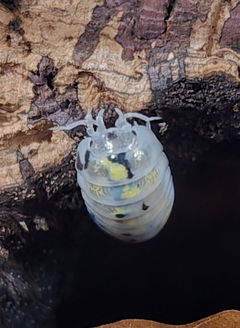
Thai Blue Angel Isopods (Cubaris sp.)
Care Info:
- Free shipping over £65
- Low stock - 5 items left
- Backordered, shipping soon
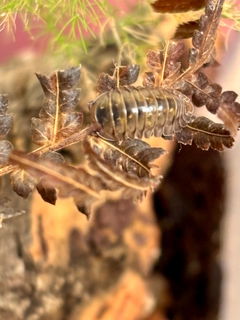
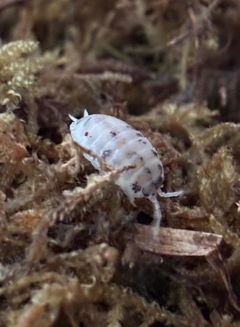
The Thai Blue Angel is one of the most genuinely fascinating Cubaris species in the entire UK hobby — a Thai locality with naturally occurring blue-grey-to-silvery colouration, a smooth rounded body shape, and a unique party trick that sets them apart from virtually every other isopod available: they fluoresce under UV light. Specifically under UV-365 nm, Thai Blue Angels reflect a stunning electric blue colour that's genuinely spectacular to observe — a feature shared by only a handful of isopod species worldwide. This combined with their already-attractive natural colouration makes them one of the most visually distinctive Cubaris available, with appeal extending well beyond keepers who just want pretty cleanup crew.
What makes Thai Blue Angels particularly worth keeping is the combination: striking premium Cubaris appearance paired with genuinely accessible care that places them firmly in the "beginner-friendly Cubaris" tier alongside Panda King and similar species. Despite their premium appearance, they're hardy, prolific breeders, and tolerant of conditions that would damage more sensitive Cubaris. They're also reasonably bold and visible for a Cubaris — described by experienced keepers as an "active isopod" that doesn't hide constantly the way many premium Cubaris do.
One important note on colouration: the "Blue Angel" name describes a tendency, not a guarantee. Thai Blue Angels are notably variable in colour, ranging from white to white-blue to white-grey, cream, and even slightly orange across individuals. The mature adults are where the blue colouration really emerges — juveniles often appear paler or more cream-toned before developing their full colour expression. Some retailers describe early arrivals being underwhelming until the colony matures.
Available in groups of 5, 10, or 20. Captive-bred stock from established UK colonies. Low stock — only 5 items left.
Quick Care Summary
- Scientific Name: Cubaris sp. 'Thai Blue Angel' (also sold as 'Thai Angel Blue')
- Common Names: Thai Blue Angel, Thai Angel Blue, Blue Angel Cubaris
- Family: Armadillidae
- Origin: Thailand — tropical rainforest environments
- Adult Size: 12–20 mm — medium to relatively large Cubaris
- Lifespan: 2–3 years typical
- Difficulty: Easy to Medium — among the more accessible Cubaris
- Temperature: 24–28°C (room temperature works in heated UK homes)
- Humidity: 55–70% with moisture gradient (some sources extend to 85%)
- Ventilation: Medium — balance airflow with humidity retention
- Conglobation: Yes — rolls into a tight ball when disturbed
- Behaviour: Mostly night-active but reasonably bold, prefers clinging to bark rather than deep burrowing, social
- Breeding: Prolific once established
- Special: Fluoresces electric blue under UV-365 nm light
What Makes Thai Blue Angel Isopods Special
Several factors have made Thai Blue Angels one of the most sought-after accessible Cubaris in the UK hobby:
The UV fluorescence is genuinely unique. This is the standout feature that distinguishes Thai Blue Angels from virtually every other isopod. Under UV-365 nm light, they reflect a stunning electric blue colour — properly fluorescent, not just appearing more blue. Very few isopod species exhibit this characteristic, making Thai Blue Angels genuinely special for keepers interested in bioluminescence and biofluorescence. Pair them with a basic UV torch and you have an isopod that delivers light shows on demand.
Naturally variable colouration. Despite the "Blue Angel" name, individuals show colour variation from white to blue-grey to silvery to cream and even slightly orange. This natural variation makes building a colony genuinely interesting — every individual has its own colour expression, and the blue tones develop more fully as animals mature into adults.
Smooth, rounded body shape with subtle sheen. Unlike textured or banded Cubaris, Thai Blue Angels have a clean smooth carapace that catches light beautifully. Combined with their pale blue-grey colouration, the overall effect is properly elegant — they look refined rather than busy.
Substantial size for a Cubaris. At 12–20 mm with adults often reaching the upper end, Thai Blue Angels are medium-to-relatively-large Cubaris — comparable in scale to Cappuccino Isopods or Rubber Duckies. The size combined with bold colouration makes them genuine display animals.
Notably hardy and prolific. Where many premium Cubaris are notoriously sensitive and slow-breeding, Thai Blue Angels sit firmly in the accessible Cubaris tier. They're forgiving of minor husbandry variations, breed prolifically once established, and recover from setbacks reliably. This combination of premium appearance with accessible care is unusual among visually distinctive Cubaris.
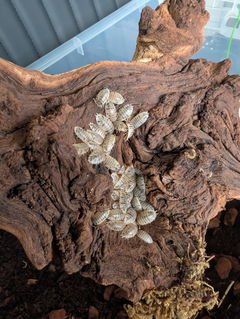
Distinctive bark-clinging behaviour. Unlike many Cubaris that burrow deep into substrate, Thai Blue Angels prefer clinging to the underside of bark and wooden pieces. This means cork bark and decaying wood pieces in your setup will be heavily used — they're surface-active in a way that makes them more observable than typical burrowing Cubaris.
Active and visible temperament. Described by experienced keepers as a notably active Cubaris. While primarily nocturnal, Thai Blue Angels are reasonably visible even during ambient lighting conditions — particularly compared to shy species like Lemon Blues that hide constantly.
Conglobation. Like all Cubaris, they roll into tight defensive balls when disturbed — adding character to colony observation. The blue-grey tones in conglobated form create an attractive defensive display.
How Thai Blue Angels Compare to Other Cubaris
If you're choosing between Cubaris species, here's how Thai Blue Angels fit in:
- vs Panda King: Both are accessible Thai Cubaris with similar care difficulty and good for keepers stepping up from beginner species. Panda Kings have bold black-and-white panda patterning. Thai Blue Angels have smooth blue-grey colouration with UV fluorescence. Similar pricing and accessibility — choose based on aesthetic preference and whether the UV feature appeals.
- vs Rubber Ducky: Rubber Duckies are the iconic premium Cubaris — significantly more expensive, harder to keep, slower-breeding. Thai Blue Angels offer comparable premium-tier appearance with accessible care and the unique UV fluorescence feature. Many keepers use Thai Blue Angels to develop Cubaris experience before attempting Rubber Duckies.
- vs Cubaris murina (Little Sea): Murina are the absolute entry-level Cubaris — much cheaper, more prolific, but visually subtle. Thai Blue Angels are larger, more visually distinctive, and offer the UV fluorescence wow-factor at higher difficulty tier. Different positioning entirely.
- vs Cappuccino Isopods: Cappuccinos have marbled coffee-and-cream patterning at similar size. Thai Blue Angels have smooth blue-grey colouration with the UV bonus. Both sit in the "premium appearance, accessible care" tier — different aesthetics for different preferences.
- vs Pak Chong: Pak Chong are tricoloured Thai cave Cubaris (blue-grey/white/orange). Thai Blue Angels are smoother blue-grey throughout with UV fluorescence. Both are accessible Thai Cubaris — Pak Chong for tricoloured cave aesthetics, Thai Blue Angels for elegant smooth colouration plus UV trick.
Browse the full Cubaris collection to compare all options.
Setting Up the Enclosure
A 6–10 litre plastic container or small glass terrarium suits a starter colony of 5–10. Glass terrariums offer better display value, particularly relevant for Thai Blue Angels given their visual appeal — and if you're investing in a UV torch to demonstrate their fluorescence, you'll want glass viewing rather than opaque plastic. The 3L Braplast tub works for starter cultures, though scaling up to larger glass setups makes sense once the colony establishes.
For ventilation, drill multiple small holes on opposite sides of the container for cross-ventilation. Medium ventilation works well — enough airflow to prevent stagnation but not so much that humidity drops below the comfort range. Cover holes with fine mesh to prevent escapes.
Bark and wood structure matters more than for typical Cubaris. Because Thai Blue Angels prefer clinging to bark rather than burrowing deep, provide multiple cork bark pieces in various orientations throughout the enclosure. Stack pieces vertically and horizontally, leaving spaces beneath where individuals can cling. This is genuinely important for the species — proper bark provision directly affects how visible and active your colony becomes.
Browse our accessories collection for appropriate enclosures, vents, and other essentials.
Substrate
Use organic topsoil (pesticide-free) as a base, with at least 5 cm depth. Mix in flake soil for added nutrition and structure. While Thai Blue Angels aren't deep burrowers (preferring bark-clinging), adequate depth still gives them options and supports substrate-dwelling juveniles.
Mix sphagnum peat moss throughout the substrate for moisture retention. Add crushed limestone or eggshells incorporated throughout — Thai Blue Angels benefit from constant calcium availability for healthy moulting and shell development.
Top layer: Generous hardwood leaf litter — magnolia leaves for long-lasting cover work particularly well. Add multiple cork bark pieces and decaying white wood pieces spread throughout (rotting white wood specifically — they favour this over fresher wood). Sphagnum moss patches help retain moisture in the wet zones.
Humidity and Temperature
Maintain humidity at 55–70% with a clear moisture gradient — approximately one-third moist, two-thirds drier. Some sources extend the upper range to 85%, but the gradient matters more than absolute numbers. Mist regularly to maintain humidity in the moist zone, allowing the drier side to be genuinely drier.
The substrate should be damp but never waterlogged. Too dry causes moulting problems; too wet causes mould and pest issues. Watch for the substrate surface — if it starts looking dried-out, mist immediately; if you see standing water, reduce misting frequency.
Temperature should be 24–28°C — proper tropical warmth reflecting their Thai origins. UK summer temperatures often fall within range; winter heating is typically necessary in most UK homes for this species. A low-wattage heat mat on the side of the enclosure (never underneath, to avoid drying substrate) connected to a thermostat keeps the colony stable. Avoid temperatures consistently below 22°C.
Diet
Thai Blue Angels are unfussy detritivores with broad appetites:
- Primary diet (always available): Hardwood leaf litter (oak, magnolia, beech), decaying rotting white wood, lichens, green moss
- Kinshi (mushroom mycelium substrate): Genuinely well-received by Thai Blue Angels. Worth offering when available.
- Vegetables (1–2x weekly): Carrot, courgette, cucumber, sweet potato, squash, mushrooms. Replace within 24–48 hours.
- Fruit (occasionally): Apple, banana, melon — small amounts
- Protein (essential — 2x weekly): Fish flakes, dried daphnia, silkworm pupae, freeze-dried peas, dried shrimp, dried mealworms, invertebrate/reptile moults. Browse our accessories collection for the full range of protein supplements.
- Calcium (always available): Cuttlefish bone, crushed limestone, oyster shell, eggshells. Multiple sources distributed throughout the enclosure.
Important: don't overfeed. In the humid conditions Thai Blue Angels require, excess food creates mould blooms faster than the colony can consume them. Less is more — feed small amounts more frequently rather than larger portions occasionally. Remove uneaten fresh food within 24–48 hours.
Breeding
Thai Blue Angels breed prolifically once established — one of their major selling points alongside the visual appeal and UV feature. Their accessible Cubaris genetics translate directly into reliable breeding behaviour under proper conditions.
Establishment period: Allow 2–3 months for new colonies to settle before expecting significant breeding activity. This is normal for Cubaris — don't assume something is wrong if you don't see babies immediately.
For breeding success:
- Stable tropical temperatures (24–28°C)
- Consistent humidity with proper gradient
- Abundant calcium availability throughout
- Regular protein supplementation
- Plenty of bark and wood pieces for clinging
- Adequate hiding spots
- Minimal disturbance during establishment
- Larger starter groups (10+) provide better breeding potential and genetic diversity
Growth rate: Normal to slow. Juveniles develop into adults over several months — colony expansion is steady rather than dramatic. Patience pays off; impatience causes management mistakes that disrupt establishment.
Pair With Springtails
Add a thriving springtail culture to any Thai Blue Angel setup. Springtails handle mould and microbial growth at a scale isopods can't manage, particularly important in the humid tropical conditions Thai Blue Angels require. They coexist peacefully with Thai Blue Angels and form an essential cleanup partnership for tropical Cubaris setups.
The UV Light Trick — Optional But Spectacular
If you want to experience Thai Blue Angels' most unique feature, invest in a UV torch operating at 365 nm wavelength. These are widely available and inexpensive. Shining UV-365 onto your colony in dim conditions causes the isopods to fluoresce electric blue — a genuinely spectacular effect that's almost impossible to capture in photos. The fluorescence is real biological response (not reflection of blue light), and it's one of the few opportunities most invertebrate keepers will have to observe biofluorescence in their pets.
This isn't necessary for keeping Thai Blue Angels successfully — they thrive perfectly well without UV demonstration. But if you want to fully appreciate what makes this species special, a UV torch is the easiest way to access their hidden visual feature.
Who Should Buy Thai Blue Angel Isopods?
Ideal for:
- Keepers with basic isopod experience ready to step up to Cubaris
- Anyone interested in biofluorescence or unusual biological features
- Collectors wanting genuinely unique Cubaris with display appeal
- Display setup enthusiasts wanting elegant smooth-bodied Cubaris
- Beginners to Cubaris wanting accessible care with premium appearance
- High-humidity bioactive setup owners
- Those building toward eventually keeping premium Cubaris like Rubber Duckies
- Keepers wanting visible active Cubaris rather than shy hiders
Not ideal for:
- Complete beginners — start with hardier species like Dairy Cow or Porcellio scaber first
- Anyone unable to maintain tropical humidity (55–70%)
- Setups where temperature can't be kept above 22°C reliably
- Cold or unheated environments
- Customers expecting uniform blue colouration (they're variable)
- Reptile/amphibian feeder use — too valuable to justify
Realistic Expectations
The "Blue Angel" name describes a tendency, not a guarantee for every individual. Colour ranges across the colony from white to white-blue to silvery-grey to cream and even slightly orange. The blue colouration emerges most fully in mature adults — juveniles often appear paler or more cream-toned before developing their full expression. Some retailers note that customers can be initially underwhelmed by juveniles, then thrilled as the colony matures. Allow 2–3 months for full colouration to develop.
Newly arrived isopods may take 2–3 weeks to acclimate before showing comfortable colony behaviour. During this initial period they'll likely remain hidden more than established colonies — this is normal acclimation.
UV fluorescence works on all individuals regardless of their visible colouration. Even Thai Blue Angels that appear primarily cream or grey in normal light will fluoresce electric blue under UV-365 nm. This means even "non-blue" individuals in your colony deliver the spectacular UV effect.
Don't expect explosive breeding immediately. Cubaris generally reproduce more slowly than Porcellio or Armadillidium species, and Thai Blue Angels follow this pattern. Within 4–6 months of establishment you'll see meaningful colony growth, but not the dramatic expansion seen in fast-breeding beginner species.
Bark-clinging behaviour is normal and desirable. If you see your Thai Blue Angels clinging to the undersides of cork bark and wood pieces rather than burrowing into substrate, that's natural species behaviour — not a sign of stress or improper setup.
Building Your Setup
A complete Thai Blue Angel setup needs proper substrate components, abundant bark and wood pieces, calcium-rich materials, generous leaf litter, and protein supplements. Browse our accessories collection for everything you need — enclosures, ventilation, cork bark, leaf litter, calcium (cuttlebone, limestone), and protein supplements (daphnia, silkworm pupae, fish flakes, freeze-dried peas).
For a deeper guide to Cubaris species and morphs, see our blog post on 23 different types of Cubaris isopods you should know about. Browse the full Cubaris collection for more options.
Use collapsible tabs for more detailed information that will help customers make a purchasing decision.
Ex: Shipping and return policies, size guides, and other common questions.