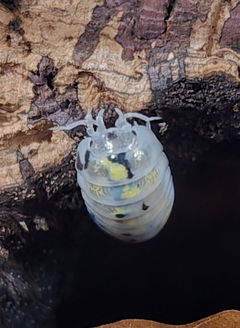
Unicorn Snails (Subulina Octona)
Care Info:
- Free shipping over £65
- Low stock - 3 items left
- Backordered, shipping soon
Unicorn Snails are properly one of the most useful and rewarding tiny invertebrates in the UK hobby — small tropical land snails with elongated, spiralled shells that taper to a fine point (hence the "Unicorn" name). Subulina octona is a small, active, highly social species genuinely ideal for nano enclosures, terrariums, bioactive setups, and as companions in tropical isopod displays. At just 1.5–3 cm adult shell length, they bring properly different value than the substantial Giant African Land Snails — quietly engaging in nano spaces, working as cleanup crew, and adding visible life at the small scale.
This is part of our wider Other Invertebrates collection and works properly well alongside our tropical isopod products as part of a broader bioactive keeping interest. Where our Giant African Land Snails are dramatic display animals at substantial size, Unicorn Snails fill the genuinely opposite niche — small enough to add to existing setups without modification, hardy enough to forgive beginner mistakes, and prolific enough to establish self-sustaining populations.
One honest framing point worth understanding up front. Unicorn Snails are properly prolific breeders — they're hermaphrodites capable of self-fertilisation, and a single snail can lay around 124 eggs over its lifetime. If you don't actively manage the population, a colony will quickly become an enclosure-overwhelming problem. Egg management isn't optional in a long-term colony. To set things up properly from the start, browse our accessories collection for substrate components, calcium sources, and other items this species depends on.
Quick Care Summary
- Scientific Name: Subulina octona (Bruguière, 1789)
- Common Names: Unicorn Snail, Awl Snail, Miniature Awl Snail / Awlsnail, Brazilian Trumpet Snail
- Family: Subulinidae (some recent classifications treat as a subfamily of Achatinidae); order Stylommatophora
- Genus context: Subulina contains several tropical land snail species with the characteristic elongated awl-shaped shell. S. octona is genuinely the most widely-distributed species in the genus, partly through its prolific reproduction and tolerance of human-modified environments
- Origin: Native to tropical Americas — Caribbean (Cuba, Venezuela) and Central/South America. Now globally distributed through human-mediated dispersal: Caribbean Islands, Hawaiian Islands, Africa, Asia, Australia, West Indies, Sri Lanka, Pacific Islands. Established as "hothouse alien" in Great Britain and Czech Republic — survives in heated indoor environments (greenhouses, hothouses, indoor terraria) but doesn't survive UK outdoor conditions
- Adult Size: 1.5–3 cm shell length (most stay around 2 cm)
- Lifespan: 2.5–4 years under good conditions
- Difficulty: Easy — genuinely beginner-friendly
- Temperature: 20–26 °C (24–27 °C optimal for activity and breeding)
- Humidity: 80% or higher — properly tropical snails that need it damp
- Body shape: Long, narrow, tapered shell ending in a sharp point — like a tiny unicorn horn. 8–9 whorls, glossy semi-translucent yellowish-brown shell. Properly different from the rounded dome-shaped shells of most familiar land snails
- Body extension: Pale yellow body can stretch almost as long as the shell when extended — properly entertaining to watch
- Behaviour: Social, nocturnal, often hidden during the day. Highly active when conditions are right
- Reproduction: Obligate hermaphrodite — every individual has both male and female reproductive organs. Capable of self-fertilisation. Properly prolific breeder
- Rarity: Common in UK hobby — established species in established trade
Why "Unicorn"?
The name comes from the shell shape. Unlike the rounded, dome-shaped shells of most familiar land snails (think garden snails or our Giant African Land Snails), Unicorn Snails have a long, narrow, tapered shell that ends in a sharp point — like a tiny unicorn horn. The shell typically has 8–9 whorls and is glossy, semi-translucent, and yellowish-brown in colour. Through the shell you can often see the snail's body, and in adults you can sometimes see eggs developing inside.
The body is pale yellow and surprisingly long when extended — Unicorn Snails can stretch their body almost as long as their shell, which makes them properly entertaining to watch as they explore enclosures. They're inquisitive and active in a way that bigger snails often aren't, and they don't have the slow, ponderous movement of larger species.
Why Keep Unicorn Snails?
Several reasons make these properly one of the most useful and rewarding tiny invertebrates in the hobby.
Bioactive cleanup. Unicorn Snails are detritivores — they consume decaying plant material, lichens, fungi, fallen leaves, and biofilms. In a planted terrarium or bioactive enclosure, they help process organic waste before it accumulates. They work properly alongside springtails and isopods to keep substrate clean — occupying a slightly different ecological niche from either.
Tropical isopod companions. Unicorn Snails coexist beautifully with tropical isopod species in mixed enclosures. They share the same warmth and humidity preferences as Cubaris and Ardentiella species — 20–26 °C and high humidity. They're too small to compete with isopods for resources and don't disturb breeding colonies. Many keepers add them to Cubaris display enclosures specifically because they're active during different hours (nocturnal) and add visible movement when the isopods are hidden.
Nano enclosures. Their tiny size (around 2 cm fully grown) means they thrive in properly small enclosures that wouldn't suit anything else. A 4-litre tub can comfortably house 10 or more Unicorn Snails. This makes them ideal for desk-top displays, classroom setups, or anyone with limited space.
Terrarium displays. In planted terrariums, the unicorn-horn shell shape stands out against natural backgrounds. They're constantly active in damp, planted environments and add visible life at the small scale where standard isopods and millipedes might be invisible.
Easy care for first-time invertebrate keepers. Unicorn Snails are properly forgiving of minor husbandry mistakes. They tolerate temperature variations, recover well from short humidity dips, and don't require specialist food. For someone new to invertebrate keeping, they're genuinely one of the right starter species.
Engaging social behaviour. Solo Unicorn Snails often live shorter, less active lives than those kept communally. They're genuinely social animals — colonies are more interesting to observe and the snails appear more naturally active in groups. Starting with 5–10 animals gives properly the best results.
About the Name and the Taxonomy
The naming situation deserves proper transparency.
- Subulina octona: Described by Jean-Guillaume Bruguière in 1789. The species epithet "octona" properly references the typically eight (octo-) whorls of the shell, while the genus name Subulina derives from the Latin "subula" meaning awl (the tapered tool that gives the species its alternative common name)
-
Common names:
- Unicorn Snail: Hobby trade name referencing the pointed unicorn-horn shell shape
- Awl Snail / Miniature Awl Snail / Miniature Awlsnail: Reflects the shell shape resembling a tapered awl tool
- Brazilian Trumpet Snail: Less common; references both an aspect of distribution and the elongated trumpet-like shape
- Family Subulinidae: Some recent molecular classifications place Subulinidae as a subfamily within Achatinidae (the family containing Giant African Land Snails), while traditional taxonomy treats it as a separate family. Both treatments appear in current literature; the hobby trade generally uses Subulinidae
- Native vs introduced range: Native to tropical Americas — particularly Caribbean and northern South America. The species has spread globally through human commerce over the past two centuries, often arriving with plant material. In temperate regions (UK, Czech Republic), S. octona survives only as a "hothouse alien" — established in heated indoor environments like greenhouses but unable to survive outdoor winters
- Distinguishing from other small land snails: The elongated tapered shell shape is properly distinctive — most familiar UK land snails have rounded or dome-shaped shells. Other awl-shaped snails exist but Unicorn Snails are by far the most commonly traded in UK hobby contexts
Setting Up the Enclosure
A small plastic tub or glass terrarium works properly well. Cross-ventilation is important — drill or include vents on opposite sides of the enclosure to maintain airflow without dropping humidity too much. Unicorn Snails do well in setups that other tropical inverts use, so existing tropical isopod enclosures can host them without modification.
Substrate should be 3–5 cm of organic topsoil, peat-based soil, or a mix. Avoid stones, gravel, or sharp materials that could damage the delicate shell. Flake soil mixed in adds nutrition and texture they enjoy.
Provide leaf litter generously — magnolia leaves, bamboo leaves, and other dried hardwood leaves all work. Unicorn Snails will graze on the leaves themselves and on the biofilms that develop on them. Browse our accessories collection for ready-prepared leaf litter options.
Add hides — small pieces of cork bark, moss patches, and pieces of wood. Snails like to bury or tuck themselves away during the day, so multiple hide options reduce stress.
Temperature and Humidity
Maintain temperature at 20–26 °C, with 24–27 °C optimal for activity and reproduction. Most UK homes will sit within the lower end of this range at room temperature; supplementary heat (a small heat mat on a thermostat, side-mounted not under-substrate) extends the comfort range during winter and encourages breeding.
Humidity should be 80% or higher. Mist daily to maintain damp substrate. Unicorn Snails breathe through a lung-like cavity that requires high atmospheric moisture — a dry enclosure causes rapid health decline. The substrate should always feel damp to the touch.
Diet
Unicorn Snails are properly herbivores and detritivores with broad appetites:
- Fresh vegetables — cucumber, courgette, sweet potato, carrot, lettuce (avoid iceberg), spinach, kale, broccoli
- Fruit (occasionally) — apple, banana, melon, mango — avoid citrus
- Leaf litter — the foundation of their diet. Hardwood leaves provide both food and grazing surfaces. Browse our accessories collection for leaf litter options
- Biofilms and lichens — naturally consumed off leaves and wood as the enclosure matures
- Calcium — properly essential, see below
Tip: Slice fresh vegetables thinly. Unicorn Snails have small mouths and can struggle with thick chunks.
Calcium
Calcium is genuinely essential for shell health. Around 98% of a snail's shell is calcium carbonate, and without consistent calcium intake, the shell becomes thin and fragile.
- Cuttlebone — leave a piece in the enclosure permanently. Snails will rasp on it as needed
- Limestone — passive calcium source plus habitat structure
- Crushed eggshell or oyster shell — additional supplementary options
Our calcium options cover the full range.
Breeding — Be Prepared
Unicorn Snails are properly extremely prolific. They're obligate hermaphrodites — every individual has both male and female reproductive organs. Two snails will breed readily, and unlike Giant African Land Snails, a single isolated Unicorn Snail can reproduce through self-fertilisation under the right conditions.
Each reproductive event produces 4–5 eggs, but a single snail can have 18–33 reproductive events over its lifetime — totalling around 124 eggs per snail. In a colony, you can quickly end up with hundreds of snails if you don't actively manage the population.
Eggs are visible through the parent's translucent shell before being laid into the substrate — properly one of the more interesting biological observations available with this species. If you don't want population growth, eggs need to be removed and frozen (humanely destroying them) before they hatch. This isn't optional in a long-term colony — Unicorn Snails will overrun an enclosure within months if left unchecked.
If you do want to breed them, no special intervention is needed. Maintain good conditions and offspring will appear automatically.
Important note on UK release: Like all snails, Unicorn Snails should never be released into the wild in the UK. They're a tropical species that wouldn't naturally survive UK winters, but eggs and small specimens can survive in heated environments (greenhouses, hothouses) and have established populations in the UK as "hothouse aliens." The species is documented as agricultural-pest potential — particularly damaging to orchids and other ornamental plants. Responsible egg management is genuinely important.
Tank Mates
Unicorn Snails work properly well with:
- Tropical isopods — Cubaris and Ardentiella species share the same conditions and don't disturb the snails. Avoid pairing with aggressive isopod species like large Porcellio that might attack small snails
- Springtails — perfect bioactive companions, sharing the same humidity preferences. Both standard Folsomia candida and coloured Neanuridae options like Santa Claus Springtails work properly well
- Other Unicorn Snails — they're highly social and thrive in groups. Solo specimens often live shorter lives than those kept communally. Properly start with 5+ animals
- Bioactive vivariums — for dart frogs, mourning geckos, and other small humid-loving herpetofauna, Unicorn Snails serve as cleanup crew without being eaten (their shells make them unpalatable to most small predators)
Avoid pairing with: large isopod species that may crush them, predatory invertebrates, or large snails (like our Giant African Land Snails) that could accidentally crush or outcompete them.
Who Should Buy Unicorn Snails?
Ideal for:
- First-time invertebrate keepers wanting an easy beginner-friendly species
- Bioactive vivarium builders needing tropical cleanup crew
- Anyone running tropical Cubaris or Ardentiella setups who wants visible nano-scale companions
- Keepers with limited space — nano-enclosure suitable
- Educational and classroom settings — easy to observe biology, hermaphroditic reproduction, and shell development
- Dart frog or small reptile keepers wanting biologically interesting cleanup crew alongside vertebrate species
- Anyone interested in observing visible egg development through translucent shells
- Keepers wanting to start a self-sustaining colony with minimal long-term investment
Not ideal for:
- Anyone unable or unwilling to manage population growth through egg removal
- Dry or cool setups — these are properly tropical animals
- Setups with large or aggressive invertebrates that could crush or eat them
- Keepers wanting individually impressive display animals — Unicorn Snails are too small for dramatic visual impact alone
Realistic Expectations
They genuinely are small. Adult Unicorn Snails top out around 2–3 cm — properly nano-scale animals. The appeal is the colony as a whole and the nano-enclosure suitability, not individual dramatic specimens. If you want substantial display snails, look at our Giant African Land Snails; if you appreciate the quiet beauty of small-scale invertebrate life, Unicorn Snails are properly one of the right choices.
They're nocturnal. Like most snails, Unicorn Snails are most active at night and during low-light periods. During the day, expect your colony to be tucked away under cover or burrowed into substrate. This is properly normal behaviour. For best observation, check the enclosure in low light or evening hours.
The population growth is genuinely real. New keepers consistently underestimate just how quickly Unicorn Snails reproduce. A starter group of 5 can become 50+ within a few months under good conditions, and 100+ within a year. If you don't actively manage eggs, this will happen. The colony will eventually self-limit through resource competition, but well before that point the enclosure will be uncomfortably crowded. Plan for egg management before establishing the colony.
The shells are delicate. The thin, glossy, semi-translucent shell is properly more fragile than the robust shells of larger snail species. Avoid sharp substrate materials, handle carefully when necessary, and ensure consistent calcium availability for shell integrity.
Parasitology note. Like many tropical snails, S. octona can serve as an intermediate host for certain parasites including some nematodes. UK captive-bred animals are properly low-risk because the parasite life cycle typically requires intermediate hosts not present in UK captive conditions, but basic hygiene (handwashing after handling, separation from food preparation) is genuinely good practice.
They live around the corners of your enclosure. Don't expect Unicorn Snails to perform on demand or display dramatically. They quietly process leaf litter, graze on biofilms, and reproduce — adding life to your setup without demanding attention. The appreciation develops over time as you observe the population dynamics and individual behaviour patterns rather than from immediate spectacle.
UK escape isn't an outdoor environmental risk in any meaningful sense — UK winters genuinely kill the species. However, escape into heated indoor environments (other parts of your home, neighbouring properties' greenhouses) could establish hothouse populations that cause agricultural damage. Recapture escapees promptly and dispose of unwanted snails responsibly through freezing rather than release.
Use collapsible tabs for more detailed information that will help customers make a purchasing decision.
Ex: Shipping and return policies, size guides, and other common questions.