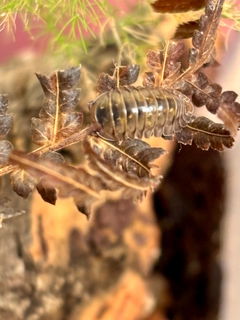
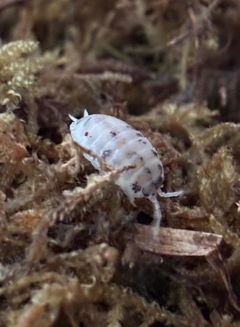
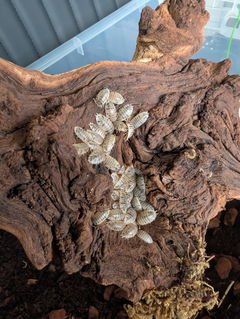
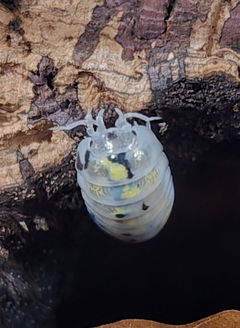
Armadillidium granulatum "Orange" (also known as "Naranjito" - Spanish for "little orange") is a naturally occurring colour form of the granulated pill woodlouse from Spain. The orange body with yellow spotting makes these among the more visually striking European isopods, and they combine this appearance with genuinely easy care and prolific breeding. They're confident, active, and tend to be visible—a combination that makes them excellent display animals.
A Glimpse
-
Origin: Spain, southwestern Europe (Costa Blanca region)
-
Scientific Name: Armadillidium granulatum
-
Common Names: Orange Granulatum, Naranjito, Yellow Spanish Isopod, Granulated Pill Woodlouse
-
Maintenance required: Low
-
Average Size: Up to 22-25mm (approximately 1 inch)
-
Rarity: Low (readily available)
-
Temperature: 15-26°C (60-78°F)
-
Ventilation: Medium
-
Humidity: 55-75% (drought tolerant)
-
Favorite food: Leaf litter, decaying wood, vegetables
-
Supplements: Calcium, protein twice weekly
Armadillidium granulatum Orange: Introduction
Armadillidium granulatum is native to the Iberian Peninsula and wider Mediterranean region. The orange form isn't a captive-bred mutation—these isopods occur naturally in some areas of Spain, where the combination of warm orange body colour and bright yellow spotting developed in wild populations. "Naranjito" is the Spanish diminutive for orange, reflecting their origin.
The species name "granulatum" refers to the textured, granulated appearance of their exoskeleton—small bumps covering the carapace give them a distinctive look compared to smoother Armadillidium species. Combined with the orange colouration, they're immediately recognisable.
These are among the larger Armadillidium species, reaching around 22-25mm as adults. They're hardy, drought-tolerant (reflecting their Mediterranean origins), and notably confident—they don't hide constantly like some species. PostPods describes them as "on display almost constantly," which matches keeper reports. For anyone wanting colourful isopods that actually show themselves, orange granulatum deliver.
Armadillidium granulatum Orange: Physical Traits and Characteristics
- Adults reach 22-25mm—among the larger Armadillidium species
- Orange body colouration (intensity varies between individuals)
- Yellow spots/speckling across the exoskeleton
- Each isopod has unique spot patterning—no two are identical
- Textured, granulated carapace (the source of the species name)
- Uropods (small projections) visible at the rear, aiding movement
- Can roll into a tight defensive ball (conglobation)
- Seven pairs of legs, front pairs with sensory function
The combination of orange base colour with yellow spotting is genuinely attractive. The granulated texture adds visual interest that smooth-shelled species lack. Individual variation in spot patterns means observant keepers can distinguish individuals.
Behaviour
Orange granulatum are notably active and visible compared to many isopod species.
Activity patterns: Active during day, early morning, and night. They're not strictly nocturnal—expect to see them moving about during daylight hours. This visibility is one of their main appeals.
Confidence: These aren't shy isopods. Once established, they're frequently visible on the surface rather than constantly hiding. The PostPods description calls them confident, and this matches their reputation.
Conglobation: Can roll into tight balls when threatened—classic pill bug behaviour.
Aggregation: In the wild, they form clusters under rocks and bark to retain moisture and for protection. They're social and do well in groups.
Temperament: Docile and handleable. They typically remain motionless or roll up when handled rather than fleeing frantically, making them pleasant to interact with.
Climbing: Capable of some climbing but not known for escaping well-secured enclosures.
Diet
Standard detritivore diet with no special requirements.
Primary foods:
- Hardwood leaf litter (oak, beech, maple)
- Decaying white-rotted wood
- Lichen and moss
Supplementary foods:
- Vegetables: carrot, courgette, sweet potato, squash, cucumber
- Fruits: apple, banana, melon
- Commercial isopod foods (Repashy Bug Burger mentioned as a favourite)
Protein: Provide protein sources twice weekly:
- Fish flakes or pellets
- Dried shrimp
- Freeze-dried insects
Calcium: Calcium is particularly important for this species given their thick, granulated exoskeletons:
- Cuttlebone (the page specifically recommends this)
- Crushed oyster shell
- Crushed eggshells
- Limestone
Feeding notes: They're scavengers and will eat practically anything organic—decaying plant matter, fungi, algae, even dead insects. In bioactive setups, they'll process animal waste and shed skin effectively. Remove uneaten fresh foods before moulting occurs.
Armadillidium granulatum Orange: Breeding
Orange granulatum are prolific breeders—one of their main selling points.
Breeding characteristics:
- Highly prolific once established
- Sub-adults may begin breeding before reaching full size
- Large brood sizes—up to 40 young per brood reported
- Females carry eggs in a marsupium (brood pouch)
- Multiple broods possible
Establishment period: Some sources note that granulatum may take slightly longer to begin breeding than other species—Exuvium mentions colonies starting to breed after approximately three months. Once established, however, they're very productive.
Breeding process: After mating, females store sperm and can produce multiple broods. The eggs develop in the marsupium until young are released as fully-formed mancae (juvenile isopods). Expect to find small juveniles appearing regularly in established colonies.
Note on the original page's parthenogenesis claim: The PostPods page suggests females can reproduce without mating to produce clones. This is not typical Armadillidium behaviour—while some isopod species can reproduce parthenogenetically, this isn't documented as standard for A. granulatum. Sexual reproduction is the norm for this species. The original page text may contain an error on this point.
Armadillidium granulatum Orange: Habitat Setup
Straightforward Armadillidium setup with moderate humidity requirements.
Enclosure: Plastic storage containers or glass terrariums work well. A shoebox-sized container (approximately 6 quart) is adequate for starter colonies; upgrade as population grows. Secure lids with ventilation holes.
Ventilation: Medium—more tolerant of airflow than tropical species. Multiple ventilation holes on container sides prevent stagnation while maintaining humidity.
Substrate: Depth of 5-10cm (2-4 inches):
- Organic topsoil as base (pesticide-free)
- Sphagnum peat moss mixed in for moisture retention
- Decaying hardwood pieces
- Crushed limestone or calcium powder mixed throughout
- Leaf litter layered generously on top
Humidity: 55-75%—notably drought-tolerant for an isopod:
- Keep approximately one-third of enclosure moist with sphagnum moss
- Allow remaining area to stay drier
- They're Mediterranean species adapted to drier conditions than tropical isopods
- Mist as needed but avoid waterlogging
- They don't like being sprayed directly—pour water on substrate edges instead
Temperature: 15-26°C (60-78°F)—wide tolerance reflecting Mediterranean climate adaptation. Room temperature in UK homes is generally fine year-round. Can tolerate cooler temperatures than tropical species but avoid extremes.
Décor:
- Cork bark pieces (hiding and food source)
- Leaf litter (food and cover)
- Moss patches (humidity retention and grazing)
- Lotus pods, coconut halves, or egg cartons for additional hides
- Live plants optional but not necessary
Light: Avoid direct sunlight on the enclosure. Normal room lighting is fine—they're active during daylight anyway.
Bioactive Use
Orange granulatum are well-suited to bioactive applications.
Strengths as cleanup crew:
- Hardy and adaptable
- Visible and active—you'll actually see them working
- Effective decomposers of waste, shed skin, and decaying matter
- Prolific breeding maintains population
- Larger size handles more material than smaller species
- Drought tolerance suits varied enclosure conditions
Suitable applications:
- Reptile bioactive setups (they tolerate the drier conditions many reptiles need)
- Paludariums (the page mentions semi-aquatic tolerance)
- Terrariums
- Vivarium cleanup crews
Compatibility: Work well alongside springtails. Adding springtails helps manage mould that might develop from supplementary feeding. Their size makes them less suitable as feeders for very small animals but fine for medium-sized reptiles.
Note: Their confidence and visibility make them particularly satisfying bioactive inhabitants—they don't just hide under the substrate.
Tank Mates
Compatible with most appropriate terrarium inhabitants.
Compatible:
- Springtails (recommended combination)
- Small snails
As cleanup crew for:
- Various reptile species
- Amphibians in moderate-humidity setups
- Invertebrate enclosures
Their larger size and active nature make them visible contributors to bioactive systems rather than background residents you never see.
Suitability
Orange granulatum are excellent beginner isopods that also satisfy experienced keepers.
Good choice for:
- Beginners wanting attractive, easy-care isopods
- Keepers who want visible, confident animals
- Bioactive setup cleanup crews
- Display colonies
- Those wanting prolific breeders
- Educational settings (individual spot patterns allow naming/identification)
- Children (docile, handleable, interesting to observe)
Less suited for:
- High-humidity tropical setups (they prefer drier conditions)
- Those wanting rare or unusual species (they're readily available)
Care level: Easy. These are forgiving isopods that tolerate a range of conditions, establish readily, and breed prolifically. The combination of low maintenance requirements and high visibility makes them ideal starter species. If you're new to isopods, you could do much worse than starting here.
Value: Currently on sale at £18 for 10 (reduced from £45)—exceptional value. At full price they're still reasonably priced for an attractive, established species. The 60% discount makes them a no-brainer for anyone considering starting an isopod colony or adding to an existing collection.
Pricing: £9 for 5, £18 for 10, £35 for 20.
What to expect: Expect active, visible isopods that don't spend all their time hiding. Expect the orange and yellow colouration to brighten your enclosure. Expect prolific breeding once established—colonies can grow quickly, so be prepared to either expand housing, sell/give away surplus, or use them in bioactive setups. Expect hardy animals that tolerate beginner mistakes. The customer reviews on the page are uniformly positive ("These isopods are orange 🥰" sums up the experience). For keepers wanting colourful, confident, easy-care isopods that actually show themselves, orange granulatum are hard to beat.