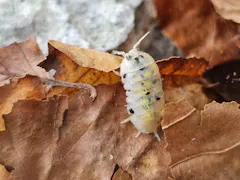
Cuban/Banana Cockroach (Panchlora nivea) for Sale
Care Info:
 ORIGIN
 TEMP
TEMP
 HUMIDITY
 LENGTH
 DIFFICULTY
 RARITY
- Free shipping over £65
- Low stock - 1 item left
The Cuban Cockroach — also known as the Green Banana Cockroach — is one of the most accessible entry points into the world of display cockroaches available in the UK. Adults are vibrant lime-green to pale green with translucent wings, looking more like a leafhopper or a small mantid than a typical cockroach. The species is widely kept internationally for both display and feeder purposes, but the bright green colouration and the engaging adult flight behaviour make it more interesting as a display animal than the appearance might suggest. At a properly accessible price point, this is the right starting species for anyone curious about display cockroaches before stepping up to the rarer metallic species.
This is part of our wider cockroach collection and works as a natural entry point alongside our more premium options — the iridescent Emerald Cockroach, the metallic blue Sapphire Flower Cockroach, the larger Giant Flower Cockroach, and the conservation-significant Simandoa Cave Roach. For keepers new to roach husbandry, Cuban Cockroaches deliver real visual appeal at a fraction of the cost of the rarer species — and the husbandry skills transfer directly to the more demanding species when you're ready to step up.
One honest framing point up front. Cuban Cockroaches are easy to keep but are properly strong fliers — adults are documented as "agile flyers" attracted to lights, capable of dispersing into a room if the enclosure isn't sealed. A genuinely escape-proof setup is non-negotiable rather than a precaution. To set things up properly from the start, browse our accessories collection for cork bark, climbing material, supplementary foods, and the humidity-supporting components this species needs.
Quick Care Summary
- Scientific Name: Panchlora nivea (Linnaeus, 1758)
- Common Names: Cuban Cockroach, Green Banana Cockroach
- Family: Blaberidae
- Origin: Native to Cuba, the Caribbean, Central America, and northern South America; established as an invasive species in the southern US (Florida, Texas, Louisiana coast) via banana shipments
- Adult Size: Females 22–24 mm; males 12–15 mm — noticeable sexual dimorphism in size
- Lifespan: Adults approximately 150 days (5 months); total egg-to-adult development around 144 days for males and 181 days for females
- Difficulty: Easy — beginner-friendly species, forgiving of moderate husbandry variation
- Temperature: 24–32 °C; warmer end (27–30 °C) supports best breeding
- Humidity: High — 70–85% with consistent moisture
- Ventilation: Moderate — balance humidity retention with airflow
- Flying: Adults are strong fliers — escape-proof lid genuinely necessary
- Climbing: Adults climb readily; nymphs burrow
- Activity: Nocturnal; attracted to lights at night
- Appearance: Adults vibrant lime-green to pale green body with translucent wings, yellow margin on the pronotum behind the head; nymphs entirely different — dark brown to black, ground-dwelling burrowers
- Sexual dimorphism: Females noticeably larger and chunkier than males; both sexes have fully developed wings and can fly
- Reproduction: Ovoviviparous — females retain egg cases internally and give birth to live young
- Rarity: Common in international culture; accessible in the UK
What Makes Cuban Cockroaches Special
The unusual colouration is genuinely engaging. The species name "nivea" literally means "snowy" in Latin, referencing the pale, almost translucent green of adult animals. The colour is unusual enough that most people don't immediately recognise them as cockroaches at all — adults look more like green leafhoppers or small grasshoppers than the brown-and-black species the word "cockroach" usually brings to mind. For keepers nervous about the idea of keeping roaches generally, the visual disconnect makes Cuban Cockroaches a properly approachable starting point.
The dramatic juvenile-to-adult transformation. Cuban Cockroach nymphs are dark brown to black — completely different from the bright green adults. They're also primarily burrowing rather than arboreal, spending most of their early development under substrate rather than on plants or in elevated cover. Watching nymphs gradually transition from underground burrowers to green flying adults across the species's roughly 5-month development cycle is one of the more interesting biological observations available in any commonly-kept invertebrate.
The adult flight behaviour. Unlike most pet cockroaches where flight is a theoretical capability rarely exercised, Cuban Cockroach adults are properly described as "agile flyers" who actively fly toward light sources at night. In a sufficiently large enclosure with proper height, adults will use the airspace rather than just walking the substrate — flight is part of the species's normal behavioural repertoire, not just an escape response. This is genuinely unusual for hobby roaches and adds engagement that more sedentary species lack.
The arboreal lifestyle of adults. Wild Cuban Cockroaches are found in trees, shrubs, palms, and other vegetation rather than on the ground. Adults are properly arboreal and use vertical cover and climbing surfaces actively in captivity. A taller-than-wide enclosure with cork bark, branches, and live or artificial plants gets the species expressing natural behaviours that flat-bottomed tubs don't support.
The non-pest status. Despite being a cockroach, P. nivea can't infest UK homes — it requires high humidity and warm temperatures to survive and is widely classed as a "nuisance" rather than a "pest" species even in its established US range. Escaped adults will fly toward lights and may disperse around a room, but they can't establish in typical UK home conditions. The species is also clean and odour-free in a properly maintained setup, with none of the disease-association concerns that come with German or American cockroaches.
The accessible price point. At entry-level price compared to the premium metallic species in the collection, Cuban Cockroaches let new keepers experiment with cockroach husbandry without the financial pressure that comes with rarer species. The skills directly transfer to other Blaberidae — once you've got a Cuban Cockroach colony running properly, the husbandry foundations for stepping up to Pseudoglomeris, Eucorydia or Simandoa are already in place.
About the Name
A brief clarification on the species's various names.
- Panchlora nivea: The scientific binomial. The genus name Panchlora derives from Greek roots meaning "all green"; the species epithet nivea means "snowy" in Latin, referencing the pale near-white quality of the green colouration in some specimens.
- Cuban Cockroach: The name that reflects the species's native Caribbean range.
- Green Banana Cockroach: The more common name in the US, referencing both the species's accidental introduction via banana shipments from Cuba and the bright green adult colouration that resembles unripe banana skin.
- Original description: Linnaeus, 1758 — placed in family Blaberidae (the live-bearing cockroaches), within superfamily Blaberoidea.
Setting Up the Enclosure
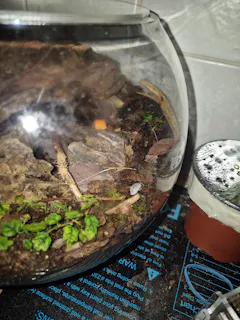
A 5–10 litre plastic container or glass terrarium suits a starter colony of 6–10 adults. Cuban Cockroaches don't need a particularly large enclosure — keeper experience consistently notes they're happier in moderately tight setups than spread out in large ones. A taller-than-wide design works better than the reverse, given the adult arboreal lifestyle.
Escape-proofing is the critical setup detail for this species. Adults are strong fliers genuinely attracted to lights, so a properly sealed lid is essential. Use clip-locked containers or terrariums with tight-fitting lids; cover ventilation holes with fine mesh; consider a smooth climbing barrier inside the rim as additional insurance. Adults that escape a poorly sealed enclosure will disperse into the room and fly toward light sources, including ceiling lights and window areas — easy to recapture individually but a nuisance you can avoid entirely with proper setup.
Ventilation should be moderate. The species needs high humidity but stagnant air encourages mould. Cross-ventilation between opposing sides works well, with mesh sized small enough to contain newly-emerged nymphs (typically 1–2 mm gaps maximum).
Provide climbing and hiding structure for adults: cork bark in vertical orientations, branches, lotus pods, live or artificial plants. Bromeliads and similar tropical-looking plants suit the species's natural habitat. Browse our accessories range for cork bark, branches, lotus pods and other natural cover options. Stacked egg cartons on the opposite side from food and water also work well for keepers wanting a simple feeder-style setup; adults often rest in the egg carton voids during the day.
Important husbandry note: You can use a water dish for this species (unlike many isopods), but a dish of hydrated water crystals is more practical — keeps up humidity, avoids drowning risk for nymphs, and provides a continuous moisture source. Some keepers also mix hydrated water crystals directly into the substrate.
Substrate
Use a moisture-retentive substrate that supports the species's burrowing nymphs:
- Organic topsoil or coco humus (pesticide-free) as the foundation — available in our accessories range
- Composted hardwood leaf litter mixed throughout and layered on top — browse our accessories collection for ready-prepared options
- Sphagnum moss for moisture retention
- Decaying hardwood pieces incorporated for nymph cover and supplementary nutrition
- Optional: hydrated water crystals mixed into the substrate to support humidity without standing water
- Springtails inoculated into the substrate to consume droppings and food waste, preventing mould in the warm humid setup
Substrate depth around 5–8 cm gives nymphs proper burrowing room during their long development period. Substrate quality matters — nymphs spend months in the substrate before emerging as adults, and dense or compacted material works against them.
Top layer: a generous covering of hardwood leaf litter plus cork bark and decaying wood for cover. Adults won't use the substrate much; nymphs will live in it.
Humidity and Temperature
Maintain humidity high — 70–85% — with the substrate kept consistently moist. Daily misting or hydrated water crystals in the substrate both work. The species genuinely depends on high humidity; dry conditions kill them quickly, particularly the nymphs. If you're erring in one direction with this species, err on the side of wetter rather than drier, while maintaining proper ventilation to prevent stagnation.
Temperature should be 24–32 °C, with 27–30 °C ideal for active breeding. UK room temperature is below the species's preferred range for most of the year — supplementary heating is realistically necessary year-round in most UK homes. A low-wattage heat mat on a thermostat, mounted on the side of the enclosure opposite the food and water (so animals can choose warmer or cooler zones), is the standard approach. Side-mounted heating creates a thermal gradient and avoids overheating substrate where nymphs spend most of their time.
Don't let temperature drop sustainably below about 22 °C — breeding stops and nymphs in particular suffer at cooler temperatures.
Diet
Cuban Cockroaches are flexible omnivorous feeders with a clear preference for soft fruits and vegetation:
- Fresh fruit — the dietary mainstay. Bananas in particular are well-received (consistent with the species's common name) — apple, mango, melon, pear, and orange also work well. Replace within 24–48 hours.
- Fresh vegetables — courgette, sweet potato, carrot, leafy greens. Replace within 24–48 hours.
- Hardwood leaf litter — eaten in moderation as background food source. Our accessories range includes properly prepared leaf litter.
- Rotting hardwood pieces — used as cover and slowly consumed
- Dry food supplements — fish flakes, dog food, dried mealworms offered occasionally for protein. Browse the protein options in our accessories collection.
- Calcium sources — cuttlebone, crushed limestone as background availability. Our calcium options cover the full range.
Position fresh food on dishes or leaves rather than directly on substrate to make removal of uneaten portions easier and reduce mould risk in the high-humidity setup.
Breeding
Cuban Cockroaches breed readily once temperature and humidity are stable. Females are ovoviviparous — they retain egg cases internally and give birth to live nymphs rather than depositing oothecae externally. The eggs hatch inside the female and emerge as fully-formed nymphs in a single brood event. Nymph development to adult takes approximately 144 days for males and 181 days for females (around 5–6 months) under good conditions.
For breeding success:
- Stable temperature in the warmer half of the range (27–30 °C is ideal)
- Consistent high humidity maintained — daily misting or water crystal supplementation
- Mixed-age colony — given the offset 5–6 month development timeline and the ~5 month adult lifespan, maintaining nymphs alongside adults supports continuous turnover
- Adequate substrate depth for nymphs to burrow during their long development phase
- Springtails inoculated to manage waste and prevent mould during the long humid setup
- Plenty of vertical structure for adult resting and breeding behaviours
- Minimal substrate disturbance — nymphs spend months in the substrate and are easily disrupted
Breeding rates are moderate rather than explosive. Females produce broods at intervals rather than continuously, and the long nymph development timeline means colony expansion is steady rather than fast. Plan for the colony to take 6+ months to start showing meaningful population growth from a starter group, with reliable productivity establishing across the first year.
Who Should Buy Cuban Cockroaches?
Ideal for:
- Beginner cockroach keepers looking for an accessible, visually interesting entry species
- Keepers building cockroach husbandry skills before stepping up to premium metallic species like the Emerald or Giant Flower Cockroach
- Display enthusiasts drawn to the green colouration and the active adult flight behaviour
- Naturalistic vivarium setups — they suit planted tropical enclosures with live bromeliads and other tropical plants
- Anyone curious about cockroaches as a hobby without committing to expensive rare species
- Keepers interested in observing dramatic juvenile-to-adult transformation
Not ideal for:
- Anyone without a properly escape-proof enclosure — adults are strong fliers and will disperse if given the opportunity
- Setups in cool UK rooms without supplementary heating — the species needs sustained warmth
- Keepers wanting consistently visible animals during the day — Cuban Cockroaches are properly nocturnal
- Anyone bothered by flying insects in general — adults are active flyers, not just passive walkers
- Setups requiring low humidity — this species depends on consistent high moisture
Realistic Expectations
They genuinely fly. The flight behaviour is real and is properly active rather than just an escape response. New keepers used to walking-only species like Hissers can be surprised by how readily Cuban Cockroach adults take to the air, particularly at dusk and night when their attraction to light kicks in. Treat the enclosure lid as a flight barrier from day one — a slow-closing lid is enough time for an adult to escape.
Nymphs look like a completely different species. The dark brown burrowing nymphs bear no visual resemblance to the bright green flying adults. New keepers occasionally don't recognise nymphs as the same species and wonder where their roaches have gone after the initial introduction. Check the substrate — they're there, just out of sight during early development. The juvenile-to-adult colour transformation is one of the species's most interesting features biologically.
Females are noticeably larger than males. The sexual dimorphism is genuine and visible — females reach close to 25 mm while males stay around 12–15 mm. New keepers sometimes assume size differences indicate different species or development stages; they don't. Both sexes have wings and can fly.
They're attracted to light. Escaped adults won't hide in dark corners — they'll fly toward the nearest light source, often heading for ceiling lights, lamps, or window areas. This is a property of Panchlora species generally and makes recovery of escapees genuinely easier than it would be for cryptic species, but it also means the species can't be ignored once loose in a room.
They're not feeder insects despite being often sold as such. While the international hobby uses Cuban Cockroaches as occasional feeders for larger reptiles and arachnids, the slow breeding rate, high-humidity requirements, and arboreal lifestyle make them inefficient for feeder use compared to species like Dubia or Red Runners. PostPods sells this species as a display animal — using them as feeders is wasteful given the available alternatives.
They can't establish in UK homes. The species requires sustained warm temperatures and high humidity that UK homes don't naturally provide. Even with multiple escaped adults, establishment is functionally impossible — the wild range stops at the southern US Gulf coast, and the UK is well outside any climate where the species could persist. This is a meaningful reassurance for keepers nervous about general cockroach pest concerns.
Use collapsible tabs for more detailed information that will help customers make a purchasing decision.
Ex: Shipping and return policies, size guides, and other common questions.