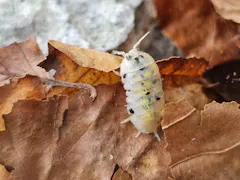
Indian Spotted Cockroaches (Therea Petiveriana)
Care Info:
 ORIGIN
 TEMP
TEMP
 HUMIDITY
 LENGTH
 DIFFICULTY
 RARITY
- Free shipping over £65
The Indian Spotted Cockroach — better known in the international hobby as the Domino Cockroach — is one of the few species that genuinely changes people's minds about cockroaches. Adults are properly striking: glossy black bodies covered in crisp white spots arranged in patterns that look exactly like domino tiles. Combined with diurnal-and-crepuscular activity (you actually see them), straightforward husbandry, and accessible pricing, this is one of the right starting species for ornamental cockroach keeping. For keepers nervous about the typical "cockroach" image, the Domino's beetle-like appearance offers a properly different visual that often wins over skeptics on first sight.
This is part of our wider cockroach collection and shares a family-level evolutionary heritage with two of our other display species — the metallic blue Sapphire Flower Cockroach and the larger Giant Flower Cockroach. All three belong to the family Corydiidae (formerly Polyphagidae), making them sister groups despite the dramatic difference in appearance. For collectors building a focused Corydiidae display covering the family's visual range, the Domino brings something genuinely different from the metallic Eucorydia species — the bold spot pattern rather than iridescent solid colours. Also pairs naturally alongside the calm-temperament approach of our Headlight Cockroach for keepers building a varied display.
One honest framing point up front. If you're buying nymphs, they don't look like much — juveniles are plain brown, hairy, and spend nearly all their time burrowed underground. The dramatic black-and-white domino transformation only happens at the final adult moult. This isn't a problem (and the eventual reward is genuine), but new keepers occasionally don't realise their initially unimpressive purchases will transform into one of the hobby's most visually distinctive species. To set things up properly from the start, browse our accessories collection for substrate components, leaf litter, and other items this species depends on.
Quick Care Summary
- Scientific Name: Therea petiveriana (Linnaeus, 1758) — though see "About the Name" section regarding the captive-stock taxonomy uncertainty
- Common Names: Domino Cockroach, Indian Domino Cockroach, Indian Spotted Cockroach, Seven-spotted Cockroach, Desert Cockroach
- Family: Corydiidae (subfamily Corydiinae); historically classified under Polyphagidae
- Genus context: Type species for the genus Therea; the species epithet honours James Petiver (1663–1718), the English naturalist who first obtained specimens from Madras
- Origin: Peninsular southern India; scrub forest and semi-arid habitats including humus piles and rubbish heaps near human settlements. Some hobby sources also list Sri Lanka, though primary literature centres the species on southern India proper.
- Adult Size: Males ~25 mm; females ~35 mm — properly noticeable sexual dimorphism in size
- Lifespan: Up to 2 years in the wild; similar in captivity with proper care
- Difficulty: Easy — among the most forgiving ornamental cockroaches available
- Temperature: 21–29 °C; UK room temperature acceptable, but breeding rates improve at 24–29 °C
- Humidity: 40–60% air humidity — properly modest by tropical cockroach standards. Moist substrate is essential for egg-laying, but air humidity should remain moderate
- Ventilation: Moderate to high — prevents stagnation in the substrate-moist setup
- Climbing: Adults can climb smooth surfaces; nymphs cannot
- Flying: Wings present but non-functional — cannot fly
- Activity: Crepuscular (dawn and dusk active), with adult males often visible during daylight hours — properly unusual for a roach
- Appearance: Adults glossy black with bold white spots in domino-like patterns; rounded somewhat beetle-like body shape; hidden orange-yellow colouring on upper abdomen (visible only when wings are raised)
- Nymphs: Plain brown, hairy, fossorial; transform dramatically at final moult
- Sexual dimorphism: Females larger (~35 mm) and broader; males smaller (~25 mm) and more active above the substrate
- Reproduction: Oviparous — females produce oothecae (egg cases) deposited in moist leaf litter; ~13 oothecae per female lifetime, each containing 6–14 nymphs
- Social: Genuinely social — do better in groups than as individual specimens
- Rarity: Common in international culture; widely available in UK hobby
What Makes Indian Spotted Cockroaches Special
The Batesian mimicry is genuinely interesting biology. The Domino Cockroach's black-and-white spot pattern isn't just visual decoration — it's evolved to mimic the appearance of the toxic ground beetle Anthia sexguttata (the six-spotted ground beetle), a properly defensive species that can spray chemical irritants at predators. By copying the beetle's appearance, Domino Cockroaches benefit from predators' learned avoidance of the genuine toxic species. The cockroaches themselves aren't toxic; they just look like something that is. This is textbook Batesian mimicry — a level of evolutionary sophistication that's properly unusual to find in a hobby invertebrate.
The transformation from nymph to adult. The visual change between juvenile and adult Domino Cockroaches is dramatic enough to be one of the species's main appeals. Nymphs are plain brown, hairy, and unremarkable — they look like ordinary roach nymphs and spend nearly all their time underground. After the final moult, adults emerge with the spectacular domino pattern that gives the species its name. New keepers who buy nymphs without knowing what to expect can be properly surprised by the change; the wait is worth it.
The diurnal-and-crepuscular activity. Most cockroaches are strictly nocturnal — they hide all day and emerge only after dark. Domino Cockroaches break this pattern: adult males are often properly visible during daylight hours, running around on the substrate rather than hiding under bark. Females are shyer and more inclined to burrow, but still surface regularly. For display purposes, this active visibility makes the species considerably more rewarding than purely nocturnal alternatives.
The Corydiidae cluster. Within our roach catalogue, the Domino Cockroach shares family-level evolutionary heritage with our other Corydiidae species — the Sapphire Flower Cockroach and Giant Flower Cockroach (both genus Eucorydia). The family Corydiidae (formerly Polyphagidae) is one of the more interesting cockroach families to keep — it includes the flower-visiting Eucorydia, the beetle-mimicking Therea, and several other ornamental groups. For collectors building a focused family-level display, all three species together show the visual range of one of the more biologically interesting cockroach families.
The accessible price point. At a properly modest price per nymph, Domino Cockroaches deliver real visual appeal at the most accessible tier of ornamental cockroach pricing. The husbandry skills transfer to other Corydiidae species; the calm temperament suits handling and observation; the social behaviour means starter colonies establish reliably. For keepers exploring ornamental cockroaches before committing to expensive species, this is the right introduction.
The cellulose-digesting gut biology. Like termites (which are technically cockroaches — Blattodea taxonomy was revised to include termites within the order), Domino Cockroaches harbour symbiotic gut bacteria and flagellates that help them digest cellulose from decaying plant matter. This makes leaf litter not just a food source but essential for digestive health — the symbionts need a steady supply of plant material to maintain the gut microbiome. The biology connects Domino Cockroaches to a broader story about cockroach-termite evolutionary heritage that's properly interesting for educational settings.
The "gateway roach" reputation. Within hobby culture, Domino Cockroaches have earned a reputation as the species that gets people interested in keeping cockroaches. Showing the dramatic adult colouration to someone with a default negative reaction to roaches often produces a noticeable shift — they look more like ornamental beetles than the brown house pests most people picture. For keepers wanting to share their interest with skeptical family members, this is the right species to demonstrate.
About the Name and the Captive Stock Taxonomy
The taxonomy here has a properly interesting twist worth knowing about.
- Therea petiveriana: The historical name applied to all Domino Cockroaches in the hobby. Described by Linnaeus in 1758, originally as Cassida petiveriana; the species epithet honours English naturalist James Petiver (1663–1718), who first obtained specimens from Madras.
- The 2009 taxonomic revision: A 2009 study by Vidlička described Therea bernhardti as a separate species, distinguished primarily by hindwing colouration. True T. petiveriana has larger yellowish-orange hindwings; T. bernhardti has shorter, stubbier hindwings that are generally black with only the root coloured. Subsequent investigation suggested that most or all captive hobby stock previously called "T. petiveriana" might actually be T. bernhardti.
- Practical implications: The two species are visually similar at first glance, require identical care, and share all the same biological features (Batesian mimicry, crepuscular activity, oothecae reproduction, gut symbionts). The hindwings are only visible when wings are spread (which is rare in life), so visual identification is properly difficult. For keepers, this taxonomic distinction doesn't change husbandry or expected behaviour — but for collectors and academic interest, knowing your stock might be T. bernhardti rather than true T. petiveriana is worth noting.
- Hobby usage: Most retailers (including this listing) continue to use the T. petiveriana name because that's how the species has been known in the hobby for decades. We'd need genuine wing examination to confirm the precise species identity of any given colony.
- Family Corydiidae: The current family designation. Older literature uses Polyphagidae — both names refer to the same family-level group; the name change reflects accepted reclassification rather than a different organism. This is the same family our Sapphire Flower Cockroach and Giant Flower Cockroach belong to.
- Common names variety: "Domino Cockroach" is the most common international hobby name. "Seven-spotted Cockroach" references the typical spot count on the elytra. "Desert Cockroach" reflects the species's preference for semi-arid scrub forest habitats. "Indian Domino Cockroach" emphasises the geographic origin. All refer to the same species — and possibly to T. bernhardti rather than T. petiveriana.
Setting Up the Enclosure
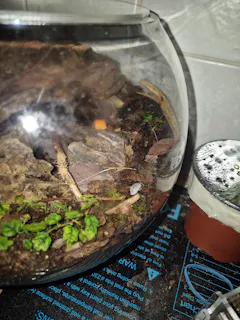
A modest enclosure suits this species — a 10-litre tub is sufficient for a well-established colony; 4-litre containers work fine for starter cultures of 5–10 individuals. Domino Cockroaches don't require elaborate setups; the species's burrowing nymphs and active adults mean the enclosure's most important feature is proper substrate depth rather than complex above-ground structure.
Escape-proofing matters for adults. Despite the calm temperament, adult Dominos can climb smooth surfaces including glass and plastic. Use a properly tight-fitting lid; a thin band of petroleum jelly around the inside rim provides additional security if needed. Nymphs cannot climb smooth surfaces, so escape risk is properly limited to the adult stage.
Ventilation should be moderate to high. The species's preference for drier conditions (compared to most tropical cockroaches) means good airflow prevents the stagnation that can encourage mould. Cross-ventilation between opposing sides of the enclosure works well; mesh-covered ventilation holes are standard practice.
Provide some surface structure but don't overload it. Adult males appreciate cork bark pieces and low branches for climbing and exploration; females and nymphs use them as cover for occasional surface activity. Browse our accessories range for cork bark and natural cover options. The species doesn't need extensive hides since burrowing provides primary cover; surface décor is mostly for display purposes and adult male activity.
Important husbandry note: Skip the standing water dish. Substrate moisture and occasional misting provide all the hydration this species needs. The relatively low air humidity preference (40–60%) means water dishes can actually create excess humidity in the enclosure.
Substrate
Substrate is the most important setup feature for this species — nymphs spend nearly all their time burrowed underground, and females need moist substrate for egg-case deposition:
- Coconut fibre (coir) as the foundation — supports burrowing and moisture retention
- Organic potting soil or peat moss mixed in (pesticide-free) — provides nutritional content for the digestive symbionts
- Optional: cypress mulch for texture and additional substrate variety
- Generous layer of hardwood leaf litter (oak preferred) on top — essential as food and habitat; browse our accessories collection for properly prepared options
- Springtails inoculated to consume droppings and food waste, preventing mould
Substrate depth should be 5–8 cm minimum (2–3 inches). In the wild, nymphs can burrow up to 30 cm deep during dry seasons; while captive setups don't need to replicate that extreme depth, adequate substrate depth is properly important for the species's wellbeing.
Create a moisture gradient by keeping the substrate damper at one end (where it's deepest) and drier toward the surface at the other. Females will deposit oothecae in the moister leaf litter areas. Avoid sand as a substrate component — it's not suitable for this species.
Top layer: a generous covering of oak leaf litter plus cork bark for cover.
Humidity and Temperature
Maintain air humidity at a properly modest 40–60% — much lower than tropical roach species. The Domino Cockroach's scrub forest origin means it's adapted to seasonal dry conditions rather than constant high humidity. Don't try to maintain rainforest conditions; this species does better with moderate humidity and well-ventilated air.
However, the substrate itself should maintain a moisture gradient with damper areas at the bottom or back of the enclosure. This is essential for female oothecae deposition and provides the substrate moisture nymphs need during their long burrowing developmental phase. Mist the damp side when the surface few centimetres dry out; don't waterlog the substrate.
Temperature should be 21–29 °C. UK average room temperature is at the cooler end of this range and is acceptable for maintenance; the warmer end (24–29 °C) supports faster development and better breeding rates. Below 21 °C activity and breeding slow noticeably; below 18 °C isn't recommended.
For breeding-focused setups, a low-wattage heat mat on a thermostat, mounted on the side of the enclosure rather than underneath, provides ideal supplementary warmth. Side-mounted heating creates a thermal gradient and avoids overheating substrate where burrowing nymphs spend most of their time.
Diet
Domino Cockroaches are detritivores with properly omnivorous tendencies. The cellulose-digesting gut symbionts mean leaf litter is genuinely essential rather than just supplementary:
- Hardwood leaf litter (oak preferred) — should always be available; the dietary foundation and essential for digestive health. Browse our accessories collection for ready-prepared leaf litter.
- Fresh vegetables — carrot, potato, sweet potato, courgette. Replace within 24–48 hours.
- Fresh fruit — apple, orange, banana. Provides both nutrition and moisture. Replace before mould develops.
- Protein supplements — fish flakes, fish food pellets, dog/cat kibble, bee pollen. Offered occasionally. Browse the protein options in our accessories collection.
- Insect jelly — clean, doesn't spoil, reportedly well-received
- Calcium sources — cuttlebone, crushed eggshells. While not as calcium-demanding as some invertebrates, calcium supports healthy moulting. Our calcium options cover the full range.
Position fresh food on dishes or leaves rather than directly on substrate to make removal of uneaten portions easier. Domino Cockroaches aren't particularly fussy eaters and will sample most offered foods, but the leaf litter is non-negotiable — the gut symbionts genuinely depend on it.
Breeding
Domino Cockroaches breed reliably in captivity once basic conditions are met. Females are oviparous — they produce oothecae (egg cases) rather than giving birth to live nymphs. Each female produces approximately 13 oothecae over her lifetime, with each containing 6–14 nymphs (some sources report up to 20–30). Oothecae are deposited in moist leaf litter, with incubation taking approximately 2–3 months depending on temperature.
For breeding success:
- Stable temperature in the warmer half of the range (24–29 °C)
- Moist leaf litter available for oothecae deposition — properly important and the most common failure point
- Adequate substrate depth (5–8 cm minimum) for nymph development
- Maintain moisture gradient — don't let oothecae dry out
- Keep animals in a social group — Dominos are properly gregarious and breed better with company
- Springtails inoculated to manage waste and prevent mould around oothecae
- Patience — newborn nymphs are tiny (around 3 mm, sesame-seed sized) and develop slowly over several months
An interesting reproductive note: once a female has mated successfully, she actively rejects subsequent male approaches, kicking suitors away with her hind legs. One mating is apparently sufficient — females store sperm and continue producing oothecae from the single mating event.
Established colonies can become genuinely productive. Since adults only live a few months while nymphs take longer to mature, maintaining overlapping generations ensures continuous adult presence for display.
Who Should Buy Indian Spotted Cockroaches?
Ideal for:
- Complete beginners to ornamental cockroach keeping
- Display enthusiasts wanting visible, day-active roaches
- Anyone interested in Batesian mimicry as observable biology
- Keepers building a focused Corydiidae display alongside Sapphire Flower and Giant Flower Cockroaches
- Families with children interested in observing invertebrates
- Bioactive vivarium setups where the gregarious detritivores contribute to substrate processing
- Educators wanting a striking display species for teaching biology concepts
- Anyone trying to demonstrate that cockroaches can be beautiful
Not ideal for:
- Keepers wanting instant visual impact — nymphs are plain brown for months before the adult transformation
- Display-focused keepers wanting constantly visible nymphs (nymphs burrow extensively)
- Anyone needing fast-breeding feeder colonies — there are more productive species for feeder use
- Setups that can't maintain substrate moisture gradient
- Tropical-style setups with high air humidity — this species prefers drier air conditions
Realistic Expectations
The juvenile-to-adult transformation takes time. New keepers buying nymphs occasionally don't realise the plain brown juveniles will eventually transform into the striking adult pattern. Don't be disappointed by initial appearance — the transformation happens at the final moult, after several months of nymph development. The wait is genuinely worth it, but it is a wait.
The species you have might actually be T. bernhardti. Per the 2009 taxonomic revision, most captive Domino stock in international hobby culture is likely T. bernhardti rather than true T. petiveriana. This doesn't affect husbandry or expected behaviour — both species are kept identically and look essentially identical to casual observation. But for collectors and academic interest, knowing this is part of the story.
Nymphs are properly hidden. The fossorial lifestyle of juveniles means you'll often see no nymphs at all on casual enclosure inspection — they spend nearly all their time burrowed in substrate. Don't excavate the substrate looking for them; you'll disturb developing animals and reduce breeding rates. Trust that the colony is there and let the substrate moisture and food availability tell you whether it's thriving.
The "Indian Spotted" name is a bit dry. International hobby culture overwhelmingly uses "Domino Cockroach" — and the visual match to domino tiles is genuinely the most memorable feature of the species. The "Indian Spotted" name accurately describes the geographic origin and pattern but lacks the visual punch of the more common name. If you're researching care online, search for "Domino Cockroach" or "Therea petiveriana" rather than the less-used "Indian Spotted" name.
The Batesian mimicry is genuinely real biology. The species hasn't just coincidentally evolved a beetle-like appearance — published research documents the mimicry relationship with Anthia sexguttata. For educational purposes, this is a properly accessible example of mimicry that you can actually show people in person. The Anthia ground beetles aren't available in the UK hobby, but photographs of both species side-by-side make the resemblance immediately apparent.
They benefit from group housing. T. petiveriana is genuinely gregarious — animals do better in social groups than as isolated individuals. Starter colonies of 5–10 nymphs establish more reliably than smaller groups. If you're considering buying just 1 or 2 animals, scale up to at least 5 for proper colony establishment.
Adult males are the show. The pronounced sexual dimorphism means adult males (smaller, more active) are properly more visible than females (larger, shyer, more burrowing). Males will frequently run across the substrate surface in daylight; females may rarely emerge from substrate during the day. A balanced sex ratio gives you both colony stability and good visible activity.
Don't expect them to fly. Despite having wings, Domino Cockroaches cannot fly — the wings are present but non-functional. The wings serve other purposes (visual signalling, alarm pheromone release when raised) but don't enable flight. This is one less escape concern than for the few cockroach species that do fly.
Use collapsible tabs for more detailed information that will help customers make a purchasing decision.
Ex: Shipping and return policies, size guides, and other common questions.