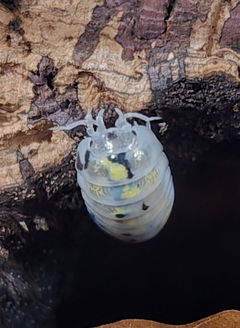
Amber Ducky Isopods (Cubaris sp.) - UK Bred
Care Info:
 ORIGIN
 TEMP
TEMP
 HUMIDITY
 LENGTH
 DIFFICULTY
 RARITY
- Free shipping over £65
- Low stock - 2 items left
Every genus has one species that quietly does everything the famous ones do, without the price tag or the hand-wringing. In Cubaris, that is the Amber Ducky. It carries the family looks and the family behaviour, it breeds more willingly than most of its relatives, and it forgives the sort of small husbandry slip that would set a premium morph back six months. If you have been circling Cubaris keeping and hesitating, this is the sensible way in.
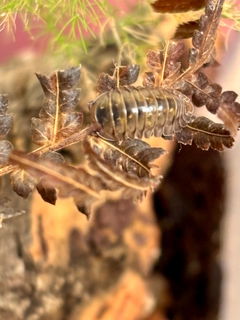
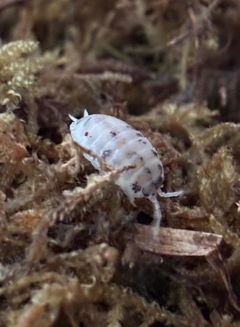
The colour is what people remember. Most isopods live in cool tones, all the greys and browns and blacks of things that live under bark. Amber Duckies run warm instead: honey, gold and orange through the front of the body, deepening to darker segments towards the rear. Under a light they glow in a way photographs consistently fail to capture.
Names and background
Sold as Cubaris sp. 'Amber Ducky', and also as the Amber Ducky Isopod or simply Cubaris Amber Ducky. Like most of the genus in the hobby it is a trade name attached to an undescribed species rather than a formal scientific one, which is normal for Cubaris and worth knowing if you go looking for literature and find none.
They share the Ducky name and the general Cubaris build with the Rubber Ducky, but they are a different animal rather than a colour form of it. The Rubber Ducky has the iconic yellow face markings and the reputation; the Amber Ducky has the warmer overall tone, a better breeding rate, and a considerably gentler learning curve.
Setting them up
Cubaris are tropical animals from warm, humid, limestone country, and the setup follows from that. Aim for a consistently warm enclosure and humidity on the high side, with a gradient rather than a uniformly soaked tub. The distinction matters: they need damp air and damp substrate, but stagnant wet conditions cause more Cubaris losses than any other single mistake.
Give them depth. Lay 7 to 10 cm of a nutritious forest-floor base such as our invertebrate substrate, because Cubaris burrow to moult and a shallow layer leaves them exposed at their most vulnerable. Cover the surface with hardwood leaf litter; magnolia leaves hold up well and give them cover to feed under. Add cork bark and, if you have it, a piece of limestone, which they will graze at directly.
Ventilation should be present but modest. Too much and the humidity you are working to maintain simply leaves.
Calcium and feeding
Calcium is not an optional extra for this genus. Cubaris come from limestone habitat and their shells are heavily calcified, so the supply needs to be permanent rather than occasional. Keep cuttlebone in the enclosure at all times and expect to see it visibly grazed down.
Beyond that, decaying hardwood and leaf litter form the bulk of the diet, with protein offered weekly in small amounts as dried shrimp or fish flake, and occasional vegetable. They are slow, deliberate feeders rather than scavengers that swarm a food dish, so put small amounts in and remove what is left.
Springtails are not optional
A humid Cubaris enclosure is close to ideal conditions for mould, and mould will take hold on uneaten protein and soft vegetable within a day or two. Seeding the enclosure with a springtail culture from day one deals with this before it becomes a problem. They coexist without any friction and do the housekeeping you would otherwise be doing by hand.
Breeding and behaviour
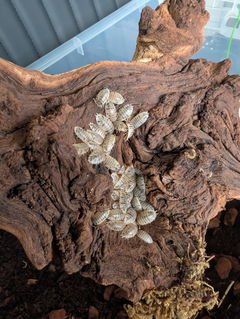
Amber Duckies breed more readily than most of the genus, but "more readily" is relative and they are still Cubaris. Expect several months of establishment before you see young, and expect broods to be modest rather than overwhelming. The colony builds steadily from there.
What sets them apart day to day is that they are bolder than their relatives. A lot of Cubaris keeping involves knowing your animals are in there somewhere and rarely seeing them; Amber Duckies spend real time on the surface. They conglobate into a tight sealed ball when disturbed, which is a large part of the appeal of the family, and they do it readily enough that you will see it often.
Who they suit
The natural next step for someone who has kept hardy beginner species and wants to move into the collector end of the hobby. They teach the Cubaris disciplines of warmth, humidity balance and constant calcium without demanding the precision that a premium morph does, so a mistake costs you time rather than the colony.
Set against the Panda King, the other common gateway into the genus, it comes down to taste: black and white patterning against warm gold. Both are forgiving by Cubaris standards. See the full Cubaris collection for the rest of the genus, or the wider isopod range if you are still deciding.
Before your colony arrives, our Amber Ducky care guide covers the full setup, feeding, breeding and the common mistakes to avoid.
Arriving with you
Captive-bred in the UK from established colonies. We post Monday to Thursday only so nothing spends a weekend in transit, sending by Royal Mail next day by 1pm in a double-walled box with the animals in ventilated deli tubs on damp sphagnum moss. A 20% overcount and our live arrival guarantee come as standard. Give them a fortnight in a dark, warm, undisturbed enclosure before you go looking for them; Cubaris settle at their own pace and digging about to check on progress is the fastest way to slow it down.