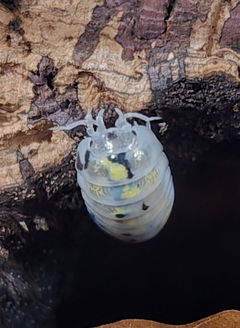
Madagascar Hissing Cockroach (Gromphadorhina sp)
Care Info:
- Free shipping over £65
- Low stock - 5 items left
- Backordered, shipping soon
The Madagascar Hissing Cockroach is one of the few invertebrates most people have actually heard of — a properly large, wingless African roach famous for the loud snake-like hissing sound that gives the species its name. The hissing isn't gimmick: it's produced by a genuinely unique respiratory mechanism (forcing air through modified abdominal breathing pores) that's found nowhere else in the insect world outside the species's close relatives. Combined with substantial adult size (commonly 5–7.5 cm, occasionally up to 10 cm), surprisingly docile temperament, and accessible price point, this is properly the right starting species for keepers new to ornamental cockroaches or invertebrates generally.
This is part of our wider cockroach collection and shares family-level evolutionary heritage with our other Blaberidae species — the metallic Headlight Cockroach, the Cuban Cockroach, and the porcelain-winged Centurion Porcelain Cockroach. The Hisser sits in the genuinely useful position of being both the most accessible entry point into ornamental cockroach keeping AND one of the most behaviourally interesting species available — the hissing, the male-male combat, the territorial behaviour, and the live-bearing reproduction all give the species genuine character beyond just being "a big cockroach."
One honest framing point up front. Despite the wingless body, adult Hissers are exceptional climbers — they'll scale smooth glass and plastic without difficulty, thanks to specialised adhesive pads on their feet. Escape-proofing is properly non-negotiable rather than a minor precaution. The classic solution is a petroleum jelly barrier around the inside of the enclosure rim; we recommend this from day one rather than after the first escape. To set things up properly from the start, browse our accessories collection for substrate components, leaf litter, and other items this species needs.
Quick Care Summary
- Scientific Name: Gromphadorhina portentosa (Schaum, 1853) is the most commonly sold species, though several similar species (G. oblongonota, G. picea) are routinely sold under the same name
- Common Names: Madagascar Hissing Cockroach, Hissing Cockroach, Hisser, MHC, Malagasy Hissing Cockroach
- Family: Blaberidae (the giant cockroach family); tribe Gromphadorhini
- Origin: Madagascar — native to rotting logs and leaf litter on the rainforest floor
- Adult Size: 50–75 mm (5–7.5 cm) typical; some individuals reach 10 cm. Among the largest cockroaches in the world
- Lifespan: 2–5 years — properly long-lived by invertebrate standards
- Difficulty: Easy — among the most forgiving ornamental invertebrates available
- Temperature: 24–29 °C optimal; survives mid-teens to mid-30s °C; breeds faster at 27–32 °C
- Humidity: 50–70% — reasonably tolerant of variation
- Wings: Completely wingless throughout life (unlike most cockroaches)
- Climbing: Excellent — can climb smooth glass and plastic using specialised adhesive foot pads
- Flying: Not possible — no wings
- Activity: Nocturnal; spends daytime hours hiding in cover
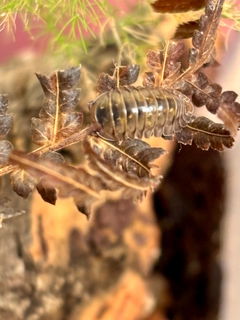
- Appearance: Oval body shape; shiny mahogany brown to nearly black exoskeleton; thick, hard, waxy cuticle
- Sexual dimorphism: Males have prominent "horns" (raised tubercles) on the pronotum behind the head; antennae hairier. Females larger and broader, lack distinct horns
- Social structure: Live communally; males defend small territories and compete with other males
- Reproduction: Ovoviviparous — females retain egg cases internally and give birth to live nymphs
- Brood size: 15–60 nymphs per brood (typically 30–40); 2–3 broods per year under good conditions
- Nymphal development: 6 moults over approximately 7 months to reach adulthood; sexual maturity at 3–6 months depending on temperature
- Mites: Most colonies host a symbiotic mite (Androlaelaps schaeferi, formerly Gromphadorholaelaps schaeferi) at the leg bases — actually beneficial to the cockroach (see below)
- Rarity: Common — among the most widely-kept hobby roaches globally
What Makes the Madagascar Hissing Cockroach Special
The hissing mechanism is genuinely unique. Most insects that make audible sounds do so through stridulation (rubbing body parts together, like crickets) or by vibrating membranes (like cicadas). Madagascar Hissing Cockroaches and their close relatives in the tribe Gromphadorhini produce sound by a completely different mechanism — forcing air through modified second abdominal spiracles (breathing pores). This is functionally similar to how vertebrates vocalise (forcing air through a sound-producing structure) and is documented nowhere else in the insect world. For keepers interested in unusual biology, this is properly worth knowing.
The four hiss types serve different social functions. Research by Nelson and Fraser (1980) identified four behaviourally distinct hisses: a male combat hiss used during aggressive encounters; two types of courtship and mating hisses used by males during reproductive sequences; and a disturbance hiss produced by both sexes and older nymphs when startled. The hisses differ in volume, duration, and amplitude pattern. For keepers observing colony dynamics, recognising the different hiss contexts adds genuine biological interest beyond just "it makes noise."
The size genuinely matters. Adult Hissers are substantial animals — properly the size of a child's hand, with thick waxy exoskeletons that feel solid rather than fragile. The impressive scale is one of the species's strongest appeals; few hobby invertebrates deliver this kind of physical presence at this price point. New keepers often underestimate how large the animals are until they see them in person.
The handleability is real. Despite being cockroaches, Hissers are properly handleable — calm, slow-moving, tolerant of regular contact, and incapable of biting humans (mouthparts aren't strong enough). They can become genuinely accustomed to handling over time, in a way that approaches the "tameness" of tarantulas or stick insects. The legs are spiny and can feel prickly, but they cause no harm. For keepers who want invertebrates they can actually pick up and observe up close rather than just look at, this is one of the right species.
The territorial behaviour is observable. Adult males defend small territories — typically a piece of bark, a rock, or a corner of the enclosure — for extended periods, and challenge other males that approach. Male-male combat involves dramatic-looking displays: ramming each other with the head horns, pushing with the abdomen, and exchanging combat hisses. It looks more violent than it actually is — injuries are rare and the combat establishes hierarchy rather than physically harming participants. For display purposes, this is one of the most engaging behavioural sequences available in any hobby invertebrate.
The mite symbiosis is properly fascinating. Most Hisser colonies host a small mite, Androlaelaps schaeferi (formerly Gromphadorholaelaps schaeferi), that lives at the base of the legs. The mites used to be considered commensal — eating debris without harming the cockroach. More recent research (Yoder et al. 2012) demonstrated they're actually mutualistic: by removing food debris and saliva from the cockroach's body, they suppress mould growth that would otherwise reduce cockroach lifespan. Cockroaches infested with mites live approximately 9 months longer than mite-free animals when both are exposed to fungal pathogens. New keepers occasionally panic about visible mites; don't. They're part of the species's normal biology and probably beneficial.
The Blaberidae family connection. Within our cockroach catalogue, the Hisser shares family-level evolutionary heritage with the Headlight Cockroach, the Cuban Cockroach, the Centurion Porcelain Cockroach, and the Shadow Cockroach. All belong to family Blaberidae (the "giant cockroach" family), and all share key features like ovoviviparous reproduction. For collectors building a focused Blaberidae display, the Hisser is the largest and most iconic species in the family.
About the Name and Species Identity
A few notes on taxonomy and what you're actually buying.
- Gromphadorhina portentosa: The most commonly-sold species and the one most international hobby sources reference. Described by Schaum in 1853. The genus name derives from Greek; the species epithet "portentosa" means "monstrous" or "marvellous" in Latin, presumably referencing the impressive size.
- Other species sold as "MHC": Several similar Madagascan species are routinely sold interchangeably under the "Madagascar Hissing Cockroach" name. G. oblongonota, G. picea, and others in the tribe Gromphadorhini all look generally similar to G. portentosa and require essentially identical care. Pet trade identification is often imprecise — your animals might be any of several species or even hybrids of multiple species mixed in captive lines.
- Tribe Gromphadorhini: The Madagascar hissing cockroach tribe contains around 20 known species across multiple genera (Gromphadorhina, Princisia, Aeluropoda, and others). All are large, wingless, and produce the characteristic spiracle-driven hiss. Nine of the twenty known species weren't formally described until 1973.
- Practical implications: Because care is essentially identical across species in the tribe, the taxonomic uncertainty doesn't matter for keepers. Your animals will hiss, climb, breed, and behave the same regardless of which specific species or hybrid lineage they belong to.
- Family Blaberidae: The "giant cockroach" family includes many of the largest cockroach species globally. Sister-genus heritage connects this species to a broad range of hobby roaches with similar life-history features.
Setting Up the Enclosure
A 20–40 litre plastic container or aquarium suits a starter group of 10–15 Hissers; larger colonies scale up proportionally. Plastic tubs work well for breeding-focused setups (cheaper, easier to manage); glass terrariums are fine for display purposes. The enclosure should be wider than tall — Hissers are floor-dwellers, not climbers by preference, even though they're capable climbers.
Escape-proofing is the most important setup feature. Adult Hissers can climb smooth glass and plastic without difficulty thanks to specialised tarsal adhesive pads. The standard solution is a band of petroleum jelly (around 5 cm wide) applied around the inside upper rim of the enclosure — the smooth fatty surface defeats the foot pads' adhesion. Apply this from day one; refresh every few weeks as the petroleum jelly accumulates dust and debris. Combine with a properly tight-fitting lid (mesh-covered ventilation) for genuine escape security.
Provide plenty of hides distributed across the enclosure floor. Egg cartons are the classic Hisser cover material — they're cheap, provide enormous surface area, create lots of small hiding gaps, and can be easily replaced when soiled. Stack them vertically to maximise usable space. Cork bark, cardboard tubes, and similar natural materials work alongside egg cartons. Hissers prefer dark hiding spots and will spend most of the day tucked away under cover.
Ventilation should be good — mesh-covered openings on opposing sides of the enclosure provide cross-ventilation. The species tolerates a range of humidity conditions but doesn't appreciate stagnant air. Browse our accessories range for substrate, cork bark and other natural cover options.
Important husbandry note: Provide drinking water via water crystals/gel, soaked sponge, or a shallow dish with pebbles (preventing drowning). Hissers will also drink misted droplets. Adequate hydration matters — dehydration is one of the few real welfare risks for this otherwise hardy species.
Substrate
Substrate choice is properly flexible for this species. Several options work depending on your preferences:
- Coconut fibre (coco coir) as a moisture-retaining base — most common choice
- Peat moss as an alternative base
- Sphagnum moss as moisture-retaining patches
- Wood chips (deciduous only — never cedar or pine, which contain harmful resins)
- Hardwood leaf litter mixed throughout and layered on top — adds food value and natural appearance. Browse our accessories collection for ready-prepared leaf litter.
- Bare floor with paper towel — properly minimalist option for feeder-focused setups, easier to clean but less natural
Substrate depth is not critical for this species — Hissers don't burrow extensively. 2–5 cm is adequate. Keep substrate slightly moist but not wet; excessive moisture isn't necessary and can encourage mould.
Top layer: egg cartons stacked or hardwood leaf litter plus cork bark for hides.
Humidity and Temperature
Maintain humidity at 50–70% — properly moderate by tropical roach standards. Occasional misting plus slightly damp substrate is sufficient. The species is reasonably tolerant of humidity variation and doesn't require precise conditions — one of its beginner-friendly features.
Provide drinking water continuously via gel crystals, soaked sponges, or pebble-lined dishes. Fresh vegetables and fruit also contribute moisture. Avoid dishes that small nymphs might drown in; the pebble approach lets juveniles drink safely.
Temperature should be 24–29 °C optimal, with the species tolerating a properly wide range from mid-teens to mid-30s °C. Hissers will survive at UK average room temperature but will be less active and breed slowly — supplementary warmth supports productive colonies. Breeding rates increase noticeably at the warmer end (27–32 °C).
A low-wattage heat mat on a thermostat, mounted on the side of the enclosure rather than underneath, provides ideal supplementary warmth. Side-mounted heating creates a thermal gradient and lets animals choose their preferred temperature zone. Ceramic heat emitters also work for larger setups.
Diet
Madagascar Hissing Cockroaches are detritivorous omnivores with properly unfussy appetites:
- Dry staples (always available): dog kibble (high-protein), cat food, fish flakes, chicken laying mash, commercial roach chow. Dry foods can be left in the enclosure constantly without spoilage concerns.
- Fresh vegetables: carrot, courgette, sweet potato, leafy greens, Chinese cabbage. Replace within 24–48 hours.
- Fresh fruit: banana, apple, orange, melon — particularly fond of overripe fruit. Replace promptly to prevent mould.
- Hardwood leaf litter: oak, beech, magnolia — supplementary food and substrate. Browse our accessories collection.
- Calcium sources: cuttlebone, crushed eggshells. Supports healthy moulting. Our calcium options cover the full range.
Notable preferences: Hissers aren't particularly enthusiastic about lettuce or spinach despite these being staples for many invertebrates. Feeding carotenoid-rich foods (carrot, sweet potato, pumpkin) can enhance the natural reddish-brown colouration. Fresh foods should be removed before mould develops — within a few hours for fruit in warm conditions.
Breeding
Madagascar Hissing Cockroaches breed reliably in captivity once basic conditions are met. Females are ovoviviparous — they retain egg cases internally and give birth to live nymphs rather than depositing oothecae. Gestation takes approximately 60 days; broods contain 15–60 nymphs (typically 30–40); females produce 2–3 broods per year under good conditions.
The breeding sequence is genuinely observable. Males court females with hissing displays and antennal contact. Mating occurs end-to-end and lasts approximately 30 minutes. Females are not receptive immediately after moulting — receptivity begins about 20 days post-moult once the exoskeleton has fully hardened. Nymphs emerge live and immediately disperse into substrate cover.
For breeding success:
- Stable temperature in the warmer half of the range (27–32 °C ideal for active breeding)
- Adequate humidity (50–70%) — supports successful moulting which is critical for nymph development
- Plenty of hides for gravid females and nymphs
- Mixed-age colony — given the 7-month nymphal development plus 2–5 year adult lifespan, maintaining overlapping generations supports continuous turnover
- Avoid severe overcrowding — Hissers tolerate moderate density but extreme overcrowding stresses colonies
Breeding rate is moderate compared to dedicated feeder species like Dubia roaches. Don't expect explosive population growth — expect steady reliable reproduction across multiple broods per year per female.
Feeder Use
Hissers can be used as feeder insects for larger reptiles, amphibians, and predatory invertebrates, but with meaningful caveats. The pros: properly substantial size for larger predators, easy to gut-load with nutritious diet, relatively soft-bodied compared to their size. The cons: breed more slowly than dedicated feeder species (Dubia roaches produce more nymphs faster); adult males have horns and spiny legs that can cause discomfort or injury to some predators; the hard adult exoskeleton can be difficult for smaller animals to consume.
Best practices for feeder use: offer nymphs or adult females (no horns) rather than adult males; consider offering freshly killed adults rather than live ones to prevent struggle injuries; gut-load with quality protein and vegetables 24–48 hours before offering. For serious feeder production, dedicated species like Dubia roaches are more practical; Hissers work better as pets with occasional excess offered as feeders.
Handling
Madagascar Hissing Cockroaches are properly one of the best invertebrates for handling. They're calm, slow-moving, tolerant of regular contact, and become accustomed to keeper interaction over time. They cannot bite — mouthparts aren't capable of harming humans. They may produce a disturbance hiss when first picked up; this is normal and harmless. The spiny legs can feel prickly against bare skin but cause no injury.
Important allergy note: Some people develop allergies to Hissers with prolonged exposure and frequent handling — symptoms can include skin irritation, rashes, or respiratory issues. The species harbours antagonistic moulds (the mite symbiosis reduces but doesn't eliminate these), and the dander and exoskeleton fragments can trigger sensitivities. If you notice any allergic symptoms developing, reduce direct contact. People with existing asthma or insect allergies should be cautious about extensive handling from the start.
Who Should Buy Madagascar Hissing Cockroaches?
Ideal for:
- Complete beginners to invertebrate keeping — properly the right first cockroach species
- Educators wanting a striking display animal for classroom or zoo settings
- Keepers wanting handleable invertebrates with observable behaviour
- Anyone interested in unusual biology — the hissing mechanism is genuinely unique
- Display enthusiasts who appreciate substantial-sized animals at accessible prices
- Long-term commitment keepers comfortable with the 2–5 year lifespan
- Bioactive vivarium setups (with appropriate co-inhabitants)
- Anyone wanting to challenge negative cockroach preconceptions — Hissers often win over skeptics
Not ideal for:
- High-volume feeder production — Dubia roaches are more efficient
- Anyone without proper escape-proofing (the climbing ability is genuine)
- Keepers with significant insect allergies (the species is a documented allergen)
- Setups where bottle-cap-sized adult horns would be problematic — males have prominent pronotal horns
- Anyone wanting a short-term project — these are 2–5 year commitments
Realistic Expectations
The hissing is properly loud. Disturbance hisses are sufficient to startle people who weren't expecting them, and can be heard clearly from a normal speaking distance away. New keepers occasionally don't realise just how audible the hiss is — children, visitors, and household members may be surprised by sudden hissing when the enclosure is disturbed. This is part of the appeal but worth knowing in advance.
They climb glass. Genuinely. The first time a new keeper sees an adult Hisser scaling a smooth glass wall is properly startling — they don't look like they should be able to do that, but they do, and easily. Don't trust visual barriers alone; the petroleum jelly band around the inside rim is non-negotiable. Apply it from day one rather than reactively after an escape.
The lifespan is long. 2–5 years as adults plus 7 months of nymphal development means individual animals are properly long-term commitments. Plan accordingly — don't acquire a colony expecting to lose interest within a year. The flip side is that established colonies become genuinely engaging long-term projects with multi-generational dynamics.
The mites are normal and beneficial. Visible mites on Hissers are part of the species's natural biology. Recent research suggests they're actively beneficial (extending host lifespan via mould suppression), not just commensal. Don't try to remove them; don't worry about them. They won't transfer to humans, won't cause harm to your animals, and are actually a sign of a healthy established colony.
Male combat is dramatic but harmless. The hissing, head-ramming, and abdominal pushing that males use during territorial disputes looks more violent than it actually is. Injuries are rare; the displays establish hierarchy rather than causing physical harm. Multiple males can coexist in well-sized enclosures — they'll establish a hierarchy through periodic combat and otherwise tolerate each other.
Allergies can develop. Sustained close handling of Hissers can trigger allergic responses in some keepers, including skin reactions and respiratory symptoms. People with existing asthma, dust mite sensitivities, or insect allergies should approach handling cautiously. If symptoms develop, reduce direct contact — most people don't develop allergies, but those who do often find the response progressive with continued exposure.
They're cleaner than people expect. Despite the "cockroach" label and the public reputation of the species, Madagascar Hissing Cockroaches are clean animals that groom themselves frequently and don't carry the pest associations of household roach species. They cannot establish in UK households (climate is wrong), don't damage stored food in homes, and don't transmit diseases of concern. The negative cultural associations with cockroaches don't really apply to this species.
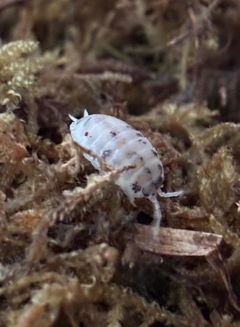
The colour develops with age. Juvenile Hissers are smaller, paler, and less impressive than adults. The mature dark mahogany-brown to nearly black colouration emerges through successive moults across the nymphal period. Don't be disappointed by the appearance of starter nymphs; adult colouration is properly different and more impressive.
Use collapsible tabs for more detailed information that will help customers make a purchasing decision.
Ex: Shipping and return policies, size guides, and other common questions.