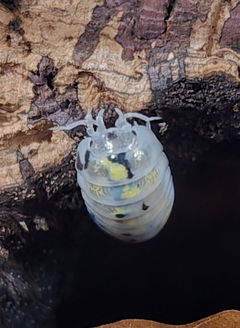
Sandstone Isopods (Armadillidium scaberrimum) for Sale
Care Info:
- Free shipping over £65
- Low stock - 1 item left
- Backordered, shipping soon
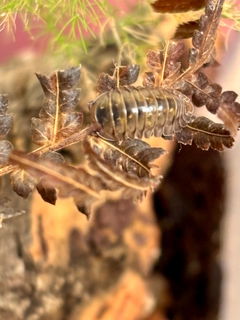
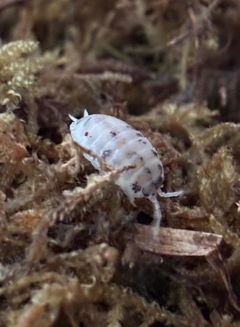
Armadillidium scaberrimum, widely known in the hobby as the Sandstone Pill Woodlouse, is one of the more textural and visually interesting Balkan Armadillidium in the UK trade. The species takes its common name from its distinctively bumpy, tuberculated carapace — a heavily granulated surface that genuinely resembles weathered sandstone in close-up. Combined with a soft beige-to-silver-grey base colour that occasionally shows pinkish-lilac hues (and a striking bluish translucence in freshly-moulted individuals), this is a properly characterful species that rewards close observation.
This is part of our wider Armadillidium collection and sits naturally alongside other Balkan and Mediterranean species in the catalogue — particularly Croatian A. klugii 'Clown' and other Adriatic-line forms. Sandstone makes a sensible introduction to the wider European Armadillidium genus for keepers stepping up from the more common A. vulgare.
One honest framing point up front. Sandstone are genuinely beginner-friendly within the genus — hardy, prolific, and forgiving of minor husbandry mistakes — but they're still a Mediterranean Armadillidium, which means they need drier conditions and better ventilation than most general "isopod care" guides assume. Anyone comfortable with A. vulgare or other European pill woodlice will handle Sandstone without difficulty.
Quick Care Summary
- Scientific Name: Armadillidium scaberrimum (formerly classified as Armadillidium omblae; the two are now recognised as distinct species)
- Common Name: Sandstone Pill Woodlouse, Sandstone Isopod
- Family: Armadillidiidae
- Origin: Balkans — Adriatic coast of Croatia, Croatian islands, Trieste region, Tremiti Islands
- Adult Size: 15–20 mm (mid-to-large for the genus)
- Lifespan: 2–3 years typical
- Difficulty: Easy — beginner-friendly within the European Armadillidium genus
- Temperature: 18–26 °C — happy at standard UK room temperature
- Humidity: 50–65% with a clear moisture gradient — drier than tropical species
- Ventilation: Medium to high — Mediterranean Armadillidium needs good airflow
- Conglobation: Yes — rolls into a complete defensive ball when disturbed
- Appearance: Heavily tuberculated, bumpy carapace giving a sandstone-like texture; base colour ranges from beige and silver-grey to pinkish-lilac, with a translucent bluish hue visible in freshly-moulted individuals
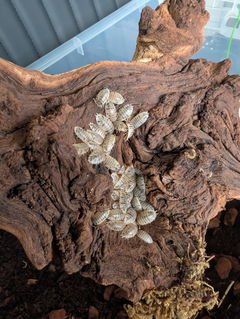
- Behaviour: Hardy and adaptable; tendency to cluster tightly under cork bark and other flat hides; classic Armadillidium temperament — measured pace, rolls when disturbed rather than running
- Breeding: Prolific and reliable once established; one of the easier Armadillidium to breed in captivity
- Rarity: Uncommon in the UK hobby but well-established in international captive breeding
What Makes 'Sandstone' Special
The textured carapace. The defining feature of A. scaberrimum is the heavily tuberculated body surface — covered in fine, even granulations that give the carapace its sandstone-like roughness. The texture is visible to the naked eye without magnification and becomes genuinely beautiful under a hand lens or close inspection. Where many Armadillidium species rely on bold patterning for visual appeal, Sandstone's appeal is tactile and structural — the surface texture is the look.
The colour shifts. Coloration in this species is more variable than first appearances suggest. Most individuals show a soft beige-to-silver-grey base colour, but some colonies produce specimens with distinct pinkish-lilac or lavender hues, and freshly-moulted animals briefly reveal a translucent bluish tint through the central spine of the body before pigmentation darkens again. Watching a colony through moult cycles brings out colour variation that static photos don't capture.
The Croatian provenance. A. scaberrimum is endemic to the Adriatic coastal region of Croatia and surrounding islands, including the Tremiti Islands off Italy and the Trieste area. This places it firmly in the Balkan Armadillidium diversity hotspot, alongside more famous Croatian species like A. klugii 'Clown'. Authentic European geographic provenance, not a fabricated trade designation.
The taxonomic clarification. Until recently this species was widely sold and catalogued under the name Armadillidium omblae, which was eventually recognised as a separate species — distinct from scaberrimum, with different morphological features. The "Sandstone" trade name now correctly attaches to scaberrimum, and you'll occasionally still see the old omblae name in older sources and historical hobby references. Worth knowing if you're researching this species across multiple sources.
The beginner-friendly profile within a premium-looking species. Many of the more visually unusual Mediterranean Armadillidium are also among the more challenging to keep. Sandstone bucks that trend — it's properly hardy, breeds reliably, tolerates a fairly wide range of conditions, and clusters in visible groups under cork bark rather than disappearing into the substrate. A genuine display species that also happens to be easy to keep.
About the Name
You'll see this species referenced under several names — worth a brief clarification.
- Armadillidium scaberrimum: The current, correct scientific name. Use this when researching in scientific or up-to-date taxonomic sources.
- Armadillidium omblae: The former scientific name, now considered incorrect. A. omblae is now recognised as a separate species that more closely resembles Cristarmadillidium muricatum and Armadillidium bifidum. You'll still see omblae used in older hobby sources and historical literature, but the current consensus is that Sandstone isopods are scaberrimum.
- 'Sandstone' or 'Sandstone Pill Woodlouse': The common hobby names, referring to the textured, granulated carapace that resembles weathered sandstone.
All refer to the same animal under the current taxonomic consensus.
Setting Up the Enclosure
A 5–10 litre plastic container with a secure clip-lock lid suits a starter colony of 10–15 individuals. Drill plenty of ventilation holes on opposite sides for proper cross-flow, covered with fine mesh. Mediterranean Armadillidium generally appreciate better airflow than tropical species, and Sandstone is no exception — get this right and the colony establishes well; stagnant air is one of the more common reasons European pill woodlice struggle.
Provide multiple flat hides distributed across the enclosure — cork bark flats, decaying hardwood pieces, flat stones, ceramic tiles. Sandstone are well-known for clustering tightly under shared cover, so flat horizontal surfaces close to the substrate work better than vertical features. Distribute hides across both the moist and dry zones so the colony can self-regulate. Keep the enclosure out of direct sunlight and away from heat sources that cause humidity to swing.
Important husbandry note: Skip the standing water dish. A lightly misted moist corner provides all the moisture this species needs, and standing water in a moderate-humidity setup encourages mould without serving a real purpose. Armadillidium drink primarily from substrate moisture rather than open water sources.
Substrate
Use a free-draining, calcium-rich Mediterranean-style substrate:
- Organic topsoil (pesticide-free) as the foundation
- Sphagnum moss concentrated in the moist corner only — not mixed throughout
- Composted hardwood leaf litter mixed through the upper layer
- Crushed limestone or oyster shell distributed liberally throughout for calcium
- Small pieces of rotting hardwood as a food source and natural cover
- A small amount of fine sand or aquarium gravel mixed in to keep the dry zone well-draining
We recommend a topsoil-based mix rather than coco coir. Substrate depth around 4–6 cm is adequate — Sandstone are surface foragers rather than deep burrowers, and the textured carapace means they spend most of their time visible under hides rather than tunnelling out of sight.
Top layer: a generous covering of hardwood leaf litter — oak, beech, hazel — plus multiple flat cork bark pieces for the clustering behaviour the species is known for. Maintain a clear distinction between the moist end and the dry end so the colony can self-regulate.
Humidity and Temperature
Maintain humidity around 50–65% overall, with roughly a quarter to a third of the enclosure kept consistently damp via lightly misted sphagnum, and the remaining majority allowed to dry out properly between waterings. Sandstone genuinely tolerate a wider humidity range than most Armadillidium — sources document them thriving in conditions from semi-arid to borderline subtropical — but they still need a clear gradient rather than uniform wetness.
Temperature should be 18–26 °C, which matches standard UK room temperature for most of the year. They handle the cooler end without difficulty, and breeding picks up modestly in the warmer half of the range. No supplementary heating is required in most heated UK homes. Avoid placement near radiators, windows or other heat sources that cause humidity to swing unpredictably.
Diet
Sandstone are hardy detritivores with notably large appetites for their size:
- Hardwood leaf litter (oak, beech, hazel) — the dietary foundation, always available
- Rotting hardwood pieces — important secondary nutrition source
- Vegetables 2–3x weekly: courgette, carrot, sweet potato, squash. Replace within 24–48 hours.
- Fruit occasionally in small amounts (apple, melon, banana)
- Protein 1x weekly: fish flake, dried shrimp, dried daphnia. Armadillidium have a lower protein requirement than Porcellio, so don't overdo it.
- Calcium (essential — always available): cuttlefish bone, crushed limestone, oyster shell, eggshell. Sandstone are particularly calcium-hungry and respond well to multiple distributed sources around the enclosure.
Sandstone eat more enthusiastically than many Armadillidium, so don't be alarmed by how quickly food disappears in an established colony. Keep portions appropriate to colony size and remove any spoiling food promptly.
Breeding
Sandstone breed prolifically and are among the easier Armadillidium to establish a self-sustaining colony from. Females carry developing young in a brood pouch (marsupium) and release fully-formed miniature versions of the adults — which inherit the tuberculated body texture from birth, though the surface granulation becomes more pronounced through successive moults as juveniles mature.
For breeding success:
- Stable temperature in the upper half of the range (22–25 °C tends to support better breeding rates)
- Consistent moisture gradient — avoid wet swings or stuffy conditions
- Abundant calcium for breeding females, with multiple distributed sources
- Occasional protein supplementation to support reproductive output
- Plenty of flat hides, especially cork bark — Sandstone gather under shared cover and breed actively in those clustered groups
- Larger starter groups (10+) establish noticeably faster than smaller ones and offer better genetic diversity
One of the practical advantages of this species is the visible clustering behaviour — because the colony gathers under shared hides rather than dispersing through the substrate, you can lift a piece of cork bark and assess colony health, size and breeding status without disturbing the enclosure significantly.
Who Should Buy 'Sandstone' Isopods?
Ideal for:
- Beginner to intermediate isopod keepers looking for a genuinely characterful Armadillidium beyond the standard A. vulgare
- Display keepers drawn to textured, naturalistic isopods rather than bright colour morphs
- Collectors building a focused Balkan or Mediterranean Armadillidium cluster alongside A. klugii 'Clown' and other Adriatic species
- Keepers wanting a hardy, prolific species that doubles as a working bioactive cleanup crew
- Anyone interested in watching colony behaviour — Sandstone cluster visibly under hides rather than disappearing into the substrate, which makes them genuinely observable
- Keepers running drier setups — Mediterranean Armadillidium match those conditions well
Not ideal for:
- Keepers who run their isopod setups consistently damp without a proper dry zone — Sandstone need the gradient
- Tight, low-ventilation enclosures — Mediterranean species are intolerant of stagnant air
- Keepers wanting vivid colour visuals — the appeal here is textural and tonal, not chromatic
- Anyone wanting an extremely rare or premium-tier species — Sandstone are well-established in international captive breeding and accessible rather than scarce
Realistic Expectations
The colour is muted, not vivid. Sandstone show subtle beige-to-silver-grey tones, occasionally with pinkish-lilac variations and a fleeting bluish hue after moulting. The appeal is the surface texture and the soft natural colour palette, not bright pigmentation. If you're looking for a colourful display species, the Croatian A. klugii 'Clown' is a better match.
They cluster tightly under hides. This is part of their charm — Sandstone gather under shared cork bark in dense groups rather than dispersing — but it means you'll see them most when you lift a hide rather than during routine observation. Plan the enclosure with multiple flat horizontal hides distributed across the substrate to encourage this behaviour and make colony checks straightforward.
The genus needs proper ventilation. The single most common reason a Mediterranean Armadillidium colony struggles in UK setups is poor airflow combined with over-misting. If your current setups all run damp and stuffy, take the time to set up a proper Mediterranean-style enclosure with real ventilation and a real dry zone before introducing Sandstone.
The old omblae name still circulates. You'll see Sandstone occasionally still referenced as Armadillidium omblae in older sources, despite the current taxonomic consensus that the two are distinct species. Be aware of this when cross-checking care information; the current correct name is scaberrimum.
They're hardy, but they're not indestructible. The "easy" rating reflects their tolerance of minor husbandry variation, not an invitation to neglect the basics. A properly set-up colony with the right substrate, moisture gradient and ventilation will breed prolifically for years; a poorly-set-up colony will still struggle even with a hardy species. Get the fundamentals right.
Use collapsible tabs for more detailed information that will help customers make a purchasing decision.
Ex: Shipping and return policies, size guides, and other common questions.