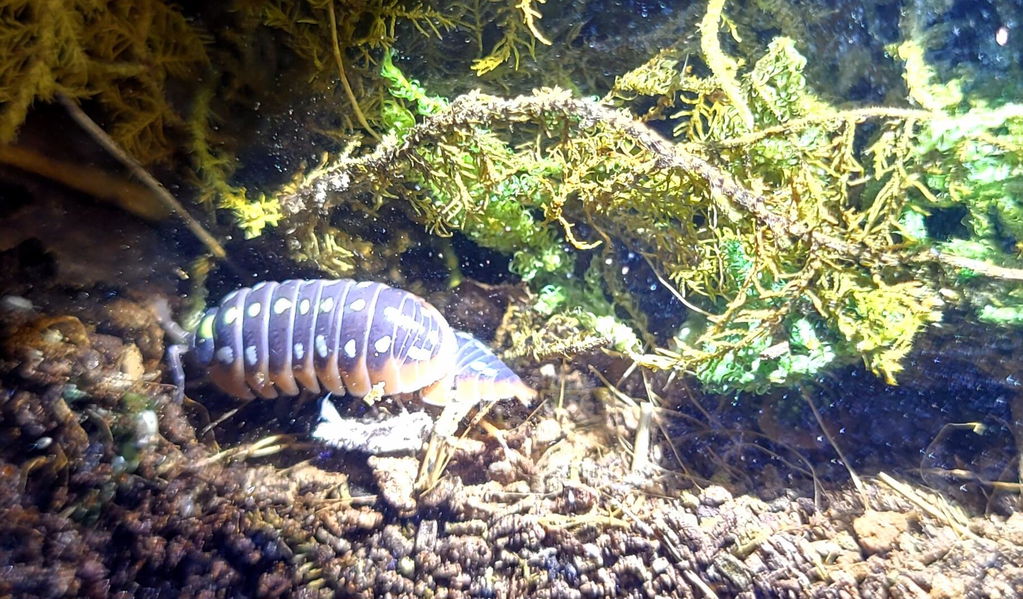
Montenegro Clown Isopods (Armadillidium klugii)
Care Info:
 ORIGIN
 TEMP
TEMP
 HUMIDITY
 LENGTH
 DIFFICULTY
 RARITY
- Free shipping over £65
- Low stock - 7 items left
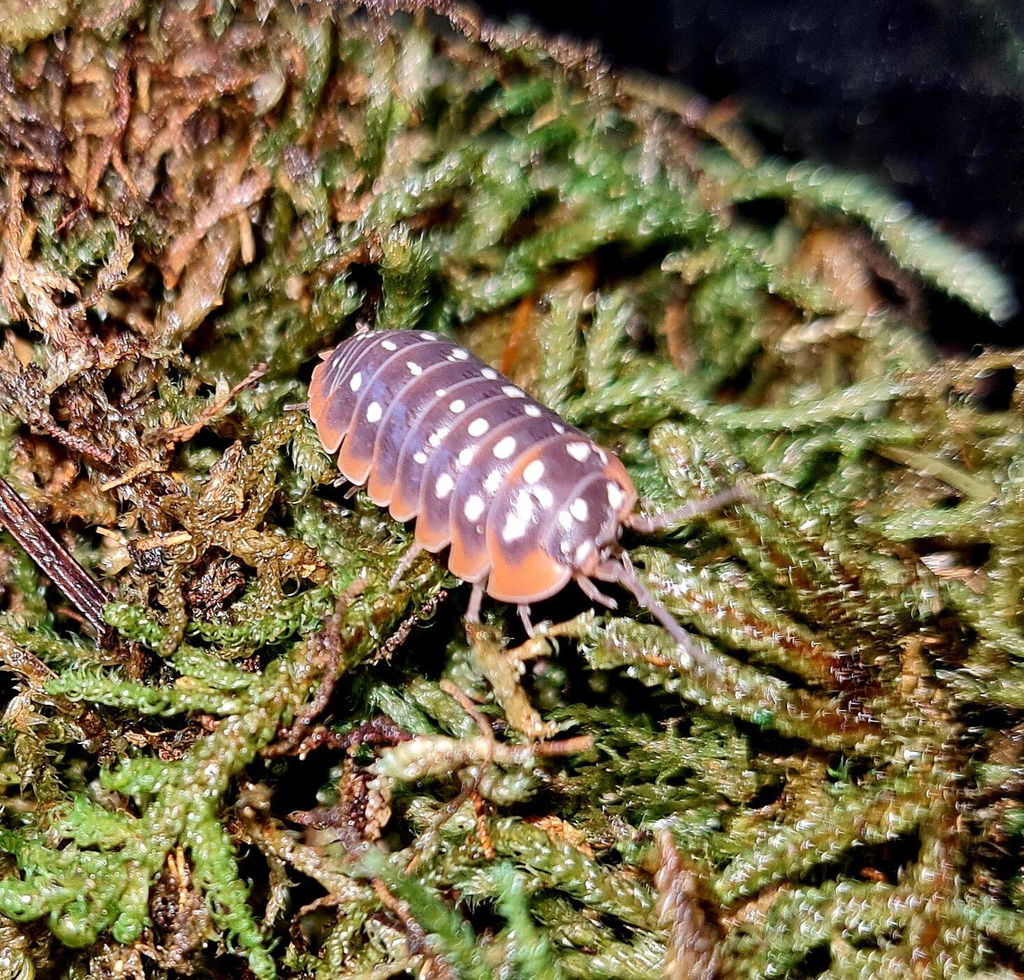
Look at a Clown from above and the pattern should ring a faint alarm bell. Dark body, three rows of pale spots running front to back, and a bright orange-red skirt around the edge. That is very close to the livery of the Mediterranean black widow, Latrodectus tredecimguttatus, which shares the same stretch of Adriatic coastline. The resemblance is widely read as mimicry, a harmless woodlouse borrowing the warning colours of something that can hurt a predator. It is a reasonable inference rather than a proven case, so I would enjoy it as a good story rather than state it as settled fact, but it is hard to look at the two side by side and not see it.
Whatever the reason for the pattern, the result is one of the best-looking woodlice you can keep, and one of the few that behaves like a display animal rather than something you catch glimpses of when you lift a piece of bark.
Names and identity
The species is Armadillidium klugii, described by Brandt in 1833. You will see it sold as the Clown Isopod, the Montenegro Clown, the Klugii Clown, or just Klugii. Our stock is the Montenegro form, the most widely kept of several regional variants alongside Dubrovnik, Croatia and Bosnia, which differ mainly in how much red they carry and whether the middle row of spots runs white or yellow.
Wild A. klugii live along the Adriatic coast from Croatia down to Montenegro, with most records clustered in Dalmatia and a scattering further south into Albania and western Greece. They shelter under stones and in limestone crevices, which tells you almost everything you need to know about how to keep them.
What they look like
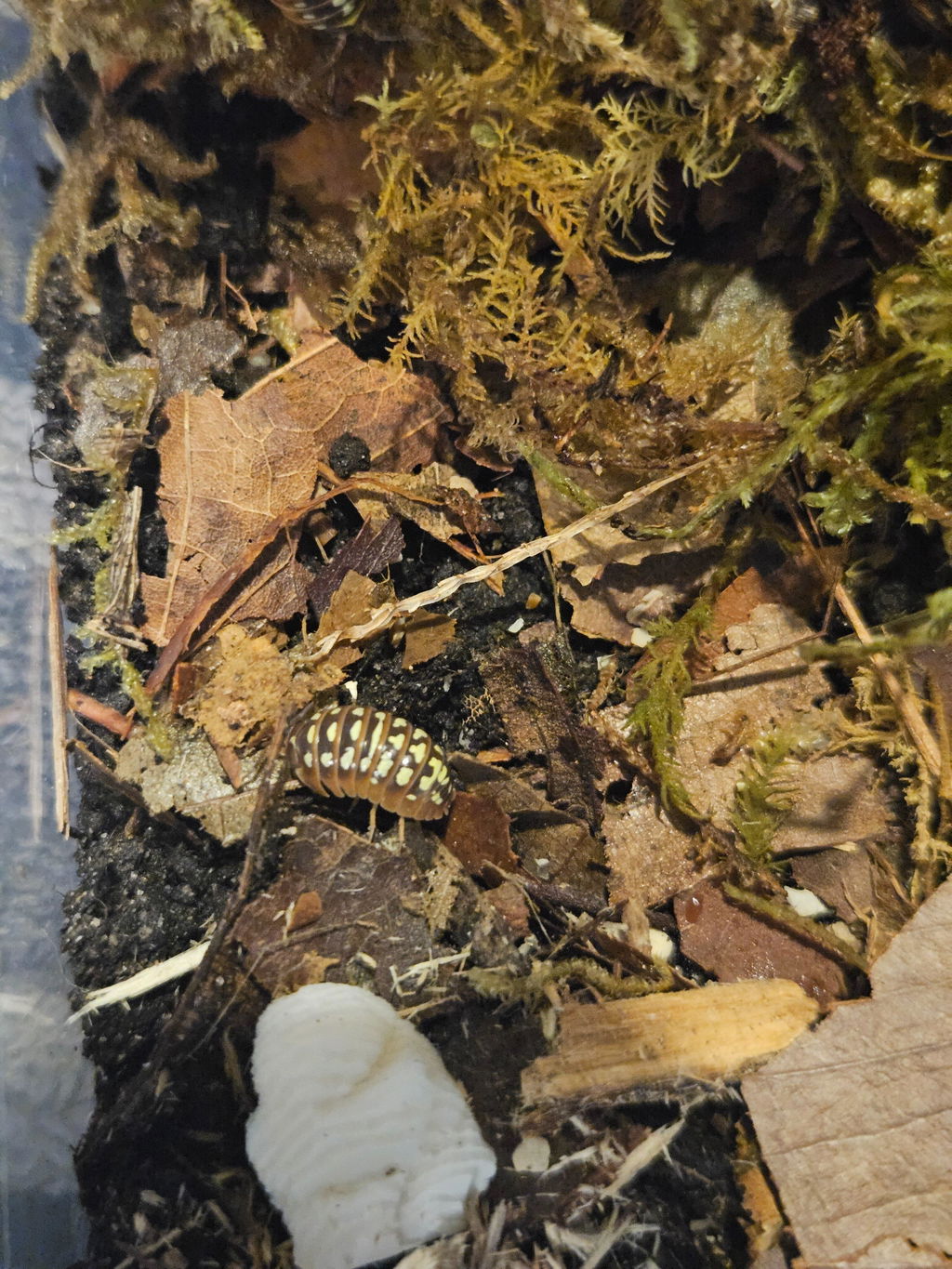
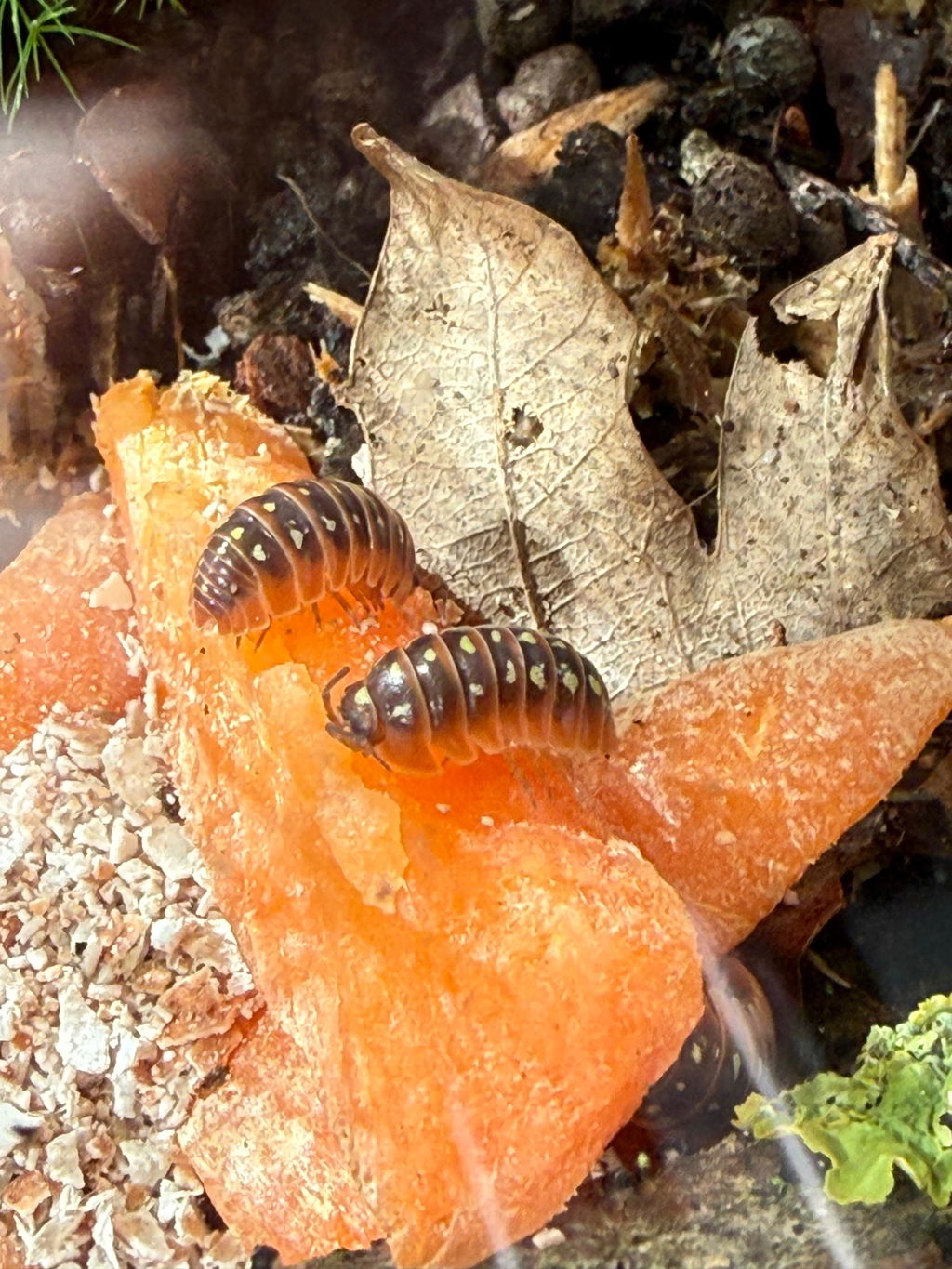
The base colour is a deep greyish-brown that reads as near-black in most lighting, broken by three neat rows of spots down the back. The outer rows stay white; the central row often warms to yellow as an animal matures, which is why a mixed-age group looks more varied than photographs of single adults suggest. Running round the edge of the body is the orange-red skirt that gives the morph its character.
They are a decent size for an Armadillidium, a settled adult running 14 to 18mm, which makes them slightly larger than the common pill bug most people meet in the garden. You will see 21mm quoted for the species all over the hobby. That is a real figure - it is the largest animal in Schmalfuss's 2013 revision of the group - but it is one exceptional specimen rather than what turns up in a tub. Like most of the genus they conglobate, rolling into a sealed ball with no gaps when they feel threatened. Clowns are bolder than most, and mine will sit out in the open under a light rather than bolting for cover, which is a large part of why they work so well in a display setup.
Setting them up
This is where most Clown colonies go wrong. They are a Mediterranean species from dry limestone country, not a tropical one, and they suffer in the humid tub that suits a Cubaris. Aim for a well-ventilated enclosure that runs mostly on the dry side, with one damp corner they can visit when they need to. Mist that corner rather than the whole enclosure, and let the rest breathe.
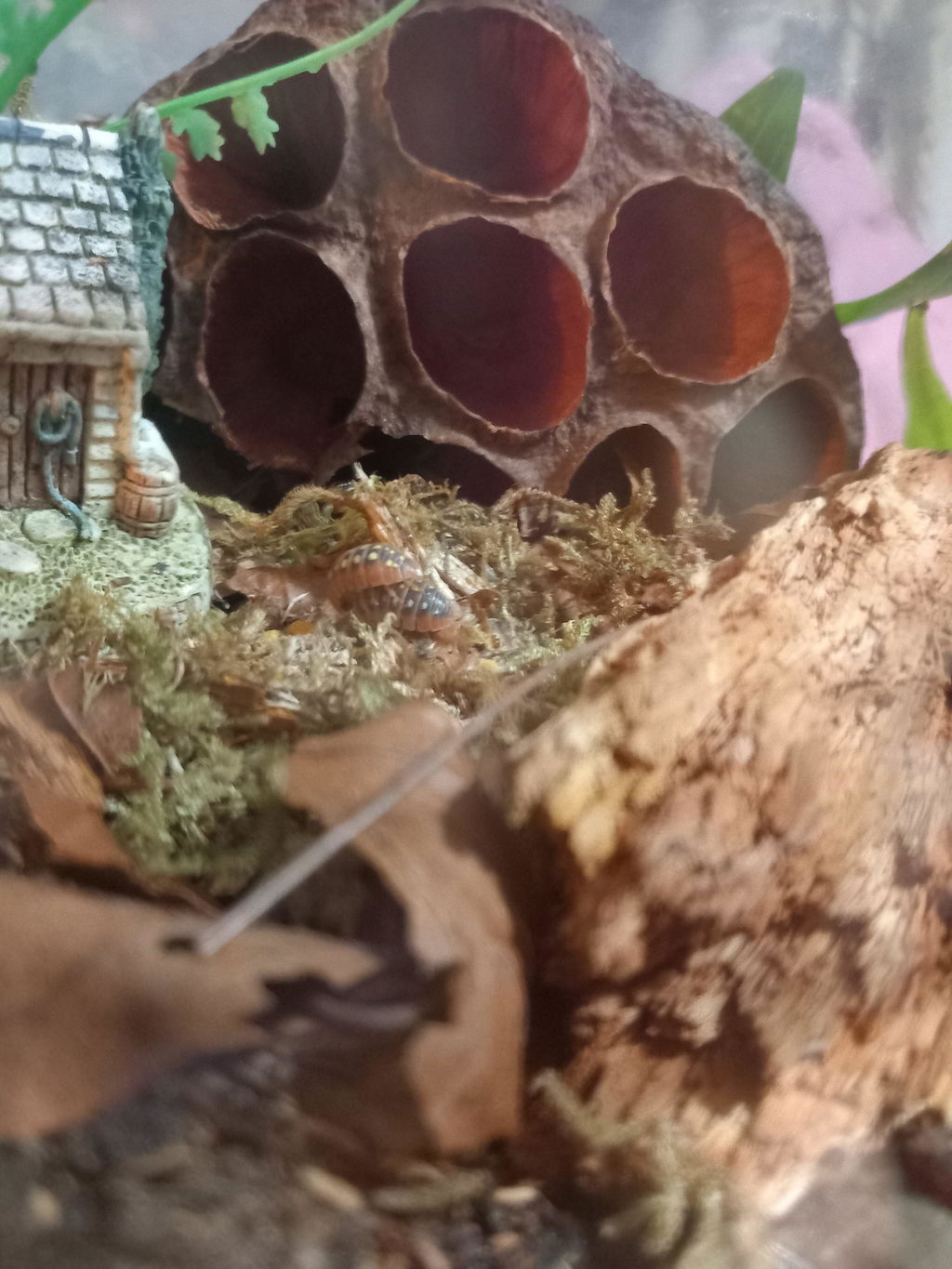
Lay a base of a nutritious forest-floor mix such as our ready-made invertebrate substrate at around 5 to 7 cm, deep enough for them to burrow when moulting. There is more on building the right mix in my write-up on isopod substrate if you would rather blend your own. Cover the surface generously with dry hardwood leaf litter, and give them cork bark, bark chunks or stacked slate for the crevices they instinctively want. Magnolia leaves are the standout here because they hold their shape for months and Clowns work through them steadily.
They do best at 22 to 26°C, warmer than a typical UK home. A heated room keeps them going year-round, though they increase slowly in it, and gentle warmth from a heat mat on a thermostat, fixed to the side of the enclosure, is the most reliable way to turn a slow colony into a productive one. Keep them out of direct sun and away from a radiator, and they will settle.
Feeding
Leaf litter and decaying hardwood do most of the work, supplemented with the occasional slice of vegetable and a protein source such as fish flake or dried shrimp every week or two. Do not overdo the wet food, and lift anything they have not finished within a day.
Calcium matters more with this species than with most. They evolved on limestone karst and they will use it. Keep cuttlebone in the enclosure permanently rather than adding it occasionally, and you will see it in the quality of their moults and the strength of the colour in the skirt.
Breeding
Clowns are steady rather than explosive. They will not swamp a tub the way a vulgare morph does, and broods tend to be modest, so a colony builds over months rather than weeks. That patience is the trade-off for the appearance, and it also means a mature colony holds its value.
Two things speed them up: warmth in the low-to-mid twenties, and getting the ventilation and moisture gradient right. Colonies kept too damp stall, and colonies kept uniformly bone dry stall too. Get the gradient right, add that warmth, and they need very little intervention. You will often catch pairs mate-guarding on the surface, which is a good sign the conditions are working.
Who they suit
Clowns are a beginner species: hardy and easy to keep alive, just slower to get breeding than most, so give a new group a few months and some gentle warmth. The one thing to learn is the drier setup, a different discipline from the humid tub most people start with. If you fancy something that looks remarkable and behaves boldly, they are among the most rewarding animals in the Armadillidium range. If you are already running Mediterranean species, they will slot straight in beside Zebra isopods or the Crystal Pineapple, since all three want the same drier, better-ventilated treatment, though Clowns want it warmer than either.
For everything else in the range, browse the full isopod collection.
Arriving with you
These are captive-bred here in the UK. Orders go out Monday to Thursday only so nothing sits in a depot over a weekend, travelling by Royal Mail next day by 1pm in a double-walled box, packed into ventilated deli tubs with damp sphagnum moss to hold humidity in transit. Every order includes a 20% overcount and our live arrival guarantee. Open the box somewhere enclosed, since a well-travelled Clown can be surprisingly quick once the lid comes off.