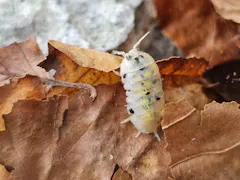
Shadow Cockroach (Pycnoscelus nigra) for Sale
Care Info:
 ORIGIN
 TEMP
TEMP
 HUMIDITY
 LENGTH
 DIFFICULTY
 RARITY
- Free shipping over £65
- Low stock - 1 item left
The Shadow Cockroach is one of the most genuinely useful cockroach species available in the UK hobby — a sleek jet-black Southeast Asian roach with red-orange legs, properly hardy husbandry requirements, and the remarkable feature of parthenogenetic reproduction. Females produce viable offspring without males, which makes colony establishment straightforward, predictable, and reliable in a way that few other species can match. For keepers wanting a roach that works equally well as a display species, a bioactive cleanup crew member, or a feeder, this is one of the few genuinely multi-purpose options in the hobby.
This is part of our wider cockroach collection and works as a properly accessible counterpoint to our display-focused metallic species. While the Emerald Cockroach, Sapphire Flower Cockroach, and Giant Flower Cockroach deliver visual spectacle at premium prices, the Shadow Cockroach delivers reliable functionality at entry-level pricing. For keepers building a properly functional invertebrate setup — whether that means a feeder colony for reptiles or a bioactive cleanup team for a planted vivarium — this is the right starting species.
One honest framing point up front. Shadow Cockroaches are dedicated burrowers. They spend most of their time underground and emerge primarily to feed. If you're looking for an actively visible display species, this isn't it — the Cuban Cockroach would be a better fit. What you're getting with Shadow Cockroaches is a properly low-maintenance, self-sustaining colony that quietly does its job. To set things up properly from the start, browse our accessories collection for substrate components, leaf litter, and supplementary foods this species needs.
Quick Care Summary
- Scientific Name: Pycnoscelus nigra (Brunner von Wattenwyl, 1865); originally described as Panchlora nigra
- Common Names: Shadow Cockroach, Shadow Roach
- Family: Blaberidae (subfamily Pycnoscelinae); genus established by Scudder, 1862
- Origin: Southeast Asia — endemic to the Indomalayan realm, with the species having spread to tropical and subtropical regions internationally as a follower of horticultural trade
- Adult Size: 20–30 mm (approximately 1 inch); medium-small among hobby roaches
- Lifespan: 1–2 years as adults; with continuous parthenogenetic reproduction, colonies maintain ongoing population turnover
- Difficulty: Easy — hardy, beginner-friendly, and forgiving of moderate husbandry variation
- Temperature: 22–28 °C; warmer end (25–28 °C) supports faster reproduction; room temperature acceptable
- Humidity: Moderate to high — 60–70% with substrate lightly damp
- Ventilation: Moderate — balance humidity retention with airflow to prevent stagnation
- Climbing: Adults can climb smooth surfaces — escape-proofing matters
- Flying: Wings present but flight ability is properly limited; not strong fliers
- Activity: Primarily nocturnal; burrowers spending most time underground
- Appearance: Jet-black body with contrasting red-orange legs; rounded compact body shape typical of burrowing Blaberidae; nymphs darker brown maturing to the characteristic black
- Sexual structure: Effectively all-female — males are extremely rare and sterile when they occur
- Reproduction: Obligate parthenogenesis (thelytoky) — females produce female offspring without mating; 30–36 offspring per female approximately monthly under good conditions
- Rarity: Common in international culture; relatively accessible in the UK
What Makes the Shadow Cockroach Special
The parthenogenesis is the central practical feature. Like the closely-related Surinam Cockroach (P. surinamensis), Shadow Cockroaches reproduce through thelytokous parthenogenesis — a form of asexual reproduction where unfertilised eggs develop into female offspring genetically identical to the mother. The practical implications are properly significant: a single animal can start a colony; you never need to worry about sex ratios; breeding success is essentially guaranteed; and population growth is predictable rather than dependent on mating success. For keepers wanting reliable colony establishment without the variables of sexual reproduction, this is genuinely useful.
The understated aesthetic. While many display roaches lean on bright colours and unusual patterns, Shadow Cockroaches take a different approach — almost entirely jet-black bodies with bright red-orange legs creating a clean contrast. The aesthetic is more "fine engineering" than "colourful display" — properly elegant in an understated way. For keepers who appreciate minimalist aesthetics or want a roach that fits a darker-themed vivarium, the visual signature works.
The multi-purpose utility. Shadow Cockroaches occupy a uniquely useful position in the hobby. They work genuinely well as feeder insects (good gut-loading, appropriate size for many reptiles, easy to maintain), as bioactive cleanup crew members (peaceful, substrate-active, non-competitive with isopods), and as display animals (when you can see them). Few other species deliver across all three use-cases — most hobby roaches are specialised for one purpose. The Shadow Cockroach's combination of parthenogenesis and hardy temperament makes it adaptable across all three.
The price-to-utility ratio. At a properly accessible price point compared to the premium metallic species, Shadow Cockroaches let new keepers experiment with cockroach husbandry without significant financial risk. The skills directly transfer to other Blaberidae species, and the parthenogenetic reproduction means even a small starter group can rapidly establish into a productive colony. For keepers exploring the hobby, this is genuinely a low-stakes entry.
The Surinam Cockroach alternative. Within international roach culture, the Shadow Cockroach is often positioned as the more interesting alternative to the ubiquitous Surinam Cockroach (P. surinamensis). Both species share the same parthenogenetic reproduction, similar size, and similar husbandry — but the Shadow Cockroach's darker colouration and red-orange leg contrast give it more display value while retaining all the functional benefits. For keepers familiar with Surinam Cockroaches, this is a properly natural upgrade.
About the Name and Taxonomy
A few notes on the species's classification and naming history.
- Pycnoscelus nigra: The current scientific binomial. The genus name Pycnoscelus derives from Greek roots meaning "dense leg"; the species epithet nigra means "black" in Latin, referencing the dark body colouration.
- Original description: Described by Brunner von Wattenwyl in 1865, initially as Panchlora nigra; subsequently moved to genus Pycnoscelus.
- Common spelling note: The genus is sometimes misspelled as "Pynoscelus" (without the second 'c') in hobby contexts. The correct spelling is Pycnoscelus — note the 'c' before the 's'.
- Genus context: Pycnoscelus contains several species including the widely-distributed P. surinamensis (the Surinam Cockroach), P. indicus (the parthenogenetic ancestor of P. surinamensis), and P. femapterus. Several species in the genus show parthenogenetic reproduction.
- Distinguishing from P. surinamensis: The two species are easily confused but distinguishable by three features — Shadow Cockroaches show overall darker colouration (jet-black vs. brown), have distinctive red-orange legs, and show a more distinct last ventral abdominal segment.
Setting Up the Enclosure
A 5–10 litre plastic container or glass terrarium suits a starter colony of 6–10 Shadow Cockroaches; scale up to 15–25 litres for established colonies. The species's burrowing nature means floor space matters more than vertical space — wider-than-tall enclosures suit them better than the reverse. Plastic tubs with secured ventilated lids work well, as do glass terrariums with mesh-topped lids.
Escape-proofing is genuinely necessary. Despite being slow movers and poor flyers, adult Shadow Cockroaches can climb smooth surfaces including glass and plastic. Use a properly tight-fitting lid; consider a smooth climbing barrier inside the rim of the enclosure (petroleum jelly or a strip of smooth plastic) as additional insurance. Cover ventilation holes with fine mesh — newly-emerged nymphs are small enough to squeeze through surprisingly small gaps.
Ventilation should be moderate. The species tolerates a range of humidity conditions but doesn't appreciate stagnant air. Cross-ventilation between opposing sides works well; mesh-topped lids provide good top ventilation. Browse our accessories range for the substrate components, leaf litter, and other items needed for proper setup.
Provide hide structure across the substrate. Cork bark slabs in horizontal orientations work well, as do stacked egg cartons positioned vertically to increase usable floor area in feeder-style setups. Decaying hardwood pieces and leaf litter complete the cover options. Shadow Cockroaches will use surface cover, but they'll spend most time burrowed regardless of what cover you provide.
Important husbandry note: Skip the standing water dish. Substrate moisture and occasional misting provide all the hydration this species needs. Open water adds drowning risk for small nymphs in an already humid setup.
Substrate
Substrate is the central setup feature for Shadow Cockroaches — they spend the majority of their time burrowed underground:
- Organic topsoil (pesticide-free) as the foundation — or a topsoil/coco coir mix in equal parts
- Composted hardwood leaf litter mixed throughout and layered on top — oak, beech, magnolia. Our accessories collection includes properly prepared options.
- Pieces of rotting hardwood mixed through the substrate — provides cover and supplementary food
- A small amount of sphagnum moss for moisture retention in one corner
- Springtails inoculated to consume droppings and food waste, preventing mould
Substrate depth should be 5–10 cm minimum — Shadow Cockroaches genuinely depend on burrowing room, and undersized substrate depth reduces breeding rates and increases stress. Avoid substrates based on plain peat without organic content — leaf litter and rotting wood inclusions support both burrowing and nutrition.
Top layer: a generous covering of hardwood leaf litter plus cork bark and rotting wood for cover.
Humidity and Temperature
Maintain humidity at 60–70% with substrate kept lightly damp rather than wet. Mist as needed to maintain substrate moisture; the species is properly adaptable on humidity but does best with consistently damp conditions that support burrowing behaviour. The substrate should be moist to the touch but not waterlogged.
Temperature should be 22–28 °C, with 25–28 °C supporting fastest breeding and population growth. Room temperature in most UK homes is acceptable for maintenance but slows reproduction noticeably — supplementary heating supports a properly productive colony. A low-wattage heat mat on a thermostat, mounted on one side of the enclosure rather than underneath, provides ideal supplementary warmth. Side-mounted heating creates a thermal gradient and avoids overheating substrate where animals spend most of their time.
For breeding-focused setups (feeder colonies, rapid population expansion), maintain the warmer end consistently. For maintenance-only setups or display purposes, the cooler end works fine.
Diet
Shadow Cockroaches are properly unfussy feeders — they consume a wide range of organic matter and excel at gut-loading for feeder use:
- Hardwood leaf litter — oak, beech, magnolia. The dietary mainstay; consumed continuously. Browse our accessories collection for ready-prepared leaf litter.
- Fresh vegetables — carrot, potato, sweet potato, courgette, squash, leafy greens. Replace within 24–48 hours.
- Fresh fruit — apple, banana, melon. Replace before mould develops.
- Rotting hardwood pieces — used as cover and slowly consumed
- Dry roach chow, fish flakes, or dog/cat kibble — protein supplements offered 2–3 times weekly. Particularly important if using as feeders (improves nutritional value passed on to predators). Browse the protein options in our accessories collection.
- Calcium sources — cuttlebone, crushed limestone as background availability. Our calcium options cover the full range.
Position fresh food on dishes or leaves rather than directly on substrate to make removal of uneaten portions easier. Shadow Cockroaches will emerge from substrate to feed but won't compete aggressively for food — provide enough that all animals can access it.
Gut-loading for feeder use: if you're using Shadow Cockroaches as feeders, the protein and vegetable content they consume passes directly to whatever eats them. Feed them properly varied diet 24–48 hours before offering to reptiles or other predators — this delivers genuinely better nutrition than nutrient-poor commercial crickets.
Breeding
Breeding Shadow Cockroaches is essentially automatic once basic conditions are met. As an obligate parthenogenetic species, females produce offspring without mating — no breeding setup, no sex ratio management, no mating success worries. A single animal can establish a colony; a starter group of 5–10 animals provides reliable population expansion within months.
Females are ovoviviparous like other Blaberidae — they retain egg cases internally and give birth to live nymphs. Brood sizes are properly substantial: 30–36 offspring per female approximately monthly under good conditions. This makes the species one of the more prolific roach breeders available in the hobby.
For optimum breeding success:
- Stable temperature in the warmer half of the range (25–28 °C is ideal)
- Consistent moderate humidity with substrate properly damp
- Adequate substrate depth (5–10 cm minimum) for burrowing and oviposition
- Plenty of food — well-fed females produce more offspring and at higher rates
- Springtails inoculated to manage waste during the rapid colony expansion
- Minimal substrate disturbance — nymphs spend extended periods in the substrate and are easily disrupted by excessive digging
- No need for sex ratio management — the colony will be essentially all-female regardless
Expect properly visible population growth within 2–3 months of establishing a starter colony, with continuous turnover thereafter. The trade-off for this productivity is that you'll need to manage colony size actively — left unchecked, Shadow Cockroach populations can outgrow their enclosures within a year or two.
Who Should Buy Shadow Cockroaches?
Ideal for:
- Reptile and amphibian keepers wanting a reliable feeder colony with good gut-loading capacity
- Bioactive vivarium keepers wanting peaceful substrate-active cleanup crew alongside isopods and springtails
- Beginner roach keepers wanting an accessible, hardy starting species
- Anyone interested in parthenogenetic reproduction as a biological feature
- Keepers wanting fast colony establishment without sex ratio concerns
- Multi-purpose hobbyists who appreciate species that work across feeder, cleanup, and display uses
Not ideal for:
- Display-focused keepers wanting constant visible activity — Shadow Cockroaches spend most time burrowed
- Setups that can't maintain even moderate humidity — they tolerate variation but need substrate moisture
- Anyone wanting bright colouration or unusual patterns — this is an understated species
- Keepers without proper escape-proofing — adults climb smooth surfaces
- Setups without adequate substrate depth — burrowing room is non-negotiable
Realistic Expectations
They burrow. A lot. The dedicated burrowing behaviour is the species's most consistent characteristic and the most common source of new-keeper disappointment. Shadow Cockroaches will spend the vast majority of their time under the substrate surface, emerging primarily to feed at night. If you set up the enclosure expecting visible animals, you'll be disappointed. Set up expecting an underground colony that occasionally surfaces, and the species delivers exactly what you'd expect.
The parthenogenesis is real and reliable. Unlike some species where parthenogenesis is occasional or environmentally-triggered, Shadow Cockroach parthenogenesis is obligate — it's the species's normal reproductive strategy rather than a backup option. Don't expect to need males for breeding; don't worry about sex ratios; just provide good conditions and the colony will expand.
They can establish in houseplants if they escape. This is a meaningful practical concern. Shadow Cockroaches and their close relative P. surinamensis are documented as occasional houseplant pests in tropical/subtropical regions, having spread internationally via the horticultural trade. UK climate is too cool for outdoor establishment, but escaped animals can survive long-term in heated indoor environments, particularly in well-watered houseplants. Use secure enclosures with climbing barriers; don't let escapes happen, and recapture quickly if they do.
Population growth is genuine. Once a colony is established at proper temperature, expect rapid expansion. A starter group of 10 animals can become 100+ within 6 months under good conditions. Plan for this — either provide growing enclosure space, harvest excess animals for feeder use, or actively manage population size. Surprised keepers who didn't expect the population dynamics sometimes find themselves with more animals than they can comfortably house.
They're not aggressive but they're not particularly social either. Shadow Cockroaches coexist peacefully in groups but don't form social bonds — they tolerate each other rather than seeking each other's company. The peacefulness extends to other invertebrates; they coexist well with isopods, springtails, and other cleanup crew species without competition issues.
The colour darkens with age. Juvenile Shadow Cockroaches are dark brown rather than jet-black, and the full black colouration develops through successive moults. Young animals may look less impressive than adult animals; this is normal development. If you're starting with nymphs, expect the full adult appearance to take a few months to emerge.
They're feeders as much as pets. The species has dual identity in the hobby — sold as both a display species and a feeder insect. There's no shame in either use, but new keepers should know that the species's productivity makes it genuinely well-suited to feeder use. If you're maintaining a colony purely as pets, you'll likely need to thin populations periodically; feeder-use absorbs that excess naturally.
Use collapsible tabs for more detailed information that will help customers make a purchasing decision.
Ex: Shipping and return policies, size guides, and other common questions.