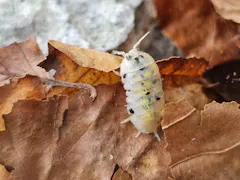
Temperate Springtails (Folsomia candida) for Sale
Care Info:
 ORIGIN
 TEMP
TEMP
 HUMIDITY
 LENGTH
 DIFFICULTY
 RARITY
- Free shipping over £65
Temperate Springtails (Folsomia candida) are the essential cleanup partner for almost every isopod setup — tiny, white, prolific microfauna that handle mould and microbial growth at a scale isopods simply can't manage on their own. They're the universally-recommended starter springtail in the hobby, and for good reason: they're hardy, prolific, cool-tolerant (genuinely suited to UK temperatures), and turn every bioactive enclosure into a thriving micro-ecosystem within weeks. If you're keeping any humid or tropical isopod — Cubaris, Ardentiella, Armadillidium gestroi, the lot — a thriving Folsomia culture isn't optional, it's the foundation.
Beyond their practical role, Folsomia candida is a genuinely interesting little animal. They're parthenogenetic — populations are all-female, reproducing without males through an endosymbiotic bacterial partnership. They have no functional eyes (a remnant of their cave-adapted heritage). They jump using a remarkable spring-loaded organ called a furcula that catapults them multiple times their body length when disturbed. And they're so well-suited to scientific study that F. candida is the ISO standard test organism for soil toxicity assessments (ISO 11267) — used in environmental research worldwide. So while they're tiny and unobtrusive, they're properly fascinating once you know what to look for.
For every isopod listing on PostPods that recommends "pair with springtails" — this is the species we mean. Whether you're setting up your first Cubaris murina colony, a premium Rubber Ducky enclosure, or a heavily-planted bioactive vivarium, Folsomia candida is the foundation. Browse the full springtail range for other varieties, or the complete isopods collection for the animals these springtails pair with.
Quick Care Summary
- Scientific Name: Folsomia candida (sometimes misspelled "Folsomnia")
- Common Names: Temperate Springtails, Folsomia Springtails, Standard White Springtails
- Class: Collembola
- Origin: Worldwide — genuinely cosmopolitan; common in soils globally
- Adult Size: 1–3 mm (very small)
- Colour: White to cream, unpigmented
- Lifespan: Several months as adults; populations renew rapidly
- Difficulty: Easy — one of the most beginner-friendly invertebrates available
- Temperature: 18–27°C — temperate/cool-tolerant; well-suited to UK room temperature
- Humidity: 50–70% (substrate should always feel moist)
- Reproduction: Parthenogenetic — all-female; reproduce without males; very prolific
- Behaviour: Active foragers; use a furcula to jump when disturbed
- Diet: Mould, fungi, decaying organic matter, pollen, bacteria
- Rarity: Common — the standard hobby springtail
- Role: Essential bioactive cleanup partner for isopod and amphibian/reptile setups
What Makes Temperate Springtails Special
Several factors make Folsomia candida the universal go-to springtail:
The essential isopod companion. This is the headline. Almost every isopod setup benefits from a thriving springtail culture — they consume mould, manage microbial growth, clean up around protein and fresh-food droppings, and turn over substrate that isopods can't process. For Cubaris and other humidity-loving species, springtails are practically mandatory.
Cool-tolerant for UK conditions. Unlike tropical springtail species, F. candida is genuinely temperate and prolific at UK room temperatures. They handle cooler rooms without supplemental heating, which makes them properly suited to British homes — and a more reliable choice than the warmer-loving tropical white or pink springtails for most UK setups.
Prolific and self-sustaining. Because they're parthenogenetic (all-female, reproducing without males via Wolbachia bacterial endosymbionts), a small starter culture builds remarkably quickly under good conditions. You'll often see a noticeable population boom within 2–3 weeks of introducing them to a moist enclosure.
Genuinely beginner-friendly. They want moisture, organic matter, and a bit of mould to eat. That's effectively all the husbandry — no temperature gradients, no humidity precision, no protein supplementation, no calcium requirements. The easiest invertebrates on the PostPods range.
The scientific model organism. Folsomia candida is the ISO 11267 standard test species for soil ecotoxicology — used globally to assess soil quality and contamination. That tells you something about how robust, predictable, and well-understood this little springtail is.
Visually charming up close. They're tiny, but a moving carpet of pale springtails on dark substrate, all jumping in unison when disturbed, is genuinely captivating once you watch closely. Their furcula (jumping organ) allows them to launch multiple times their body length, which is properly impressive on the millimetre scale.
No risk to other animals. They don't bite, sting, or carry parasites. They coexist peacefully with isopods, dart frogs, geckos, and any other vivarium inhabitants — purely beneficial.
Why Every Isopod Setup Needs Springtails
Springtails and isopods aren't alternatives — they're complementary. A healthy bioactive setup uses both:
- Springtails handle the microscale: mould spores, surface fungi, bacterial films, decaying microorganisms in damp areas
- Isopods handle the macroscale: leaf litter, decaying wood, fresh vegetables, fruit, protein supplements
The two together create a balanced cleanup system where nothing is missed. Critically, springtails take care of the spoilage risk around protein feedings — one of the leading causes of mould problems in isopod enclosures. Particularly important for humidity-loving Cubaris and Ardentiella species where damp conditions favour mould growth.
For specific isopod ranges, springtails are valuable across the board:
- Premium Cubaris (Rubber Ducky, Panda Kings, Cappuccinos) — essential, given how moist Cubaris setups need to be
- Beginner setups (Cubaris murina, Dairy Cow) — get the bioactive system established from day one
- Larger Armadillidium and Porcellio — handle mould around protein supplements
- Vivarium / dart frog setups — universal cleanup partner
Setting Up the Culture
A simple, low-effort process:
Container: A plastic tub or jar with a snug lid is fine — Folsomia don't escape readily and don't need elaborate enclosures. Add a few small ventilation holes covered with fine mesh, or simply lift the lid briefly during weekly feeds for air exchange. Most keepers use a basic plastic container or repurposed deli cup.
Substrate: Several proven approaches work:
- Charcoal method: Activated charcoal pieces in a few centimetres of water at the bottom; springtails live on the charcoal surface. Easy to harvest by tipping or flooding gently — most popular method for clean breeding.
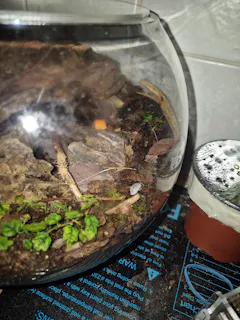
- Substrate method: A few centimetres of damp organic substrate — topsoil with flake soil and sphagnum moss works well. More naturalistic; harvesting is by floating springtails to the surface.
- Hybrid: Substrate on one side, charcoal on the other — gives them options.
We recommend a topsoil and sphagnum-based mix rather than coco coir. Add small pieces of magnolia leaves or bark on the surface — they hide and forage beneath these.
Moisture: Substrate should always feel moist — like a wrung-out sponge if using substrate, or with visible water at the base if using charcoal. Springtails dry out and die if conditions become arid. Mist or top up water as needed.
Temperature: 18–27°C. UK room temperature works year-round. They tolerate the lower end of this range comfortably, which is why they're called "temperate" — distinguishing them from tropical white or pink springtails that need warmer conditions.
Feeding the Culture
Folsomia candida feed on mould, fungi, decaying organic matter, pollen, and bacteria. In a culture, the easiest approach is a small pinch of dry yeast or baker's yeast sprinkled on the substrate surface once or twice weekly — it grows mould, and the springtails consume both the mould and the yeast directly. Other options:
- Dry rice grains, fish flakes, or dry pet food in small quantities
- Slices of mushroom (they relish fungal matter)
- Decaying leaf litter naturally in the culture
Don't overfeed — uneaten food breeds excess mould that can sour the culture. A pinch every few days for a healthy thriving population.
Harvesting Springtails into Isopod Enclosures
Once your culture is established (typically 2–4 weeks), you can begin transferring springtails to isopod enclosures. Two simple methods:
- Charcoal method: Tip the charcoal piece directly into the isopod enclosure; brush off the springtails clinging to it; return the charcoal piece to the culture.
- Float method: Add water briefly to the culture — springtails float to the surface — pour them off into the isopod enclosure (drain through fine mesh if needed).
You don't need many to seed an enclosure — a small group will multiply rapidly under the moist conditions isopods provide. Within a few weeks the bioactive setup will have a self-sustaining springtail population.
Reproduction and Population Dynamics
Folsomia candida populations are entirely female. Reproduction is parthenogenetic — facilitated by a Wolbachia bacterial endosymbiont — meaning every individual is essentially a clone of her mother. This makes them remarkably easy to keep: no sex-ratio management, no breeding considerations, just stable moisture and food to maintain a thriving colony.
Reproductive rate is very high under good conditions — populations can double or triple within weeks. The flip side: if conditions deteriorate (drying out, lack of food, contamination), populations can crash quickly. Keep cultures moist and fed, and they'll persist indefinitely; neglect them, and they'll go quietly.
How Temperate Springtails Compare to Other Springtail Species
If you're choosing between springtail varieties, here's how Folsomia candida fits in:
- vs Snowflake Springtails: Similar white temperate-tolerant species; Folsomia is the workhorse standard, Snowflakes are an alternative cool-climate variety. Both suit UK conditions well.
- vs Thai Red Springtails: Thai Reds are warmth-loving tropical springtails with reddish pigmentation; Folsomia is the temperate alternative. Choose Folsomia for cooler UK setups; choose Thai Red for warmer tropical Cubaris enclosures where they thrive.
- vs Orange or Yellow Springtails: Both are pigmented tropical alternatives with more visible colouration. Folsomia is plainer-looking (just white) but more vigorous in cooler temperate setups.
For most UK isopod setups — especially with cooler-running rooms or temperate Armadillidium species — Folsomia candida is the most reliable choice. For high-humidity warmth-loving tropical Cubaris setups, tropical springtail species are alternatives or supplements. Many keepers run two species side by side for resilience.
Browse the full springtails collection to compare all options.
Who Should Buy Temperate Springtails?
Ideal for:
- Anyone starting an isopod colony — get springtails alongside, not after
- Bioactive vivarium builders (dart frogs, day geckos, planted enclosures)
- Cubaris keepers — premium Cubaris setups practically require springtails
- Beginners wanting an easy-to-keep cleanup organism
- UK keepers with cooler-running homes (temperate species suits this)
- Anyone troubled by mould or fungal growth in invertebrate setups
Not ideal for:
- Pure desert/arid setups (springtails dry out quickly)
- Setups that won't be kept consistently moist
- Keepers wanting brightly-coloured visible springtails (try Orange, Yellow, or Thai Red instead)
Realistic Expectations
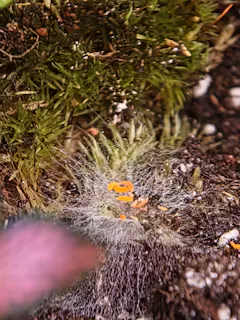
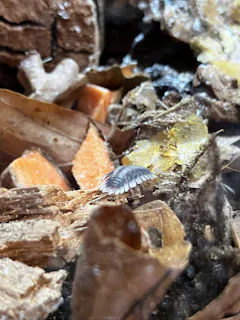
They're tiny. Set expectations: 1–3 mm, white, fast-moving, jumping when disturbed. Visible up close but easy to overlook from a distance.
They live in the substrate and damp areas. Most of the population is hidden in moist substrate, leaf litter, and around food. You'll see plenty when you mist or open the lid — they emerge briefly then retreat to cover.
Populations build over weeks, not days. Starter cultures take 2–4 weeks to establish meaningfully. Once thriving, they're self-sustaining and require minimal effort.
They don't replace isopods. Springtails handle microbial cleanup at a scale isopods can't — they work *with* isopods, not as replacements. A healthy bioactive setup uses both.
Cultures need maintenance, not much. Top up moisture; feed weekly; replace substrate if it sours. That's effectively the entire husbandry.
Building Your Setup
A complete Folsomia culture needs minimal kit — a container, substrate or charcoal, a moisture source, and food. Browse our accessories collection for everything you need — containers, substrate, leaf litter, and other essentials. For larger projects, multiple smaller cultures provide resilience against any single colony crashing.
Browse the full springtails collection for other varieties — or, if you're here for the isopods these springtails pair with, the full isopods range covers the complete catalogue.
Use collapsible tabs for more detailed information that will help customers make a purchasing decision.
Ex: Shipping and return policies, size guides, and other common questions.