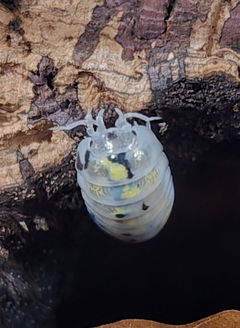
Pak Chong Isopods (Cubaris sp.)
Care Info:
 ORIGIN
 TEMP
TEMP
 HUMIDITY
 LENGTH
 DIFFICULTY
 RARITY
- Free shipping over £65
- Low stock - 2 items left
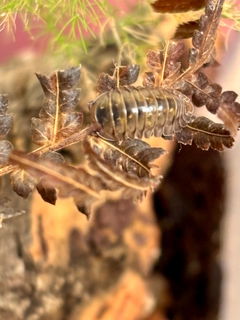
This is the sensible, lower-cost door into one of the hobby's most famous animals. Pak Chong is the same species as the Rubber Ducky, from the Pak Chong district of Thailand, without the Rubber Ducky price of entry. Sold as Pak Chong Isopods, or simply Cubaris sp. "Pak Chong", these are a tricolour cave Cubaris collected from the limestone karst around Pak Chong in Nakhon Ratchasima Province, northeastern Thailand. They share their bloodline with the celebrated Rubber Ducky and stand as the parent stock behind the Cherry Blossom morph, so you are buying into serious pedigree at a fraction of the usual outlay.
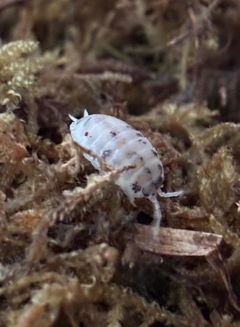
At around 15mm, they wear one of the more handsome colour schemes in the genus. The central body runs a soft blue-grey, each segment is trimmed with a crisp white frill, and the rear glows a warm orange-to-red, with the occasional flash of the same colour across the face. The effect is often likened to the markings of a Bernese mountain dog: dark centre, white edging, rust accents, arranged in three clear zones. Like all Cubaris they conglobate, rolling into a tight ball at the first sign of disturbance, and colour intensity varies from one animal to the next, which gives keen keepers something to select for over the generations.
This listing is the standard Pak Chong. If you want the same animal turned up a shade warmer and redder, the Red Pak Chong is a colour form of exactly the same species. Either way you are getting a slow but reliable Cubaris that earns its place in a display: striking to look at, calm to keep, and a gentle step up for anyone ready to move on from beginner species. They sit comfortably alongside the rest of the Cubaris range.
Keep them warm, in the 24 to 27°C band, at 70 to 80% humidity, with only low ventilation so the moisture holds. Give them a deep living substrate they can burrow into and feed from: a base of flake soil blended with rotted hardwood and a little organic topsoil works well, and it is worth keeping a plain coco-coir base out of the mix, as it holds little of the nutrition a cave Cubaris wants. Calcium is permanent, not occasional, so leave cuttlebone or crushed limestone available at all times for healthy moults and shell growth. Layer the top with leaf litter and cork bark for cover and grazing, and build in a humidity gradient, one side damper than the other, with gentle cross-ventilation so the air never turns stagnant. Feed them lightly and regularly on decaying leaves and wood as the staple, topped up with the occasional slice of vegetable and a modest pinch of protein.
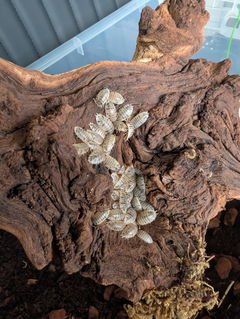
Breeding is slow but dependable. Pak Chong will not swarm the way a hardy starter species does, but a settled group reproduces steadily, dropping small broods of mancae once the colony has found its feet, which usually takes a couple of months of stable conditions. Hold the temperature and humidity steady, keep calcium and leaf litter topped up, and let them get on with it undisturbed. A thriving springtail culture makes a fine companion, quietly clearing mould and keeping the substrate sweet. For a wider look at the genus, our guide to the types of Cubaris is a good place to read further.
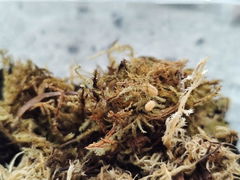
Every group is captive-bred and packed around a ventilated tub of damp sphagnum inside a double-walled box, then sent out Monday to Thursday by tracked next-day Royal Mail for delivery by 1pm. Live arrival is guaranteed, and we always tuck in a 20% overcount for good measure.