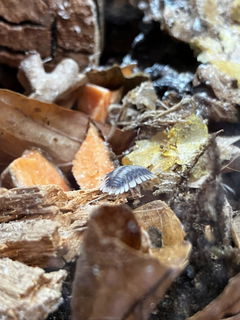
Cubaris murina 'Mandarin' Isopods
Care Info:
 ORIGIN
 TEMP
TEMP
 HUMIDITY
 LENGTH
 DIFFICULTY
 RARITY
- Free shipping over £65
- Low stock - 5 items left
Most Cubaris make you earn them. The Mandarin does not. It is a vivid, mandarin-orange colour form of Cubaris murina, the hardy, forgiving species that is the genuine gateway into the genus, so you get the warm citrus glow of a premium-looking Cubaris on care that a beginner can actually manage. It is the easy one, in a lovely colour. Every colony we send is captive-bred here in the UK.
Introduction
This is Cubaris murina 'Mandarin', a bright orange morph of the widespread, easygoing C. murina. Where the premium cave Cubaris like the Rubber Ducky demand precise, stable conditions, murina is the hardy, quick-to-settle exception, and the Mandarin puts a bold colour on it. It completes the warm-toned murina family alongside the standard murina, the pink Papaya and the mottled Anemone, four accessible morphs of one easy species.
Appearance
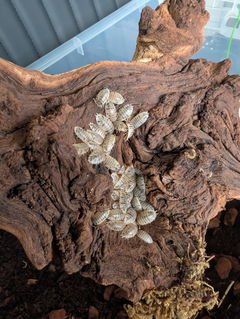
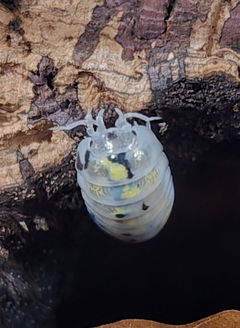
A small-to-medium Cubaris, up to around 12 mm, in a uniform vibrant orange that genuinely earns the mandarin name, warmer and bolder than the pink-toned Papaya. The colour comes in over successive moults, so young stock looks paler before the full orange arrives, and a settled colony has a sunny, citrus glow against dark substrate. Like the rest of the genus it conglobates into a tight ball when disturbed.
Care
Here is where the Mandarin is forgiving where its cave cousins are fussy. It is a warm, tropical-to-subtropical isopod wanting 17 to 28°C, leaning warm, and moderate humidity around 55 to 75%, but, unusually for the genus, it does not need a sharp moisture gradient: a consistently lightly-damp, never wet, enclosure with a little ventilation suits it, and it forgives a short drift in conditions. Build a nutritious substrate on organic topsoil, flake soil and white-rotted hardwood rather than coco coir, with crushed limestone through it for calcium, and give leaf litter and cork for cover. Our complete Cubaris care guide covers the detail, though this is one of the species that asks least of it.
Diet
An easy-going detritivore: leaf litter, decaying white wood and forest moss as the constant base, small amounts of vegetable and the occasional soft fruit, plus a little protein such as fish flake or dried shrimp. Keep a permanent calcium source going for clean moults, and lift uneaten fresh food within a day or two. A springtail culture keeps any mould in check.
Breeding
The Mandarin is a good, forgiving breeder, far easier than the premium cave Cubaris, which is a large part of its appeal. Give a settled group steady warmth, consistent light dampness and constant calcium, and it builds reliably, with young released fully formed and colouring up as they moult. A larger starter group settles faster; keep the line pure and it breeds true.
Who is this for?
The Mandarin suits the beginner who wants a vivid first Cubaris without the exacting care, the collector completing the murina morph set, and anyone wanting to learn the genus before stepping up to the demanding rarities like the Rubber Ducky. It is a poor fit only for a bone-dry or cool setup, or for someone after a large display animal, since this is a small isopod kept for colour and ease. Browse the rest of the genus to compare.
All stock is captive-bred here in the UK and travels under our live arrival guarantee, in a ventilated deli tub with damp sphagnum inside a double-walled box. We post Monday to Thursday by Royal Mail next day before 1pm, with a 20% overcount in every order.
Use collapsible tabs for more detailed information that will help customers make a purchasing decision.
Ex: Shipping and return policies, size guides, and other common questions.