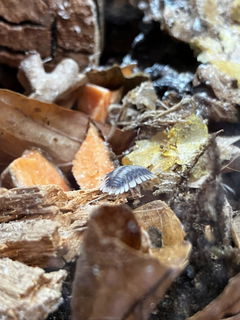
Venezillo parvus 'Dalmatian' Isopods
Care Info:
 ORIGIN
 TEMP
TEMP
 HUMIDITY
 LENGTH
 DIFFICULTY
 RARITY
- Free shipping over £65
- Low stock - 9 items left
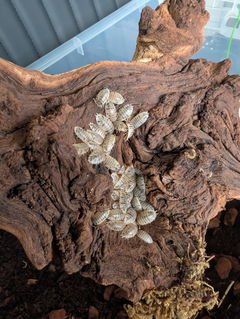
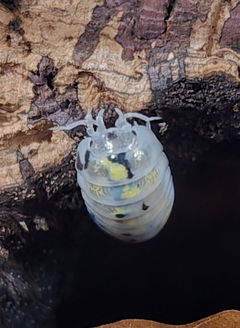
The first thing you notice is the spotting. Venezillo parvus, the Dalmatian isopod, wears black spots scattered across a pale body, the exact markings of a dalmatian dog shrunk down onto an isopod barely the length of a grain of rice. It is a dalmatian in miniature, and once a colony settles in and dozens of them are working across the leaf litter, that scatter of dark flecks on white is one of the prettiest sights in a small vivarium.
These are tiny animals, with adults reaching only around 8 mm. Like the larger Armadillidium they are related to within the family Armadillidae, Venezillo parvus conglobates, rolling itself into a tight little ball when it feels threatened or when the air dries out. Watching a spotted dwarf the size of a match head tuck into a perfect sphere never gets old, and it is a reassuring sign too, telling you the animal is behaving as it should. For all that delicate look, they are hardy and forgiving, which makes them a good first dwarf isopod.
This is a tropical dwarf, so I keep mine warm and humid rather than cool and Mediterranean. Somewhere around 21 to 26°C suits them, and in most heated homes that means little more than a warm shelf, though a low-wattage heat mat on the side of the tub through winter does no harm. Aim for a gentle moisture gradient rather than a soaking wet box, damp across most of the floor with a slightly drier corner, and pair that with good cross-ventilation so the air keeps moving and never turns stale.
Give them a living base to burrow through, because they spend most of their lives under the surface. I mix flake soil with rotted hardwood and a good topsoil, which holds moisture, feeds the colony and keeps a healthy biofilm ticking over. Avoid a plain coco-coir base, it looks tidy but offers little to eat and dries out in a way these damp-loving dwarfs dislike. Scatter calcium through the mix, crushed cuttlebone or eggshell, for clean moults, then top it with a thick layer of magnolia leaf litter for cover to graze under.
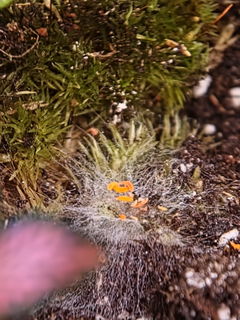
One word of warning that comes with any dwarf species: they are small enough to walk straight out of standard ventilation holes, and the young are smaller still. Cover every vent with fine mesh and you will keep the whole colony where it belongs. I also like to run a springtail culture alongside them, since springtails mop up mould in the humid conditions these isopods want, and the two work together to keep the living soil clean and balanced.
As a clean-up crew they are peaceful, prolific and quietly effective, slipping into tight spaces a larger isopod could never reach and turning over the soil month after month. If you are weighing them up against my other little workers, they sit close to the Dwarf White for pure below-ground utility but with far more to look at, while surface-active tropicals like Cubaris murina and the bold, ball-rolling Zebra fill different roles again. Run the Dalmatian as a charming display species in its own right, or seed it through a bioactive setup and let it disappear happily into the substrate.
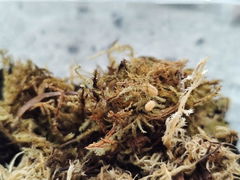
Every one of these is bred here rather than collected from the wild. When you order, I box them double-walled around a ventilated tub of damp sphagnum and post Monday to Thursday by tracked next-day Royal Mail, with a live-arrival guarantee and a small overcount added as standard.
Use collapsible tabs for more detailed information that will help customers make a purchasing decision.
Ex: Shipping and return policies, size guides, and other common questions.