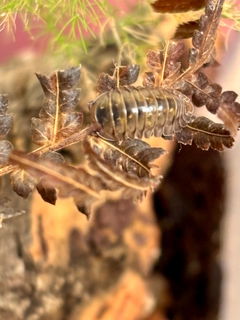
Porcellio Niklesi Orange Blaze Isopods
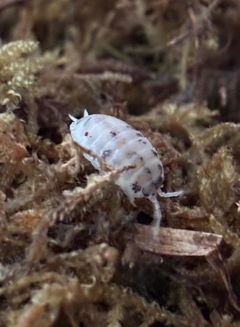
burning orange long and thin isopod
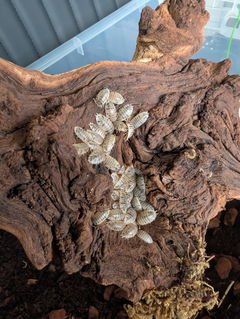
burning orange isopod with dark bottom segment
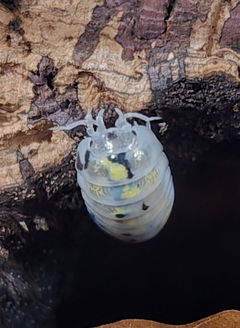
Porcellio isopod with burning orange body

Porcellio Niklesi Orange Blaze Isopods

Care Info:

Origin icon ORIGIN
SPAIN
Temperature icon TEMP
18-28 ℃
Humidity icon HUMIDITY
45-55 %
Length icon LENGTH
20 mm
Difficulty icon DIFFICULTY
MEDIUM
Rarity icon RARITY
RARE
Sale price£25.00
/
Tax included. Shipping calculated at checkout.

Quantity
  • Free shipping over £65
  • Low stock - 3 items left
  • Backordered, shipping soon

Porcellio nicklesi Orange Blaze are properly one of the most visually striking Porcellio morphs in the UK hobby — a fiery, vivid orange selective-bred colour line of the Spanish dry-habitat species P. nicklesi, with contrasting black and white specks that catch the light dramatically. Combined with the species's distinctive husbandry profile (Mediterranean dry-loving, very low humidity by isopod standards) and the relatively easy sexing of adults, Orange Blaze is one of the more rewarding choices for keepers ready to step into dry-habitat Porcellio specifically.

This is part of our wider Porcellio collection and shares species heritage with our Nicklesi Tang (another orange-toned variant of the same species). At the genus level, it joins our other Spanish and Mediterranean Porcellio products including Porcellio werneri Silverback (Greek), Porcellio expansus Prades (Spanish), and others. All these Mediterranean Porcellio species share the dry-loving husbandry profile that's properly different from tropical hobby isopods. For collectors building a focused Mediterranean Porcellio display, this is one of the right additions.

One honest framing point up front. P. nicklesi husbandry requires properly different setup from tropical isopods — significantly lower humidity (45–55% vs the 70–85% typical of Cubaris), good ventilation, mostly-dry substrate with only a small damp zone. If your previous experience is exclusively with Cubaris, Ardentiella, or even standard Porcellio scaber, this is a real adjustment. The instinct to mist regularly will actively harm this species. To set things up properly from the start, browse our accessories collection for substrate components, ventilation accessories, and other items this species depends on.

Quick Care Summary

  • Scientific Name: Porcellio nicklesi Dollfus, 1892 — "Orange Blaze" morph specifically
  • Synonyms: Formerly sometimes listed as Porcellio bolivari nicklesi Dollfus, 1892 (subspecies designation now superseded; treated as full species per current WoRMS taxonomy)
  • Common Names: Orange Blaze Nicklesi, Nickles Isopod, Nicklesi Orange Blaze
  • Family: Porcellionidae (order Isopoda, suborder Oniscidea)
  • Genus context: Porcellio is a properly large genus of mainly Mediterranean and European isopods. Many species are dry-tolerant rocky-habitat specialists — distinct from the tropical Cubaris that dominate the modern premium hobby
  • Origin: Spain — dry, Mediterranean habitats. Type locality recorded as Spain in Dollfus's original 1892 description
  • Adult Size: Up to 20 mm body length (up to ~30 mm including uropods) — properly substantial
  • Lifespan: 2–3 years typical in good captive conditions
  • Difficulty: Medium — a dry-habitat specialist with specific requirements; not the hardest Porcellio but requires proper husbandry approach
  • Temperature: 18–28 °C — properly suits UK ambient room temperature for most of the year; supplementary heating rarely needed
  • Humidity: 45–55% — properly low; significantly drier than most isopods. Properly the most distinctive husbandry requirement
  • Ventilation: Medium to high — good airflow is essential. Stagnant humid air will harm this species
  • Behaviour: Surface-active; reclusive but visible at low-light times. Standard Porcellio activity patterns
  • Appearance (Orange Blaze morph): Fiery, vivid orange body with contrasting black and white specks throughout — properly striking visual character. Easily distinguished from the wild-type grey form
  • Sexual dimorphism: Males have notably longer uropods; females have shorter uropods and broader body shape. Properly easy to sex at adult size
  • Rarity: Rare in UK hobby — selective-bred morph not widely propagated

What Makes Orange Blaze Nicklesi Special

The dramatic Orange Blaze colouration. The name properly describes the visual character — fiery, vivid orange body with contrasting black and white specks creating a striking patterned appearance. Where the standard wild-type P. nicklesi is grey with subtle patterning, Orange Blaze is one of the most visually distinctive Porcellio morphs in the UK hobby. Under good display lighting, the orange catches the light in ways the wild-type doesn't.

The P. nicklesi morph family heritage. P. nicklesi appears in the hobby in several established forms — wild-type (grey with subtle patterning), Rubivan (black and white, sometimes called "cookies and cream"), Orange Blaze (this morph), and Tang (another orange-toned variant). If you're familiar with Rubivan specifically, Orange Blaze can be thought of as its orange counterpart. The exact origins of Orange Blaze aren't entirely settled — it may be a naturally occurring colour variant isolated from wild populations, or it may have involved crossing with the Rubivan line. Either way, it's now an established, true-breeding morph.

The Mediterranean dry-habitat biology. Unlike most premium hobby isopods (which come from tropical rainforest environments), P. nicklesi evolved in dry Spanish Mediterranean habitats. This translates to genuinely different husbandry — much lower humidity, higher ventilation, room-temperature preferences rather than tropical heat. For keepers comfortable with one husbandry profile, switching to P. nicklesi requires properly different setup logic.

The UK temperature suitability. The 18–28 °C preferred range matches UK average room temperature for most of the year. Unlike tropical species that need supplementary heating through autumn-to-spring, P. nicklesi typically thrives at standard UK room ambient without dedicated heat — properly practical for keepers without dedicated heating infrastructure.

The Porcellio family connection. Within our Porcellio collection, this is one of the Mediterranean dry-loving species alongside our Porcellio werneri Silverback (Greek Shield), Porcellio expansus Prades, and other Mediterranean Porcellio. These species share the dry-loving husbandry approach that distinguishes them from tropical isopods — for keepers in drier UK homes or anyone tired of constantly managing tropical humidity, the Mediterranean Porcellio offer a properly different keeping experience.

The easy adult sexing. Unlike many isopod species where sex identification requires specialist examination, adult P. nicklesi are properly easy to sex — males have noticeably longer uropods (the tail-like appendages at the rear), while females have shorter uropods and broader body shape with a visible marsupium when carrying eggs. For keepers planning breeding, this makes pair confirmation straightforward without magnification or specialist knowledge.

The selective-breeding heritage. Orange Blaze represents established hobby selective breeding from wild-type P. nicklesi populations. The morph is now true-breeding, meaning the orange phenotype passes reliably through generations when maintained as a pure line (not mixed with other P. nicklesi morphs). For collectors interested in established colour lines with genetic stability, this is one of the more reliable premium Porcellio morphs.

About the Name and the Nicklesi Morph Family

A few notes on naming and the morph cluster.

  • Porcellio nicklesi: Described by Adrien Dollfus in 1892 from Spanish collections. The species was sometimes placed as a subspecies of P. bolivari (as P. bolivari nicklesi) but is currently treated as a distinct species per WoRMS (World Register of Marine, Freshwater and Terrestrial Isopod Crustaceans)
  • Spelling note: The correct species name is nicklesi with a 'c' — derived from the honoree's name. You may occasionally see this misspelled as "niklesi" without the 'c' in hobby trade contexts, but the formal scientific spelling per Dollfus's 1892 original description and current taxonomic databases is nicklesi
  • "Orange Blaze" as morph designation: Hobby trade name referencing the dramatic orange colouration. Selective-bred from wild-type P. nicklesi, established as a true-breeding line in current hobby contexts
  • The P. nicklesi morph family:
    • Wild-type: Grey with subtle patterning — the natural form found in Spanish wild populations
    • Rubivan: Black and white, sometimes called "cookies and cream"
    • Orange Blaze (this morph): Fiery orange with black and white specks
    • Tang: Another orange-toned variant; subtly different from Orange Blaze
    All share identical care requirements — what differs is appearance only
  • Maintaining morph lines separate: If you keep multiple P. nicklesi morphs, maintain them in separate enclosures to preserve the colour lines. Mixing Orange Blaze with Rubivan or wild-type produces offspring that don't reliably express either parent morph's colouration — the selective breeding work that established the lines depends on keeping them separate
  • Family Porcellionidae: Distinct from family Armadillidae (which contains our Cubaris and Ardentiella) and Oniscidae (which contains our Oniscus species). Porcellionidae species generally don't conglobate (don't roll into tight balls); they rely on flat body shape and quick cover-seeking for defence

Setting Up the Enclosure

The enclosure setup is properly different from tropical isopod species. Two non-negotiable requirements: lower humidity than typical hobby setups, and strong ventilation to prevent moisture stagnation.

A 12-litre tub is a reasonable starting size for a small group, moving up as the colony grows. Sealed plastic containers work properly well when modified with adequate ventilation — fine mesh on opposing sides of the lid, or screw-in air vents from our accessories range. For P. nicklesi specifically, err on the side of more ventilation rather than less — excess humidity is the enemy.

Provide proper structure:

  • Cork bark slabs in various sizes, including vertical orientations
  • Stone pieces or slate — properly natural habitat material that mimics rocky Mediterranean environments
  • Multiple hide options creating gaps of different sizes
  • Egg crate sections work well as hides — flat layers create narrow gaps

Browse our accessories range for cork bark, ventilation accessories, and natural cover options.

Escape-proofing is generally straightforward — P. nicklesi aren't notable climbers on smooth surfaces. A properly fitting lid with adequate ventilation is sufficient.

Important husbandry note: The humidity-ventilation balance is properly the most common failure point. P. nicklesi need lower humidity AND high ventilation simultaneously — this is genuinely different from most hobby isopods. Don't seal up the enclosure to maintain humidity — for this species, more airflow is generally better than less.

Substrate

Substrate composition is properly different from tropical isopod species — drier overall with the moisture gradient concentrated in a small refuge area. The right mix:

  • Organic topsoil as a base — kept relatively dry rather than constantly damp
  • Crumbled white rotten wood mixed in — properly important food source
  • Crumbled hardwood leaf litter mixed throughout and layered generously on top. Browse our accessories collection for ready-prepared leaf litter
  • Flake soil can be incorporated as a nutritious substrate component providing both food value and good texture
  • Sphagnum moss patches in only one corner — no more than one fifth of the enclosure should be damp. The rest stays dry
  • Calcium sources — cuttlebone permanently available; crushed limestone or eggshell incorporated into substrate. Properly essential for exoskeleton development. Our calcium options cover the full range

Substrate depth: 3–5 cm minimum is sufficient — P. nicklesi aren't deep burrowers. Maintain a clear moisture gradient with most of the enclosure dry and only a small (one-fifth maximum) damp area in one corner. Animals move between zones to choose their preferred humidity.

Humidity and Temperature

Maintain humidity at 45–55% — properly low compared to most hobby isopods. The Spanish Mediterranean habitat is genuinely dry, and these animals are adapted for it. Don't attempt rainforest-style humidity (70%+); consistently high moisture causes mould and stress in P. nicklesi.

Maintain the moisture gradient through targeted misting — light misting on the moss corner once or twice weekly maintains the moisture refuge without saturating the rest of the substrate. The bulk of the enclosure should be allowed to dry between any moisture applications.

Temperature should be 18–28 °C — properly matching UK ambient room temperature for most of the year. Room temperature in most UK homes will sit comfortably within that range. No additional heating is typically needed.

Avoid placing the enclosure in direct sunlight or near heat sources, which can create temperature spikes and rapidly dry out the small damp area. If your home runs cooler than 18 °C in winter, a low-wattage heat mat on a thermostat, mounted on the side of the enclosure, provides supplementary warmth.

Diet

The primary diet is decayed leaf litter and white rotten wood, both of which should be present in the enclosure at all times. Interestingly, P. nicklesi often prefer well-decayed, older leaves over fresher ones — properly don't rush to replace leaf litter as it breaks down.

  • Hardwood leaf litter — the dietary foundation; should always be available. Browse our accessories collection for ready-prepared leaf litter
  • White rotten wood — both food and habitat; constantly consumed
  • Root vegetables — sweet potato, carrot, yam go down well
  • Fresh fruit occasionally — banana, apple in small portions. Replace within 24–48 hours
  • Protein regularly — fish flakes, dried shrimp, freeze-dried bloodworm. Offer twice weekly. Browse the protein options in our accessories collection
  • Calcium sourcescuttlebone permanently available. Properly critical for exoskeleton development, especially for breeding females and growing juveniles. Our calcium options cover the full range

Place protein-based foods on the dry side of the enclosure to prevent rapid spoilage. Remove uneaten fresh food before it moulds — particularly important in the drier substrate where mould development can be a sign of conditions being out of balance.

Breeding

P. nicklesi will breed reliably in captivity once conditions are properly dialled in. Development time to maturity is around 9 months — medium-range for Porcellio species. Brood sizes are moderate, and once established, a colony will grow steadily.

Sexing adult P. nicklesi is properly straightforward:

  • Males: Longer, more prominent uropods. Slimmer body shape overall
  • Females: Shorter uropods. Broader body, with a visible brood pouch (marsupium) when carrying eggs

At full adult size, sexing is properly straightforward — you don't need magnification or specialist knowledge. This makes pair confirmation reliable when planning breeding setups.

For breeding success:

  • Correct humidity (low — 45–55%)
  • Good ventilation throughout the enclosure
  • Varied diet with consistent protein and calcium
  • Stable temperature in the 20–25 °C range works well
  • Minimal disturbance — properly important for established colonies
  • Maintain pure morph lines — don't mix with Rubivan or wild-type if you want to preserve the Orange Blaze colour

Who Should Buy Orange Blaze Nicklesi?

Ideal for:

  • Experienced isopod keepers with established success in Mediterranean dry-loving Porcellio species
  • Anyone who has kept Porcellio werneri, P. expansus, P. hoffmannseggii, P. magnificus, P. bolivari, or similar dry-habitat Porcellio
  • Collectors building a focused P. nicklesi morph display alongside our Nicklesi Tang
  • Display enthusiasts drawn to dramatic warm orange colouration
  • Keepers comfortable maintaining low humidity with strong ventilation
  • Anyone in UK homes that can sustain consistent 18–28 °C without dramatic temperature fluctuations
  • Bioactive vivarium setups designed around dry rocky habitats rather than tropical rainforest

Not ideal for:

  • First-time isopod keepers — start with easier species before tackling dry-habitat specialists
  • Anyone whose previous experience is exclusively Cubaris, Ardentiella, or tropical species — the husbandry adjustment is genuinely substantial
  • Tropical-only setups that can't accommodate the lower humidity requirement
  • Setups that can't maintain strong ventilation
  • Keepers planning to mix morph lines — pure-line maintenance is needed to preserve Orange Blaze colouration

Realistic Expectations

The dry husbandry profile is genuinely different from most hobby isopods. New keepers transferring habits from Cubaris or Ardentiella often instinctively keep P. nicklesi too wet — this is properly the most common cause of colony failure. The species needs predominantly dry substrate with only a small damp refuge corner, not uniformly damp substrate. The temptation to mist "just a little more" is the single biggest mistake new nicklesi keepers make.

If you've kept other dry-habitat Porcellio — Spanish species like P. hoffmannseggii, P. magnificus, P. bolivari, or our Porcellio werneri Silverback — you already understand the approach and P. nicklesi won't present surprises. The care philosophy is the same: predominantly dry enclosure, small damp patch, good ventilation, and resist the urge to over-mist.

If this would be your first dry-habitat species, it's doable but worth researching the approach thoroughly before your isopods arrive. Browse our Porcellio collection to see the full range of species we stock, including some more forgiving options if you'd prefer to build experience first.

The morph genetics aren't fully understood. Orange Blaze is a selectively-bred line, but whether it represents a simple Mendelian recessive trait, a polygenic colour combination, or a stable hobby selection from naturally-occurring wild variation isn't fully established. The morph is now reliably true-breeding when maintained as a pure line, but mixing with other P. nicklesi morphs (especially Rubivan) produces unpredictable offspring colouration. Maintain morph lines separately if you want consistent expression.

Slow but steady colony growth. P. nicklesi aren't as prolific as some Porcellio species — the 9-month development time to maturity is medium-range for the genus, and brood sizes are moderate. Don't expect rapid colony expansion. The species rewards patience and consistent conditions rather than rapid multiplication.

The visual appeal develops with size. Newly-released mancae are properly less dramatically coloured than adults — the Orange Blaze colour intensifies with maturation. Don't be disappointed by initially understated juveniles; the morph appearance becomes more striking after several moults.

UK escape isn't an environmental risk. UK outdoor conditions are too cool and wet for Spanish Mediterranean P. nicklesi to establish reliable wild populations. The species needs drier conditions than UK climate typically provides. Recapture escapees promptly but don't worry about establishing harmful feral colonies.

Use collapsible tabs for more detailed information that will help customers make a purchasing decision.

Ex: Shipping and return policies, size guides, and other common questions.
You may also like


Recently viewed