Porcellio Silvestri High Orange Isopods

Porcellio Silvestri High Orange Isopods

Care Info:

Origin icon ORIGIN
EUROPE
Temperature icon TEMP
18-24 ℃
Humidity icon HUMIDITY
50-70 %
Length icon LENGTH
15-20 mm
Difficulty icon DIFFICULTY
EASY
Rarity icon RARITY
RARE
Regular price£30.00
/
Tax included. Shipping calculated at checkout.

Quantity
  • Free shipping over £65
  • In stock, ready to ship
  • Backordered, shipping soon

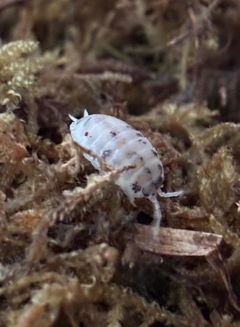
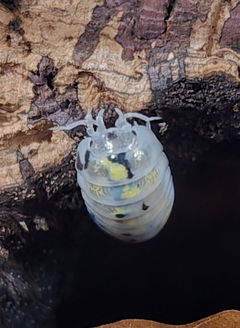
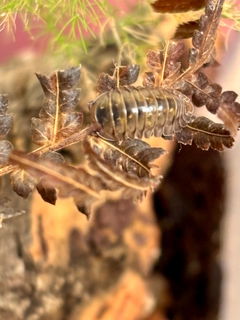
Porcellio silvestrii 'High Orange' is the selectively-bred orange colour line of one of the more biologically interesting Iberian Porcellio in the hobby — a Spanish pine-forest species that exhibits genuine sexual dimorphism in colouration, with adult males showing vibrant bright orange and adult females expressing the same orange in duller form or with grey tones. The 'High Orange' designation refers to the line bred to intensify the bright orange expression — properly distinctive among Porcellio, where most species show essentially identical colouration across sexes.

This is the orange sibling listing to our dark Porcellio silvestrii 'Black Senia' — same species, opposite colour direction. Together they showcase the genetic range of P. silvestrii: black on one end, intensified orange on the other. Properly satisfying as a paired collection for keepers building a species-themed Iberian cluster.

Like all Porcellio, the High Orange does not conglobate — it curls partially when threatened rather than rolling into a complete ball. If you want a roller, look at other Porcellio won't suit; browse the full Porcellio collection for related species across the genus.

Quick Care Summary

Note: this listing's care icons couldn't be verified by direct page access. Care figures below reflect Exuvium and other authoritative sources for P. silvestrii; verify against the icons on the live product page before finalising your setup.

  • Scientific Name: Porcellio silvestrii Arcangeli, 1924
  • Colour Line: 'High Orange' — selectively bred for intensified orange expression
  • Common Name: Silvestri's Woodlouse (Orange line)
  • Family: Porcellionidae
  • Origin: Spain (Catalonia type locality; range extends across pine-forest habitats in northern and southern Spain)
  • Adult Size: Up to 25 mm — substantial mid-tier Porcellio
  • Lifespan: 2–3 years typical
  • Difficulty: Easy — among the more forgiving Iberian Porcellio
  • Temperature: 18–24°C (Mediterranean preference)
  • Humidity: 50–70% — drier-leaning with moisture gradient
  • Ventilation: Moderate to high — they require good airflow
  • Conglobation: No — curls partially when threatened
  • Appearance: Males show vibrant bright orange; females show duller orange with grey tones — properly distinctive sexual dimorphism in colour
  • Behaviour: Active day and night including early morning; shy initially; bold foragers once established
  • Breeding: Reliable — breeds true for the intensified orange expression with selective work
  • Rarity: Rare in the UK hobby

What Makes 'High Orange' Special

The sexual dimorphism is genuinely unusual. Porcellio silvestrii is one of relatively few terrestrial isopod species where males and females express noticeably different colouration. Most Porcellio (and most isopods generally) show essentially identical colour across sexes — only the body proportions and uropods differ. In P. silvestrii, adult males are vibrant bright orange while adult females are duller orange or grey-tinted. For naturalist customers, watching a colony develop and being able to identify sex by colour alone is properly interesting biology — much more accessible than the subtle morphological sex characters of most isopods.

The 'High Orange' selective work. This colour line represents intensification of the species's natural male orange expression, selectively bred over generations to produce stronger orange colouration in both sexes than the wild-type baseline. The result is a properly vivid display Porcellio with substantial visual impact.

The Filippo Silvestri provenance. Porcellio silvestrii was described by Aristide Arcangeli in 1924 in "Contributo alla conoscenza degli isopodi della Catalogna" — properly substantial 100-year-old scientific record from the Catalan fauna. The species name honours Filippo Silvestri (1873–1949), the major Italian entomologist who specialised in Protura, Thysanura, Diplura, and Isoptera, and who described the previously unknown order Zoraptera. Multiple species across different invertebrate groups bear his name.

The complementary cluster with Black Senia. P. silvestrii shows extraordinary colour range — from the dark Black Senia locality form through the bright orange of this 'High Orange' selected line. Keeping both gives you the genetic spectrum of a single species across two visually distinct lines.

Spanish pine-forest origin. P. silvestrii is native to Spanish pine forests with the moderate humidity and warm temperatures typical of Mediterranean coniferous habitat. This translates well to UK indoor husbandry — comfortably room-temperature, broadly tolerant of humidity variation, and active during daylight hours as well as at night.

Active and visible. Unlike many premium Porcellio that spend most of their time hidden, P. silvestrii are notably active across day, evening, and early morning hours. The bright orange males in particular are properly visible when foraging — substantial display value for a Porcellio at this price point.

For background on the genus and how the various Porcellio species compare, see our Different Types of Porcellio Isopods guide.

Setting Up the Enclosure

A 6–10 litre plastic container with a secure clip-lock lid suits a starter colony of 5–10 individuals. Drill ventilation holes on opposite sides for cross-ventilation, covered with fine mesh. P. silvestrii specifically need good airflow — this isn't a "stagnant humid" species. Aim for moderate to high ventilation.

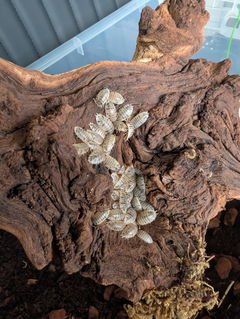
Provide multiple hiding spots — cork bark flats, decaying wood, flat stones, ceramic hides. The orange colouration shows particularly well against dark naturalistic substrate and weathered cork bark. Keep the enclosure out of direct sunlight.

Important husbandry note: Porcellio do not need a standing water dish. Misting one corner of the enclosure provides all the moisture they need — open water risks drowning and is unnecessary for a Mediterranean drier-leaning species. Skip the water dish.

Substrate

Use a moisture-retentive substrate that drains well, reflecting the Spanish pine-forest origin:

  • Organic topsoil base (pesticide-free) as the foundation
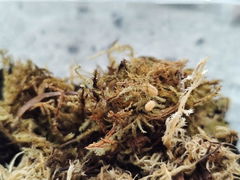
  • Sphagnum moss for the moist section (keep one third of the enclosure consistently damp using moss; this matches Exuvium's confirmed husbandry approach for the species)
  • Composted hardwood leaf litter (oak, beech, maple)
  • Flake soil mixed in for added nutrition
  • Crushed limestone or eggshells distributed throughout for calcium
  • Pieces of rotting white wood (specifically recommended for this species)

We recommend a topsoil and sphagnum-based mix rather than coco coir. Substrate depth around 5–8 cm allows natural burrowing while supporting moisture-gradient stability.

Top layer: generous hardwood leaf litter plus rotting white wood pieces — both are specifically appreciated by P. silvestrii. Plus cork bark hides for cover.

Humidity and Temperature

Maintain humidity around 50–70% with a clear moisture gradient — keep one-third of the enclosure consistently damp using sphagnum moss while the rest stays drier with leaf litter coverage and good airflow. P. silvestrii is documented as not liking it too wet — properly drier-leaning Mediterranean species. Overwetting is more likely to cause issues than insufficient moisture.

Temperature should be 18–24°C — comfortably within UK room temperature year-round. They handle the cooler end of this range without difficulty and breeding picks up at 22–24°C. The species's pine-forest origin means they're adapted to seasonal temperate-Mediterranean variation rather than constant tropical conditions.

Diet

High Orange isopods are unfussy detritivores with broad appetites:

  • Hardwood leaf litter (oak, beech, magnolia) — the dietary foundation, always available
  • Rotting white wood — specifically recommended for this species; properly important nutrition source
  • Moss and decaying leaves — particularly relevant to the pine-forest origin
  • Vegetables 1–2x weekly: carrot, courgette, sweet potato, squash. Replace within 24–48 hours.
  • Fruit occasionally (small amounts of soft fruit)
  • Protein 1–2x weekly: fish flakes, dried shrimp, dried daphnia. Feed protein on the drier side of the enclosure to prevent spoilage.
  • Calcium (essential — always available): cuttlefish bone, crushed limestone, oyster shell, eggshells.

For dark and bright-coloured Porcellio lines including this orange-selected stock, oak leaf litter and white rotting wood seem to support pigmentation maintenance — keep both well stocked.

Breeding

High Orange breed reliably under stable conditions. The sexual dimorphism makes pairing properly straightforward: bright orange = male, duller orange/grey = female. Once mated, females develop a marsupium (brood pouch) and produce broods over the standard Porcellio cycle.

Colour breeding: The intensified orange expression is a selectively-bred trait. Pure 'High Orange' colonies breed true reliably, with selective work over generations strengthening the orange line further. Introducing wild-type or Black Senia individuals would dilute the orange expression — keep lines separate.

For breeding success:

  • Stable temperature in the warmer range (22–24°C is ideal for peak breeding)
  • Consistent moderate humidity with proper gradient — keep 1/3 moist, 2/3 drier
  • Abundant calcium for breeding females
  • Regular protein supplementation
  • Adequate hides and cover for gravid females
  • A larger starter group establishes faster and provides genetic diversity

Young inherit the orange line genetics from birth, with colouration intensifying through successive moults as juveniles mature toward adult sexual expression.

Who Should Buy 'High Orange' Isopods?

Ideal for:

  • Display keepers drawn to bright orange Porcellio with biological interest beyond pure aesthetics
  • Collectors building a P. silvestrii species cluster (High Orange + Black Senia — opposite colour expressions of the same species)
  • Naturalists interested in sexual dimorphism — properly unusual feature among terrestrial isopods
  • Keepers wanting a substantial Porcellio with manageable care (Easy difficulty by Iberian standards)
  • Anyone who appreciates honest taxonomic provenance (Arcangeli 1924, Catalonian type locality, Filippo Silvestri etymology)
  • Display setups with dark substrate where orange isopods stand out vividly

Not ideal for:

  • Keepers wanting a conglobating "rolling" isopod — Porcellio don't roll
  • Wet humid tropical setups — they prefer drier Mediterranean conditions
  • Customers wanting uniform-colour colonies — the natural dimorphism means males and females visibly differ
  • Beginner keepers without proper ventilation setup — good airflow is essential for this species

Realistic Expectations

The colour really is sexually dimorphic. Don't expect uniform vivid orange across the colony — adult males show the brightest orange; females are duller or grey-tinted. This is a species trait, not a defect, and it gives you instant visual sex identification.

They want ventilation. Probably the most common P. silvestrii failure mode is overly humid stagnant conditions — overwetting kills this species faster than underwetting. Good airflow is properly important.

They're shy initially but become bolder. Like most Porcellio, the High Orange spends much of its early time hidden but becomes a more confident forager as colonies establish. Adults are properly active across day and night once settled.

The "silvestrii" spelling has two i's. Named after Filippo Silvestri the Italian entomologist — the species name needs both i's to be taxonomically correct. Many retailer listings (often including the on-page title) drop one of the i's; the correct binomial is Porcellio silvestrii.

Pairing with Black Senia gives you the whole species story. The two lines represent opposite ends of the P. silvestrii colour spectrum — black on one extreme, intensified orange on the other. Genuinely satisfying as a paired collection.

Use collapsible tabs for more detailed information that will help customers make a purchasing decision.

Ex: Shipping and return policies, size guides, and other common questions.
You may also like


Recently viewed