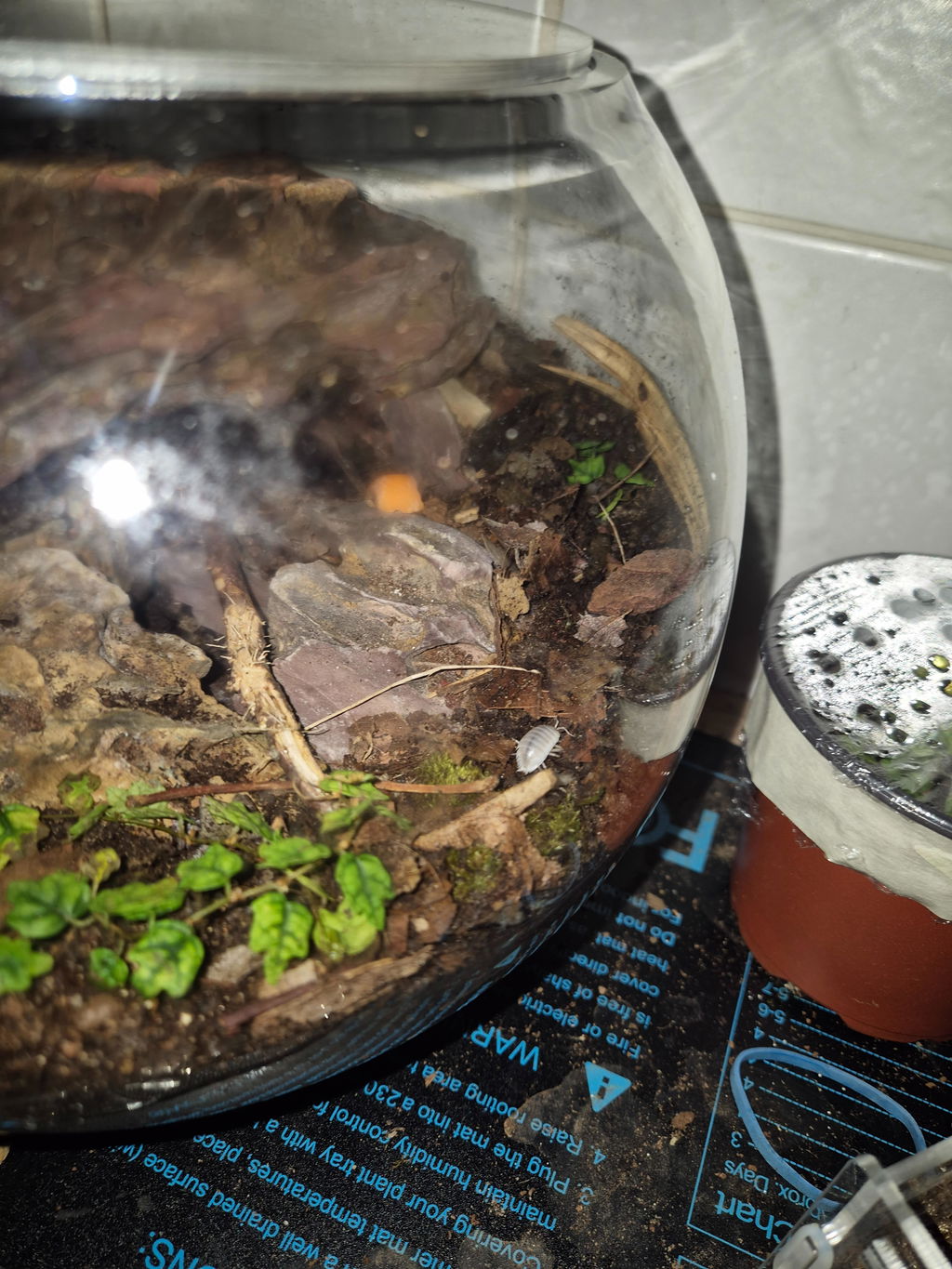
snow white isopods
Snow white isopods
Snow white isopods

Snow White Isopods (Porcellio Laevis)

Care Info:

Origin icon ORIGIN
AMERICA
Temperature icon TEMP
16-26 ℃
Humidity icon HUMIDITY
55-75 %
Length icon LENGTH
20-30 mm
Difficulty icon DIFFICULTY
EASY
Rarity icon RARITY
COMMON
Regular price£2.50
/
Tax included. Shipping calculated at checkout.

Quantity
  • Free shipping over £65
  • Low stock - 4 items left
  • Backordered, shipping soon

The Snow White is the all-white selective morph of Porcellio laevis — same hardy species as the popular Dairy Cow and Giant Orange, just with the pigmentation bred out to produce a striking pure white isopod. The pale colouration creates dramatic visual contrast against dark substrate and leaf litter, and unlike many "white" isopods that look slightly grey or off-white, properly maintained Snow Whites show genuinely clean, snow-like colouration that gives them their name.

What makes Snow Whites particularly appealing is the combination: striking white morph appearance paired with the bulletproof hardiness of standard P. laevis. You're getting designer-tier visual impact on a species that's genuinely beginner-friendly, breeds prolifically, and tolerates the kinds of husbandry mistakes that would damage delicate species. They're large (up to 20 mm), active, fast, and notably more visible than typical isopods — making them genuinely viable as display animals as well as effective bioactive cleanup crew.

Available in starter colony groups. Captive-bred stock from established UK colonies. Mixed sizes included to give your colony immediate breeding potential.

Quick Care Summary

  • Scientific Name: Porcellio laevis 'Snow White'
  • Common Names: Snow White Isopod, White Laevis, P. laevis White
  • Family: Porcellionidae
  • Origin: Native to North Africa and Mediterranean Europe (selectively bred morph); now globally distributed
  • Adult Size: Up to 20 mm — one of the larger common species
  • Lifespan: 2–3 years typical
  • Difficulty: Very Easy — genuinely beginner-friendly
  • Temperature: 18–26°C (UK room temperature works year-round)
  • Humidity: Medium (50–70%) with moisture gradient — 3/4 humid to 1/4 dry approach
  • Ventilation: Medium to high — good airflow important
  • Conglobation: No — Porcellio cannot roll into a ball, they rely on speed
  • Behaviour: Fast, active, often diurnal, social
  • Breeding: Extremely prolific — among the fastest-breeding isopods available

What Makes Snow White Isopods Special

Several factors make Snow Whites one of the most rewarding beginner-tier isopod purchases:

Genuinely clean white colouration. Unlike some "white" isopods that look slightly off-white or grey, properly maintained Snow Whites display proper clean, snow-like colouration. The contrast against dark substrate and leaf litter is dramatic, and they remain visible from across a room rather than blending into the enclosure.

Big enough to actually appreciate. At up to 20 mm, Snow Whites are noticeably larger than common Armadillidium or Powder species. The size combined with the white colouration makes them genuinely viable as display animals — observable from a distance rather than requiring close inspection. Males have distinctive long, spear-shaped uropods that further distinguish them.

Voracious cleanup capacity. Like all Porcellio laevis, Snow Whites are widely regarded as one of the gold standard bioactive cleanup species. Their appetite is genuinely impressive — they'll process organic waste, decaying leaves, fallen fruit, dead insects, and even reptile shed skin at a rate that smaller species can't match.

Notably diurnal. Unlike most isopods that hide during the day, Snow Whites are active during daylight hours. You'll regularly see them out foraging across the substrate, which adds to their display value.

Extremely prolific breeding. A small starter colony establishes rapidly. Within a few weeks you'll see new mancae (babies), and within a few months you'll have a thriving population. This makes them ideal for new keepers wanting quick visible progress, and for reptile/amphibian keepers using them as a sustainable feeder source.

Highly tolerant of conditions. Snow Whites handle temperature swings, humidity variations, and minor husbandry mistakes that would devastate sensitive species. This forgiveness factor is invaluable for new keepers still learning, and for anyone who can't maintain perfect conditions year-round.

Affordable for the visual quality. Despite the striking white colouration, Snow Whites remain among the more accessibly-priced isopod morphs. You can build a serious colony without significant investment.

Setting Up the Enclosure

Snow Whites aren't fussy about enclosure size, but bigger is better given their large size and prolific breeding. A 6–10 litre tub works for a starter colony of 10–20; scale up to 20+ litres for established breeding colonies.

A plastic tub with a clip-lock lid is the standard setup — easy to maintain, holds humidity well, and easy to drill ventilation holes into. Glass terrariums also work but cost more. For ventilation, drill multiple small holes on alternating sides of the container to create cross-ventilation.

Browse our accessories collection for appropriate enclosures, vents, and other essentials.

The Moisture Gradient

Snow Whites do best with a moisture gradient — specifically a 3/4 humid to 1/4 dry approach:

  • Three-quarters damp: Moist substrate with sphagnum moss and damp leaf litter. Mist this area to maintain moisture.
  • One-quarter drier: Drier substrate with leaf litter cover. Place protein foods on this side — they spoil quickly in damp conditions.

This gradient lets the colony self-regulate while maintaining the higher overall humidity that P. laevis prefers compared to drier-adapted Mediterranean species.

Substrate

Use organic topsoil (pesticide-free) as a base, with at least 5 cm depth. Snow Whites will burrow occasionally and benefit from substrate they can dig into. Top with generous leaf litter — long-lasting hardwood leaves work best — and add cork bark hides spread throughout. Mix some calcium-rich materials throughout the substrate (limestone, crushed eggshells, or oyster shell) to support healthy moulting at their larger size.

Temperature

18–26°C is the ideal range. UK room temperature works year-round in most homes — no supplementary heating typically needed. They tolerate temperature fluctuations that would stress more sensitive species, making them genuinely low-maintenance pets. If you want to maximise breeding rates, keeping them on the warmer end of the range (22–26°C) produces noticeably faster colony growth.

Diet

Snow Whites are big eaters with broad appetites. Their willingness to consume almost anything organic is a major reason they make such effective cleanup crew:

  • Primary diet: Dried leaf litter and rotting wood — always available
  • Vegetables: Cucumber, courgette, sweet potato, carrot, butternut squash, pumpkin, broccoli stems. Replace daily.
  • Fruit (occasionally): Apple, banana, melon, mango
  • Protein (essential — 2x weekly): Snow Whites need significant protein. Like all P. laevis, they will resort to cannibalism (eating newly-moulted soft individuals) if protein is insufficient. Browse our accessories collection for the full range of protein supplements.
  • Calcium (essential): Cuttlebone always available, plus limestone pieces for passive calcium. Essential for healthy moulting at this size.

One word of caution: Snow Whites are protein-hungry, and in mixed-species or planted bioactive setups they can occasionally damage soft-bodied animals or plant material if underfed. Make sure protein supplementation is regular and adequate. They're not suitable companions for delicate species like soft snails or sensitive isopod morphs.

Breeding

Snow Whites are some of the most prolific isopod breeders available. Porcellio laevis females are ovoviviparous — they carry fertilised eggs in a brood pouch (marsupium) on the underside of their body until the offspring are fully developed, then release live mancae directly into the substrate.

Under good conditions (warm temperatures, ample food, moisture gradient), a starter colony of 10 typically begins producing visible mancae within 4–8 weeks. Within 6 months, the colony will be substantial. Within a year, it'll be a thriving population that can sustain regular harvesting for feeding to reptiles or splitting into new enclosures.

Genetic note: The white colouration is recessive. Breeding two Snow Whites together typically produces all-white offspring. Crossing Snow Whites with standard pigmented P. laevis (like Dairy Cow or Giant Orange) typically produces pigmented offspring that may carry the white gene as recessive — interesting if you're experimenting with breeding projects, but worth knowing if you want to maintain pure white lines.

Bioactive and Feeder Use

Snow Whites are among the most popular and effective bioactive cleanup crews for reptile and amphibian setups. Their large size, voracious appetites, prolific breeding, and active visibility make them ideal for processing organic waste in vivariums where larger or more reclusive isopods would be less effective.

They also serve as excellent feeders for reptiles and amphibians. Their large size, soft body, calcium content, and active movement make them attractive prey for a wide range of herp species. A well-maintained colony sustains regular harvesting indefinitely without depleting the population.

Who Should Buy Snow White Isopods?

Ideal for:

  • Complete beginners wanting a forgiving starter species with serious visual appeal
  • Bioactive enthusiasts wanting effective and visible cleanup crews
  • Reptile/amphibian keepers wanting feeders that double as cleanup crew
  • Anyone who appreciates striking white colouration without true albino fragility
  • Keepers building displays where animal visibility matters
  • Those wanting fast-breeding self-sustaining colonies

Not ideal for:

  • Anyone wanting slow, calm display specimens (Snow Whites are quick and energetic)
  • Mixed setups with delicate soft-bodied species (they may nibble)
  • Keepers preferring conglobating species (Porcellio don't roll into balls)
  • Anyone wanting bold patterning rather than uniform colour

Realistic Expectations

Newly arrived Snow Whites, particularly juveniles, may appear slightly cream or off-white rather than the pure snow-white of mature adults. Pure colouration develops with successive moults and good nutrition. Given 2–3 months of stable conditions, they develop into the bold white adults you see in marketing photos.

Expect prolific breeding once established — potentially requiring expansion to additional enclosures within months as the colony grows. This is a feature for cleanup crew use but worth knowing if you want to manage population size.

Don't expect calm, slow display animals — Snow Whites are quick, active, and voracious like all P. laevis. If that energy appeals to you, they're hard to beat for the price. If you prefer more sedate isopods, consider Armadillidium species instead.

Building Your Setup

A complete Snow White setup needs basic substrate components, calcium sources, leaf litter, and protein supplements. Browse our accessories collection for everything you need — enclosures, ventilation, leaf litter, calcium (cuttlebone, limestone), and protein supplements.

For more on Porcellio species and morphs, read our blog post on different types of Porcellio isopods. New keepers should also see our setting up guide for full enclosure walkthroughs. Browse the full Porcellio collection for more options.

Use collapsible tabs for more detailed information that will help customers make a purchasing decision.

Ex: Shipping and return policies, size guides, and other common questions.

You may also like


Recently viewed