Porcellio Werneri Silverback - Greek Shield
Care Info:
 ORIGIN
 TEMP
TEMP
 HUMIDITY
 LENGTH
 DIFFICULTY
 RARITY
- Free shipping over £65
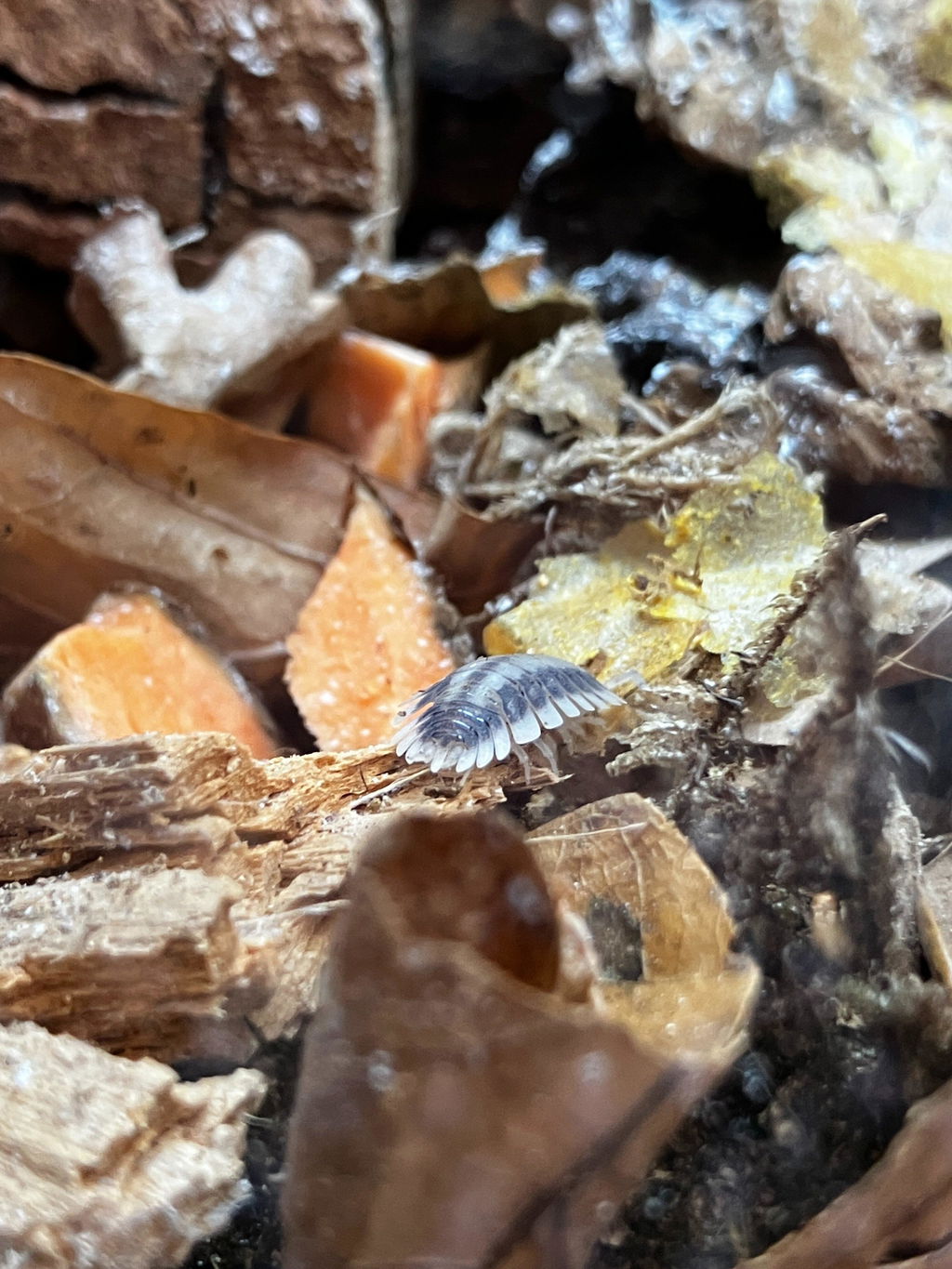
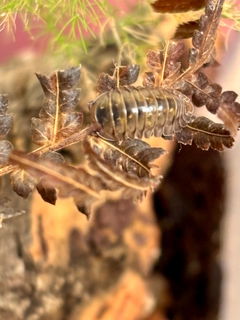
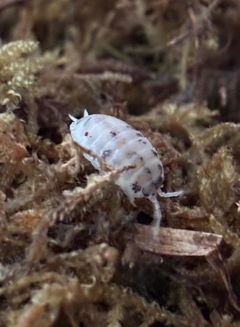
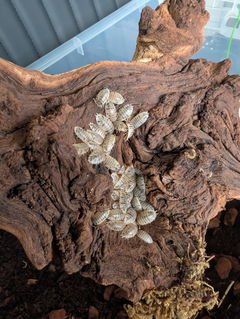
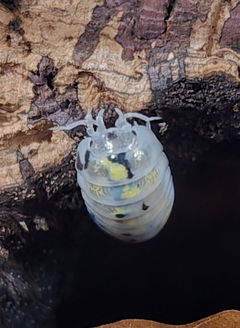
Nothing else in the hobby is shaped like this. Porcellio werneri is the flattest isopod you can buy, a wide grey disc with a pale serrated skirt running all the way round, and the usual comparisons run to pancakes, hovercraft and robot vacuums. The Silverback takes that outline and adds a broad silvery-white band down the centre of the back, which is the difference between an interesting animal and one people stop to look at.
That stripe is not a colour morph selected in captivity. Silverback stock comes from a separate wild population to the standard grey Greek Shield, so the two are distinct lines of the same species rather than variations bred out of one another.
Names and origins
The species is Porcellio werneri, sold as the Greek Shield Isopod, Werner's Woodlouse, or simply the Pancake Isopod, with this line traded as the Silverback. As the common name suggests, they come from Greece and the Aegean islands.
One correction, because it circulates on some listings: these are not a Spanish species. The ecological work on them places them firmly in Greece as specialists of dry, calcareous rocky habitat, and that habitat description is the most useful care sheet you will find anywhere. Dry, stony, mineral-rich, well-aired.
What that flat body is for
The shape is a defence. Faced with something threatening, a Porcellio cannot roll into a ball the way an Armadillidium can, so werneri went the opposite way: it flattens against a surface and wedges itself into the nearest crevice, where the profile makes it very difficult to get hold of. In an enclosure you will see the same behaviour against cork bark, where they clamp down and effectively become part of the surface.
Adults reach roughly 20 to 25 mm across, which puts them among the larger isopods available. Juveniles start out brown and shift to the adult grey as they mature, so a mixed-age group looks less uniform than the photographs suggest.
Setting them up
This is where colonies are won or lost, and the mistake is always the same one: too much moisture. Keep roughly a third of the enclosure damp and let the remaining two thirds run genuinely dry, and pair that with generous ventilation. A sealed, humid tub will kill this species, and it does so quickly enough that people often assume the animals arrived unwell.
Lay a base of a nutritious mix such as our invertebrate substrate at 5 to 7 cm, moisten one end only, and cover the surface with dry hardwood leaf litter. Magnolia leaves work well, and stacked bark, slate or flat stones are close to essential rather than decorative, because animals evolved for crevices need crevices. More detail on building the base is in my isopod substrate guide.
Ordinary UK room temperature suits them, somewhere in the high teens to mid twenties, with no additional heating needed. Give them floor space rather than a small deep tub; adult males can be territorial with each other and a cramped colony produces more conflict than a roomy one.
Feeding
Leaf litter and decaying hardwood form the base of the diet. Beyond that, Porcellio as a genus has a serious appetite for protein, and werneri is no exception, so offer dried shrimp, fish flake or similar at least weekly. Underfed Porcellio go looking for protein elsewhere, which is worth knowing before you add them to a vivarium containing anything small and soft.
Calcium is the other half of the equation for a large, heavily armoured species. Keep cuttlebone in the enclosure permanently. In a deliberately dry setup, take out any uneaten wet food within a day rather than letting it create the damp patch you have been careful to avoid.
Breeding and behaviour
Steady rather than prolific, and slower to build than the workhorse species. Get the gradient and the ventilation right and they reproduce reliably; get either wrong and the colony simply stalls without any dramatic sign that something is amiss.
They are mostly active at night and in the early morning, and shy with it, spending daylight tucked under cover. This is not a species that performs on demand, and the pleasure is more in finding them wedged somewhere improbable than in watching a busy surface.
Who they suit
An intermediate species, and one I would steer a complete beginner away from, not because they are fragile but because the drier discipline is the opposite of what most starter guides teach. Anyone who has kept a Mediterranean species will find the logic familiar; if you already run Clown Isopods or Zebras, this is the same approach taken a step further towards dry.
The rest of the genus sits in the Porcellio collection, and the full catalogue in isopods for sale.
Arriving with you
Captive-bred here in the UK, sent Monday to Thursday only so nothing sits in a depot over a weekend, travelling Royal Mail next day by 1pm in a double-walled box with the animals in ventilated deli tubs on damp sphagnum moss. Every order includes a 20% overcount and our live arrival guarantee. Have the enclosure built and ventilating before they arrive, and if you take one thing from this page, make it that the enclosure should look drier than you think is right.