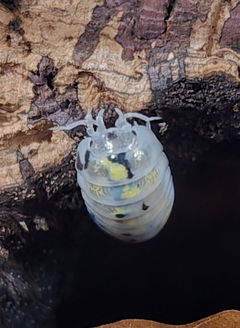
Trachelipus ratzeburgii Isopods for Sale
Care Info:
- Free shipping over £65
- In stock, ready to ship
- Backordered, shipping soon
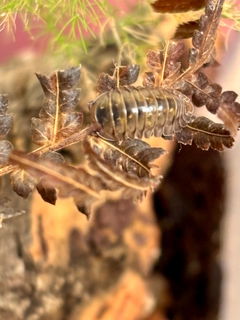
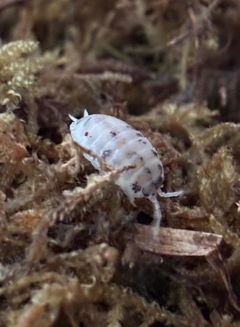
Trachelipus ratzeburgii, commonly known as Ratzeburg's Woodlouse or the Forest Woodlouse, is a hardy, handsome European forest species that makes a genuinely rewarding and low-fuss addition to the hobby. It shows the attractive longitudinal patterning typical of the genus Trachelipus — a darker base body marked with paler lengthwise striping — on a robust, slightly glossy forest woodlouse. Easy to keep, adaptable, and a reliable bioactive worker, it's a great choice for keepers who appreciate the understated natural beauty of a true European woodlouse over the bright tropical colour morphs.
The species carries proper scientific heritage. It was described by Johann Friedrich von Brandt in 1833, and named in honour of the 19th-century German naturalist Johann Theodor Christian Ratzeburg — hence both the scientific epithet ratzeburgii and the common name "Ratzeburg's Woodlouse." It belongs to the family Trachelipodidae, a group of robust, flat-bodied woodlice distinct from the pill-bug families.
Native across much of mainland Europe — from France, Germany, and the Low Countries through the Alps and into the Baltic, the Balkans, and Scandinavia — T. ratzeburgii is a woodland species typically found under the bark of rotting tree stumps, beneath stones, and among moss. It sits naturally within the PostPods Trachelipus collection alongside related species like T. mostarensis and T. difficilis. Like other Trachelipus, it is flat-bodied and cannot conglobate (roll into a ball) — it scurries and shelters rather than rolling.
Quick Care Summary
Please note: the care figures below use the research consensus for this temperate European forest species. Verify against the specific care icons on this product page before finalising your setup.
- Scientific Name: Trachelipus ratzeburgii (Brandt, 1833) (note: the listing URL contains a typo — the correct spelling is ratzeburgii, not "rotzeburgi")
- Common Names: Ratzeburg's Woodlouse, Forest Woodlouse
- Family: Trachelipodidae
- Origin: Mainland Europe (woodland species)
- Adult Size: Approximately 15 mm
- Lifespan: 2–3 years typical
- Difficulty: Easy — hardy and beginner-friendly
- Temperature: 18–24°C — cool-tolerant European species
- Humidity: 60–75% with a moisture gradient
- Ventilation: Good — airflow important; tolerates drier conditions than tropical species
- Conglobation: No — flat-bodied; scurries and shelters rather than rolling
- Behaviour: Active, mostly nocturnal; shelters under bark and stones during the day
- Breeding: Steady once established
- Rarity: Uncommon — a less-frequently-seen European species in the UK hobby
What Makes Ratzeburg's Woodlouse Special
Several factors make T. ratzeburgii a worthwhile keep:
The longitudinal striping. This is the visual headline. Like other Trachelipus, the body shows a darker base marked with paler lengthwise stripes, creating a subtle, naturalistic patterning that's genuinely attractive in good light — understated rather than flashy, but properly handsome on a robust forest woodlouse.
Genuine European forest heritage. Unlike the many tropical and Mediterranean species in the hobby, T. ratzeburgii is a continental European woodland species — described by Brandt in 1833 and named after the German naturalist Ratzeburg. There's a real natural-history depth to keeping a properly documented European woodlouse with a 19th-century type description.
Hardy and easy. Ratzeburg's Woodlouse is genuinely beginner-friendly — adaptable, forgiving of minor husbandry imperfections, and tolerant of the cooler, drier conditions that many tropical species can't handle. A reliable choice for a first European woodlouse or a dependable bioactive worker.
The pleopodal lungs. Like other members of the genus, Trachelipus carry five pairs of pleopodal lungs — visible as paler patches on the underside — an interesting anatomical feature reflecting how this group breathes air through modified gill structures. A quietly fascinating detail for keepers interested in isopod biology.
A good bioactive worker. As a robust forest detritivore, T. ratzeburgii readily processes leaf litter, decaying wood, and organic matter — making it a useful and active cleanup species in temperate bioactive setups.
Crustacean heritage. Like all isopods, Trachelipus are crustaceans — more closely related to marine shrimp and crabs than to insects. The flat, segmented body makes that ancestry visually intuitive.
How Ratzeburg's Woodlouse Compares to Other Species
If you're choosing between European woodlice, here's how T. ratzeburgii fits in:
- vs Trachelipus mostarensis: Both are European Trachelipus with the characteristic genus patterning. T. mostarensis is the Balkan species (Bosnia/Croatia); T. ratzeburgii is the wider-ranging Central and Northern European forest species. Natural companions in a Trachelipus collection.
- vs Trachelipus difficilis: Both are continental European Trachelipus. Different regional species (T. difficilis is from Hungary/Romania/Slovakia), same genus characteristics and similar easy care.
- vs Oniscus asellus: Both are non-conglobating European woodlice. Oniscus is the larger, smoother "skirted" species (and a UK native); T. ratzeburgii is the striped continental forest species. Both flat-bodied, both easy, complementary in a European woodlouse collection.
- vs Porcellio scaber Mix: Both are hardy, non-conglobating woodlice good for beginners. P. scaber is the common rough woodlouse; T. ratzeburgii is the striped forest species. Different genera, similar accessibility and bioactive usefulness.
Browse the full Trachelipus collection to compare all species in this genus.
Setting Up the Enclosure
A 6–10 litre plastic container with a secure lid suits a starter colony, with larger setups as the colony grows. T. ratzeburgii is forgiving about enclosure choice and thrives in standard plastic tubs with appropriate ventilation. The 3L Braplast tub works for small starter groups; larger colonies benefit from more space.
Drill ventilation holes on opposite sides for cross-ventilation, covered with fine mesh. Good airflow is important — as a forest species that tolerates drier conditions than tropical isopods, they appreciate ventilation and dislike stagnant, waterlogged setups. Provide plenty of hides — cork bark, leaf litter, decaying wood, and flat stones replicate their natural under-bark and under-stone shelters. Browse our accessories collection for appropriate enclosures, vents, and other essentials.
Substrate
Use a moisture-retentive woodland substrate:
- Organic topsoil base (pesticide-free) as the foundation
- Sphagnum peat moss mixed throughout for moisture retention
- Flake soil mixed in for added nutrition
- Crushed limestone or eggshells distributed throughout for calcium
- Plenty of decaying hardwood pieces and rotting bark (a forest-floor staple for this species)
- Forest moss for humidity and grazing
We recommend a topsoil and sphagnum-based mix rather than coco coir. Substrate depth: 5–8 cm for burrowing and security.
Top layer: Generous hardwood leaf litter — magnolia leaves, oak, and beech all work well — plus rotting bark, cork flats, and decaying wood. Replicating the woodland leaf-and-bark floor suits this forest species particularly well.
Humidity and Temperature
Maintain moderate humidity (around 60–75%) with a clear moisture gradient — keep one side of the enclosure damp with sphagnum moss and damp leaf litter, while the rest stays drier with leaf litter and bark cover. T. ratzeburgii is a forest species that handles drier conditions better than most tropical isopods — in the wild it's noted in warm, relatively dry woodland microhabitats — so good ventilation and a proper gradient suit it far better than uniformly wet conditions.
As one PostPods customer noted about following the website's care guidance, getting moisture right is the key to keeping isopods successfully — and for a forest woodlouse like Ratzeburg's, the gradient with a drier well-ventilated side is more forgiving than fussy precision. Avoid waterlogging the substrate.
Temperature should be 18–24°C — they're a cool-tolerant European species, and UK room temperature works year-round without supplemental heating. They handle the cooler end of the range comfortably, which makes them well-suited to cooler homes and unheated rooms.
Diet
Ratzeburg's Woodlice are unfussy detritivores with broad woodland appetites:
- Primary diet (always available): Decaying hardwood leaf litter (oak, beech, magnolia), rotting wood and bark, fungal tissue, algae, dried plant matter, mosses, lichen
- Vegetables (1–2x weekly): Carrot, courgette, sweet potato, squash, leafy greens. Replace within 24–48 hours.
- Fruit (occasionally): Small amounts of soft fruit
- Protein (1x weekly): Fish flakes, dried shrimp, dried daphnia, dead insects. Browse our accessories collection for the full range of protein supplements.
- Calcium (essential — always available): Cuttlefish bone, crushed limestone, oyster shell, eggshells. Important for healthy moulting — provide a constant source.
Coprophagy is normal: Like many woodlice, they will re-ingest droppings to recover nutrients and gut microbes. This is normal, healthy behaviour, not a sign of inadequate feeding.
Breeding
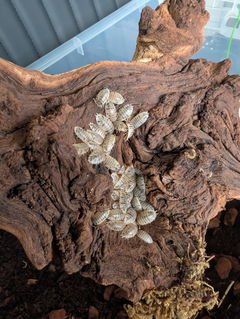
Ratzeburg's Woodlice breed steadily once established under stable conditions, building reliable colonies over time.
Breeding basics:
- Females carry developing young in a marsupium (fluid-filled brood pouch) and release fully-formed live juveniles
- Multiple broods throughout a female's lifetime under good conditions
- The longitudinal striping develops as juveniles mature through successive moults
- A pure colony breeds the species reliably
For breeding success:
- Stable temperatures within range (20–23°C is ideal)
- A proper moisture gradient with a drier, well-ventilated side
- Adequate calcium for breeding females
- Regular protein supplementation
- Plenty of bark, cork, and leaf-litter hides
- A larger starter group establishes faster and provides genetic diversity
The reward is a settled, productive colony of an attractive, properly-documented European forest woodlouse — a quiet, dependable keep with genuine natural-history character.
Pair With Springtails
Add a thriving springtail culture to any Ratzeburg's Woodlouse setup. Springtails handle mould and microbial growth at a scale isopods can't manage — particularly useful around protein foods and in the moist zone of the gradient. They coexist peacefully with the Trachelipus and form a helpful cleanup partnership.
Who Should Buy Ratzeburg's Woodlice?
Ideal for:
- Keepers wanting an attractive, hardy European forest woodlouse
- Naturalists who appreciate properly-documented native-European species heritage
- Collectors building a Trachelipus cluster (ratzeburgii + mostarensis + difficilis + others)
- Bioactive setup builders needing a robust, active temperate cleanup species
- Cool-room keepers who don't want a heat-dependent tropical species
- Beginners wanting a forgiving, low-fuss first woodlouse
Not ideal for:
- Keepers wanting bright tropical colour morphs (this is a subtly-striped natural species)
- Very wet, humid tropical setups (they prefer a drier, well-ventilated gradient)
- Anyone wanting an isopod that conglobates — Trachelipus don't roll (try Magic Potion or other Armadillidium instead)
Realistic Expectations
The striping is subtle and naturalistic. Set expectations toward the understated longitudinal pattern of a true forest woodlouse — handsome and natural rather than vividly colourful. The appeal is genuine European natural history, not tropical flash.
They don't conglobate. Like Porcellio and Oniscus, Trachelipus is flat-bodied and doesn't roll into a ball. They scurry and shelter under bark and stones instead.
They're genuinely easy. Hardy, adaptable, cool-tolerant, and forgiving — among the more straightforward woodlice to keep, and a reliable bioactive worker.
They want it cooler and drier than tropicals. A real characteristic — this is a temperate forest species that handles cool, well-ventilated conditions far better than humid tropical setups.
It's a continental European species. Native to mainland Europe rather than Britain — a properly-documented forest woodlouse with a genuine 19th-century scientific description, named after the naturalist Ratzeburg.
Building Your Setup
A complete Ratzeburg's Woodlouse setup needs a roomy enclosure, a moisture-retentive woodland substrate, abundant calcium, generous leaf litter and bark hides, and protein supplements. Browse our accessories collection for everything you need — enclosures, ventilation, leaf litter, calcium (cuttlebone, limestone, oyster shell), and protein supplements.
Browse the full Trachelipus collection for more species in this genus — including T. mostarensis and T. difficilis — for a complete European Trachelipus cluster.
Use collapsible tabs for more detailed information that will help customers make a purchasing decision.
Ex: Shipping and return policies, size guides, and other common questions.