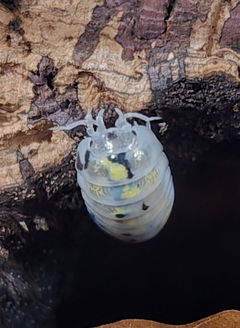
Albino Rodatzi Giant African Land Snails ( Lissachatina Fulica)
- Free shipping over £65
- In stock, ready to ship
- Backordered, shipping soon
The Albino Rodatzi is one of the most visually striking colour morphs of the Giant African Land Snail. It combines two appearance traits — the warm golden Rodatzi shell colouration and the pale, body-albinism that produces a creamy white mantle and foot — to create a snail that genuinely stands out from any other GALS morph in the UK hobby. The contrast between the rich golden shell and the pure white body makes for an elegant, almost porcelain-looking animal that's hard to ignore once you've seen one in person.
Beyond the looks, the care is identical to standard Achatina fulica — these are the same species you may already be familiar with from our standard Lissachatina fulica and Rodatzi GALS listings, just expressing different colouration genes. Beginner-friendly, hardy, and suited to families, schools, and anyone wanting an exotic invertebrate that doesn't demand specialist care.
Available individually, in groups of 5, or in groups of 10. Captive-bred stock from established UK colonies.
Quick Care Summary
- Scientific Name: Lissachatina fulica (formerly Achatina fulica) — Albino Rodatzi morph
- Common Names: Albino Rodatzi GALS, Albino Rodatzi Giant African Land Snail
- Family: Achatinidae
- Origin: East Africa — captive-bred globally for many generations
- Adult Size: Up to 18 cm shell length (typically 15–18 cm)
- Lifespan: 5–6 years average, up to 9 years with excellent care
- Difficulty: Easy — genuinely beginner-friendly
- Temperature: 21–26°C (UK room temperature)
- Humidity: 75–90% — high humidity essential
- Reproduction: Hermaphroditic, prolific egg layer (100–400 eggs per clutch)
What Makes the Albino Rodatzi Different
The Albino Rodatzi is the result of two genetic traits combining in the same animal:
The Rodatzi shell colouration. Rodatzi morphs display a warm golden-yellow base shell with darker brown banding — the signature look that distinguishes them from the more common brown-and-tan wild-type appearance. This trait shows clearly on the shell.
Body albinism. Standard GALS body colouration ranges from grey to dark brown. The albino trait suppresses pigmentation in the soft body tissues, producing a creamy white to pale ivory mantle, foot, and tentacles. The eye spots remain visible (often dark or pinkish, depending on the individual).
The combination is what makes the Albino Rodatzi particularly striking — the warm golden shell sits on top of a pale, almost luminous body, creating a colour contrast you simply don't see in most GALS morphs. Standard Rodatzi snails (with normal body colouration) and standard albino GALS (with normal shell colouration) are both more common; the combination here is what makes this listing unusual.
How the Albino Rodatzi Compares to Our Other GALS
If you're choosing between snail species, here's how the Albino Rodatzi fits in:
- vs Rodatzi GALS (standard): Same shell colouration, but with a pigmented dark body. The Albino Rodatzi adds the white-body trait to create the dramatic colour contrast. Identical care.
- vs Standard Lissachatina fulica: The standard wild-type colouration with darker brown shell and dark body. The Albino Rodatzi is a more visually distinctive morph variation. Same species, identical care.
- vs Pink Lipped Panthera: Different species (L. immaculata) with a more slender body and pink shell aperture border. Slightly higher temperature requirement (24–27°C vs 21–26°C). Different aesthetic appeal — choose Pink Lipped Panthera for shape distinctiveness, Albino Rodatzi for colour contrast.
- vs Unicorn Snails: Completely different scale. Unicorns are tiny tropical species (2 cm) for nano enclosures and bioactive setups; Albino Rodatzi are large display snails up to 18 cm. Different use cases entirely.
Browse the full Other Invertebrates collection to compare all snail and invertebrate options.
Setting Up the Enclosure
For a single adult, provide a minimum 45×45 cm floor space. For a group of 3–5 adults, scale up to 60+ litres. They appreciate room to move and need adequate space for multiple snails to spread out without crowding.
A glass terrarium or large plastic tub with a secure, ventilated lid works well. The lid must be properly clipped or weighted — adult GALS are surprisingly strong and will lift loose lids during their nightly explorations. A snail loose in a UK home is bad for both the snail (cold, dehydration) and your day (finding it in unexpected places).
Ventilation should be moderate — enough to prevent stagnant air and bacterial buildup, but not so much that humidity drops. A few ventilation holes or a small mesh section is ideal. Our accessories collection has appropriate vents for snail enclosures.
Substrate
Provide at least 5 cm of moist substrate (8–10 cm preferred). Albino Rodatzi will burrow into the substrate to rest, lay eggs, and aestivate during dry periods. Deeper substrate gives them the option to fully bury themselves, which is natural behaviour and reduces stress.
Use organic topsoil (pesticide-free, fertiliser-free) as a base. Mixing in flake soil adds nutritional value snails will benefit from. Avoid stones, sharp gravel, or anything abrasive — falling onto sharp surfaces can crack the delicate shell, particularly the leading edge that's still growing in younger animals.
Top with leaf litter — magnolia leaves work well as long-lasting cover, and bamboo leaf litter adds structural variety. The leaf layer provides shelter and helps maintain humidity at substrate level.
Temperature and Humidity
21–26°C is the comfort range, which is typical UK room temperature. Most homes provide acceptable conditions during warmer months. During winter, a heat mat (placed on the side or back of the enclosure, never underneath) connected to a thermostat will keep temperatures stable. Don't let temperatures drop below 18°C consistently — they're tropical snails that don't tolerate prolonged cool periods.
Humidity should be 75–90%. Mist daily to maintain damp substrate. The substrate should always feel wet to the touch. Snails are highly sensitive to dehydration — a dry enclosure causes them to retreat into their shell and seal the opening with a hardened mucus membrane (epiphragm). If you see this seal, mist immediately and the snail should emerge within hours.
Diet
Albino Rodatzi GALS are large, hungry snails with broad appetites. Like all Lissachatina fulica, they're primarily herbivorous:
- Vegetables: Cucumber, courgette, sweet potato, carrot, lettuce (avoid iceberg), kale, spinach, broccoli, butternut squash, mushrooms
- Fruit (occasionally): Banana, apple, melon, mango, strawberry — avoid citrus (too acidic)
- Protein (1–2x per week): Fish flakes, dried mealworms, or small amounts of unseasoned cooked meat. Protein supports shell growth and overall health, particularly important for young, growing snails.
- Calcium (essential — see below)
Avoid: anything treated with pesticides or herbicides, citrus fruits, salty foods, and iceberg lettuce (low nutritional value).
Replace fresh food daily and remove uneaten portions to prevent mould and fruit fly infestations. Place fresh food on a flat dish or directly on the substrate.
Calcium — Critical for Shell Health
At 15–18 cm long, GALS build large, heavy shells that demand significant calcium intake. Without adequate calcium, the shell becomes thin, fragile, and prone to cracking. Shell damage is serious and often permanent.
For Albino Rodatzi specifically, there's an additional consideration: the pale shell can sometimes show calcium deficiency more visibly than dark-shelled morphs. Thin or growth-disturbed areas show up clearly against the golden colouration. This is actually a benefit for early problem detection — but it makes consistent calcium supplementation even more important.
- Cuttlebone — leave in the enclosure permanently. Snails will rasp on it as needed
- Malawi Limestone — passive calcium source plus habitat enrichment
- Crushed eggshell or oyster shell — sprinkle on substrate or offer in a small dish
Adult snails will visibly consume cuttlebone — you'll see grooves and bite marks where they've rasped. Replace as it gets used up.
Breeding — Plan Ahead
Like all GALS, Albino Rodatzi are hermaphrodites and prolific breeders. Every individual has both male and female reproductive organs. They still need a mate to breed (self-fertilisation is rare but possible), but any two snails can reproduce. Sexual maturity is reached as early as 5 months. Once breeding begins, a single clutch can contain 100–400 eggs, multiple times per year.
If you keep more than one snail, you will get eggs. You need a plan for managing them. Most keepers freeze unwanted clutches (which humanely destroys them) or crush them after laying. This is responsible population management — allowing unchecked breeding produces hundreds of snails you cannot rehome or release.
About Albino Rodatzi offspring: Genetics here is interesting. Both the Rodatzi shell colouration and the body albinism are recessive traits. Breeding two Albino Rodatzi together typically produces all Albino Rodatzi offspring. Breeding an Albino Rodatzi with a standard GALS produces offspring that may carry the genes but won't visibly express them — and recombining those carriers in later generations can produce a mix of standard, Rodatzi, albino, and Albino Rodatzi snails.
Releasing GALS into the wild is illegal in the UK and would be irresponsible regardless. They wouldn't survive a UK winter outdoors, but eggs and small specimens can establish in heated environments.
Handling
GALS are gentle, calm snails that tolerate handling well. They don't bite (you may feel the radula rasping if they explore your skin — it tickles rather than hurts) and aren't aggressive.
How to handle: Wet your hands first. Gently slide the snail off the surface it's resting on, allowing it to release its grip naturally. Never pull a snail off a surface by its shell — this can damage the mantle (the tissue connecting body to shell) and cause serious injury.
Wash hands thoroughly after handling. L. fulica can carry parasites including rat lungworm. This is a precaution rather than a reason to avoid handling, but basic hygiene is essential — particularly important if children are involved.
Don't drop the snail. The shell is large and heavy in adults, and a fall onto a hard surface can crack it. Minor cracks can sometimes heal with calcium support, but major damage often isn't recoverable.
Tank Mates
Albino Rodatzi GALS can be housed with:
- Other GALS species and morphs — including standard L. fulica, Rodatzi, and Pink Lipped Panthera. Different species and morphs can coexist and may interbreed (worth considering if you want to maintain pure colour lines)
- Springtails — bioactive cleanup crew that handles mould and waste
- Hardy isopod species — Porcellio scaber, Giant Orange (P. laevis), or Dairy Cows (P. laevis) as additional cleanup crew. Avoid expensive or delicate isopod species — large snails can inadvertently crush smaller enclosure inhabitants
Avoid pairing with: small or fragile species (Unicorn Snails would be at risk of being crushed), aggressive predators, or species requiring significantly different conditions.
Why Choose the Albino Rodatzi Morph?
If you've kept standard L. fulica or are deciding between snail morphs, the Albino Rodatzi offers a genuine step up in visual interest. The combination of the golden Rodatzi shell with the pale albino body produces a colour contrast that's distinct from any other common GALS morph, including the standard Rodatzi.
The care is the same easy, hardy, beginner-friendly routine that makes GALS such accessible exotic pets. You're not signing up for any additional husbandry difficulty by choosing a morph — you're just getting more visual reward for the same care effort.
For first-time snail keepers, Albino Rodatzi are a viable starter species — easy to care for, visually distinctive enough to be genuinely engaging, and offering real photographic appeal that standard GALS sometimes lack. Just go in understanding the size they'll reach, the egg management responsibility, and the heating requirement during winter.
What You Need to Get Started
- A glass or plastic tank (45×45 cm minimum for a single adult) with a secure lid
- At least 5 cm of moist, pesticide-free topsoil
- Cork bark or similar for hides
- Cuttlebone — calcium is essential. Leave in the enclosure at all times
- Fresh vegetables and leafy greens — replaced daily
- A spray bottle for misting
- A thermometer and hygrometer to monitor conditions
Pairs Well With
For a complete Albino Rodatzi setup:
- Cuttlebone — essential calcium for shell health
- Malawi Limestone — passive calcium and habitat enrichment
- Flake Soil — nutritious substrate component
- Magnolia Leaves — long-lasting leaf litter
- Bamboo Leaf Litter — structural leaf cover
- Ultra Tropical Fish Flakes — protein supplementation
- Dried Daphnia — protein supplementation alternative
- Springtails — bioactive cleanup crew
- Enclosures & Air Vents — secure lids and proper ventilation
Browse the full Other Invertebrates collection for more snail and invertebrate options, or see our setting up guide for a complete enclosure walkthrough.
Use collapsible tabs for more detailed information that will help customers make a purchasing decision.
Ex: Shipping and return policies, size guides, and other common questions.