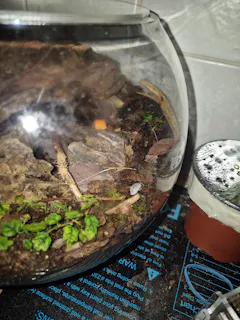
Cameroon Olive Millipede (Telodeinopus aoutii)
Care Info:
 ORIGIN
 TEMP
TEMP
 HUMIDITY
 LENGTH
 DIFFICULTY
 RARITY
- Free shipping over £65
The Cameroon Olive Millipede is properly one of the best giant millipedes for keepers starting out with larger species. Originating from Cameroon in West-Central Africa, these impressive detritivores reach an impressive 150-190mm in length, with a smooth olive-brown to dark body and the gentle, deliberate movement that makes giant millipedes such rewarding display animals. They're hardy, forgiving, and properly straightforward to care for — a genuinely easy entry into the world of giant African millipedes.
Quick Care Overview
- Origin — Cameroon, West-Central Africa
- Adult size — 150-190mm
- Temperature — 20-28°C
- Humidity — 70-90%
- Difficulty — easy; properly well-suited to beginners
- Lifespan — typically 5-7 years in captivity
- Behaviour — calm, slow-moving, primarily nocturnal
Why They're a Great Choice
Cameroon Olive Millipedes are properly forgiving of minor husbandry inconsistencies in a way that suits newer keepers:
- Tolerate a reasonable range of temperatures comfortable in most UK homes
- Hardy and resilient compared to more demanding species
- Impressive size with a calm temperament
- Active enough to be interesting, gentle enough to handle occasionally
- Readily accept standard millipede diets
Husbandry Essentials
Enclosure
- Size — minimum 30-45L for a small group; these are large millipedes that appreciate floor space
- Orientation — horizontal floor space rather than height
- Ventilation — moderate; balance humidity retention with airflow
- Lid — secure but ventilated
Substrate
Deep substrate is properly essential for these burrowing millipedes:
- Depth — minimum 10-15cm; deeper is better
- Composition — coconut fibre or peat-free compost mixed with plenty of decaying hardwood
- Topping — generous layer of oak, beech, or magnolia leaf litter
- Calcium — cuttlebone or crushed shells always available
- Decaying wood — properly the foundation of their diet; they eat the substrate as they burrow
Browse our accessories collection for leaf litter, decaying wood, cuttlebone, and substrate components.
Temperature and Humidity
- Temperature — 20-28°C, comfortable in most UK homes with supplemental heating in winter
- Humidity — 70-90% with proper ventilation
- Maintenance — mist regularly, keep substrate moist but never waterlogged
A heat mat with a thermostat positioned to one side creates a useful gradient during colder months.
Diet
Cameroon Olive Millipedes are properly detritivores:
- Staple — decaying hardwood and leaf litter (the foundation of their diet)
- Vegetables — cucumber, sweet potato, carrot, leafy greens in moderation
- Fruit — occasional banana, apple, melon as treats
- Calcium — cuttlebone, crushed eggshell, calcium-rich substrate additions for healthy exoskeleton and moulting
- Avoid — citrus, anything with pesticides, processed foods
Remove uneaten fresh food within 24-48 hours to prevent mould.
Important Safety Notes
Defensive Secretions
Like most giant millipedes, Cameroon Olive Millipedes can secrete defensive chemicals when stressed or threatened:
- The secretion can stain skin temporarily
- It may cause mild irritation in sensitive individuals
- Always wash hands thoroughly after handling
- Never rub eyes or face after contact
- Keep handling brief and gentle to minimise stress
Pesticide Sensitivity
Millipedes are properly extremely sensitive to pesticides — far more than isopods:
- Use only organic, pesticide-free leaf litter and wood
- Avoid garden centre plants treated with systemic insecticides
- Keep enclosures away from rooms where insecticide sprays are used
- Never use flea treatments on pets in the same room
Bioactive Setup Compatibility
Cameroon Olive Millipedes work well in bioactive setups alongside other detritivores. Adding a cleanup crew of isopods and springtails helps process waste and control mould, keeping the enclosure healthy. Tropical isopod species share similar warmth and humidity needs, making them natural companions. Properly worth knowing that millipedes will occasionally eat eggs or very small isopod mancae, though established colonies typically outpace any predation.
Handling
These millipedes tolerate occasional gentle handling:
- Allow them to walk across your hand rather than picking them up
- Never grip the body — risk of damage
- Keep handling sessions brief
- Wash hands thoroughly afterwards
- Avoid handling during or after moulting (a vulnerable period)
Live Arrival
All our millipedes are shipped with proper packaging and our standard live arrival guarantee. Browse our wider millipedes collection for other available species.
Use collapsible tabs for more detailed information that will help customers make a purchasing decision.
Ex: Shipping and return policies, size guides, and other common questions.