
UK Millipede Identification Guide
UK Millipede Identification Guide: Common Species, Habitats and Garden Benefits
Millipedes are among the most frequently encountered invertebrates in British gardens, woodlands and compost heaps — slow-moving, harmless to people, and quietly essential to healthy soil. They belong to the class Diplopoda ("double-footed", a nod to the two pairs of legs on most body segments), and Britain hosts more than 60 species. This guide covers how to tell a millipede from a centipede, the common UK species you're likely to find, their ecological role, and how to make your garden more welcoming to them.
Key Points at a Glance
- Millipedes have two pairs of legs on most segments; centipedes have just one pair per segment.
- They're detritivores — they eat decaying matter, not living prey, and won't bite people.
- UK species are completely harmless to humans, though some release pungent, almond-scented defensive fluids.
- They're valuable nutrient recyclers, fragmenting leaf litter so fungi and bacteria can finish the job.
- Despite their many legs (typically 40–400), they move in a slow, rippling wave rather than scurrying.
Millipede vs Centipede: How to Tell Them Apart
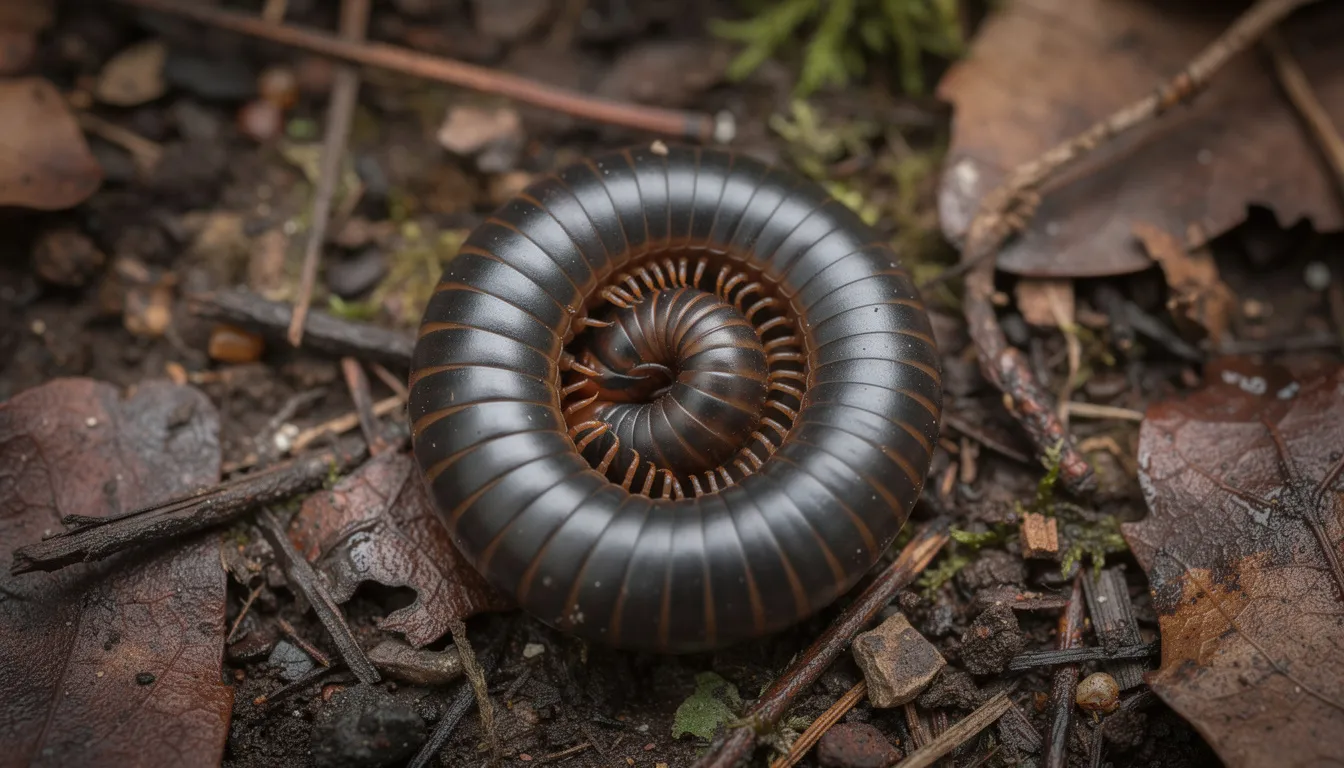
The two are often confused because they share the same damp habitats under logs, stones and leaf litter, but a quick look settles it. Legs are the clearest giveaway: millipedes have two pairs per segment (40 to 400-plus legs in total), while centipedes have a single pair per segment and generally fewer legs. Diet and behaviour differ just as much: millipedes are slow, peaceful decomposers that feed on rotting vegetation, while centipedes are fast, nocturnal predators that use venomous modified front legs (forcipules) to catch prey. And when disturbed, a millipede curls into a tight defensive spiral and may release pungent fluid, whereas a centipede simply bolts.
In short: many legs and slow means millipede; fewer legs and fast means centipede.
Common UK Millipede Species
Britain and Ireland host dozens of species, but a handful turn up reliably for anyone willing to lift a log or sift through a compost heap.
White-legged snake millipede (Tachypodoiulus niger)
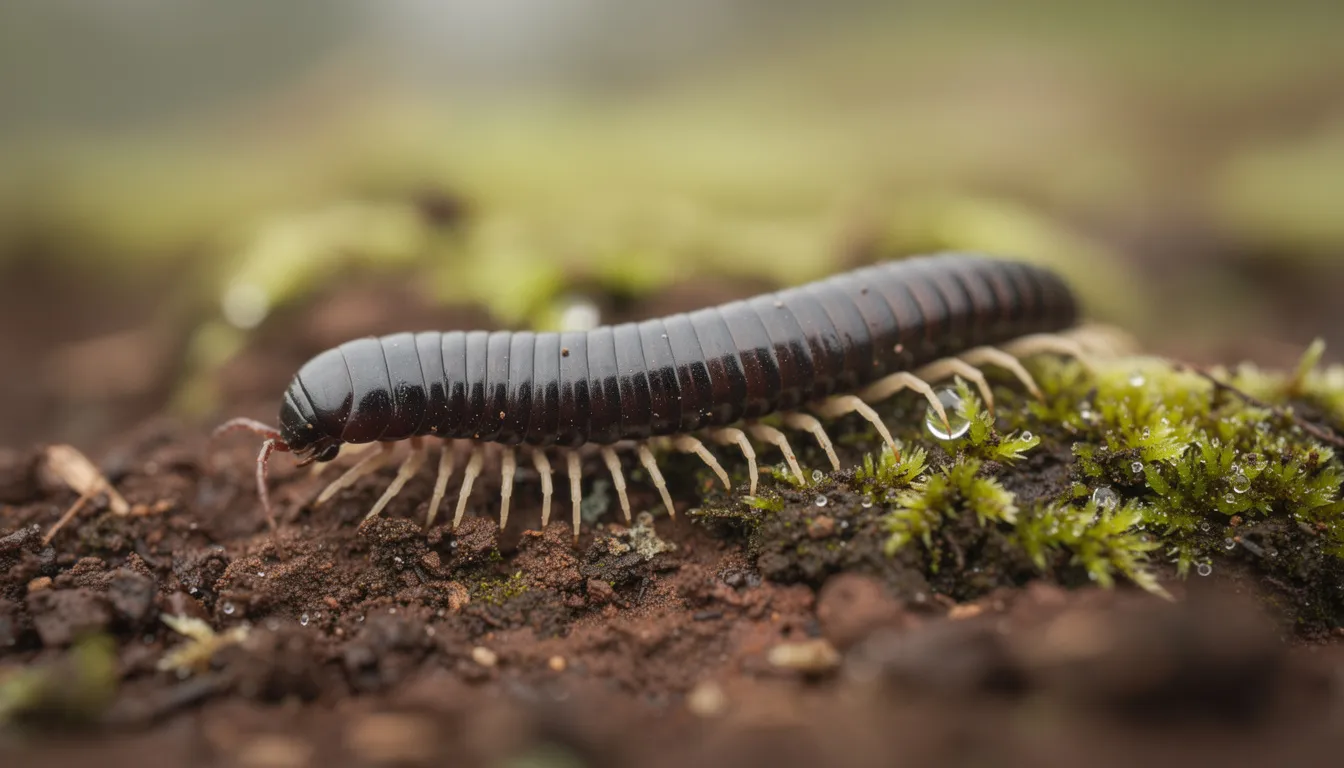
One of the most recognisable British millipedes, thanks to its shiny, tubular black body and contrasting white legs. It reaches up to about 6 cm (usually 4–5 cm), making it one of the larger common species, and its cylindrical body ends in a small pointed tip. Juveniles are brown with pale stripes before darkening to black as adults. It's widespread across lowland England, Wales and parts of Scotland and Ireland, found in deciduous woodland, gardens, allotments and parkland — under stones, logs and bark, or within rotting trees. Disturb one and it coils into a spiral and may release a pungent secretion.
Flat-backed millipedes (e.g. Polydesmus angustus)
Unmistakable for their shape: instead of the rounded profile of snake millipedes, each segment has lateral "keels" that give a broad, flattened, segmented look from above. Polydesmus angustus is typically around 2–2.5 cm long and orangey- or grey-brown with pale legs, with roughly 19–20 body segments as an adult. It's common in damp woodland across the UK, under dead wood, in deep leaf litter and shaded borders, and turns up in moist compost heaps. It tends to hide rather than flee, and can give off an almond-like scent when handled. Several similar species exist, so confident identification often needs a hand lens and a proper key.
Striped millipede (Ommatoiulus sabulosus)
One of the easiest to identify thanks to bold markings: a dark brown or black body with one or two orange or yellowish stripes running its length, reaching up to about 3 cm. It's widespread in Britain and Ireland, particularly in meadows, rough grassland, sandy soils and woodland edges, and is more tolerant of drier conditions than most UK millipedes. Unusually, it's often active by day, grazing on algae and lichen and climbing vegetation, walls and bark — and its stripes make it identifiable without magnification.
Other UK groups worth knowing
Pill millipedes (Glomerida) can roll into a complete ball when threatened and are easily mistaken for woodlice — tell them apart by their smoother, shinier plates and greater number of legs. Tunnelling millipedes are slimmer, streamlined species built for burrowing deeper into the soil rather than living at the surface. For species-level identification, UK field guides such as the AIDGAP keys or regional atlases are the way to go.
Habitats and Lifestyle
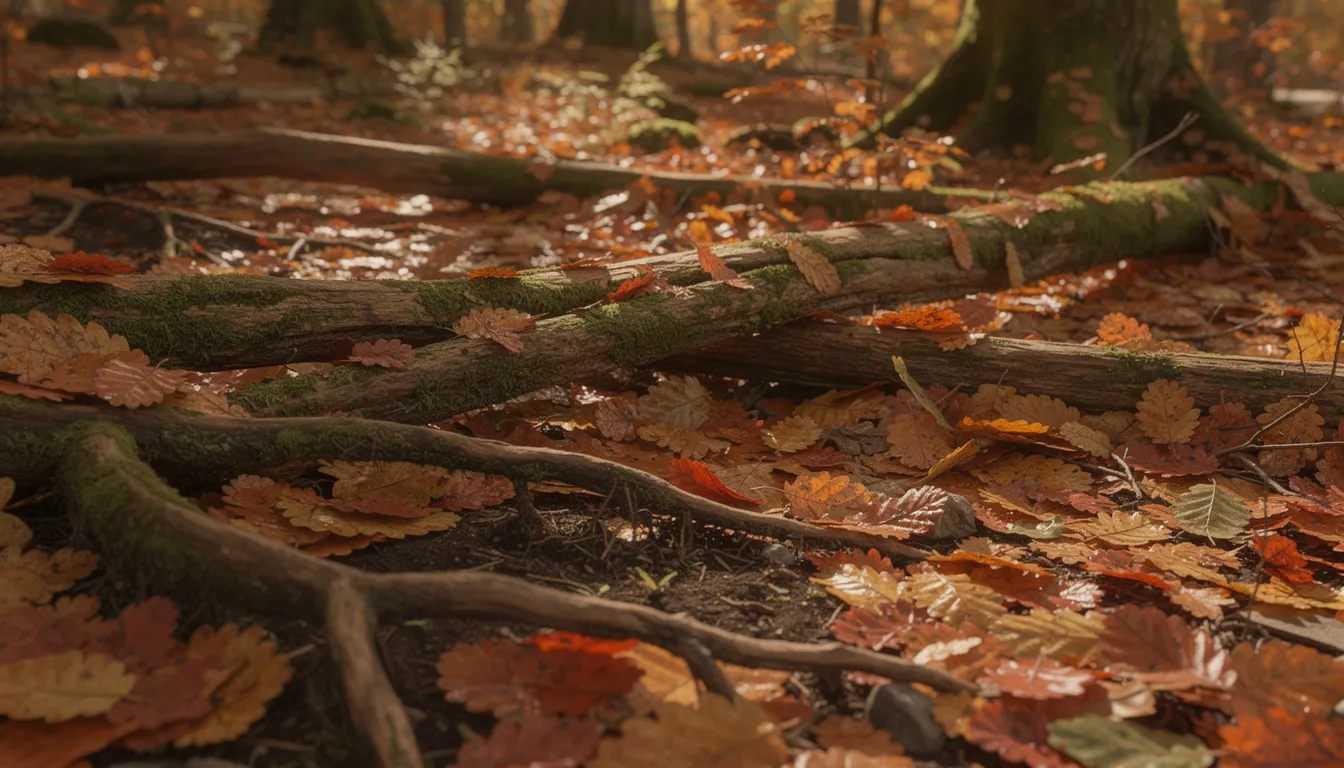
UK millipedes are land invertebrates that depend on moisture, so they cluster wherever it's damp and rich in organic matter: woodland soil and leaf litter, under stones, logs and loose bark, in compost heaps and garden waste, around shaded borders and tree stumps, and in damp cellars, greenhouses and outbuildings. Compost heaps are a particularly reliable spot — the same kind of place a simple cucumber trap for wild isopods will turn up all sorts of detritivores.
They're mostly active at night or on damp, overcast days, sheltering from drying wind and sun, and although many are present year-round you'll spot them most in the wetter months of spring and autumn. Their diet is decaying leaves and dead plant material, supplemented with the mildew, microfungi and algae growing on damp surfaces — much like woodlice and their feeding habits. By fragmenting litter into bacteria- and fungus-rich pellets, they kick-start the decomposition that microbes then complete.
Why Millipedes Matter
Millipedes are unsung recyclers, working everywhere from garden soil to ancient woodland. By fragmenting dead leaves and wood into smaller pieces, they vastly increase the surface area available to fungi and bacteria, speeding the return of carbon and minerals to the soil — a role that's especially valuable where earthworms are scarce.
Their defences are worth understanding too. Beyond curling into a protective spiral, many secrete foul-tasting or pungent chemicals from glands (repugnatorial glands) along the body; some species even release small amounts of hydrogen cyanide, and it's these almond-scented compounds that deter birds, shrews and ground beetles. The chemistry is harmless to humans in the quantities involved, but it's why a handled millipede can leave a faint marzipan smell on your fingers. With a tough exoskeleton and chemical defence rather than speed, they can afford to take life slowly.
They don't live in isolation, either. Millipedes share their decomposer niche with earthworms, isopods such as woodlice, centipedes, springtails and beetle larvae, forming part of a complex community whose members both complement and compete with one another — and like other detritivores, captive isopods can even be supported with extras such as mealworm sheddings. They're also food for hedgehogs and amphibians.
Where to Find Them
The common species are spread across England, Wales, Scotland and Ireland, with distribution shaped more by habitat than by climate. The white-legged snake millipede is common throughout lowland Britain (scarcer in the uplands), flat-backed species favour woodland, and the striped millipede leans towards sandy soils and grassland; all are more numerous in the wooded south and centre of England.
To find them, turn over stones, logs and flowerpots (and replace them gently afterwards), check the moist edges of compost heaps, sift damp woodland leaf litter, peer under loose bark on dead trees, and search shaded borders and rockeries after rain. If you'd like your sightings to count for something, conservation surveys and local biological records centres welcome observations — ideally with a photograph — which help build better distribution maps for Britain and Ireland.
How to Support Millipedes in Your Garden
UK gardens and allotments add up to a huge amount of invertebrate habitat, and a few simple choices make yours more welcoming to millipedes and the wider decomposer community — including any isopods you keep for the garden or terrarium.
Leave some leaf litter and dead wood in quiet corners rather than clearing everything away, keep a compost heap (ideal millipede habitat), build a log pile or two in the shade, and resist the urge to dig over every bed, which preserves soil structure and microhabitats. Just as important is going easy on chemicals: pesticides can kill millipedes directly or wipe out the fungi they depend on, and slug pellets and broad-spectrum insecticides are especially damaging. Planting native shrubs and ground cover for shade and moisture, and positioning rocks for cool, damp hiding spots, all help sustain the conditions they like.
The payoff is a healthier garden: better natural nutrient cycling, improved soil fertility over time, and less need for synthetic fertilisers. These creatures are, in a real sense, threatened more by tidiness than anything else — so next time you lift a log or turn the compost, take a moment to appreciate the slow, steady work going on beneath your feet.
Frequently Asked Questions
Are UK millipedes dangerous or do they bite?
No. British millipedes don't bite or sting and are harmless to people and pets. Their only defence is curling up and releasing a pungent, sometimes almond-scented fluid, which is harmless in the tiny amounts involved — though it's worth washing your hands after handling one.
How do I tell a millipede from a centipede?
Count the legs per segment: millipedes have two pairs, centipedes one. Millipedes are also slow, cylindrical or flat-backed decomposers, while centipedes are fast, flattened predators that run when disturbed.
Are millipedes bad for my garden?
Quite the opposite — they're beneficial decomposers that improve soil health. They occasionally nibble soft seedlings or ripe strawberries in very damp conditions, but this is minor and far outweighed by their nutrient-recycling work.
Why does a millipede smell of almonds?
The almond scent comes from defensive compounds (including trace hydrogen cyanide) secreted to deter predators. It's harmless to humans at these levels, but is the reason for washing your hands after handling them.


Leave a comment