Dairy Cow Isopods for Sale UK (Porcellio laevis)
Care Info:
 ORIGIN
 TEMP
TEMP
 HUMIDITY
 LENGTH
 DIFFICULTY
 RARITY
- Free shipping over £65
- In stock, ready to ship
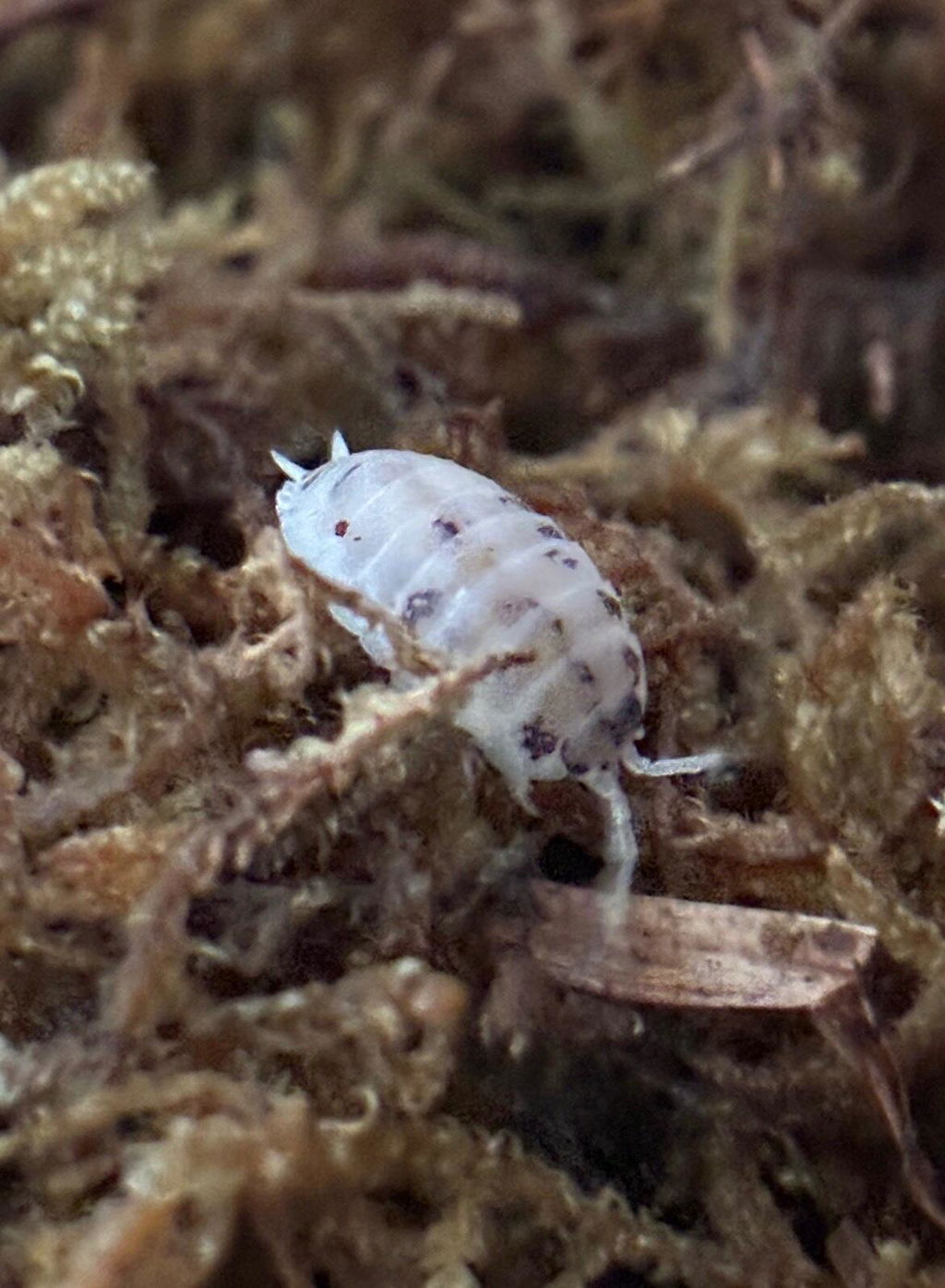
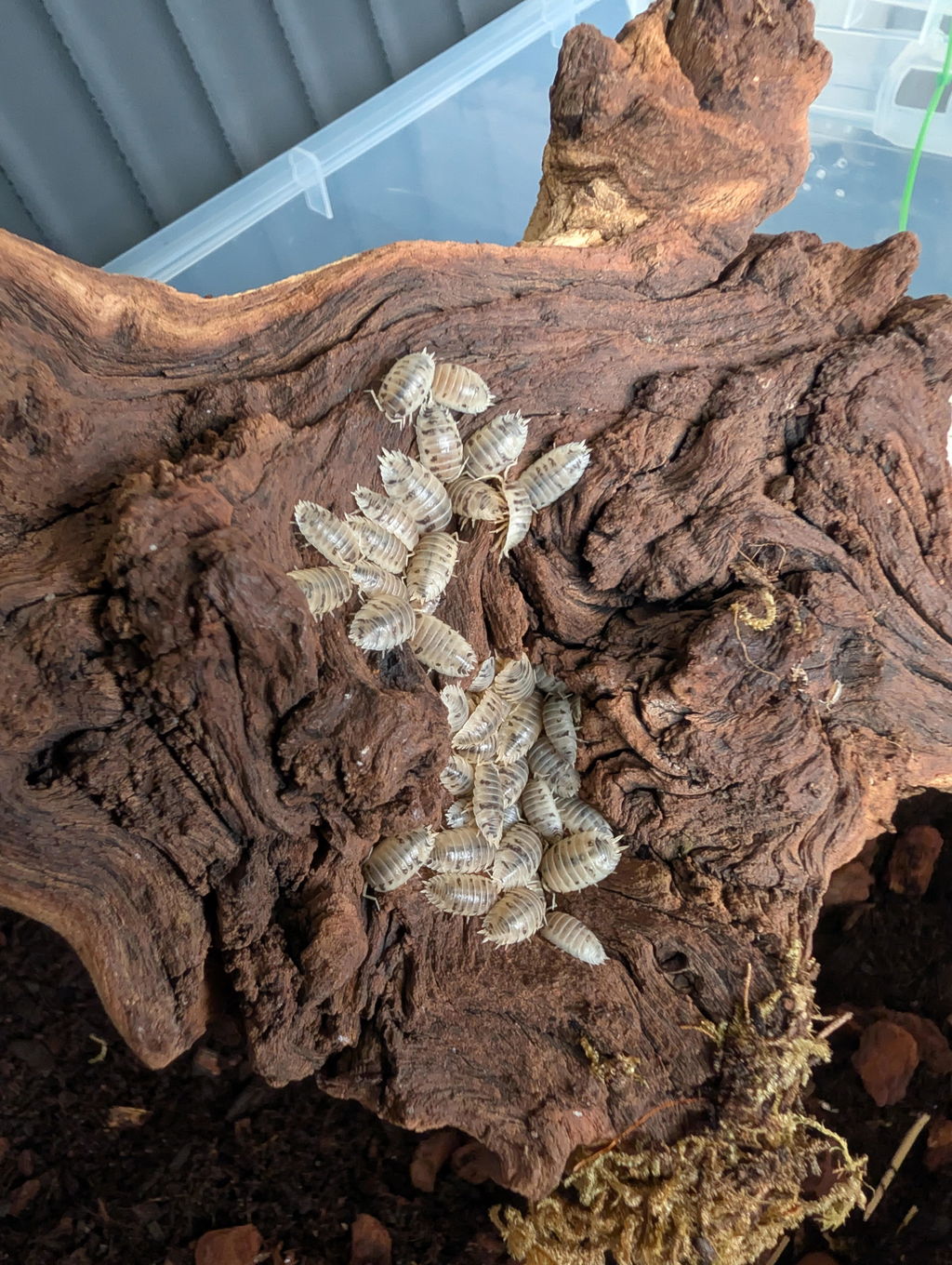
If you want an isopod that actually works for a living, this is the one. Dairy Cows are big, fast, permanently hungry Porcellio laevis, marked in bold black-and-white patches that look like a Friesian herd viewed from a great height. They break down waste faster than almost anything else in the hobby, they breed prolifically, and they are about as forgiving as isopods get. There is one thing you need to know before they go anywhere near another animal, and I have put it below rather than burying it at the bottom.
About the Dairy Cow isopod
Dairy Cow, sometimes written Dairy Cow Isopod or simply Cow, is a black-and-white morph of Porcellio laevis, a species native to southern Europe, the Mediterranean basin and North Africa that has since spread across much of the world alongside human activity. The species name laevis means smooth, which describes the shell nicely: no bumps or ridges, just a clean glossy surface, quite unlike the pebbled texture of a scaber.
They are among the larger isopods you can keep, with adults reaching roughly 2cm, which is the published maximum for the species. They are also quick. Porcellio do not conglobate, so when something startles them they do not roll into a ball; they flatten and sprint, which is why the species has been known as the swift woodlouse for a lot longer than it has been called a Dairy Cow.
The protein requirement, and why it matters
Porcellio laevis has an unusually high protein demand compared with most isopods, and this is the detail that gets left out of a lot of listings. A well-fed colony is no trouble at all. An underfed one will start looking for protein wherever it can find it, which can mean soft-bodied tankmates, or in a vivarium the skin of a sleeping reptile.
The fix is simple and cheap: keep a protein source permanently available rather than offering it occasionally. Dried silkworm pupae, fish flake or a dried invertebrate food all work. If you are adding these to an enclosure with other animals in it, treat protein as part of the setup rather than an extra. Do that and they are excellent, hard-working vivarium residents. Skip it and they will make their own arrangements.
Care and housing
Undemanding, which is why they are one of the best first isopods. A clip-lock tub with good cross-ventilation suits them, and bigger is better given how large they get and how quickly they multiply. Give them plenty of surface cover: cork bark, bark chips, and a thick layer of leaf litter they can work through.
Substrate should be a nutritious base of flake soil, well-rotted hardwood and untreated organic topsoil, deep enough for the females to dig their brooding hollows. Coco coir is not the right base for them; it holds water but feeds nothing that eats the substrate itself.
On moisture, this is a species people commonly get wrong by overdoing it. They want moderate humidity with a clear gradient, not a uniformly wet tub. Keep one end damp and let the other run dry and airy, and they will use both. They like warmth and will breed faster for it: a heated room carries them for most of the year; through the heating season an English home averages around 19°C, just under the 20 to 26°C band, so a small heat mat on a thermostat at one end keeps a colony breeding. Calcium should be constantly available, either as cuttlebone or crushed limestone, because animals this size put a lot into every moult.
Diet
Leaf litter and rotting wood underpin everything and should never run out. On top of that they take vegetables enthusiastically, particularly courgette, carrot, squash and sweet potato, and they will clear a slice faster than you expect. Protein sits alongside all of this permanently rather than as a treat, for the reasons above.
Breeding
This is one of the fastest-breeding isopods in the hobby and it needs almost no help from you. Females carry their brood in a pouch beneath the body and release live young; in warm conditions with food constantly available, a starter group turns into a working colony within months. If anything the usual problem is the opposite one, and keepers end up with more than they planned for. That is part of why they are so widely used as a feeder species: a mature colony produces a surplus you can harvest indefinitely without denting it.
Who is this isopod for?
Beginners, bioactive keepers and anyone who wants an isopod that visibly does something. They are hardy enough to survive the mistakes everyone makes early on, striking enough to be worth watching in their own right, and productive enough to feed other animals from. The one group I would steer away is anyone housing them with small, soft-bodied or delicate tankmates, where the protein issue makes them a poor neighbour.
If you like the animal but want a different look, the Giant Orange is the same species in a bold orange, with identical care, and the Milk Back is another laevis line worth a look. Do not confuse Dairy Cows with the Oreo Crumble, which wears a similar black-and-white pattern but is a Porcellionides pruinosus morph, noticeably smaller and faster. The full range is in our Porcellio collection, and there is more husbandry detail in our Dairy Cow isopod care guide.
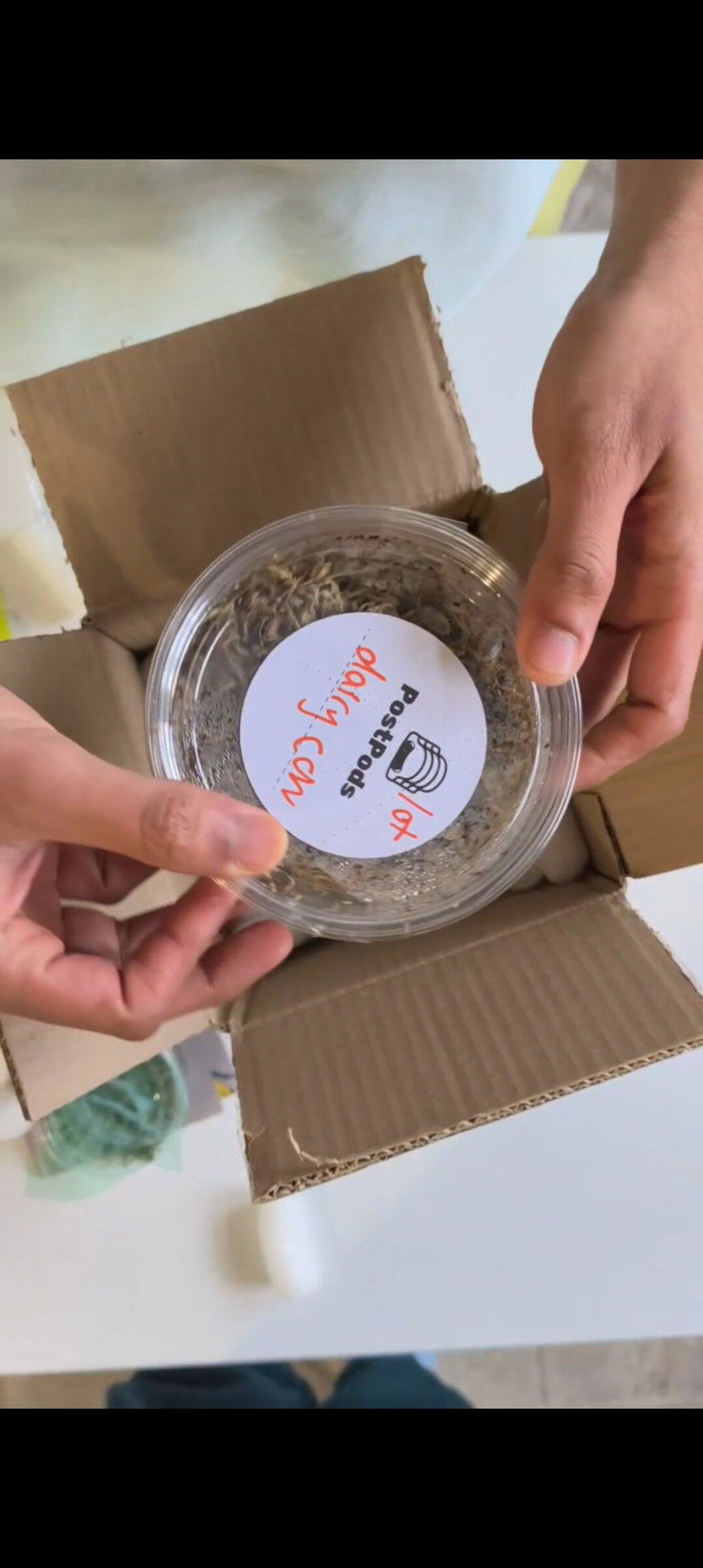
These come from our own captive-bred colonies, and we count 20% over your order into every tub as standard. They travel in a ventilated deli pot with damp sphagnum inside a double-walled box, sent Monday to Thursday only on Royal Mail's tracked next-day service, and backed by our live arrival guarantee.