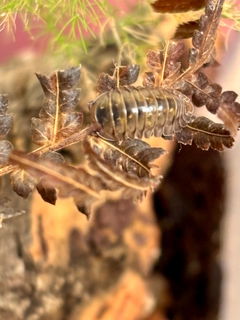
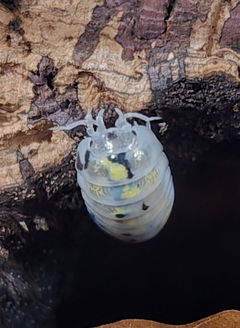
African Giant Chocolate millipede (Ophistreptus Guineensis)
Care Info:
- Free shipping over £65
- In stock, ready to ship
- Backordered, shipping soon
The African Giant Chocolate Millipede is one of the more visually distinctive large hobby millipedes — a 25–26 cm West African species with a properly warm chocolate-brown to reddish-tan colouration and a glossy sheen that catches the light. The species closely resembles the legendary Archispirostreptus gigas (African Giant Black) in overall body shape and proportions, but where the AGB is dark and sometimes a bit dull-looking, the Chocolate has a warmth and lustre that makes it genuinely striking. Combined with a properly easier-than-average husbandry profile (drought-tolerant savannah origin rather than rainforest) and surface-active behaviour, this is one of the right entry points into the African giant millipedes for keepers ready to step up from beginner species.
This is part of our wider millipede collection and shares family-level evolutionary heritage with three other species in the catalogue — our Burmese Beauty Millipede (Tanzanian Spirostreptus), our African Olive Millipede (Angolan Analocostreptus), and our Ghana Speckled Leg Millipede (West African Telodeinopus). All four belong to order Spirostreptida, family Spirostreptidae — the major family of African and Asian giant millipedes. For collectors building a focused Spirostreptidae display, these four species together cover the family's main African biogeographic range and aesthetic spectrum, from slender olive Angolan to chunky banded Tanzanian to striped-legged West African to chocolate-brown Ghanaian/Nigerian.
One honest framing point up front. There's genuine uncertainty in the hobby about whether everything sold as Ophistreptus guineensis is actually a single species. The recorded distribution of O. guineensis in scientific databases doesn't always match the collection localities reported in the hobby (Ghana, Nigeria, Cameroon), and it's possible that multiple species within the genus are being sold under the same name. The husbandry information here applies to the species as typically encountered in the UK trade. To set things up properly from the start, browse our accessories collection for substrate components, leaf litter, and other items this species depends on.
Quick Care Summary
- Scientific Name: Ophistreptus guineensis (Silvestri, 1897)
- Common Names: African Giant Chocolate Millipede, Chocolate Millipede, Giant Chocolate Millipede
- Family: Spirostreptidae (order Spirostreptida); genus Ophistreptus
- Genus context: Ophistreptus is a West African genus within Spirostreptidae. The hobby trade may include multiple species under the O. guineensis name — see the taxonomic note below
- Origin: Dry savannah regions of Ghana and Nigeria; some hobby sources also list Cameroon. Properly different from rainforest species — the native habitat experiences distinct dry and rainy seasons rather than constant tropical humidity
- Adult Size: 25–26 cm (10 inches) — properly substantial. Larger than our Ghana Speckled Leg (16–18 cm) and our African Olive (~12 cm), but smaller than the African Giant Black (Archispirostreptus gigas) which reaches 33.5 cm
- Lifespan: Approximately 7–10 years in good captive conditions — properly long-lived, comparable to the African Giant Black
- Difficulty: Easy — the drought tolerance makes this one of the most forgiving large millipedes
- Temperature: 23–28 °C; supplementary heat usually needed through UK cooler months
- Humidity: 50–65% — properly lower than rainforest species. The savannah origin means they handle drier conditions and humidity fluctuation better than most tropical millipedes
- Ventilation: Moderate to higher — drought-tolerant species tolerate more airflow than typical rainforest millipedes
- Climbing: Active climber — requires thick branches and vertical structure
- Activity: Surface-active and often visible during the day; rests on the surface during inactive periods
- Appearance: Long cylindrical body with rich chocolate-brown to reddish-tan colouration throughout; properly glossy sheen catches light. Named both for the chocolate colour and a distinctive aroma the species releases when handled
- Diet: Properly omnivorous detritivore — leaf litter, rotten wood, fruits, vegetables, even fermented fruits and small amounts of carrion
- Defensive secretion: Standard millipede benzoquinones (not cyanide) — temporary skin stain but harmless to humans
- Rarity: Common in UK hobby; properly hobby-bred and reliably available
What Makes the Chocolate Millipede Special
The drought tolerance is genuinely distinctive. Most of our tropical millipedes — our Red Ring Millipede, Amber Millipede, Thai Rainbow — come from constantly humid forest environments. The Chocolate Millipede's dry savannah origin means it tolerates humidity fluctuation properly better than typical hobby species. This is a significant advantage for less experienced keepers, anyone who sometimes forgets to mist, or keepers in drier UK home environments. The 50–65% humidity requirement is genuinely achievable without intensive humidity engineering.
The chocolate-brown colouration with glossy sheen. The species's common name isn't marketing — adults are genuinely chocolate-brown to reddish-tan with a properly glossy surface that catches light. Under good display lighting, this is one of the visually warmer-looking large millipedes available. The comparison with the more famously-dark African Giant Black is real: similar size class and body proportions, but where the AGB is sometimes dull-looking, the Chocolate has visual warmth.
The chocolate aroma. Beyond the colour, the species releases a distinctive chocolate-like aroma when handled — properly unique among hobby millipedes. The defensive benzoquinone secretion that other millipedes produce as a sharp-smelling deterrent is, in this species, perceived as chocolate-aromatic by most handlers. This is a genuinely unusual sensory characteristic for an invertebrate and is one of the species's properly distinctive features.
The substantial size. At 25–26 cm adult length, this is one of the larger millipedes in the UK hobby — properly substantial compared to the medium-size species in our catalogue. The size delivers genuine "African giant" presence without the higher difficulty curve of some other large species.
The Spirostreptidae family cluster. Within our catalogue, this is now our fourth Spirostreptidae product — alongside our Burmese Beauty Millipede (Tanzania), African Olive Millipede (Angola/DRC), and Ghana Speckled Leg Millipede (Ghana/Togo). For collectors building a focused Spirostreptidae display, these four species cover the family's main African biogeographic range plus the major aesthetic variations within the family — banded chunky, slender olive, striped-legged, chocolate-brown.
The active surface behaviour. Like our Ghana Speckled Leg Millipede, Chocolate Millipedes are properly active and surface-dwelling — they'll climb on cork bark, rest visibly on the substrate surface, and tend to be visible far more than purely fossorial species. They're also noticeably strong and fast movers for their size, which makes them more engaging to watch than the slow-plodding giants like AGB. For display enclosures, they're hard to beat.
The long lifespan. Captive Chocolate Millipedes can live 7–10 years — properly long-lived, matching the lifespan of the African Giant Black. That's a genuine long-term commitment, but it also means you get more from the relationship than with shorter-lived species. A well-maintained group can provide years of observation and breeding opportunities. Growth is slow — juveniles go through many moults over a long period before reaching adult size, doubling their length along the way. Don't expect a baby to become a 25 cm adult in a few months — this is a species that rewards patience.
The dietary flexibility plus interesting feeding behaviours. Beyond the standard detritivore diet (leaf litter, rotten wood), O. guineensis readily accepts fruits and vegetables — banana, cucumber, melon, cooked sweetcorn, oranges. Interestingly, they're also partial to fermented fruits and will accept small amounts of carrion. The varied diet makes them properly easy to feed.
About the Name and the Hobby Taxonomic Uncertainty
A note worth understanding properly.
- Ophistreptus guineensis: Described by Silvestri in 1897. The current accepted scientific name. The species epithet "guineensis" references the Guinea region of West Africa, reflecting the species's general biogeographic origin
- Hobby taxonomic uncertainty: There's genuine uncertainty in the hobby about whether everything sold as O. guineensis is actually a single species. The recorded distribution of O. guineensis in scientific databases (such as Millibase) doesn't always match the collection localities reported in hobby trade — Ghana, Nigeria, and Cameroon are commonly cited, but the species may have a more limited natural range. It's possible that multiple species within the genus Ophistreptus (or even related genera) are being sold under the O. guineensis name. Without microscopic gonopod examination of individual specimens, distinguishing closely-related species in the trade isn't possible
- Common name confusion: "Chocolate Millipede" can also refer to other dark-brown millipede species in the trade. The "African Giant Chocolate Millipede" name is more specific but still occasionally used loosely. The combination of the scientific name (Ophistreptus guineensis) and the "African Giant Chocolate" common name typically refers to the same species in UK trade
- Comparison with Archispirostreptus gigas: The African Giant Black (AGB) is a properly different species — larger (up to 33.5 cm), darker, generally drier-looking. Both are large African Spirostreptidae but they're not the same animal. Confusion between the two is common because both fill the "large dark African millipede" niche in the hobby; the Chocolate's warmer colour and slightly smaller size distinguish it
- Family Spirostreptidae: Shared with our Burmese Beauty Millipede, African Olive Millipede, and Ghana Speckled Leg Millipede. Four Spirostreptidae genera in our catalogue, all with similar fundamental husbandry approaches but distinct biological details
- Order Spirostreptida feature: Both pairs of legs on the seventh body segment of males are modified into gonopods (reproductive structures). Standard for the order; shared with our other Spirostreptida species
Setting Up the Enclosure
The substantial adult size (25–26 cm) demands a properly large enclosure. Minimum recommended dimensions are 60 × 20 × 50 cm (length × depth × height) for a small group; scale up proportionally for larger colonies. The active climbing behaviour means height matters as well as floor space — a tall enclosure with vertical structure rewards the species's natural surface activity.
Substrate depth is critical despite the climbing behaviour. Adult Chocolate Millipedes burrow to moult and during periods of inactivity, and inadequate substrate depth causes failed moults. Minimum substrate depth should be 10 cm; 15 cm is properly better. The substrate also serves as a major food source — deeper substrate means more food reserves.
Provide proper climbing structure. The active climbing behaviour means this isn't optional:
- Thick branches positioned vertically and at angles — properly substantial branches that won't collapse under a 25 cm millipede's weight
- Cork bark slabs in both vertical and horizontal orientations
- Multiple climbing surfaces at different heights
- Some horizontal pieces as resting platforms
Browse our accessories range for cork bark, branches, and natural climbing options.
Escape-proofing matters more than for smaller species. Chocolate Millipedes are properly strong animals — make sure the lid is secure and any doors lock down. A 25 cm millipede has the physical strength to push against inadequate enclosure seals. Verify lid security regularly.
Important husbandry note: If using supplementary heat, mount the heat source from the side rather than below the enclosure. Under-substrate heating is genuinely harmful for any burrowing millipede species.
Substrate
Substrate is both habitat and food. The right mix:
- Coconut fibre (coir) as the moisture-retaining foundation
- Organic compost or topsoil (pesticide-free) mixed throughout for nutritional content
- Crumbled rotten hardwood mixed in — properly important food source. Beech, oak, magnolia all work
- Generous layer of hardwood leaf litter on top — essential as food and cover. Browse our accessories collection for ready-prepared leaf litter
- Springtails inoculated to consume excess moisture and prevent mould
- Calcium sources — cuttlebone, crushed eggshell, limestone. Properly important for moulting success at this size. Our calcium options cover the full range
Substrate depth: 10 cm minimum, 15 cm preferred. The savannah origin means the substrate should be moist to the touch rather than sopping wet — properly different from rainforest species. Maintain a gradient with one side slightly drier and the other slightly damper; animals choose their preferred humidity level naturally.
Humidity and Temperature
Maintain humidity at 50–65% — properly lower than most of our tropical millipede species. This is one of the Chocolate Millipede's most distinctive husbandry features. The savannah origin means the species tolerates drier conditions and humidity fluctuation in ways rainforest species can't. For UK keepers in drier homes, this is a significant practical advantage.
Don't try to maintain rainforest humidity (80%+) — the species doesn't need it and consistently high humidity can actually cause health issues. Light misting once or twice weekly to maintain substrate moisture is properly sufficient; the substrate provides longer-term moisture buffer.
Temperature should be 23–28 °C, with 25–27 °C the sweet spot. UK average room temperature is below the species's preferred range for much of the year — supplementary heating is typically needed through autumn-through-spring months.
A low-wattage heat mat on a thermostat, mounted on the side of the enclosure rather than underneath, provides ideal supplementary warmth. Side-mounted heating creates a thermal gradient and avoids overheating substrate where burrowing animals spend time during moults.
Through UK summers, the species generally maintains comfortable temperatures without supplementary heat. Brief excursions above 28 °C are tolerated well given the savannah origin; sustained exposure above 30 °C still causes stress.
Diet
Chocolate Millipedes are properly omnivorous and accept a wide range of foods:
- Hardwood leaf litter — the dietary foundation; should always be available. Oak, beech, magnolia all work. Browse our accessories collection for ready-prepared leaf litter
- Rotten hardwood — both food and substrate component. Genuinely important — properly different from species that mainly process leaf litter
- Fresh fruit — properly well-received: cucumber, melon, banana, oranges, apple, peach. Cooked sweetcorn is a documented favourite
- Fresh vegetables — courgette, sweet potato, carrot
- Fermented fruits — unusually, the species accepts and even prefers fermented fruit. Slightly over-ripe banana works well
- Carrion in small amounts — though primarily a detritivore, the species will occasionally take small amounts of animal-derived food
- Fungi and mushrooms — fresh edible mushrooms are accepted
- Protein supplements occasionally — fish flakes, dog/cat kibble, dried shrimp. Once or twice monthly
- Calcium sources — cuttlebone, crushed eggshell, limestone. Always available. Our calcium options cover the full range
Remove uneaten fresh food within 24–48 hours to prevent mould. Important husbandry note: millipede mouthparts aren't tough enough to chew hard surfaces — even at 25 cm size, the Chocolate Millipede needs softened or moist food to process it. Hardwood substrate components must be properly rotted (not green or fresh wood) for the animals to access them as food. Maintaining substrate moisture is partly about keeping food accessible.
Breeding
Chocolate Millipedes breed reliably in captivity, but the breeding biology has a properly distinctive feature worth understanding.
The dry-then-wet cycle: Unlike rainforest species that breed under constant humidity, Chocolate Millipede females often need an arid period followed by a wet stimulus to deposit eggs. This reflects the species's natural savannah origin where rainy seasons trigger reproductive activity. In captivity, simulating this cycle (slightly drier substrate for 4–6 weeks, then heavier misting and humidity boost for 1–2 weeks) can encourage egg-laying when natural breeding has been slow.
The breeding sequence:
- Sex identification: Males have the modified gonopods on the seventh body segment characteristic of order Spirostreptida; females lack these modifications. The legs on the 7th segment of males are replaced by these reproductive structures
- Mating involves face-to-face contact with the pair often remaining coupled for prolonged periods
- Females deposit eggs in moist substrate, typically several centimetres deep
- Eggs hatch into miniature versions of adults with fewer segments
- Juveniles develop full segmentation and colouration through successive moults — properly slow process
- Sexual maturity reached at approximately 2–3 years
Leave young with adults. An important breeding detail: juvenile O. guineensis feed on adult fecal pellets to acquire the gut bacteria needed to digest cellulose properly. Separating juveniles from adults too early can cause digestive problems and slow growth. The presence of adult feces is a genuine biological requirement for juvenile development, not just optional company.
For breeding success:
- Group of at least 3–5 animals with confirmed males and females
- Stable temperature in the 25–27 °C range
- Implement the dry-then-wet cycle for egg-laying stimulation when needed
- Adequate substrate depth (10–15 cm minimum)
- Continuous supply of leaf litter, rotten wood, and varied food
- Calcium consistently available
- Keep juveniles with adults — properly important for development
- Patience for the 2–3 year maturation timeline
Handling
Chocolate Millipedes are docile and easy to handle. They're calm, slow-moving, and tolerant of careful contact. The distinctive defensive feature is the chocolate-like aroma released when handled — properly different from the sharper benzoquinone smell of most millipedes. This is mild benzoquinone defensive chemistry interpreted by human noses as chocolate-aromatic rather than offensive.
Wash hands thoroughly after handling. Like all millipedes, the defensive secretion can temporarily stain skin and may cause mild irritation in sensitive individuals — even if the smell is pleasant. Don't touch eyes or eat without washing.
The substantial size (25–26 cm) makes them genuinely rewarding to handle properly, but also means fall damage is a real concern. Keep handling sessions short and over soft surfaces — a large millipede falling from height can suffer fatal exoskeleton damage despite their visible strength.
Don't handle excessively. Repeated stress affects feeding and breeding behaviour even in calm animals. Handle when you genuinely want to observe up close rather than as constant interaction.
Who Should Buy Chocolate Millipedes?
Ideal for:
- Keepers wanting their first African giant millipede — properly forgiving husbandry profile
- Anyone in drier UK homes where rainforest-humidity species are challenging
- Display enthusiasts drawn to the warm chocolate-brown colouration with glossy sheen
- Keepers building a focused Spirostreptidae display alongside our Burmese Beauty, African Olive, and Ghana Speckled Leg Millipedes
- Anyone wanting large, visible, surface-active millipedes rather than purely fossorial species
- Patient keepers comfortable with 2–3 year maturation and 7–10 year lifespan
- Bioactive vivarium setups with proper substrate depth and vertical structure
- Keepers curious about the unusual chocolate aroma defensive secretion
Not ideal for:
- Setups smaller than 60 × 20 × 50 cm — the species needs proper enclosure size
- Setups unable to maintain 23–28 °C — UK winters require supplementary heat
- Anyone wanting the maximum-size African Giant Black — these aren't quite that scale
- Keepers expecting rapid breeding success — the dry-then-wet cycle and slow juvenile development take patience
- Short-term keeping interests — the 7–10 year lifespan is a genuine commitment
Realistic Expectations
The "drought-tolerant" framing has limits. While Chocolate Millipedes handle lower humidity better than typical tropical species, they're still tropical animals — they need warm temperatures (23–28 °C) and moderate humidity (50–65%). "Drought-tolerant" doesn't mean "desert-suitable." Don't try to maintain Chocolate Millipedes in dry, cool conditions; they need warmth and substrate moisture, just less extreme humidity than rainforest species.
The chocolate aroma takes some getting used to. While most handlers perceive the defensive secretion as chocolate-like rather than offensive, individual responses vary — some keepers find the aroma less pleasant than others describe. The smell is properly distinctive and the chocolate comparison is real, but expectations of "smells like real chocolate" may be slightly overstated. It's a recognisably chocolate-adjacent aroma that's notably different from other millipede defensive smells.
Size takes years to develop. Don't expect a baby Chocolate to reach 25 cm in months. Juveniles develop slowly through many moults over 2–3 years before reaching adult size. If you want immediate "giant millipede" presence, buy adult or near-adult stock; if you're starting with juveniles, prepare for patience.
The taxonomic uncertainty is real. The hobby may include multiple species under the O. guineensis name, with collection localities not always matching scientific distribution records. Care advice from different sources may reflect different actual species. The information here applies to the typical UK trade animal; results may vary if your specific stock is from a different population or a different cryptic species.
Comparing with the African Giant Black is reasonable but not perfect. The AGB (Archispirostreptus gigas) is larger (up to 33.5 cm), darker, more famous, and in some ways "the" classic African giant millipede. The Chocolate is smaller, lighter-coloured, more drought-tolerant, and has the unique chocolate aroma. They're complementary species rather than direct substitutes. If you want maximum size and the classic dark-millipede aesthetic, AGB is the answer; if you want warmer colour, easier humidity, and unique defensive chemistry, Chocolate is the answer.
Active surface behaviour is real but not constant. Like most millipedes, Chocolate Millipedes still spend substantial time underground during moults and rest periods. Surface activity is properly more visible than purely fossorial species but isn't continuous. Expect to see them most reliably during dawn, dusk, and after feeding.
Juveniles need adult fecal pellets. This isn't optional — separating young animals from adults too early causes properly real digestive problems. The microbial transfer through adult feces is part of how millipedes establish their gut bacteria for cellulose digestion. Communal housing isn't just optional preference; it's biological requirement.
UK escape isn't an environmental risk. UK outdoor conditions are too cool and dry for O. guineensis to establish in the wild. Recapture escapees promptly but don't worry about establishing feral populations.
Use collapsible tabs for more detailed information that will help customers make a purchasing decision.
Ex: Shipping and return policies, size guides, and other common questions.