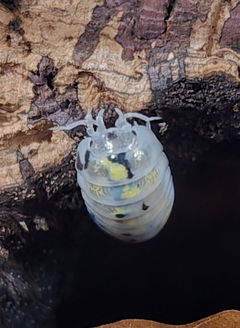
Amber Millipede (Pelmatojulus Ligulatus)

Amber Millipede (Pelmatojulus Ligulatus)

Care Info:

Origin icon ORIGIN
WEST AFRICA
Temperature icon TEMP
24-28 ℃
Humidity icon HUMIDITY
80-90 %
Length icon LENGTH
140-160 mm
Difficulty icon DIFFICULTY
MEDIUM
Rarity icon RARITY
UNCOMMON
Regular price£10.00
/
Tax included. Shipping calculated at checkout.

Quantity
  • Free shipping over £65
  • In stock, ready to ship
  • Backordered, shipping soon

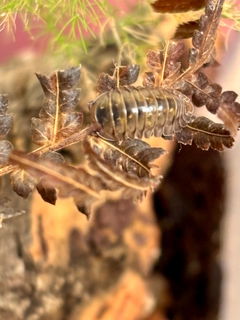
The Amber Millipede is one of the more visually distinctive medium-to-large millipedes available in the UK hobby — a chunky, glossy West African species with bold alternating amber-orange and dark brown banding that genuinely lives up to the photographs. Adults reach 140–160 mm with properly substantial girth, putting them in the size category above smaller species like our Red Ring Millipede but below the truly enormous African Giants. Combined with the glossy near-laminate body texture and the contrast of the amber bands, this is one of the more photogenic millipedes in the catalogue.

This is part of our wider millipede collection and shares family-level evolutionary heritage with our Red Ring Millipede — both belong to order Spirobolida, family Pachybolidae, despite the dramatic differences in size and appearance. The Amber is genuinely the larger, chunkier West African counterpart to the slim Red Ring South African species. For collectors building a focused Pachybolidae display, the two species together show the family's visual range from the bold-banded compact Centrobolus to the substantial banded Pelmatojulus. Also worth considering alongside our Burmese Beauty Millipede for keepers building a varied African millipede cluster — though the Burmese Beauty is from a different order (Spirostreptida) and family.

One genuinely important framing point up front. The Amber Millipede is a dietary specialist. Unlike many hobby millipedes that happily accept cucumber, banana, sweet potato, and similar fresh produce, P. ligulatus feeds almost exclusively on white rotten wood, decaying leaf litter, and lichen. They'll largely ignore fresh fruit and vegetables — some keepers report occasional nibbles, but you can't rely on it. This isn't a difficulty problem so much as a planning requirement: if you can keep them supplied with properly rotted hardwood and leaf litter, they're not difficult to care for. If you can't, they'll struggle. Read the diet section carefully before committing. To set things up properly from the start, browse our accessories collection for substrate components, leaf litter, and other items this species depends on.

Quick Care Summary

  • Scientific Name: Pelmatojulus ligulatus (Voges, 1878) — originally described as Spirobolus ligulatus, also historically placed in genus Pachybolus; current placement confirmed by Hoffman & Mahsberg 1996 and Wesener et al. 2008
  • Common Names: Amber Millipede, Amber Banded Millipede, Yellow-banded Millipede, Tiger Millipede, Chocolate Millipede
  • Family: Pachybolidae (order Spirobolida); tribe Pachybolini — the endemic Afrotropical group of giant millipedes
  • Genus context: Pelmatojulus contains multiple West African species. Established by de Saussure in 1860. Closely related hobby species: P. excisus (Giant Fire Millipede). Other species in the genus: P. togoensis (Togo/Ghana), P. insignis (Ghana), P. tectus (Cameroon, recently re-classified), P. brachysternus (Cameroon)
  • Origin: West African secondary rainforests — documented from Benin, Togo, Nigeria, Cameroon, Ivory Coast, and Ghana
  • Adult Size: 140–160 mm length with properly substantial girth — bulkier than thinner millipede species of similar length
  • Lifespan: Several years in good captive conditions; sexual maturity reached at approximately 2 years
  • Difficulty: Easy to medium — straightforward husbandry but requires properly committed dietary planning
  • Temperature: 24–28 °C — properly tropical. Supplementary heating usually needed through UK cooler months
  • Humidity: 80–90% — high. Substrate kept consistently moist; regular misting required
  • Ventilation: Moderate — enough to prevent mould without drying conditions out
  • Activity: Burrowing primarily; not climbers. Spend most time in or just under substrate
  • Appearance: Glossy, chunky cylindrical body with alternating amber-orange and dark brown segmental banding; properly substantial girth gives the impression of a "bigger" animal than the length alone suggests
  • Sexual dimorphism: Males have sole pads on the tarsi (feet); both pairs of legs on the 7th body segment are modified into gonopods (characteristic of order Spirobolida)
  • Defensive secretion: Standard millipede defensive liquid (benzoquinones) — can temporarily stain skin; wash hands after handling
  • Social structure: Tolerant of group housing given enough space and food
  • Rarity: Uncommon in UK hobby; periodically available rather than constantly stocked

What Makes the Amber Millipede Special

The colouration and gloss combination. Amber Millipedes have one of the more genuinely photogenic body patterns in the hobby — the warm amber-orange against the deep brown bands creates strong contrast, and the glossy near-laminate finish on the segments catches light in a way that matt-finished species don't. Properly lit, these are striking animals. Photographs do them justice; in person they're even better.

The substantial girth. While the 140–160 mm length is solid rather than enormous, Amber Millipedes are properly chunky — noticeably wider and bulkier than thinner millipede species of similar length. The visual presence is more like a medium-large species than a slim one. For keepers who want millipedes that feel like proper substantial animals rather than "long worms," the body proportions matter.

The Pachybolidae family connection. Within our millipede collection, the Amber shares order (Spirobolida) and family (Pachybolidae) heritage with our Red Ring Millipede (Centrobolus anulatus). The visual differences are dramatic (chunky orange-banded West African vs. slim red-banded South African), but the evolutionary relationship is properly close — both are in the same family, both have the smooth cylindrical body and segmental banding typical of the Pachybolidae. For collectors building a focused Pachybolidae display covering both ends of the family's geographic range and size spectrum, these two species together work well.

The tribe Pachybolini context. Pelmatojulus belongs to the tribe Pachybolini — the endemic Afrotropical group of giant millipedes that includes Pachybolus, Hadrobolus, Epibolus, and the Malagasy Madabolus. According to Wesener et al. (2008), Pelmatojulus (West Africa) is distinguished within the tribe by an increased number of apical antennal sensory cones — a properly specialised feature suggesting refined sensory capability. For keepers interested in biological context beyond just keeping animals alive, this puts the species in a genuinely interesting evolutionary group.

The dietary specialism is unusual. Most popular hobby millipedes are dietary generalists — they'll eat substrate, leaf litter, fresh fruit, vegetables, and protein supplements happily. P. ligulatus is properly different. As a true rotten-wood specialist, the species essentially ignores fresh produce and depends almost entirely on substrate-derived nutrition: white rotten hardwood, decaying leaf litter, and lichen. This biological specialism makes them genuinely interesting to keep but requires committed planning of food supply.

The relationship with P. excisus. The Giant Fire Millipede (Pelmatojulus excisus) is the most visually similar hobby species — both are West African Pelmatojulus, both show banded colouration, and they're sometimes confused in the trade. The visual differences: P. ligulatus tends toward more amber/yellow tones in the banding while P. excisus has more red/fire tones. Care requirements are essentially identical between the two species, so keepers familiar with one species can handle the other without learning new husbandry.

The slow maturation. Amber Millipedes reach sexual maturity at approximately 2 years of age — properly slow by hobby invertebrate standards. The slow development means captive populations are unhurried by feeder-species standards but also means breeding success takes proper time commitment. Don't expect rapid colony growth.

About the Name and Taxonomy

The species has some naming history worth knowing.

  • Pelmatojulus ligulatus: Original description by Voges in 1878, as Spirobolus ligulatus. The species has moved through several genera over the years — at one point classified as Pachybolus ligulatus. The current accepted combination is Pelmatojulus ligulatus per Hoffman & Mahsberg 1996 and Wesener et al. 2008.
  • Genus Pelmatojulus: Established by de Saussure in 1860. The name derives from Greek roots — pelmato referring to the sole of the foot (referencing the distinctive tarsal sole pads) and julus being a common millipede taxonomic root.
  • Tribe Pachybolini: The endemic Afrotropical group of giant millipedes. Within the tribe, Pelmatojulus is distinctive for its elevated number of apical antennal sensory cones. The other tribe members include Pachybolus, Hadrobolus, Epibolus, and the Malagasy Madabolus.
  • Family Pachybolidae: Shared with the genus Centrobolus (our Red Ring Millipede) and many other African and Asian spirobolidan millipedes. The family represents one of the major lineages of medium-to-giant tropical millipedes.
  • Common name variants:
    • Amber Millipede — the most common UK hobby name; references the warm amber tones of the banding
    • Amber Banded Millipede — alternative emphasising the banded pattern
    • Yellow-banded Millipede — sometimes used; references the lighter end of the colouration range
    • Tiger Millipede — references the alternating dark-and-light banding pattern
    • Chocolate Millipede — alternative name occasionally seen; references the dark brown components of the banding
  • Order Spirobolida feature: Both pairs of legs on the seventh segment of the male are modified into gonopods (reproductive structures). This is a defining order-level feature shared with our Red Ring Millipede and Ivory Millipede.

Setting Up the Enclosure

A 30 × 40 cm floor area works as a minimum for a small group of Amber Millipedes; scale up proportionally for larger colonies. Both plastic and glass enclosures work; plastic tubs are generally easier for maintaining the high humidity these animals need. Width matters more than height — this is a burrowing species rather than a climber, so floor space and substrate depth take priority over vertical space.

Substrate depth is critical. Minimum 10 cm — these animals genuinely use substrate depth for burrowing and dietary purposes. Adults will routinely disappear underground for extended periods between surface activity sessions.

Climbing structure is optional rather than essential. Unlike our Red Ring Millipede (a properly arboreal species), Amber Millipedes spend most of their time at or below substrate level. Cork bark, coconut shells, or pieces of bark laid flat make good hides and are appreciated, but elaborate vertical structures aren't necessary. Browse our accessories range for cork bark and natural cover options.

Ventilation matters genuinely for this species. The high humidity preference (80–90%) makes mould a real risk in poorly-ventilated setups. Cross-ventilation through opposing mesh-covered openings provides the right balance — adequate airflow to prevent stagnation without drying the enclosure out. Don't seal the enclosure for "maximum humidity" — that produces stagnant air and mould problems.

Important husbandry note: Skip the deep water dish. Substrate moisture and regular misting provide all the hydration this species needs. Deep water dishes can encourage drowning incidents and excessive humidity. A shallow water-soaked sponge works for animals that want to drink.

Substrate

Substrate is not just habitat for this species — it's properly the primary food source. The right mix:

  • Coconut fibre (coir) as the moisture-retaining foundation
  • Organic compost (pesticide-free) mixed throughout for nutritional content
  • Crumbled white rotten hardwood mixed in generously — genuinely essential rather than supplementary. White rotten wood is the species's dietary foundation
  • Generous layer of hardwood leaf litter on top — properly essential as food and cover. Browse our accessories collection for ready-prepared leaf litter
  • Sphagnum moss patches — supports humidity maintenance and provides additional cover
  • Springtails inoculated to consume excess moisture and prevent mould
  • Calcium sources — cuttlebone, crushed eggshell, or limestone chips. Always available. Our calcium options cover the full range

Substrate depth: 10 cm minimum. The animals will work through this substrate constantly — expect to top up the rotten wood and leaf litter components every few weeks as they consume it.

Maintain consistently moist substrate — properly damp to the touch but never waterlogged. The high humidity preference is supported primarily by substrate moisture rather than air humidity per se.

Humidity and Temperature

Maintain humidity at 80–90% — genuinely high by hobby standards. Achieve this through substrate moisture and regular misting (typically several times per week). The substrate itself should hold moisture between mistings. Light surface misting maintains the high air humidity these animals need.

Don't oversaturate the substrate. Waterlogged conditions cause mould, anaerobic substrate problems, and can drown animals in extreme cases. The substrate should be properly damp throughout but not water-saturated.

Temperature should be 24–28 °C — properly tropical. UK average room temperature is below this range for most of the year, so supplementary heating is usually required. A low-wattage heat mat on a thermostat, mounted on the side of the enclosure rather than underneath, provides ideal warmth. Side-mounted heating creates a thermal gradient and avoids overheating substrate where burrowing animals spend most of their time.

Critically, for any fossorial species, never use under-substrate heating — it traps animals between heat and dry surface conditions. Side-mount heating only.

Through UK summers, the species typically maintains comfortable temperatures without supplementary heat. Through autumn through spring, expect to run heating consistently.

Diet

This is the section that genuinely matters most for this species. Amber Millipedes are dietary specialists — properly different from most hobby millipedes. The species feeds almost exclusively on:

  • White rotten hardwood — the dietary foundation. "White rot" refers to the soft, crumbly, well-decayed hardwood you find on the forest floor where fungal decomposition has broken down the wood. Should always be available. Browse our accessories collection for properly prepared options
  • Decaying hardwood leaf litter — oak, beech, magnolia. Genuinely essential and constantly consumed
  • Lichen on bark or branches — properly appreciated and worth offering when available
  • Calcium sources — cuttlebone, crushed eggshell, limestone. Always available. Properly important for moulting success

What they won't eat (much): Fresh fruit and vegetables are largely ignored by this species. Some keepers report occasional nibbles on banana, cucumber, or similar fresh produce, but it's not reliable food. Don't substitute fresh produce for the rotten wood and leaf litter — the species genuinely depends on the specialist diet.

The practical implication: you need to be properly committed to sourcing and maintaining a steady supply of white rotten hardwood and leaf litter before buying this species. If you have access to a fallen oak or beech log decomposing on your property, or you can reliably source rotten wood through hobby suppliers, you'll be fine. If you're hoping to feed them table scraps, this isn't the right species.

Position fresh additions of rotten wood and leaf litter throughout the enclosure rather than in concentrated piles — the animals work through substrate gradually rather than visiting feeding stations.

Breeding

Amber Millipedes can be bred in captivity given proper conditions, though they're properly slow to mature. Sexual maturity is reached at approximately 2 years of age — a substantial time commitment compared to faster-developing invertebrate species.

Sex determination: Males can be identified by the distinctive sole pads on the tarsi (feet) — these are the basis of the genus name Pelmatojulus (literally "sole-foot Julus"). Females lack these tarsal sole pads. Both sexes show the gonopods on the 7th body segment characteristic of order Spirobolida — in males, these are modified for reproduction; in females, the corresponding segment is unmodified.

The breeding sequence:

  • Mating involves prolonged contact between male and female
  • Females deposit eggs in moist substrate, typically several centimetres deep
  • Young remain with adults — they feed on the same rotten wood, leaf litter, and lichen as adults
  • Juveniles develop adult colouration gradually through successive moults
  • Total development to sexual maturity: approximately 2 years

For breeding success:

  • Group of at least 3–5 animals, ideally with confirmed males and females
  • Stable temperature in the 24–28 °C range
  • Consistent high humidity (80–90%)
  • Adequate substrate depth (10 cm minimum) for egg deposition and juvenile development
  • Continuous supply of rotten wood and leaf litter — both for adults and for juvenile development
  • Calcium consistently available — affects egg shell quality and juvenile moult success
  • Properly long patience — visible adult recruitment takes 2+ years from initial breeding

Handling

Amber Millipedes are docile and slow-moving. They'll generally just plod calmly across your hands rather than attempt rapid escape. Like all millipedes, they can secrete a mild defensive liquid (benzoquinones) when threatened — this can temporarily stain skin and may cause mild irritation in sensitive individuals. Wash hands thoroughly after handling.

Don't handle excessively. The defensive secretion costs the animal energy to produce; repeated stress also affects feeding behaviour. Handle when you genuinely want to observe up close rather than as constant interaction.

Keep handling sessions short and over soft surfaces — a 140–160 mm millipede falling from height can suffer fatal damage to its exoskeleton.

Who Should Buy Amber Millipedes?

Ideal for:

  • Keepers who can reliably source rotten hardwood and leaf litter
  • Display enthusiasts drawn to glossy banded millipedes with substantial girth
  • Experienced keepers comfortable with dietary specialist species
  • Collectors building a focused Pachybolidae display alongside our Red Ring Millipede
  • Anyone interested in West African invertebrates specifically
  • Bioactive vivarium setups where the fossorial detritivores contribute to substrate processing
  • Patient keepers comfortable with the 2-year maturation timeline

Not ideal for:

  • Complete beginners to millipede keeping — the dietary specialism adds complexity beyond typical "easy" species
  • Keepers without access to properly rotted hardwood
  • Anyone hoping to feed millipedes on table scraps or fresh produce
  • Cool-room setups unable to maintain 24–28 °C consistently
  • Anyone wanting truly massive size — these aren't African Giant scale animals

Realistic Expectations

The dietary specialism is genuinely the most important thing to plan for. Unlike most popular hobby millipedes, Amber Millipedes won't accept fresh fruit and vegetables as primary food. They need white rotten hardwood and decaying leaf litter — and they consume substantial quantities of both. If you can't reliably source these foods, this isn't the right species regardless of how attractive the animals are. The existing description's framing on this is correct: it's not difficulty, it's planning.

The maturation is slow. 2 years to sexual maturity is properly slow by hobby standards. Don't expect rapid breeding or visible juvenile recruitment within the first year. Buy this species expecting a multi-year commitment to colony establishment.

They're burrowers, not climbers. Unlike our Red Ring Millipede which spends substantial time on visible climbing surfaces, Amber Millipedes are properly fossorial. Expect them to be invisible most of the time, surfacing to feed and explore but spending the majority of their lives below substrate level. Don't buy this species expecting constant visibility.

P. excisus confusion is real. The Giant Fire Millipede is the most visually similar hobby species. If you're researching P. ligulatus care online and find sources that look like they're describing a slightly different animal, they may be referring to P. excisus. Husbandry is essentially identical between the two species; the visual differences are subtle (amber/yellow tones vs. red/fire tones in the banding).

The humidity demands are substantial. 80–90% air humidity is properly high — significantly higher than many hobby millipedes need. This requires committed misting and substrate moisture maintenance. Don't underestimate the moisture demands; chronic under-humidity causes moulting problems that aren't immediately obvious but become visible weeks or months later as deformed adults.

The "yellow-banded" name is partially accurate. The amber colour reads variously as amber, yellow, or orange depending on individual specimens, lighting, and the age of the animal (newly-moulted animals show more vivid colouration than animals approaching their next moult). Don't expect identical-looking individuals; some variation in colour tone is normal.

The species name has moved through several genera. If you're researching the literature, you'll find this species referenced as Spirobolus ligulatus, Pachybolus ligulatus, and Pelmatojulus ligulatus across different sources from different decades. All refer to the same animal; Pelmatojulus ligulatus is the current accepted combination per recent taxonomic literature.

UK escape isn't an environmental risk. As with the other tropical millipedes in our catalogue, UK outdoor conditions are too cool and dry for P. ligulatus to establish in the wild. Recapture escapees promptly but don't worry about establishing feral populations.

Use collapsible tabs for more detailed information that will help customers make a purchasing decision.

Ex: Shipping and return policies, size guides, and other common questions.

You may also like


Recently viewed