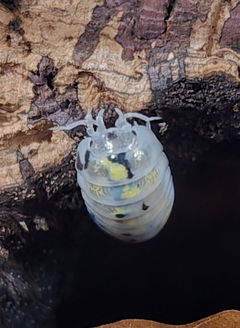
Oniscus asellus 'Orange' Isopods
Care Info:
 ORIGIN
 TEMP
TEMP
 HUMIDITY
 LENGTH
 DIFFICULTY
 RARITY
- Free shipping over £65
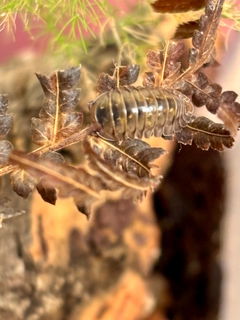
This is the woodlouse from the biology textbooks, the one under every damp log in Britain, only here it is dressed in bright orange. Oniscus asellus 'Orange' is a selectively bred orange morph of the common shiny woodlouse, one of the most familiar isopods in the British Isles. The wild type was named by Linnaeus himself in 1758 and is so widespread that it is often called the archetypal woodlouse, the very animal most people picture when they hear the word. What you get here is that same hardy native rendered in a warm, glowing orange that turns a garden commoner into something worth putting on display.
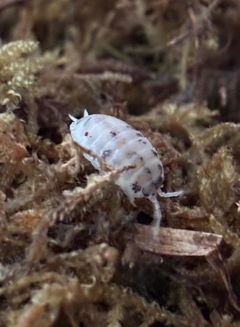
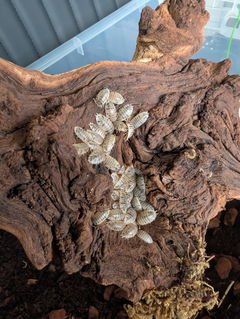
The wild-type Oniscus asellus is the bumpy-backed, slightly flared brown-grey woodlouse everyone knows from under bricks and flowerpots. The Orange morph keeps every bit of that familiar shape but swaps the drab colouring for a warm orange that shows off the faintly skirted, out-turned edges of the body beautifully. It is a flat-bodied isopod, and like Porcellio scaber, another familiar native woodlouse, it does not conglobate. Rather than rolling into a ball when disturbed, it relies on speed and cover, scurrying for the nearest bit of bark or leaf. Adults reach a decent size for a common woodlouse, and a settled group has real presence against dark substrate.
What makes it worth keeping is the mix of good looks and easy temperament. This is a hardy, forgiving native and one of the better beginner isopods, happy to double as a sturdy bioactive cleanup crew in a vivarium where it grazes on rotting matter and keeps the substrate turned over. It sits naturally alongside the rest of the PostPods range, whether you fancy the rolling Armadillidium vulgare 'Big Italy', the patterned Dairy Cow, or the bright Magic Potion. Browse the rest of the Oniscus range for its relatives, or the wider isopod collection to build out a mixed group.
Care could hardly be simpler. As a temperate native, Oniscus asellus wants nothing more than normal room temperature, so no heating is needed anywhere in the UK. Aim for moderate humidity with a clear gradient, keeping one end damp and leaving the other drier so the colony can choose, and give the enclosure medium ventilation to keep the air fresh without drying everything out. Build the floor from flake soil and rotted wood topped with a generous layer of leaf litter, which is the base of the diet rather than mere decoration. Keep calcium available for healthy moulting and offer a little protein now and then, and that is all there is to it.
Once settled it breeds steadily, without any special coaxing. Females carry their eggs and then their young in a brood pouch beneath the body and release miniature versions of the adults, which darken and then colour up through successive moults. Keep the food, calcium and moisture gradient consistent, avoid disturbing the colony too often, and numbers build at a reliable, unhurried pace. A springtail culture makes a fine companion in the same tub, working the mould and mess at a scale the isopods cannot, so it is worth adding some springtails from the start.
Every order is captive-bred here in the UK and travels in a ventilated tub of damp sphagnum moss, cushioned inside a double-walled box to hold warmth and take the knocks of transit. We post Monday to Thursday by tracked next-day Royal Mail, aimed to reach you by 1pm the following day, and back every parcel with a live-arrival guarantee. We include a 20% overcount as standard, so you can settle your new colony in with a little room to spare.