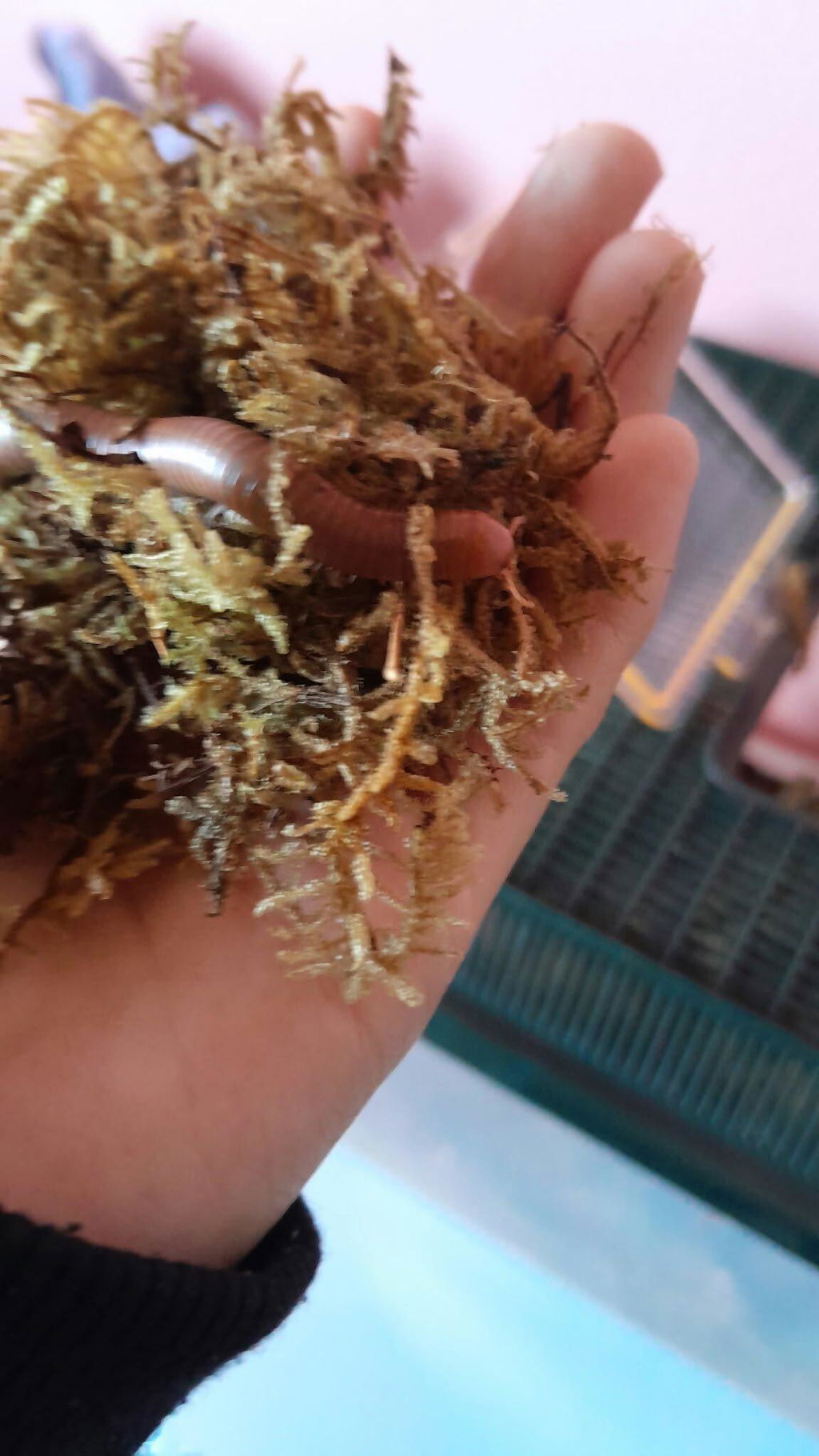
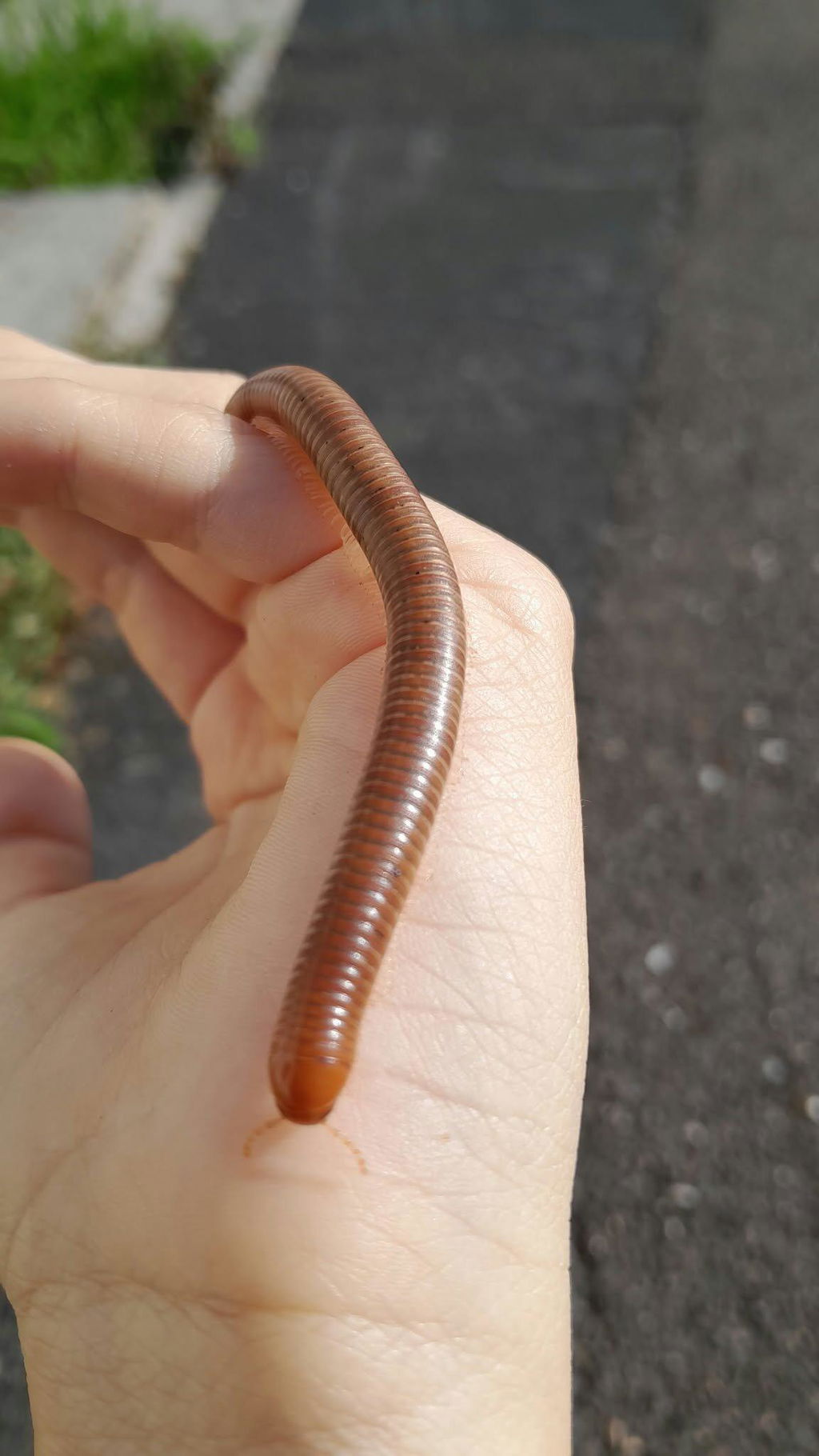
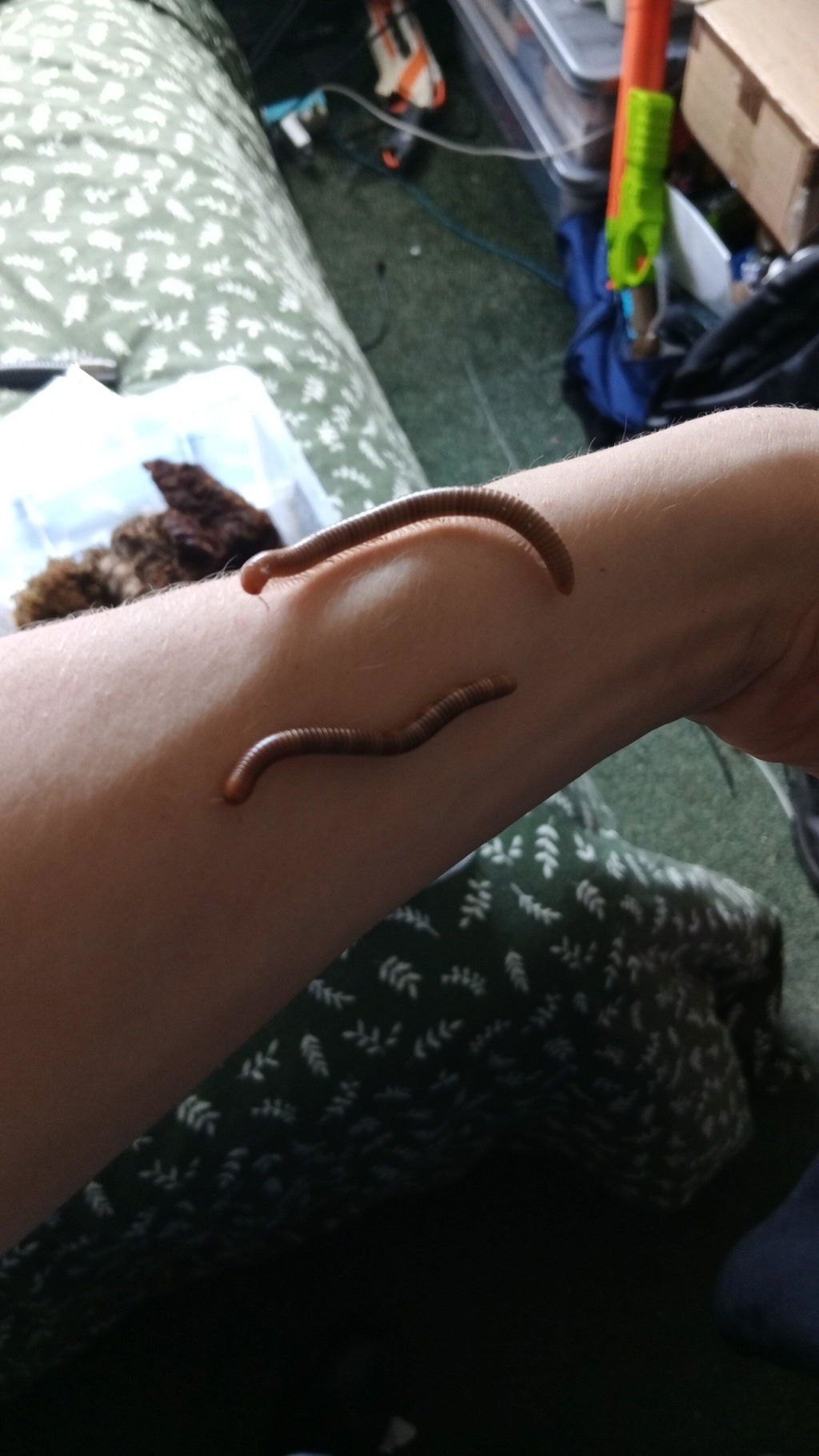
Burmese Beauty Millipede (Spirostreptus Sp)
Burmese Beauty Millipede
Burmese Beauty Millipedes

Burmese Beauty Millipede (Spirostreptus Sp 1)

Care Info:

Origin icon ORIGIN
TAZMANIA
Temperature icon TEMP
24 ℃
Humidity icon HUMIDITY
65-80 %
Length icon LENGTH
120-150 mm
Difficulty icon DIFFICULTY
EASY
Rarity icon RARITY
COMMON
Regular price£6.50
/
Tax included. Shipping calculated at checkout.

Quantity
  • Free shipping over £65
  • Low stock - 1 item left
  • Backordered, shipping soon

The Burmese Beauty Millipede is one of the most genuinely well-balanced species available in the UK hobby — a medium-sized Tanzanian millipede with striking olive green and orange banding, an active surface-dwelling temperament, and properly accessible pricing. Despite the common name suggesting Myanmar, this species actually originates from East Africa — the "Burmese" tag is a quirk of the hobby trade that's stuck despite being geographically wrong. What you're actually getting is a sub-Saharan African Spirostreptid, sharing evolutionary heritage with the larger African giant species. For first-time millipede keepers wanting visual appeal, observable activity, and forgiving husbandry without paying premium prices, this is one of the right starting points.

This is part of our wider millipede collection and pairs naturally alongside our other species — the surface-active Ivory Millipede as an alternative medium-sized starter, the UV-reactive Hawaiian Glow Millipede for collectors wanting size variety, and the larger African Giant Chocolate Millipede for keepers ready to step up to the impressive end of the catalogue. The Burmese Beauty bridges the gap between small and large display millipedes — substantial enough to appreciate but not as demanding (or expensive) as the giant species.

One honest framing point up front. Despite the manageable size and beginner-friendly difficulty rating, Burmese Beauty Millipedes are properly long-lived (5 years possible) and slow-developing. This is a meaningful long-term commitment rather than a short-cycle colony species. To set things up properly from the start, browse our accessories collection for the substrate components, leaf litter, calcium sources, and other items this species depends on.

Quick Care Summary

  • Scientific Name: Spirostreptus sp. 1 (also listed as Spirostreptidae sp. 1) — the "sp. 1" designation indicates an undescribed species; numbered designations are common across Spirostreptus hobby stock to distinguish unidentified locality variants
  • Common Names: Burmese Beauty Millipede, Olive Banded Millipede, Tanzania Olive Millipede, Globular Millipede
  • Family: Spirostreptidae (order Spirostreptida)
  • Origin: Tanzania, East Africa — despite the "Burmese" common name; the species inhabits dry savanna and forest-edge habitats in East Africa
  • Adult Size: 120–150 mm (12–15 cm, approximately 5–6 inches) — medium-sized; substantial enough to appreciate without the demanding requirements of giant African species
  • Lifespan: Up to 5 years with proper care
  • Difficulty: Easy — forgiving, hardy, and beginner-friendly
  • Temperature: 22–26 °C; 24 °C is the sweet spot. UK average room temperature acceptable for maintenance, but breeding rates improve at the warmer end
  • Humidity: 65–80% with substrate moist throughout but not waterlogged
  • Ventilation: Moderate cross-ventilation — important to prevent mould buildup in the humid setup
  • Activity: Surface-active and crepuscular/nocturnal; properly visible compared to many burrowing millipedes
  • Climbing: Limited climbing ability but enjoys low branches and cork bark; will use vertical structure when provided
  • Social: Peaceful in groups — can be housed communally without issue
  • Appearance: Wide olive-green body segments alternating with thin black bands; an extremely thin metallic coppery iridescent stripe runs along each black band (subtle but visible in good light); legs and antennae beige
  • Juveniles: More orange than adults; develop the characteristic olive-green-and-orange "creamsicle" banding as they mature through successive moults
  • Conglobation: Coils three-dimensionally into a globe shape rather than the flat disc-coil of many millipedes — distinctive enough to give the species the alternative name "Globular Millipede"
  • Sexing: Males have modified legs (gonopods) on the 7th body segment, making this segment noticeably thicker than in females
  • Reproduction: Breeds readily in captivity; eggs laid in substrate; juveniles benefit from staying with adults
  • Defensive secretion: Brown-yellow benzoquinone fluid when stressed — can irritate skin and eyes; wash hands after handling
  • Rarity: Common in the UK hobby; one of the more reliably-available Spirostreptus species

What Makes the Burmese Beauty Millipede Special

The colour combination is genuinely attractive. The wide olive-green body segments alternating with thin black bands create a clean, contrasting pattern that's easy to appreciate from a distance. The subtle metallic coppery iridescence running along each black band is the species's hidden detail — easy to miss in casual observation but properly striking under good lighting. The aesthetic is meaningfully different from the cream-and-black banding of the Ivory Millipede or the solid brown of the African Giant Chocolate Millipede, giving collectors a distinct colour profile within the millipede catalogue.

The juvenile-to-adult colour transition. Young Burmese Beauties emerge as predominantly orange animals — properly different from the olive-green adult appearance. The colour develops through successive moults until reaching the mature olive-and-orange "creamsicle" banding around 12–13 cm body length. Watching juveniles gradually transition into their adult colouration across 1–2 years is one of the more visually engaging biological observations available in millipede keeping.

The surface activity. Unlike many millipedes that spend the vast majority of their time burrowed underground, Burmese Beauties are properly surface-active — regularly visible exploring above the substrate, particularly during dawn, dusk, and night hours. They'll use climbing branches and cork bark structures rather than just floor space. For display-focused keepers, this visibility makes the species significantly more rewarding to observe than the constantly-burrowed alternatives.

The unique globular conglobation. When threatened, most millipedes curl into a flat disc-shaped coil. The Burmese Beauty takes a different approach — coiling three-dimensionally into a tight globe shape rather than a flat disc. This distinctive defensive behaviour is striking enough to give the species one of its alternative common names ("Globular Millipede") and is genuinely fascinating to observe when you can encourage the response (gentle disturbance rather than aggressive handling).

The accessible size and price. At a properly accessible price point per animal, Burmese Beauties let new keepers experiment with medium-sized millipedes without significant financial pressure. The 12–15 cm adult size sits in a sweet spot — substantial enough to be a proper display animal, but not requiring the very deep substrate and larger enclosures that 20+ cm species need. For first-time millipede keepers, the cost-to-value ratio is genuinely strong.

The reliable breeding behaviour. Burmese Beauties breed readily in captivity once basic conditions are met — properly distinguishing them from some of the slower-breeding millipede species. For keepers wanting to see colony development rather than just maintaining a static group, the species delivers. Mating is observable (face-to-face couplings often lasting extended periods); juveniles establish reliably when left with adults; population growth is steady once established.

The millipede cluster. Within our millipede catalogue, the Burmese Beauty bridges the gap between the small UV-reactive Hawaiian Glow and the larger African Giant Chocolate. For collectors building a varied millipede display covering multiple genera and size classes, the Burmese Beauty is one of the right middle-tier additions.

About the Name and Taxonomy

A few notes on the species's nomenclature and the genuine taxonomic uncertainty around this stock.

  • Spirostreptus sp. 1: The current scientific designation. The "sp. 1" indicates an undescribed species — the hobby uses numbered designations (sp. 1, sp. 8, etc.) to distinguish between unidentified Spirostreptus stock from different localities or with different morphological features.
  • Family Spirostreptidae: A large family of millipedes within the order Spirostreptida — distinct from the Spirobolidae family containing the Ivory Millipede. Spirostreptid millipedes are characterised by their long cylindrical bodies, often substantial size, and African/tropical distribution. Family-level recent taxonomic work (2023, Henrik Enghoff and others) has moved many former Spirostreptus species into other genera (Analocostreptus, Attemsostreptus, Lophostreptus), so the genus is currently being revised — the hobby's "Spirostreptus sp." designation reflects this taxonomic instability.
  • "Burmese Beauty" name: A trade name that's stuck despite being geographically wrong. The species is from Tanzania, not Myanmar (Burma). The name probably originated from a misidentification during early hobby distribution; correcting it now would require coordinating across multiple international suppliers, so the wrong name persists.
  • Alternative common names: "Olive Banded Millipede" and "Tanzania Olive Millipede" both accurately describe the species — these are sometimes used by keepers who prefer not to use the geographically-misleading "Burmese" name. "Globular Millipede" refers to the distinctive three-dimensional coiling behaviour.
  • Genus context: Multiple Spirostreptus species inhabit the same East African region. Distinguishing between them without expert taxonomic examination is difficult, so several similar-looking Tanzanian Spirostreptus may be sold under the "Burmese Beauty" name across the international hobby. Practical husbandry is essentially identical across the genus, so this taxonomic ambiguity doesn't affect keeping success.

Setting Up the Enclosure

A medium-sized vivarium suits this species — minimum 30 × 20 × 40 cm for a small group, scaled up to 40 × 40 × 50 cm for groups of up to 10 animals. Larger is better; Burmese Beauties are properly active and will use the space rather than retreating to a single corner. Both glass terrariums and plastic enclosures work well; ventilation is more important than the specific container material.

A secure lid is essential. Despite limited climbing ability, millipedes are properly strong for their size and can push against poorly-secured lids. Use clip-locked containers or terrariums with weighted/locking lids. Cross-ventilation between opposing sides of the enclosure is critical to prevent mould buildup — mesh-covered ventilation on at least two sides plus a small lid vent provides the right balance.

Provide climbing structure. Burmese Beauties aren't expert climbers, but they enjoy moving off the ground and will use thick branches, cork bark in vertical orientations, and similar structures. Don't overcrowd the enclosure with vertical décor — leave open floor space for surface activity. Browse our accessories range for cork bark, branches, and other natural cover options.

Surface décor matters more than for purely burrowing species. Hardwood leaf litter scattered generously on the substrate surface, cork bark hides positioned across the enclosure, moss and lichen patches on branches (which will be grazed) — all support the species's surface-active lifestyle. Burmese Beauties will use surface cover actively rather than just retreating below substrate.

Critical heating note: NEVER use heat mats underneath the substrate. Millipedes burrow to escape unfavourable conditions — heat-from-below traps them between heat and dry surface conditions, with documented fatal consequences. If supplementary heating is needed, use overhead heat lamps or heat mats mounted on the SIDE of the enclosure rather than underneath. This is genuinely important husbandry guidance, not a minor preference.

Substrate

Deep, nutrient-rich substrate is the most important setup feature — millipedes eat substrate as their primary food source, and substrate depth provides the burrowing room needed for moulting:

  • 50% forest humus — the top layer of soil from under deciduous trees; properly broken-down organic matter
  • 20% aged hardwood leaf litter — brown, partially decomposed leaves; oak, beech, magnolia. Browse our accessories collection for ready-prepared leaf litter.
  • 20% shredded decaying hardwood — should crumble easily between fingers when properly aged
  • 5% play sand or bird grit — NOT builder's sand (which contains harmful chemicals)
  • 5% ground cuttlebone or powdered limestone — for calcium availability and substrate buffering
  • Springtails inoculated to consume droppings and food waste, preventing mould in the humid setup

Substrate depth should be 10–20 cm minimum — Burmese Beauties moult underground and need proper burrowing room. Layer the substrate: compact the bottom 7–8 cm slightly to provide structural stability, then add the remaining substrate more loosely on top for digging access.

Critical: NEVER use anything from pine or other coniferous trees — the resins are properly toxic to millipedes. Stick to deciduous hardwood sources (oak, beech, ash, maple, birch).

Top layer: a generous covering of hardwood leaf litter plus cork bark, moss patches, and lichen-bearing branches for cover.

Humidity and Temperature

Maintain humidity at 65–80% with the substrate kept moist throughout — squeeze a handful of substrate; it should hold its shape briefly without dripping water. This species is relatively hardy regarding humidity (better resistance to "foot rot" — a bacterial leg condition caused by overly wet conditions — than many millipede species), but proper moisture levels still matter.

Mist regularly to maintain substrate moisture; the leaf litter layer and moss patches help retain humidity between mistings. Avoid waterlogging or standing water in the substrate. Cross-ventilation prevents the kind of stagnant humid conditions that encourage mould while still maintaining the high air humidity the species needs.

Temperature should be 22–26 °C, with 24 °C as the optimum. UK average room temperature (around 20 °C) is acceptable for maintenance — Burmese Beauties tolerate cooler conditions better than many tropical species, which is one of their beginner-friendly features. However, breeding rates and activity levels improve noticeably at the warmer end of the range.

If supplementary heating is needed for breeding-focused setups, use overhead heat sources or side-mounted heat mats only. Side-mounted heating creates a thermal gradient and avoids the fatal heat-from-below trap that affects burrowing millipedes.

Diet

Burmese Beauties are detritivores — they derive the majority of their nutrition directly from substrate consumption. Supplementary feeding enriches that base diet:

  • Primary diet (from substrate): decaying hardwood, decomposed leaf litter, organic matter in forest humus — consumed continuously as part of normal substrate activity
  • Cucumber — the documented favourite fresh food; consistently well-received
  • Melon, banana, oranges, soft fruits — all eaten readily; replace within 24–48 hours
  • Cooked sweetcorn — well-received supplementary food
  • Soft vegetables — carrot, sweet potato, courgette
  • Moss and lichen — place on branches; will be grazed actively
  • Flake soil — fermented hardwood substrate, used as additional food source
  • Protein supplements occasionally — fish flakes, dried shrimp. Browse the protein options in our accessories collection.
  • Calcium sources — cuttlebone, crushed eggshells, oyster shell. Ground limestone can be mixed into substrate. Essential for proper exoskeleton development at each moult. Our calcium options cover the full range.

Using a small ceramic dish as a designated feeding spot helps — millipedes learn where fresh food appears and you can remove uneaten portions easily before mould develops.

Calcium is non-negotiable. As with all millipedes, Burmese Beauties moult repeatedly as they grow, and each moult requires calcium for proper exoskeleton hardening. Cuttlebone or limestone left in the enclosure continuously is the simplest and most reliable approach.

Breeding

Burmese Beauties breed readily in captivity once basic conditions are met. Mating is genuinely observable — animals mate face-to-face, often remaining coupled for extended periods. Females deposit eggs directly into substrate; juveniles emerge as small versions of adults and gain body segments through successive moults. Sexual maturity is typically reached around 12–13 cm body length.

For breeding success:

  • Stable temperature in the warmer half of the range (24–26 °C is ideal for active breeding)
  • Consistent humidity (65–80%) with substrate genuinely moist throughout
  • Adequate substrate depth (10–20 cm) for egg deposition and juvenile burrowing
  • Plenty of substrate-based food — rotting wood and leaf litter must be maintained as a continuous food source
  • Mixed-sex group — sex by checking the 7th body segment (males have visibly thicker segment due to modified gonopod legs)
  • Springtails inoculated to manage waste during the colony establishment phase
  • Minimal substrate disturbance — eggs and small juveniles are easily destroyed by overdigging
  • Juveniles should be left with adults — they benefit from consuming adult faecal pellets, which contain beneficial gut bacteria essential for proper development

Some keepers report that a brief drying phase may help trigger breeding, mimicking the distinct rainy/dry seasons of the species's Tanzanian habitat. This isn't necessary for breeding but can be a useful technique if natural conditions don't trigger reproduction in a stable setup.

Who Should Buy Burmese Beauty Millipedes?

Ideal for:

  • First-time millipede keepers looking for an attractive, forgiving species
  • Display enthusiasts wanting surface-active, observable millipedes
  • Keepers building millipede husbandry skills before stepping up to African Giant Chocolate Millipedes or other larger species
  • Anyone interested in observing dramatic juvenile-to-adult colour transitions
  • Bioactive vivarium enthusiasts (with appropriate co-inhabitants — see notes below)
  • Keepers wanting peaceful communal animals that don't require individual housing
  • Anyone exploring the millipede hobby on a modest budget
  • Long-term project keepers comfortable with the 5-year lifespan

Not ideal for:

  • Keepers wanting fast results — millipedes develop slowly across years
  • Setups that can't maintain consistent moisture
  • Anyone with strong skin sensitivities — the defensive benzoquinone secretion can irritate
  • Cohabiting with aggressive isopod species (Porcellionides pruinosus, Porcellio laevis) that might disturb moulting millipedes
  • Setups with under-substrate heating that can't be relocated

Realistic Expectations

The "Burmese" name is just wrong. New keepers occasionally try to research Burmese/Myanmar millipede care guides only to find the geographic information doesn't match their animals' actual requirements. The species is Tanzanian — East African savanna and forest-edge habitats, not Southeast Asian. When researching care information online, search for "Spirostreptus sp. 1" or "Tanzania olive millipede" rather than the misleading "Burmese" name.

The defensive secretion is real. When stressed, Burmese Beauties release brown-yellow benzoquinone fluid from glands along the body. The species can produce a properly significant quantity for its size when properly threatened. The secretion stains skin briefly, has a strong odour, and can irritate sensitive skin and eyes. Wash hands thoroughly after any handling; don't touch your face before washing. The secretion isn't medically dangerous to healthy adults but is properly unpleasant.

They cannot bite. Despite occasionally "pinching" with their legs (which is harmless), millipedes have no biting mouthparts capable of harming humans. The defensive secretion is the only real handling concern.

Handling should be limited. Despite being generally docile and handleable, Burmese Beauties are properly delicate — the long segmented body is easily injured by drops or rough handling. Support the body during handling, keep handling sessions brief, and work over a soft surface so any falls aren't catastrophic. Frequent handling stresses animals and triggers more defensive secretions.

Cohabitation requires care. Burmese Beauties cohabit well with Cubaris isopods and similar peaceful species, plus springtails for mould management. Avoid prolific aggressive isopod species like Porcellionides pruinosus or Porcellio laevis — these can disturb moulting millipedes (a vulnerable phase that can result in fatal injury if disturbed). Cubaris species are particularly compatible co-inhabitants.

Development is slow. Even in well-maintained colonies, Burmese Beauties take 1–2 years to reach adult size. Don't panic if juveniles seem to be making slow progress — that's just how the species works. The trade-off for slow development is the long adult lifespan (up to 5 years).

The substrate is genuinely the food source. As substrate feeders, Burmese Beauties consume substantial volumes of substrate material. The visible droppings are small pellets that accumulate on and within the substrate — these are normal and healthy, though they signal that substrate refresh is gradually becoming necessary. Bioactive setups with springtails handle this naturally; non-bioactive setups need periodic substrate top-up or replacement (typically every 6–12 months depending on colony size).

The globular coiling is properly distinctive. Burmese Beauties don't coil into the flat disc shape characteristic of most millipedes — they coil three-dimensionally into a tight globe. This is the source of the "Globular Millipede" alternative name and is genuinely unusual within the millipede order. If you've kept other millipedes that use disc-coiling, expect this species to look noticeably different when defensively coiled.

Use collapsible tabs for more detailed information that will help customers make a purchasing decision.

Ex: Shipping and return policies, size guides, and other common questions.

You may also like


Recently viewed