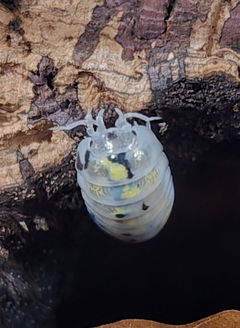
Porcellio Scaber Dalmation Isopods
Care Info:
 ORIGIN
 TEMP
TEMP
 HUMIDITY
 LENGTH
 DIFFICULTY
 RARITY
- Free shipping over £65
- Low stock - 1 item left
Our old copy here said Porcellio scaber is a poor climber on smooth surfaces and therefore fine in an open-topped tub. The first half is roughly fair and the conclusion drawn from it is not, so the lid advice comes first. On rough ground this species climbs freely: the UK recording scheme describes it as readily climbing walls and trees, it is the woodlouse people find indoors and high on brickwork, and there is work from 1957 confirming experimentally that it eats green algae off tree bark, and later records of the same on brickwork. Clean dry acrylic slows it down. Condensation, a smear of substrate or a scratch does not, and neither does silicone or a cable entry. Keep them lidded and put the ventilation in the sides.
The animal
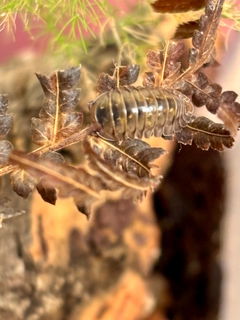
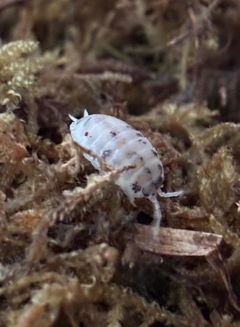
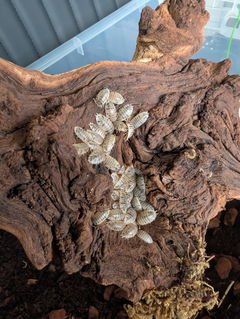
Latreille described Porcellio scaber in 1804 and the Latin scaber means rough, which is the tuberculate, slightly pitted back that tells it apart from the smooth-shelled woodlice. Adults reach around 17mm. The Dalmatian is a captive-bred colour form: a pale cream ground broken up by dark speckling, heavy on some animals and almost absent on others, so no two in a culture are marked the same. That variation is the appeal, and it is what makes a maturing colony worth watching rather than simply worth having.
We are not going to tell you how the spotting is inherited, because nobody has published it for this pattern. What is established is that isopod colour comes from ommochrome pigments, not from the melanin that colours a dog, so the Dalmatian name describes a look and not a mechanism. Something else was established only last year, and it is worth knowing about the animal in your hands: P. scaber turned out to carry four quinoline-based compounds in its tegumental glands, the first defensive chemistry ever identified from any crustacean. About forty nanograms in total per animal, and in the trial the spiders offered woodlice ate far fewer of them than of beetles. It is a deterrent measured in billionths of a gram, not anything that concerns a person handling them.
Keeping them
Very little goes wrong with them. Room temperature suits them in most UK homes, the working range we run across the scaber morphs is 17 to 26°C, and where preference has actually been measured it sits around 21°C. Humidity wants to sit in the 55 to 70 per cent band, and it should be a gradient and not uniform damp: one end lightly misted, the other left dry and airy. They handle drier ground than the common shiny woodlouse does, and that tolerance is much of how they got everywhere. Ventilation matters more than people expect.
A starter culture is happy in a tub of five litres or more. Lay substrate 5 to 7cm deep, bury it under a generous depth of hardwood leaf litter, and drop in cork bark and white-rotted wood for cover and grazing. Keep a cuttlebone in permanently. Porcellio are protein-hungry and a colony that gets protein regularly grows faster and breeds more reliably, so offer silkworm pupae or fish flake alongside occasional courgette or carrot, clearing anything uneaten after a day. They breed steadily and make a sound first project. Our guide to the Porcellio covers the rest of the genus.
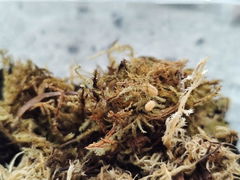
Colonies leave us Monday to Thursday in a vented pot with damp moss, boxed inside twin-wall board, on a Royal Mail service that lands before 1pm the following day. We put a comfortable margin over the number on the label, and live arrival is guaranteed.
Use collapsible tabs for more detailed information that will help customers make a purchasing decision.
Ex: Shipping and return policies, size guides, and other common questions.