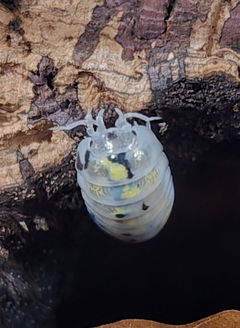
Cubaris sp. 'Blind Saturn' Isopods for Sale
Care Info:
- Free shipping over £65
- Low stock - 2 items left
- Backordered, shipping soon
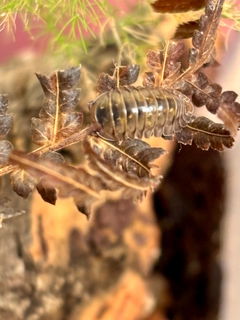
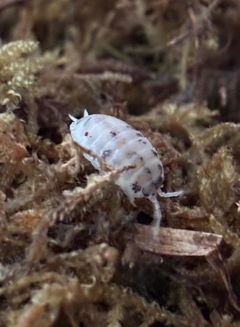
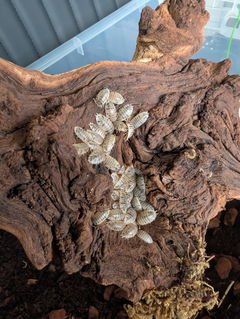
Cubaris sp. 'Blind Saturn' is one of the most genuinely unusual isopods in the UK hobby — a true cave-adapted troglobite from the deep cave systems of Southeast Asia, notable for its lack of functional eyes and its pale, ghostly, unpigmented body. These are specialist animals for keepers who appreciate the unusual rather than the colourful. They won't win any beauty contests against the vivid premium Cubaris flooding the market, but their remarkable adaptations to a life of perpetual darkness make them genuinely fascinating specimens — and a properly distinctive addition to a serious collection.
Blind Saturn isopods are true troglobites — animals that have evolved specifically and exclusively for cave life. Found in deep underground cave systems in Southeast Asia (Thailand and Malaysia), they've adapted over countless generations to environments with no light, remarkably stable temperatures, and consistently high humidity. In that perpetual darkness, eyes and pigmentation serve no purpose — so the species has evolved without them. The pale, eyeless appearance isn't a defect or a weakness; it's an elegant energy-saving adaptation, with the animal investing nothing in features it would never use underground.
An honest note worth making up front: information on this species in the hobby is limited. They're not widely kept, and much of the available guidance comes from general cave-Cubaris care principles rather than detailed species-specific documentation. That's part of what makes them appealing to the right keeper — but it also means they're best suited to experienced hobbyists comfortable working from first principles. Browse the full Cubaris collection for the broader genus, or the cave-dwelling Troglodillo collection for other Southeast Asian cave-associated isopods. Like other Cubaris, they retain the ability to conglobate (roll into a tight defensive ball) when disturbed.
Quick Care Summary
- Scientific Name: Cubaris sp. 'Blind Saturn'
- Common Names: Blind Saturn, Blind Saturn Cubaris
- Family: Armadillidae
- Origin: Southeast Asia (Thailand/Malaysia — cave systems)
- Adult Size: 10–15 mm — on the smaller side for Cubaris
- Lifespan: 2–3 years typical
- Difficulty: Medium — a specialist species, not for beginners
- Temperature: 23–26°C — stability matters more than exact numbers
- Humidity: 70–90% — consistently high and stable (a genuine cave-humidity species)
- Ventilation: Low to medium — enough to prevent mould without dropping humidity
- Conglobation: Yes — rolls into a tight defensive ball
- Eyes: Reduced or absent — a classic troglobite adaptation
- Behaviour: Highly secretive; spends most time buried or under cover; no response to light cycles
- Breeding: Slow — typical of cave-adapted species
- Rarity: Rare — uncommon specialist species
What Makes Blind Saturn Isopods Special
Several factors make the Blind Saturn genuinely worth keeping for the right hobbyist:
A true troglobite. This is the headline. The Blind Saturn isn't just a pale Cubaris — it's a genuine cave-obligate species, evolved over generations for a life entirely without light. Keeping a true troglobite is a fundamentally different proposition from keeping surface species, and offers a real connection to one of the most extreme habitats on earth.
The eyeless, ghostly appearance. Eyes reduced or entirely absent; body pale and unpigmented, ranging from translucent white to cream. It's an appearance that speaks directly to the species' biology — every feature stripped back to what survival in darkness actually requires.
The depigmentation is elegant biology, not a flaw. In complete darkness, pigment serves no protective or signalling purpose, so cave species evolve without it — saving the metabolic cost. The ghostly look is a textbook example of regressive evolution, and a genuine talking point for anyone interested in how life adapts to extreme environments.
Something genuinely different. In a hobby increasingly dominated by ever-brighter colour morphs, the Blind Saturn offers the opposite appeal — understated, scientific, and unusual. For keepers drawn to biology over aesthetics, that's a real draw.
Conglobation retained. Despite their cave adaptations, they retain the classic Cubaris ability to roll into a tight defensive ball — so the characteristic charm of the genus is still there, on a uniquely pale, eyeless body.
How Blind Saturn Compares to Other Cubaris
If you're choosing between Cubaris-type species, here's how the Blind Saturn fits in:
- vs Rubber Ducky: Opposite ends of the Cubaris appeal spectrum. Rubber Ducky is the iconic, characterful, surface-evolved premium Cubaris; Blind Saturn is the pale, eyeless, cave-obligate specialist. Both Medium difficulty, both rare — but bought for entirely different reasons.
- vs Cubaris murina: Cubaris murina is the easy, forgiving, surface-dwelling gateway Cubaris; Blind Saturn is the demanding cave specialist. Start with murina to learn Cubaris husbandry, then consider Blind Saturn once you can hold stable, high-humidity conditions reliably.
- vs Dwarf White Isopods: Both are small, pale, unpigmented isopods — but for very different reasons. Dwarf whites are a hardy, prolific bioactive cleanup species; Blind Saturn is a slow, specialist cave troglobite kept as a display curiosity. Don't confuse the two: dwarf whites are beginner-friendly workhorses, Blind Saturn is not.
Browse the full Cubaris collection to compare all options in this popular genus.
Physical Traits and Characteristics
- Adults reach approximately 10–15 mm — on the smaller side for Cubaris
- Pale, ghostly appearance due to lack of pigmentation — colours range from translucent white to cream
- Eyes reduced or absent — a classic adaptation to perpetual darkness
- Soft, oval-shaped bodies typical of the Cubaris genus
- Retain the ability to conglobate (roll into a ball) when disturbed
Behaviour
Blind Saturn isopods are secretive even by Cubaris standards. Without functional eyes, they navigate entirely by other senses and show no response to light cycles. Expect them to spend the vast majority of their time buried in substrate or hidden under cover. They're nocturnal by habit (though "nocturnal" becomes a meaningless concept for an animal that evolved in perpetual darkness), and you're unlikely to see much surface activity. If you want isopods you can observe regularly, this isn't the species for you.
They're also notably sensitive to environmental changes. Cave environments are remarkably stable — temperature, humidity, and conditions vary little throughout the year — so captive Blind Saturn isopods expect similar consistency. Fluctuations that other species would shrug off can genuinely stress these animals. Stability is the single most important husbandry principle.
Setting Up the Enclosure
A 6-litre container works well for a starter colony. These aren't particularly active isopods, so large enclosures aren't necessary — a smaller, stable, well-controlled environment suits them far better than a large one that's harder to keep consistent. The 3L Braplast tub works for the smallest starter groups, with a slightly larger container as the colony grows.
Light: Unnecessary. These isopods have no use for light and may actively prefer darker conditions. Keep the enclosure away from direct light.
Ventilation: Low to medium. They need some airflow to prevent mould, but not so much that humidity drops. Balance is the key — our Braplast vent plugs help fine-tune this. Hides: Cork bark, wood pieces, and moss provide essential cover; multiple hiding spots help them feel secure. Browse our accessories collection for appropriate enclosures, vents, and other essentials.
Substrate
Create a soil-based mix suited to cave Cubaris, with substantial moisture retention and limestone content reflecting their natural cave-floor environment:
- Base (around 60%): Organic topsoil (pesticide-free), aged leaf mould or forest humus
- Organic matter (around 25%): White-rotted wood pieces (essential — both nutrition and habitat), decomposing hardwood leaves, sphagnum moss for moisture retention
- Mineral content (around 15%): Limestone pieces or powder (mimics their cave environment), plus other calcium-rich additives
- Flake soil can be incorporated for added nutrition
We recommend a soil-based mix rather than coco coir — topsoil and forest-floor components better replicate their natural cave-floor conditions. Substrate depth: at least 8–10 cm — they're burrowers and need genuine depth to exhibit natural behaviour.
Keep the substrate consistently moist throughout — unlike most premium Cubaris, these aren't a species that benefits from a dry zone. The entire enclosure should feel damp, like a wrung-out sponge (though never waterlogged). Generous magnolia leaf litter on top provides cover and ongoing food.
Humidity and Temperature — Stability is Everything
Maintain consistently high humidity (70–90%) — these are genuine cave-humidity animals that evolved in damp underground systems, and unlike most premium Cubaris they want uniform moisture rather than a dry-and-moist gradient. The enclosure should be consistently moist throughout, though never waterlogged. Low-to-medium ventilation prevents mould without letting humidity drop.
Temperature should be 23–26°C, and stability matters far more than hitting exact numbers. Cave environments are remarkably constant year-round, and these isopods expect the same. Avoid temperature swings, draughts, and placement near windows or heat sources. As one PostPods customer noted about following the website's care guidance, getting conditions right is the key to keeping isopods successfully — and for a cave troglobite like the Blind Saturn, consistency is the entire game. They'll tolerate a stable setup at the edge of their range far better than a fluctuating one in the middle of it.
Diet
Like other Cubaris, Blind Saturn isopods are detritivores that feed primarily on decaying organic matter:
- Decaying wood (staple): Particularly white-rotted softwood — include pieces in the enclosure at all times
- Leaf litter (always available): Hardwood leaves (oak, beech, birch) provide ongoing nutrition
- Vegetables (occasionally): Carrot, sweet potato, squash in small amounts
- Protein (1–2x weekly): Dried shrimp, fish flakes, or gammarus shrimp. Browse our accessories collection for the full range of protein supplements.
- Calcium (essential — always available): Cuttlefish bone or limestone chunks support healthy moulting. Given their cave origins, limestone is particularly appropriate.
Feeding approach: Keep decaying wood and leaf litter available at all times as the dietary base, supplementing with occasional vegetables, regular protein, and a constant calcium source. Remove uneaten fresh foods promptly to prevent mould in the consistently humid conditions.
Breeding
Limited information is available on breeding rates for this species, but like most cave-adapted Cubaris, expect slow reproduction. Cave environments typically support lower population densities than surface habitats, and species that evolved there tend to have correspondingly slow life histories — slow growth, small broods, and gradual colony development.
Patience is essential. There are no special breeding triggers to chase — stable conditions (consistent temperature, humidity, and food supply) will support breeding far better than any specific intervention. A settled, undisturbed, stable colony is the goal; population growth follows naturally but gradually.
Pair With Springtails
Add a thriving springtail culture to any Blind Saturn setup. Springtails handle mould and microbial growth at a scale isopods can't manage — particularly important in the consistently high humidity these cave animals require, where mould can establish readily. They coexist peacefully with the Blind Saturn and form an essential cleanup partnership.
Who Are Blind Saturn Isopods Suited For?
Blind Saturn isopods are specialist animals for a specific type of keeper.
Suited for:
- Experienced Cubaris keepers who can maintain stable, high-humidity environments
- Those interested in cave-adapted invertebrates and troglobitic species
- Keepers who appreciate unusual biology over visual appeal
- Patient hobbyists — these aren't fast breeders or active display animals
Not suited for:
- Beginners to isopod keeping — start with Cubaris murina first
- Anyone wanting colourful, visible pets
- Keepers who struggle to maintain consistent humidity
- Those looking for a bioactive cleanup crew — these are specialist display animals that won't thrive in typical vivarium conditions, and shouldn't be bought as a working cleanup species
Realistic Expectations
You won't see much of them. This is the single most important expectation to set. Blind Saturn isopods spend almost all their time buried or hidden, show no response to light, and are secretive even by Cubaris standards. They're a species you keep for the knowledge of what they are, not for daily observation.
They're not colourful. The pale, eyeless, ghostly appearance is the entire aesthetic — and it's the point. If you want visual appeal, this isn't the species; if you want fascinating biology, it absolutely is.
They're a specialist, not a cleanup crew. Despite being Cubaris, they won't thrive as a bioactive cleanup species in a typical vivarium. Keep them in a dedicated, stable, cave-like setup.
Stability beats everything. Consistent temperature and humidity matter more than any other single factor. A stable setup at the edge of their range outperforms a fluctuating one in the middle of it.
Information is genuinely limited. Much of the available guidance comes from general cave-Cubaris principles rather than species-specific documentation. Keeping them well means working carefully from first principles — part of the appeal for the right keeper.
Building Your Setup
A complete Blind Saturn setup needs a small, stable, well-controlled enclosure, a deep moisture-retentive soil-based substrate with limestone content, abundant white-rotted wood and leaf litter, multiple cork bark hides, and protein supplements. Browse our accessories collection for everything you need — enclosures, ventilation, leaf litter, calcium (cuttlebone, limestone), and protein supplements.
Browse the full Cubaris collection for more species, or the cave-dwelling Troglodillo collection for other Southeast Asian cave-associated isopods.
Use collapsible tabs for more detailed information that will help customers make a purchasing decision.
Ex: Shipping and return policies, size guides, and other common questions.