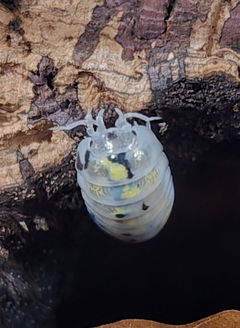
Cubaris sp. 'Bumblebee' Isopods for Sale
Care Info:
- Free shipping over £65
- Low stock - 1 item left
- Backordered, shipping soon
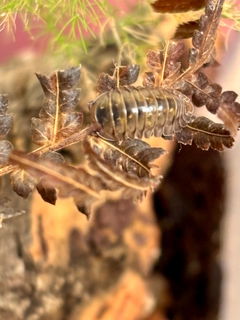
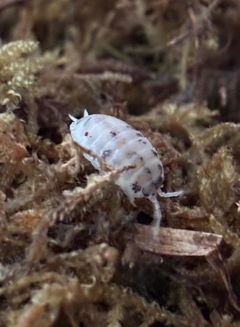
Cubaris sp. 'Bumblebee' is one of the most genuinely striking premium Cubaris in the UK hobby — and the name says it all. The body shows bold, contrasting bands of honey-yellow and black across the segmented carapace that genuinely resemble a bumblebee's classic warning pattern. It's instantly recognisable, properly distinctive, and one of the most photogenic Cubaris available. Combined with their conglobating ball-rolling behaviour and the natural sociability of a healthy colony, the Bumblebee is a real display showpiece for serious Cubaris keepers.
What makes the Bumblebee particularly worth keeping is exactly that aposematic-style colouration — the high-contrast yellow-and-black mimicry of a defended insect. Whether the visual mimicry serves any genuine protective function in the wild or is simply striking colouration that has evolved in their habitat is open to discussion, but visually they're properly captivating. They sit alongside other premium Thai Cubaris in your range — most notably the iconic Rubber Ducky (some keepers report Bumblebees are slightly more active and visible than Rubber Duckies), the bold Panda King, and the elegant Cappuccino.
Like other tropical Cubaris, they come from the warm forests of Thailand and need consistent warmth and humidity in captivity. They're rated Medium difficulty — accessible for keepers with some Cubaris experience but not a beginner species. Like all Cubaris, they conglobate (roll into a tight defensive ball) when disturbed.
Quick Care Summary
- Scientific Name: Cubaris sp. 'Bumblebee'
- Common Names: Bumblebee, Bumblebee Cubaris, Cubaris Bee
- Family: Armadillidae
- Genus: Cubaris
- Origin: Thailand
- Adult Size: Approximately 10–18 mm — a medium Cubaris
- Lifespan: 2–3 years typical
- Difficulty: Medium — not a beginner species; suits keepers with some Cubaris experience
- Temperature: 18–26°C (warm-preferring tropical Cubaris)
- Humidity: 70–80% — moist but NOT wet (a critical distinction)
- Ventilation: Medium — balance airflow with humidity retention
- Conglobation: Yes — rolls into a tight defensive ball
- Behaviour: Active, sociable; slightly more active than Rubber Ducky; mostly nocturnal but visible in dim conditions
- Breeding: Steady once established
- Rarity: Rare — sought-after premium Cubaris
What Makes Bumblebee Isopods Special
Several factors make the Bumblebee genuinely worth its premium status:
The honey-yellow-and-black banded pattern. This is the headline. Bold yellow stripes alternating with dark bands across the segmented body create an instantly recognisable bee-like look — sharp, warm-toned, and properly photogenic. There's a real visual punch to a colony of these against a dark naturalistic substrate.
An aposematic-style colour story. The yellow-and-black warning pattern is one of nature's most universally recognisable danger signals — used by genuine bees and wasps, as well as countless mimics across the insect world. The Bumblebee Cubaris carries that classic warning palette, which is part of what makes them so striking; whether it confers any protective function in the wild or simply reflects parallel evolution of bold contrast, it's a memorable look.
Slightly more active than Rubber Duckies. Among premium Cubaris, the Bumblebee is noted for being relatively visible and active — a useful advantage for display setups where you actually want to see your isopods. They explore more readily and tend to be out and about more than some of the more reclusive premium species.
A bridge between novelty Cubaris and the premium tier. While not as iconic as Rubber Ducky, the Bumblebee occupies a quietly desirable space in premium Cubaris collecting — distinctive, recognisable, and increasingly sought-after among collectors building a high-end Cubaris range.
Effective bioactive cleanup. Beyond their display appeal, they're effective detritivores — processing decaying matter and contributing to a healthy living soil ecosystem in bioactive setups.
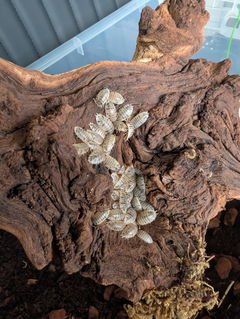
Calm temperament in colonies. They're peaceful and sociable, settling well into established groups — properly enjoyable to watch as a colony grows.
Conglobation. Like all Cubaris, they roll into a tight defensive ball when disturbed — the classic rounded Cubaris charm, here on a vividly-striped premium species.
How Bumblebee Compares to Other Premium Cubaris
If you're choosing between premium Cubaris, here's how the Bumblebee fits in:
- vs Rubber Ducky: The iconic premium Cubaris pair. Rubber Ducky shows the famous duck-face markings; Bumblebee shows bold honey-yellow-and-black banding. Both Thai, both premium, both medium difficulty — Bumblebees are typically a bit more visible and active. Natural display companions.
- vs Panda King: Both are bold-contrast premium Cubaris. Panda King shows black-and-white panda patterning; Bumblebee shows warm yellow-and-black bee bands. Different colour palettes, same premium tier — natural companions.
- vs Cappuccino: Cappuccino is the warm-toned coffee-brown premium Cubaris; Bumblebee is the sharper yellow-and-black contrast. Different aesthetics within the premium Thai Cubaris range.
- vs Cubaris murina: Cubaris murina is the easiest, most forgiving gateway Cubaris (in standard, Papaya, Anemone, and Mandarin morphs); Bumblebee is a step up in distinctiveness, premium status, and care requirements. Natural progression — murina first, then Bumblebee.
Browse the full Cubaris collection to compare all options in this popular genus.
Setting Up the Enclosure
A 6–10 litre plastic container with a secure clip-lock lid suits a starter colony. Cubaris appreciate consistent humidity, so aim for a setup that holds moisture while allowing medium ventilation — enough airflow to prevent stagnation without drying out the enclosure. The 3L Braplast tub works for starter colonies, with larger housing as the colony grows; our Braplast vent plugs help maintain humidity while preventing tiny mancae from escaping.
Provide plenty of hiding spots — cork bark, leaf litter, and decaying wood — to help the colony feel secure, which in turn promotes feeding and breeding. The bold yellow-and-black markings show particularly beautifully against darker, naturalistic substrate. Keep the enclosure out of direct sunlight. Browse our accessories collection for appropriate enclosures, vents, and other essentials.
Substrate
Use a substrate mix that retains moisture and provides calcium:
- Organic topsoil (pesticide-free) as the base
- Sphagnum peat moss and sphagnum moss for moisture retention
- Flake soil for added nutrition and structure
- Crushed limestone or eggshells worked throughout for calcium
- Decayed hardwood pieces and leaf litter mixed in
- Pieces of rotting white wood for nutrients
- A little sand for drainage and texture
We recommend a topsoil and sphagnum-based mix rather than coco coir. Substrate depth: at least 5 cm for burrowing and security.
Top layer: Generous hardwood leaf litter — magnolia leaves work particularly well for long-lasting cover. Add cork bark, decaying wood, and a sphagnum moss patch on the humid side. Plenty of cover encourages natural behaviour and helps the colony feel secure.
Humidity and Temperature — Moist Not Wet
The most important husbandry principle for Bumblebees is keeping them moist but NOT wet. This is a critical distinction that protects expensive stock — like other premium Cubaris, they suffer moulting issues and sudden colony die-offs if conditions become too damp or waterlogged, even though they need consistently humid air.
Maintain humidity around 70–80% with a moisture gradient — keep one side of the enclosure more humid (damp sphagnum moss, regular light misting of that area) while the drier side has leaf litter coverage and good airflow. The substrate should feel damp like a wrung-out sponge, never waterlogged. Mist the moist side as needed to maintain moisture; let the drier side breathe.
As one PostPods customer noted about following the website's care guidance for Cubaris-type isopods, proper instructions prevent the most common fatal mistake — too much moisture. With Bumblebees specifically, this matters more than with most species, because they're particularly sensitive to overwetting. When in doubt, err slightly drier and increase ventilation; never let the enclosure stay soaking.
Temperature should be 18–26°C — they're warm-preferring tropical Cubaris that appreciate stable conditions in the middle of the range. Room temperature in heated UK homes works well; avoid fluctuations and don't place the enclosure near heat sources or windows. If your home runs cold, a heat mat on a thermostat helps — position it on one side to maintain the gradient, never underneath (which dries the substrate).
Diet
Bumblebee isopods are detritivores feeding on the usual range of forest materials:
- Staples (always available): Hardwood leaf litter (oak, beech), decaying rotting wood, dried moss, and the substrate's organic matter
- Vegetables (1–2x weekly): Carrot, courgette, sweet potato, squash. Replace within 24–48 hours.
- Fruit (occasionally): Small amounts of soft fruit
- Protein (1–2x weekly): Fish flakes, dried shrimp. Browse our accessories collection for the full range of protein supplements.
- Calcium (essential — always available): Cuttlefish bone, crushed limestone, eggshells, oyster shell. Important for healthy moulting — provide a constant source.
Feeding approach: Maintain a base of leaf litter and decaying wood, supplementing with small amounts of vegetables, occasional fruit, regular protein, and a constant calcium source. Don't overfeed — excess fresh food spoils quickly in humid Cubaris conditions and can contribute to moulting issues. Remove uneaten fresh foods within 24–48 hours to prevent mould.
Breeding
Bumblebee isopods breed at a steady rate once established under stable conditions — building colonies reliably over time rather than explosively.
Breeding basics:
- Females brood eggs in a marsupium and release fully-formed live young
- The bold yellow-and-black banded colouration develops as juveniles mature
- A pure colony breeds the morph reliably
For breeding success:
- Consistent humidity (70–80%) — avoid fluctuations and overwetting
- Stable temperature (22–25°C is ideal)
- Plenty of calcium for breeding females
- Abundant hiding spots so the colony feels secure
- Regular protein supplementation
- A larger starter group establishes faster and provides genetic diversity
For more detailed care guidance on this species, see our blog post on caring for Cubaris Bumblebee isopods. As a steady breeder, the Bumblebee rewards patient, consistent husbandry with reliable colony growth — and a thriving colony of yellow-and-black banded isopods makes a genuinely striking display.
Pair With Springtails
Add a thriving springtail culture to any Bumblebee setup. Springtails handle mould and microbial growth at a scale isopods can't manage — particularly important in the humid conditions Cubaris require, and around fresh foods. They coexist peacefully with the Bumblebee and form an essential cleanup partnership.
Who Should Buy Bumblebee Isopods?
Ideal for:
- Keepers wanting a genuinely striking, distinctive premium Cubaris
- Those drawn to bold high-contrast yellow-and-black colouration
- Collectors building a premium Cubaris range (Rubber Ducky, Panda King, Bumblebee, Cappuccino)
- Display enthusiasts wanting a relatively visible Cubaris (more active than Rubber Ducky)
- Photographers — the colouration is properly photogenic
- Experienced Cubaris keepers ready for a Medium-difficulty species
Not ideal for:
- Complete beginners — start with hardier species like Cubaris murina first
- Keepers who tend to overwater (overwetting is a leading cause of die-offs in this species)
- Setups prone to humidity fluctuation (consistency matters)
- Cool rooms that can't provide the warmth they prefer
Realistic Expectations
The yellow-and-black banding is the main visual story. Set expectations toward the bold honey-yellow stripes on dark base — that bumblebee-like contrast is the genuine selling point. Pattern intensity may vary slightly between individuals.
They're Medium difficulty, not Easy. As a premium tropical Cubaris with sensitivity to overwetting, the Bumblebee requires more attentive husbandry than gateway species like Cubaris murina. Set expectations realistically — they reward careful keeping but punish neglect or overwet conditions.
They want moisture, not water. The "moist not wet" balance is the critical husbandry skill with this species. A consistently damp but never waterlogged enclosure is the target.
Consistency matters most. The key husbandry point is stable, medium-to-high humidity and steady warmth — avoid fluctuations and arid conditions, both of which are damaging.
They're rare and premium. Set expectations toward limited stock and premium status — this is a collector's species, not a budget cleanup crew.
Building Your Setup
A complete Bumblebee setup needs a humidity-retentive, calcium-rich substrate, abundant calcium sources, generous leaf litter, plenty of cork bark hides, and protein supplements. Browse our accessories collection for everything you need — enclosures, ventilation, leaf litter, calcium (cuttlebone, limestone, oyster shell), and protein supplements.
Browse the full Cubaris collection for more species and morphs across this popular genus.
Use collapsible tabs for more detailed information that will help customers make a purchasing decision.
Ex: Shipping and return policies, size guides, and other common questions.