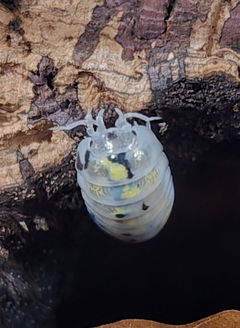
Four-Spotted Jade Roach (Eustegasta buprestoides) for Sale
Care Info:
- Free shipping over £65
- In stock, ready to ship
- Backordered, shipping soon
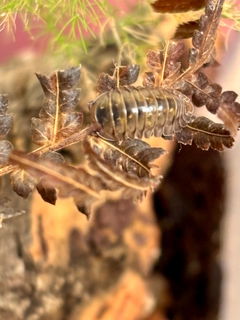
The Four-Spotted Jade Roach is one of the more visually striking smaller cockroaches available in the UK hobby — a Central African species with a lustrous jade-green base colour punctuated by four distinct golden-yellow spots arranged symmetrically across the wing covers. The metallic sheen on the exoskeleton catches light at different angles, shifting between emerald and bronze tones, and the symmetrical four-spot pattern is genuinely distinctive once you know what to look for. Combined with the species's manageable size and steady breeding behaviour, this is a properly approachable display roach for keepers ready to step beyond the most common starter species.
This is part of our wider cockroach collection and pairs well alongside our other small-to-medium display roaches — the iridescent Emerald Cockroach (Pseudoglomeris magnifica), the metallic blue Sapphire Flower Cockroach (Eucorydia yasumatsui), and the larger Giant Flower Cockroach (E. dasytoides). For collectors building a focused jewel-roach collection, E. buprestoides brings something different — the spot pattern rather than the bands or solid metallic surfaces of the Eucorydia and Pseudoglomeris species.
One honest framing point up front. E. buprestoides is broadly easy to keep but has a few specific quirks that matter. Adults can climb and can fly, so escape-proofing is essential — both an airtight lid and a smooth climbing barrier inside the rim are standard. Small brood sizes and slow nymph development mean colony establishment takes time. To set things up properly from the start, browse our accessories collection for the chunky substrate components, supplementary foods, and cover this species depends on.
Quick Care Summary
- Scientific Name: Eustegasta buprestoides (Walker, 1868)
- Common Name: Four-Spotted Jade Roach
- Family: Blaberidae (superfamily Blaberoidea); originally described as Epilampra buprestoides
- Origin: Central and West Africa — recorded from Cameroon, Gabon, Equatorial Guinea (Bioko Island), and the Democratic Republic of the Congo
- Adult Size: 20–25 mm typical in hobby stock; some sources record smaller (12–15 mm) which may reflect different captive lines or measurement conventions
- Lifespan: Adults 3–6 months after maturity; females live noticeably longer than males
- Difficulty: Easy to medium — straightforward husbandry but slow to establish a productive colony
- Temperature: 22–28 °C; warmer end (24–28 °C) supports faster development and better breeding
- Humidity: Moderate — substrate kept humid but not wet
- Ventilation: Moderate to high — they aren't particularly picky in this regard
- Climbing: Adults are good climbers — airtight lid plus internal climbing barrier required
- Flying: Adults can fly — escape-proofing genuinely matters
- Activity: Primarily nocturnal; will come out during the day in established colonies, particularly when food is offered
- Appearance: Lustrous jade-green base colour with metallic sheen; four distinct golden-yellow spots arranged symmetrically on the wing covers; iridescent quality under lighting shifts between emerald and bronze tones
- Sexual dimorphism: Males slightly smaller and more slender than females
- Reproduction: Ovoviviparous — gives birth to live young; typically around 12 nymphs per brood; gestation 1.5–2 months
- Nymph development: Approximately 7–8 months from birth to maturity
- Rarity: Uncommon in the UK hobby; relatively common in international culture
What Makes the Four-Spotted Jade Roach Special
The symmetrical spot pattern is genuinely distinctive. Where most metallic cockroach species rely on solid colour blocks, bands, or wing-edge contrast, E. buprestoides displays four clear yellow-gold spots arranged symmetrically across the wing covers — two on each side. The pattern is consistent enough to give the species its common name and to make individual animals immediately recognisable in a mixed-cockroach collection. Combined with the jade-green metallic base, the result is a properly different aesthetic from the rest of the hobby.
The metallic sheen has depth to it. The exoskeleton isn't just green — it shifts visibly between emerald, jade, and bronze tones depending on the lighting angle. Under direct light the bronze undertones come forward; in softer lighting the jade reads more cleanly. This iridescent quality means the animals look noticeably different in different setups and lighting conditions, which adds to their interest as a display species.
The Central African heritage is unusual in the hobby. Most metallic cockroaches available to UK keepers come from Southeast Asia (the Eucorydia species) or the Caribbean. E. buprestoides brings a different geographic origin — the equatorial forests of Cameroon, Gabon, and the Congo basin — and a different evolutionary background that's reflected in its specific care preferences (humid but well-ventilated substrate, fruit-and-veg-heavy diet rather than leaf-litter staple).
The species has a quiet temperament. Like many display roaches but more so, E. buprestoides is calm, peaceful, and doesn't react aggressively to disturbance. They're not particularly fast runners compared to wild-type cockroaches, and they don't bite or have noticeable defensive behaviours beyond the usual hiding response. For keepers interested in cockroaches as observable animals rather than feeder insects or pest species, this kind of temperament is a real advantage.
The display-roach cluster. Within our cockroach catalogue, E. buprestoides brings spot-pattern aesthetics to a collection that otherwise leans heavily on solid metallic species (Emerald, Sapphire Flower, Giant Flower) or sized-up African species (Simandoa). It's the right addition for keepers wanting visual variety within a focused metallic-roach collection.
About the Name
A brief clarification on the species's nomenclature and history.
- Eustegasta buprestoides: The current scientific binomial. The species epithet "buprestoides" references buprestid beetles (jewel beetles), which the species superficially resembles in its metallic colouration and spot patterning.
- Epilampra buprestoides: The original 1868 description by Walker; reclassified to Eustegasta by Princis in 1963.
- Four-Spotted Jade Roach / Four-Spotted Jade Cockroach: The standard hobby trade names, describing both the spot pattern and the metallic green colouration.
- Original description: Walker, F. (1868) in Catalogue of the Specimens of Blattariae in the Collection of the British Museum, with the type specimen held at the Natural History Museum, London.
- Taxonomic placement: Family Blaberidae (the live-bearing cockroaches), within superfamily Blaberoidea.
Setting Up the Enclosure
A 5-litre container suits a starter culture of 10–15 nymphs; a 10–20 litre tank or tub works well for a permanent colony. E. buprestoides adults are competent climbers and capable of short flights, so escape-proofing is genuinely necessary rather than a precaution. The right setup combines two features: an airtight lid (ideally clip-locked or with foam-sealed edges) and a smooth climbing barrier around the inside rim of the enclosure — typically a band of petroleum jelly or a strip of smooth plastic that adults can't grip. Ventilation holes should be covered with fine mesh sized small enough that newly-emerged nymphs (3–4 mm) can't squeeze through.
Moderate to high ventilation is preferred but the species isn't particularly picky in this regard. Cross-ventilation between opposing sides works well. Don't undersize ventilation in pursuit of humidity retention — Blaberidae generally do better with proper airflow than with stagnant humid setups.
Hides are technically unnecessary for this burrowing species, but provide them anyway for display purposes. Cork bark, lotus pods, and decaying hardwood pieces all work well. Browse our accessories range for cork bark, lotus pods and other natural cover options. Adults will climb on above-ground structures and rest on cork bark vertical pieces, even though they spend most of their time burrowing.
Important husbandry note: Skip the standing water dish. Misting and substrate moisture provide all the hydration this species needs, and standing water in the warm humid setup adds drowning risk for nymphs without practical benefit.
Substrate
This is the central setup detail for E. buprestoides. Substrate depth and composition matter genuinely more than for most cockroach species:
- 5–10 cm depth of chunky, loose substrate — this is critical. Compacted substrate makes burrowing impossible for the small, fragile nymphs and is one of the documented causes of colony collapse in this species.
- Base of coconut fibre, sphagnum peat, or pesticide-free potting soil — available in our accessories range
- Mixed with chunkier components: coco coir chunks, mulch, decaying hardwood crumbles, or orchid bark — to maintain loose structure
- White rotten hardwood incorporated through the substrate — consumed with enthusiasm by this species when offered, more so than leaf litter
- A small amount of sphagnum moss for moisture retention in one corner
- Springtails inoculated into the substrate to consume droppings and food waste
Keep the substrate humid but not wet. Soggy conditions encourage fungal issues; properly damp substrate that crumbles in the hand without dripping is the right consistency. If the substrate compacts as it ages, that's a sign to refresh it — compacted substrate is the most likely reason a previously stable colony will start to fail.
Top layer: leaf litter is optional rather than essential. Unlike most isopods and many cockroaches, E. buprestoides doesn't depend on leaf litter for food. White rotten hardwood is consumed with much more enthusiasm.
Humidity and Temperature
Maintain moderate humidity with the substrate kept consistently damp rather than wet. Mist one side of the enclosure twice weekly to create a moisture gradient — animals can choose damper or drier conditions as they prefer. Air humidity in the 60–70% range works well. Good ventilation alongside the moderate humidity is the right combination; high humidity plus stagnant air is the failure mode.
Temperature should be 22–28 °C. The species tolerates a wider temperature range than many tropical cockroaches and can handle brief drops to around 18 °C without serious issue, making them more forgiving of UK room-temperature variation than the strictly warm-loving Cubaris isopods or Pseudoglomeris cockroaches. That said, the warmer end of the range (24–28 °C) is genuinely better for breeding and nymph development — most UK keepers benefit from a low-wattage heat mat on a thermostat to support the warmer end during cooler months. Side-mounted heating creates a thermal gradient and avoids overheating substrate where nymphs spend most of their time.
Diet
E. buprestoides has a more varied and omnivorous diet than typical detritivorous roaches — the species's natural diet leans towards fruits, soft vegetation, and protein-rich items rather than leaf litter and rotting wood alone:
- Dry dog food or premium cat food — works well as a staple in the wild-type diet. The animals consume it readily and it provides balanced nutrition without spoilage risk.
- Fresh fruit — apple, banana, mango, melon, pear. Replace within 24–48 hours.
- Fresh vegetables — carrot, sweet potato, courgette, squash. Replace within 24–48 hours.
- White rotten hardwood — the species's preferred secondary food, consumed with noticeable enthusiasm
- Bee pollen and protein supplements — fish flakes, dried mealworms, dried shrimp offered occasionally. Browse the protein options in our accessories collection.
- Dried mushrooms and lichen — well-received supplementary foods when available
- Calcium sources — cuttlebone, crushed limestone as background availability. Our calcium options cover the full range.
- Leaf litter — optional. Eaten in small quantities but not a dietary staple for this species; don't rely on it as the foundation of feeding.
Feed 2–3 times weekly. Position fresh food on dishes or leaves rather than directly on substrate to make removal of uneaten portions easier and reduce mould risk in the humid setup. Established colonies will come out to feed during the day when food is offered, providing more observation opportunities than purely night-active species.
Breeding
E. buprestoides is ovoviviparous — females retain developing young internally and give birth to live nymphs rather than laying egg cases. Gestation runs approximately 1.5–2 months depending on temperature, with brood sizes typically around 12 nymphs at 3–4 mm in length. Newborn nymphs immediately burrow into substrate for safety and feed nocturnally during their first weeks.
For breeding success:
- Stable temperature in the warmer half of the range (24–28 °C is ideal for active breeding)
- Loose, chunky substrate at proper depth — this is the most important husbandry detail for nymph survival
- Consistent moisture without saturation
- Mixed-age colony — given the 7–8 month nymph-to-adult timeline and the offset male/female lifespans, maintaining nymphs alongside adults supports continuous breeding
- Springtails inoculated to manage waste and prevent filth buildup
- Avoidance of substrate compaction — refresh substrate components if it starts feeling dense rather than loose
- Minimal disturbance of substrate — nymphs are fragile and easily crushed by careless digging
- Patience — small broods and slow nymph development mean colony expansion is steady rather than rapid
Brood sizes are smaller than many tropical cockroaches, and nymph development is slower than feeder roach species. This combination means colonies are properly slow to start — a successful starter culture might take a year or more before becoming reliably productive. Once established, breeding is fairly stable and consistent rather than spectacular.
Who Should Buy Four-Spotted Jade Roaches?
Ideal for:
- Display enthusiasts drawn to spotted-pattern aesthetics rather than solid metallic species
- Keepers building a focused metallic-roach collection alongside the Emerald, Sapphire Flower, and Giant Flower species
- Intermediate keepers ready for a species with slightly more specific substrate requirements than starter roaches
- Anyone interested in African invertebrates — Central/West African roach species are relatively uncommon in UK culture
- Long-term project keepers comfortable with slow colony establishment
- Bioactive setup enthusiasts — they coexist well with isopods and springtails, occupying slightly drier substrate areas than most isopod species prefer
Not ideal for:
- Complete beginners — Madagascar Hissers or other hardier roach species are easier starting points
- Keepers without a properly escape-proof enclosure — climbing and flying ability make a sealed lid plus internal climbing barrier necessary
- Setups where substrate quality can't be properly maintained — compaction kills colonies
- Anyone wanting fast colony expansion — the 7–8 month nymph development and ~12 nymph brood size mean colonies grow slowly
- Keepers wanting a leaf-litter-based diet species — they prefer fruit, veg, and rotting wood over leaf litter
Realistic Expectations
The escape-proofing is genuinely necessary. Some hobby sources describe this species as non-climbing or flightless, but more thorough keeper accounts consistently report that adults are capable climbers and capable of short flights. Treat escape-proofing as a setup requirement rather than an optional precaution: airtight lid, internal climbing barrier (petroleum jelly or smooth plastic strip), and fine mesh on ventilation holes. The animals are small enough that they can squeeze through surprisingly small gaps — ventilation hole diameter no greater than about 2 mm is standard advice.
Substrate matters more than for most species. Compacted substrate is the documented colony-killer for E. buprestoides. Small nymphs need to burrow through loose substrate to survive, and dense or compacted material makes that impossible. Refresh substrate components periodically if you notice it settling into a denser form than when first set up. A loose, chunky mix with good structure is non-negotiable rather than ideal.
Don't overdig the enclosure. Nymphs spend much of their early development burrowed into the substrate, and careless digging during maintenance can crush them. Spot-clean from the surface rather than excavating; substrate refreshes should happen by adding new material on top rather than turning over the existing substrate aggressively.
Colony growth is steady, not explosive. New keepers used to feeder roaches (Dubia, Red Runners, Hissers) can be surprised by how slowly E. buprestoides colonies grow. The combination of small brood sizes and slow nymph development means even successful colonies expand at a manageable pace rather than overwhelming the enclosure. For collectors, this is a feature; for anyone wanting feeders, it's a sign this is the wrong species.
The four spots vary slightly between individuals. The pattern is consistent enough to be diagnostic for the species, but individual variation in spot size, intensity, and exact position is normal. Don't expect every animal to look identical — the slight variation adds to the visual interest of an established colony.
They're not feeder insects. Despite being a relatively small roach, the slow breeding rate, long nymph development, and display value make E. buprestoides entirely unsuitable for use as feeder insects. This is a display species in the same category as the other metallic roaches in our catalogue.
Use collapsible tabs for more detailed information that will help customers make a purchasing decision.
Ex: Shipping and return policies, size guides, and other common questions.