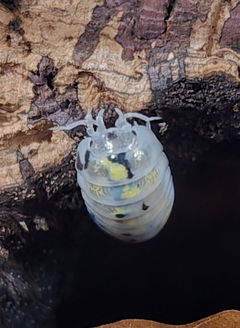
Giant Banahoa Isopods (Fillipinodillo sp.) for Sale
Care Info:
- Free shipping over £65
- In stock, ready to ship
- Backordered, shipping soon
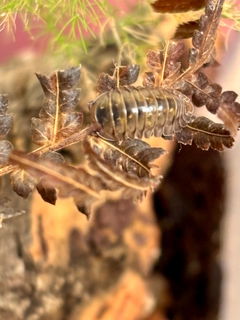
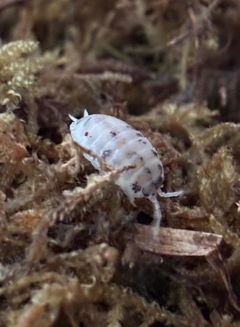
Fillipinodillo sp. 'Giant Banahoa' is one of the more genuinely impressive premium Philippine isopods in the international hobby — a substantial Armadillidae-family species from the Mount Banahaw region of the Philippines, distinctive for its almost armoured-looking body and intricate rusty-toned segmentation patterns. Properly substantial conglobating Asian isopod that sits among the catalogue's flagship-tier acquisitions.
This is the sibling listing to our Fillipinodillo sp. Nakar — same genus, different Philippine locality. Together they showcase the genus across two distinct Philippine localities: Banahoa (Mount Banahaw) and Nakar. Properly compelling for collectors building a focused Philippine-isopod collection. Browse the full Fillipinodillo collection for the complete genus range we stock.
One important honest note up front. This is a properly challenging species — not a beginner pick despite occasional retailer framing suggesting otherwise. The Fillipinodillo genus has limited published care literature, husbandry is consistency-sensitive, and acquisition cost reflects genuine rarity. Master Cubaris murina or other beginner-tier species first before considering this listing.
Quick Care Summary
Note: this listing's care icons couldn't be verified by direct page access. Care figures below reflect The Bug Room, isopods.co.uk, and other authoritative UK breeder sources for Fillipinodillo sp. 'Giant Banahoa'; verify against the icons on the live product page before finalising your setup.
- Scientific Name: Fillipinodillo sp. 'Giant Banahoa' (undescribed species; UK hobby spelling. Note: the formally-described scientific genus is spelled Filippinodillo Schmalfuss, 1987 — one 'l', two 'p's — though both spellings are widely used)
- Family: Armadillidae
- Origin: Mount Banahaw region, Philippines — Southeast Asia. "Banahoa" is an informal hobby-spelling variant of the Philippine mountain name Banahaw.
- Adult Size: 15–25 mm (substantial for a Fillipinodillo)
- Lifespan: 2–3 years typical
- Difficulty: Intermediate to Advanced — properly challenging, with limited published care literature for the genus
- Temperature: 18–26°C — broadly tolerant within room-temperature range
- Humidity: 60–75% — critical for this genus; consistent humidity is the single most important husbandry parameter
- Ventilation: Moderate — balance airflow with humidity retention
- Conglobation: Yes — rolls into a defensive ball when threatened
- Appearance: Substantial armoured-looking body with intricate rusty-toned patterning across segmented exoskeleton; properly distinctive Armadillidae body form
- Behaviour: Slower-moving than typical Cubaris; primarily nocturnal; reclusive when small, more visible as colonies establish
- Breeding: Slow but reliable under stable conditions
- Rarity: Very Rare in the UK hobby
What Makes 'Giant Banahoa' Special
The Mount Banahaw provenance. Banahaw (anglicised as Banahao, hobby-spelled Banahoa or Banahoo) is a properly significant Philippine mountain — a major biodiversity locality on the island of Luzon. The mountain hosts multiple endemic species across different invertebrate and vertebrate groups, including the Mount Banahaw forest mouse (Apomys banahao), the Banahao forest frog, and various other locality endemics. The 'Giant Banahoa' Fillipinodillo is the hobby's representative from this mountain's invertebrate fauna — genuinely substantial geographic provenance, not a fabricated trade name.
The armoured aesthetic. Where most premium Cubaris emphasise either bold colour contrast (Rubber Ducky, Dairy Cow) or pastel subtlety (Ice Flower, Pastel), the Giant Banahoa shows a properly different aesthetic — substantial body proportions with intricate rusty-toned segmentation that produces an almost armoured appearance. The visual sits distinctly outside the standard Cubaris aesthetic categories.
The Schmalfuss 1987 taxonomic provenance. The Filippinodillo genus was formally described by German isopodologist Helmut Schmalfuss in 1987, with type species Filippinodillo maculatus from Cebu island. Only four species are formally described: F. maculatus, F. kimberleyensis, F. flavimaculis, and F. palawanensis. The 'Giant Banahoa' is an undescribed hobby species — properly part of the genus but not yet formally diagnosed in the scientific literature. Genuine taxonomic frontier.
The complementary cluster with Nakar. Fillipinodillo sp. Nakar is the genus sibling from a different Philippine locality — same genus, different locality form, comparable care, distinct visual identity. Keeping both gives you the genus across two locality lines, a properly satisfying focused collection from a niche genus.
Honest difficulty framing. Some online sources frame Fillipinodillo as "easy for some, very difficult for others" — the reality is closer to "intermediate to advanced." The genus has limited published care literature, husbandry is humidity-sensitive, and unsuccessful establishment is documented across multiple keeper reports. We recommend treating these as a serious specialist acquisition rather than a hobby-tier purchase.
For background on the wider isopod hobby and how the various genera compare, see our useful articles section in the blog.
About the Spelling
You'll see this species referenced under multiple spellings across the international hobby — properly worth a clarification.
- Genus: The formally-described scientific genus is Filippinodillo (Schmalfuss 1987) — one 'l', two 'p's — per Wikipedia, WoRMS, and ITIS. The UK hobby (including PostPods) widely uses Fillipinodillo with double 'l'. Both spellings refer to the same genus.
- Locality: The Philippine mountain is properly spelled Banahaw or Banahao. The hobby uses "Banahoa" and "Banahoo" as informal phonetic renderings. All refer to the same Mount Banahaw region of Luzon.
If you're researching in scientific sources, search for "Filippinodillo" and "Banahaw." If you're searching the hobby community, both spellings of each return relevant results.
Setting Up the Enclosure
A 10–15 litre plastic container with a secure clip-lock lid suits a starter colony of 5–10 individuals. Drill ventilation holes on opposite sides for cross-ventilation, covered with fine mesh. Fillipinodillo appreciate moderate ventilation — enough airflow to prevent stagnation without compromising the high humidity they require. Get this balance right and the species establishes well; get it wrong and colonies collapse.
Provide multiple hiding spots — cork bark flats, decaying wood, flat stones, ceramic hides. Substantial isopods need substantial cover. Keep the enclosure out of direct sunlight.
Important husbandry note: Don't provide a standing water dish. Misting and a moist corner provide all the moisture they need — open water risks drowning small individuals and encourages mould in the high-humidity setup. Skip the water dish.
Substrate
Use a moisture-retentive tropical substrate mix:
- Organic topsoil (pesticide-free) as the foundation
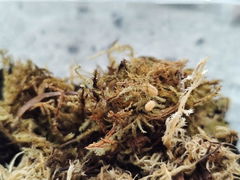
- Sphagnum moss for the moist section and overall moisture retention
- Composted hardwood leaf litter mixed throughout
- Flake soil for added nutrition and structure
- Crushed limestone or oyster shell distributed throughout for calcium
- Rotting hardwood pieces (important nutrition source)
We recommend a topsoil and sphagnum-based mix rather than coco coir. Substrate depth around 8–10 cm gives them room to burrow and supports moisture-gradient stability — particularly important for this humidity-sensitive genus.
Top layer: generous hardwood leaf litter — oak, beech, magnolia — plus cork bark for cover. Maintain the moisture gradient carefully.
Humidity and Temperature
Maintain humidity around 60–75% with a clear moisture gradient — keep one-third of the enclosure consistently damp using sphagnum moss while the rest stays slightly drier with leaf litter coverage. The substrate should feel damp like a wrung-out sponge, never waterlogged. Humidity is documented as the single most critical care parameter for Fillipinodillo — get this right and the rest follows.
Temperature should be 18–26°C — broadly within UK room temperature year-round. They handle the cooler end without difficulty and breeding picks up in the warmer range. No supplementary heating required in most heated UK homes; avoid placement near heat sources or windows where temperatures fluctuate significantly.
Diet
Giant Banahoa are unfussy detritivores feeding on the typical Asian isopod range:
- Hardwood leaf litter (oak, beech, magnolia) — the dietary foundation, always available
- Rotting hardwood pieces — important nutrition source
- Vegetables 1–2x weekly: carrot, courgette, sweet potato, squash. Replace within 24–48 hours.
- Fruit occasionally (small amounts of soft fruit)
- Protein 1–2x weekly: fish flakes, dried shrimp, dried daphnia. Feed protein on the drier side of the enclosure to prevent spoilage in high humidity.
- Calcium (essential — always available): cuttlefish bone, crushed limestone, oyster shell, eggshells.
Don't overfeed — excess fresh food spoils quickly in tropical humid conditions and damages air quality in enclosures. The species's slower metabolism means it processes food more gradually than active beginner species.
Breeding
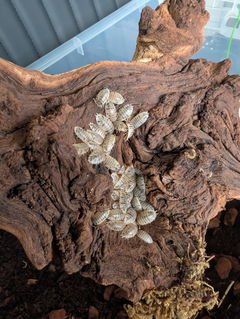
Giant Banahoa breed slowly but reliably under stable conditions. The genus is documented as slower-breeding than typical Cubaris, with longer intervals between broods and smaller brood sizes. Specifics for this particular undescribed species aren't well-documented in published sources — keeper observation contributes meaningfully to community understanding.
For breeding success:
- Stable temperature in the warmer range (22–26°C is ideal for peak breeding)
- Consistent humidity (65–75%) — avoid fluctuations
- Deep substrate (8–10 cm) for burrowing
- Abundant calcium for breeding females
- Regular protein supplementation
- Plenty of secure hiding spots
- Larger starter groups establish faster and provide genetic diversity for long-term colony health
Young inherit the species's rusty patterning from birth, with colour intensifying through successive moults as juveniles mature.
Who Should Buy 'Giant Banahoa' Isopods?
Ideal for:
- Experienced isopod keepers seeking properly distinctive species beyond the standard Cubaris and Porcellio catalogue
- Display enthusiasts drawn to substantial armoured-looking isopods with intricate segmentation
- Collectors building a Philippine-locality cluster (Giant Banahoa + Fillipinodillo Nakar for the genus pair)
- Naturalists interested in undescribed hobby species and the taxonomic frontier of Fillipinodillo
- Keepers comfortable with limited published care data and willing to observe carefully
- Anyone investing in a premium acquisition with proper geographic provenance from the Philippines
Not ideal for:
- Complete beginners — start with Cubaris murina or other beginner species first
- Keepers wanting reliable established husbandry data — these are properly under-documented
- Anyone expecting fast breeding or prolific colonies — the genus is slow
- Setups prone to humidity fluctuation — Fillipinodillo are humidity-sensitive
- Customers wanting bold colour visual — the Giant Banahoa aesthetic is substantial and armoured, not vivid
Realistic Expectations
They're properly challenging. Fillipinodillo has limited published care literature, and the genus is humidity-sensitive enough that unsuccessful establishment is documented across multiple keeper reports. Set expectations toward "serious specialist acquisition" rather than "easy display species." If husbandry consistency is challenging for your current setups, master easier species first.
They're slower-moving. Don't expect bold active foraging like P. laevis or Powder Orange. The Giant Banahoa is a slow-moving, reclusive species that becomes more visible only with larger established colonies and consistent care.
The colouration is substantial, not vivid. Rusty tones across an armoured-looking body — properly distinctive but not the saturated colour palettes of premium Cubaris or selectively-bred Porcellio morphs.
Breeding is slow. Plan for patient colony establishment over many months rather than rapid expansion. The species's slow breeding is part of why it remains rare and premium-priced in the UK hobby.
The spelling variations are real. Both "Fillipinodillo" and "Filippinodillo" refer to the same genus. Both "Banahoa" and "Banahaw" refer to the same Philippine mountain. Use whichever spelling matches the context (hobby community or scientific literature).
This is an undescribed species. 'Giant Banahoa' is a hobby trade designation, not a formal taxonomic identification. The genus is well-established, but this specific Mount Banahaw form hasn't been formally described in the scientific literature. Properly part of the genus, but operating at the taxonomic frontier.
Use collapsible tabs for more detailed information that will help customers make a purchasing decision.
Ex: Shipping and return policies, size guides, and other common questions.