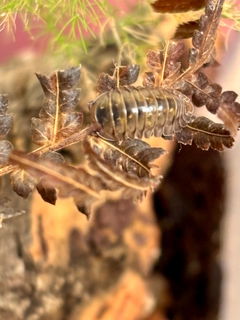
Giant Italian Isopods (Armadillidium)
Giant Italian Isopods for sale
Giant Italian Isopods
Armadillidium Giant Italian Isopods
Armadillidium Giant Italian Isopod
Armadillidium Giant Italian Isopods for sale

Armadillidium vulgare 'Big Italy' (Giant Italian) Isopods for Sale

Care Info:

Origin icon ORIGIN
ITALY
Temperature icon TEMP
18-27 ℃
Humidity icon HUMIDITY
50-70 %
Length icon LENGTH
20+ mm
Difficulty icon DIFFICULTY
EASY
Rarity icon RARITY
RARE
Regular price£25.00
/
Tax included. Shipping calculated at checkout.

Quantity
  • Free shipping over £65
  • In stock, ready to ship
  • Backordered, shipping soon

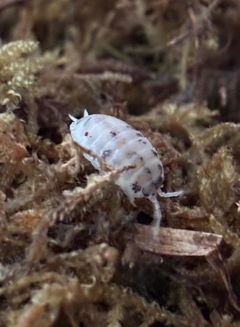
Armadillidium vulgare 'Big Italy', commonly known as the Giant Italian Isopod, is an Italian locality of the world's most successful terrestrial isopod — selectively-bred to express the larger body size that some Italian populations naturally show. While standard pill bugs reach around 10–18 mm, Big Italy specimens regularly exceed 20 mm, giving them a genuinely substantial presence and making them one of the largest A. vulgare locality variants in the UK hobby. They retain everything that makes the common pill bug such a reliable keep — hardy temperament, classic conglobation, easy care, drought tolerance — but with the added visual impact of properly substantial adults.

A. vulgare itself is arguably the most successful terrestrial isopod on the planet. Originally from the Mediterranean, it has spread to every continent except Antarctica, thriving in gardens, forests, and urban environments worldwide. Most people have encountered them — they're the classic "roly-poly" or "pill bug" that rolls into a ball when disturbed. The Big Italy locality represents Italian populations bred to express the larger end of that species' natural size range, and the result is an isopod that's instantly familiar but noticeably more substantial.

They sit naturally alongside other Italian Armadillidium in the PostPods range — particularly A. gestroi and its 'Milky Way' selective morph, plus the Northern Italian A. tirolense 'Lake Garda' — and within the broader A. vulgare morph cluster alongside Magic Potion and the T+ Albino. Like all Armadillidium, they conglobate into a tight defensive ball when disturbed — and that classic rolling behaviour is genuinely more impressive at 20+ mm.

Quick Care Summary

  • Scientific Name: Armadillidium vulgare 'Big Italy'
  • Common Names: Giant Italian, Big Italy, Italian Giant Pill Bug
  • Family: Armadillidiidae
  • Origin: Italy (locality variant; captive-bred)
  • Adult Size: 20+ mm — substantially larger than the typical A. vulgare 10–18 mm
  • Lifespan: 2–5 years; 2–3 years typical
  • Difficulty: Easy — the most forgiving Armadillidium for beginners
  • Temperature: 18–27°C; tolerates wider range (near freezing to 37°C)
  • Humidity: 50–70% with a moisture gradient
  • Ventilation: Medium
  • Conglobation: Yes — tight, complete spheres
  • Sexual Dimorphism: Yes — males typically gunmetal grey; females brown with yellowish markings
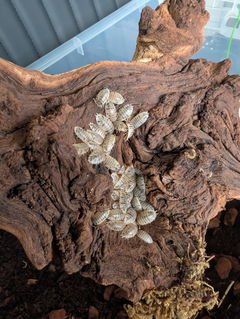
  • Behaviour: Active day and night; highly social; aggregating in groups of up to 200
  • Breeding: Steady year-round in stable conditions
  • Rarity: Rare — limited locality stock in the UK hobby

What Makes Big Italy Isopods Special

Several factors make the Big Italy a properly worthwhile A. vulgare:

The size. This is the headline. At 20+ mm, they're substantially larger than standard pill bugs and noticeably bigger than most popular A. vulgare morphs. The difference isn't subtle — adult Big Italies have real presence, and the classic conglobation is genuinely more impressive on a larger isopod. Watching a 20+ mm pill bug curl into a perfect sphere is properly satisfying.

Genuinely easy. A. vulgare is the species against which beginner isopods are measured. They tolerate near-freezing temperatures up to 37°C, handle dramatic humidity variation, and forgive most husbandry mistakes. Hardy, adaptable, and reliable — ideal for first-time isopod keepers who want something substantial.

Drought tolerance. Remarkably, A. vulgare can survive 0% humidity for periods that would kill most isopods. Research shows that conglobation also reduces water loss significantly — when curled into a ball, exposed surface area drops and moisture is retained. This makes them genuinely tolerant of less-than-perfect conditions.

Fascinating biology. They engage in coprophagy — eating their own droppings — to recover copper for the haemocyanin in their blood. (Unlike vertebrates whose blood uses iron-based haemoglobin, isopods carry oxygen using a copper-based pigment, and they need to recycle the copper.) It's a genuinely interesting bit of natural history that the species illustrates well.

Highly social with aggregation pheromones. They release attractant chemicals that draw conspecifics together, leading to clusters of up to 200 individuals under favoured hiding spots — these aggregations create their own humid microclimates. Watching the colony cluster and disperse based on conditions is a quiet pleasure of keeping them.

Visible sexual dimorphism. Adult males are typically gunmetal grey; females are brown with yellowish markings — sexing is straightforward at maturity, useful for breeders and naturalists alike.

Conglobation. Tight, complete spheres when disturbed — the classic roly-poly behaviour at impressive size.

How Big Italy Compares to Other Armadillidium and Italian Species

If you're choosing between large or Italian Armadillidium, here's how Big Italy fits in:

  • vs Magic Potion (A. vulgare): Same species, very different look. Magic Potion is the smaller pale-toned A. vulgare morph (~15 mm); Big Italy is the larger Italian locality (20+ mm) with classic vulgare colouration. Same care, different size and palette.
  • vs A. vulgare T+ Albino: Both are A. vulgare variants. T+ Albino is the smaller orange-gold albino morph; Big Italy is the larger Italian wild-type locality. Different colour philosophies, same easy care.
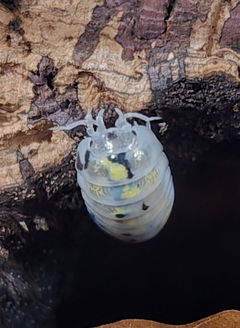
  • vs A. gestroi: Both are large Italian Armadillidium. A. gestroi shows rows of yellow spots on a darker body and is a coastal Mediterranean species; Big Italy is the larger common pill bug from inland Italian populations. Natural Italian Armadillidium companions.
  • vs A. gestroi 'Milky Way': Both are large Italian Armadillidium morphs. Milky Way is the UK-bred speckled-pattern gestroi; Big Italy is the size-focused vulgare locality. Different selection priorities (pattern vs size), same Italian heritage.
  • vs Lake Garda (A. tirolense): Both are Italian Armadillidium with substantial size. Lake Garda is the Northern Italian sub-Alpine neon-and-black species; Big Italy is the size-maximised common pill bug. Both Italian, very different aesthetics.

Browse the full Armadillidium collection to compare all species and morphs.

Setting Up the Enclosure

Big Italy adults benefit from slightly more space than smaller species, given their larger body size and tendency to aggregate in groups. A 12-litre container suits a starter colony; established colonies thrive in 25+ litre setups or larger terrariums where they can spread and show natural aggregation behaviours. The 3L Braplast tub works only for the smallest starter groups; this species genuinely benefits from more space.

Drill ventilation holes on opposite sides for cross-ventilation, covered with fine mesh. Medium ventilation suits them — they handle airflow better than tropical species. Provide plenty of hides — cork bark flats, leaf litter, decaying wood, and flat stones — where they'll cluster in their characteristic aggregations. Browse our accessories collection for appropriate enclosures, vents, and other essentials.

Substrate

Build a basic moisture-retentive substrate appropriate for this hardy Mediterranean species:

  • Organic topsoil base (pesticide-free) as the foundation
  • Sphagnum peat moss mixed throughout for moisture retention
  • Crushed limestone or eggshells distributed throughout for calcium — particularly important for substantial adults
  • Flake soil mixed in for added nutrition
  • Decaying hardwood pieces and rotting wood incorporated throughout

We recommend a topsoil and sphagnum-based mix rather than coco coir. Substrate depth: 5–8 cm for burrowing — they'll dig into substrate during dry periods to find suitable moisture.

Top layer: Generous hardwood leaf litter — magnolia leaves, oak, and beech all work well — plus cork bark flats and decaying wood for hides. Flat stones or bark slabs create the kind of preferred aggregation spots where colonies cluster.

Humidity and Temperature

Maintain 50–70% humidity with a moisture gradient — keep one-quarter to one-third of the enclosure damp with sphagnum moss and damp leaf litter, with the rest drier and well-ventilated. The Big Italy is genuinely drought-tolerant — they handle drier conditions better than almost any other isopod — but they still appreciate access to moist areas and will migrate between zones based on their hydration needs. Provide the gradient and let them choose.

As one PostPods customer noted about following the website's care guidance, getting moisture right is the key to keeping isopods successfully — and the Big Italy makes this easy because they're forgiving. Even less-than-ideal conditions rarely cause problems, but the gradient still produces healthier, more visible colonies than uniform conditions either way.

Temperature should be 18–27°C — room temperature works year-round. They tolerate a remarkably wide range — from near freezing up to about 37°C — and a slight night drop into the mid-teens mimics natural conditions. Aggregation pheromones activate more strongly between 20–30°C, so warmer rooms produce more visible social behaviour.

Diet

Big Italy isopods are detritivores with broad appetites:

  • Primary diet (always available): Hardwood leaf litter (oak, beech, maple, birch), decaying white-rotted wood, decomposing plant matter
  • Vegetables (1–2x weekly): Carrot, potato, sweet potato, squash, apple, pear. Replace within 24–48 hours.
  • Fruit (occasionally): Small amounts of soft fruit
  • Protein (1x weekly): Fish flakes, dried shrimp, dried insects, reptile shed skin (when available). Browse our accessories collection for the full range of protein supplements.
  • Calcium (essential — always available): Cuttlefish bone, crushed limestone, oyster shell, eggshells. Particularly important for large adults — A. vulgare prefers calcium-rich soils in the wild, and adequate calcium supports the substantial exoskeleton.

Coprophagy is normal: They eat their own droppings to recover copper for the haemocyanin in their blood. This is normal behaviour, not a sign of inadequate feeding — don't worry when you see it.

Live plants: Like other Armadillidium, they may nibble live plant material if other food is insufficient. In bioactive setups with planted enclosures, ensure they have abundant leaf litter and decaying wood to redirect their attention.

Breeding

A. vulgare breeds readily with no special requirements — including the Big Italy locality.

Breeding basics:

  • Females first reproduce at 3–4 months old
  • Multiple broods throughout their lifetime (iteroparous)
  • Females can store sperm and produce young even without recent mating — a genuinely useful adaptation for colony stability
  • Breed more commonly in spring/summer, but reproduce year-round in stable captive conditions
  • Females carry developing young (mancae) in a fluid-filled marsupium (brood pouch) that protects them from desiccation

For breeding success:

  • Stable temperatures (20–25°C is ideal)
  • A proper moisture gradient (50–70% with a damp side)
  • Adequate calcium for large breeding females
  • Regular protein supplementation
  • Plenty of cork bark and leaf-litter hides
  • A larger starter group establishes faster and provides genetic diversity

Expect steady colony expansion once established — not the fastest breeders among isopods, but reliable and consistent. Higher temperatures and adequate moisture encourage breeding activity.

Pair With Springtails

Add a thriving springtail culture to any Big Italy setup. Springtails handle mould and microbial growth at a scale isopods can't manage — particularly useful around protein foods and in the moist zone of the moisture gradient. They coexist peacefully with the Big Italy and form a helpful cleanup partnership.

Who Should Buy Big Italy Isopods?

Ideal for:

  • Beginners wanting impressive, easy isopods with real presence
  • Keepers who appreciate classic pill bugs but want substantial adults
  • Bioactive setup builders needing hardy, drought-tolerant cleanup crews
  • Collectors building an Italian Armadillidium cluster (Big Italy + A. gestroi + Milky Way + Lake Garda)
  • Display colony enthusiasts where visibility and conglobation impact matter
  • Reptile and amphibian keepers needing persistent cleanup populations
  • Naturalists interested in aggregation behaviour and pheromone-driven social biology

Not ideal for:

  • Keepers wanting small, fast-breeding feeder colonies
  • Very humid tropical setups (they survive but don't thrive)
  • Heavily-planted bioactive setups (they may nibble live plants)
  • Those wanting rare, exotic-looking colour morphs (these look like big classic pill bugs)
  • Cleanup crews for small predators — adults are too large for dart frogs and small geckos

Realistic Expectations

They look like big pill bugs. The Big Italy isn't a colour morph — it's a size morph. Set expectations toward "the classic roly-poly, just bigger" rather than exotic looks. Their appeal is presence, behaviour, and substance — not colour.

The size difference is real but not dramatic. We're talking 20+ mm rather than the typical 10–18 mm — noticeable when seen side by side with standard pill bugs, particularly impressive on conglobated adults, but they're still recognisable pill bugs rather than something unrecognisably enormous.

They're remarkably easy. Forgive most husbandry mistakes, tolerate wide condition ranges, breed reliably. Among the easiest isopods to keep alive, even compared to other beginner species.

The biology is genuinely interesting. Aggregation pheromones, copper-based haemocyanin, coprophagy for copper recycling, sexual dimorphism in colour, sperm storage in females. A. vulgare rewards keepers who pay attention to behaviour and biology.

They aggregate in big groups. Don't be surprised to find 100+ adults clustered under a single piece of cork bark — that's normal social behaviour driven by aggregation pheromones, not a sign of overcrowding.

Building Your Setup

A complete Big Italy setup needs a roomy enclosure, basic substrate components, abundant calcium, generous leaf litter, multiple cork bark hides and flat stones (for the preferred aggregation spots), and protein supplements. Browse our accessories collection for everything you need — enclosures, ventilation, leaf litter, calcium (cuttlebone, limestone, oyster shell), and protein supplements.

Browse the full Armadillidium collection for more species and morphs — including the smaller pale Magic Potion for an A. vulgare morph contrast, or other Italian Armadillidium like A. gestroi, A. gestroi 'Milky Way', and Lake Garda for a complete Italian cluster.

Use collapsible tabs for more detailed information that will help customers make a purchasing decision.

Ex: Shipping and return policies, size guides, and other common questions.
You may also like


Recently viewed