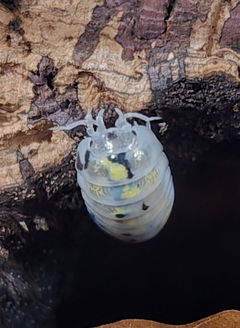
Glowspot Cockroaches (Lucihormetica Subcincta)
Care Info:
- Free shipping over £65
- Low stock - 1 item left
- Backordered, shipping soon
The Glowspot Cockroach is the slightly more elusive sister to our Headlight Cockroach — another South American Lucihormetica species with the same characteristic pronotum spots on adult males, but distinguishable by a smoother pronotum (no warty texture), pale ivory-coloured wings, and properly slower breeding. Both species share the genus's misleading "glowing" reputation, and we'll address that honestly below: the spots do not bioluminesce in the dark. They do autofluoresce under UV light, but the long-standing myth about symbiotic bacteria causing bioluminescence has been investigated and disproven. What you're buying is a properly handsome ornamental roach with striking sexual dimorphism, not a glow-in-the-dark insect.
This is part of our wider cockroach collection and forms a natural pair alongside the Headlight Cockroach (L. verrucosa) for keepers building a focused Lucihormetica display. Both species have the same approximate care profile, the same UV-fluorescence feature, and the same calm temperament — but differ in a handful of meaningful aesthetic and behavioural ways. For collectors wanting both, they work well as a paired exhibit; for keepers choosing between them, L. verrucosa is the easier starting point and L. subcincta is the slightly more demanding step up.
One honest framing point up front. L. subcincta is properly slow-breeding — genuinely slower than the already-modest L. verrucosa. Keeper reports of 12+ months from acquiring starter nymphs to seeing first offspring are normal, with some keepers waiting 17 months for first broods. This is a long-term project species rather than a productive colony. To set things up properly from the start, browse our accessories collection for substrate components, leaf litter, and other items this species depends on.
Quick Care Summary
- Scientific Name: Lucihormetica subcincta (Walker, 1868); originally described as Brachycola subcincta
- Common Names: Glowspot Cockroach, Glow Spot Cockroach
- Family: Blaberidae (subfamily Blaberinae)
- Origin: Colombia — specifically the humid montane and lower-montane forests of central and northeastern Colombia, at elevations of 1,200–1,800 m
- Adult Size: 24–28 mm; females slightly larger and broader than males
- Lifespan: 1–2 years as adults; total egg-to-adult development takes 6–10 months through 6–7 moults
- Difficulty: Easy to medium — hardy once established but properly slow to breed
- Temperature: 22–29 °C; 26–29 °C is ideal for active breeding
- Humidity: Moderate — 50–70% with a clear moisture gradient (one side damp, other drier)
- Ventilation: Moderate to high — supports the species's preference for the cooler montane forest microclimate
- Climbing: Adults can climb smooth surfaces (glass, plastic); nymphs cannot
- Flying: Wings present but non-functional; cannot fly
- Activity: Nocturnal; spends significant time in semi-permanent burrows during daylight hours
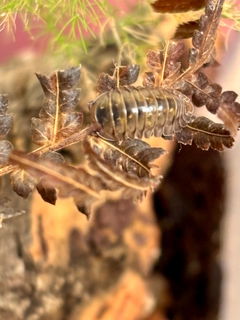
- Appearance: Adults glossy dark brown to black with subtle bronzy sheen; pale ivory-coloured wing covers (distinguishing feature vs verrucosa); smoother pronotum than verrucosa
- Male spots: Two prominent yellow-orange spots on the pronotum — appearance can intensify to deeper orange with carotenoid-rich diet
- Female pronotum: Plain dark, no spots
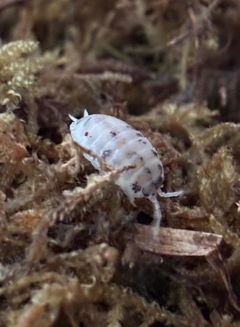
- Nymphs: Dark maroon to black with distinctive orange heads — visually quite different from verrucosa nymphs
- UV fluorescence: Spots fluoresce blue-green under UV light (autofluorescence); they do not bioluminesce in the dark — see "About the Name" section for details
- Reproduction: Ovoviviparous — females retain egg cases internally and give birth to live nymphs; approximately 15 live nymphs per brood
- Breeding rate: Slow — colonies may take 12+ months to start producing offspring
- Rarity: Common in international culture but generally less available than L. verrucosa; moderate UK availability
What Makes the Glowspot Cockroach Special
The visual differences from the Headlight Cockroach. While the two Lucihormetica species share the same general appearance — dark glossy bodies, prominent male pronotum spots, calm temperament — L. subcincta has properly distinguishable features. The wing covers are pale ivory rather than the brown of verrucosa; the pronotum is smooth rather than warty; the nymphs are maroon-black with bright orange heads rather than shiny black with orange markings. For collectors who already keep L. verrucosa, the visual differentiation makes Glowspots a genuinely worthwhile addition rather than a duplicate species.
The Colombian montane forest origin. Unlike many tropical roaches that come from lowland warm-and-humid habitats, L. subcincta originates from cooler montane forests at 1,200–1,800 m elevation. This explains the species's slightly different husbandry preferences — moderate humidity rather than high, moderate ventilation rather than sealed, and tolerance for cooler temperatures than most lowland tropical species. For UK keepers, this actually works in the species's favour: the cooler montane preferences align reasonably well with British room temperature.
The semi-permanent burrows and observed parental behaviour. L. subcincta shows behaviour that's properly unusual for a cockroach — adults form semi-permanent burrows where they raise their young, and some keepers have observed adults dragging leaves into their burrows. This level of substrate engineering and apparent parental investment isn't documented for most roach species and gives L. subcincta a level of biological interest beyond just the visual aesthetics.
The carotenoid-coloured spots. Like its sister species L. verrucosa, the male spots in L. subcincta show colour variation based on dietary carotenoid intake. Feed males carrots, pumpkin, sweet potato, or other carotenoid-rich foods consistently and the spots intensify from whitish-yellow to deeper orange. The thin cuticle over the spot area allows the underlying tissues to show through, and those tissues respond directly to dietary pigment. The colour development isn't immediate but emerges through successive moults.
The calm handleable temperament. L. subcincta is properly slow-moving and docile by cockroach standards — they don't dart, don't panic when handled, and don't show the freeze-and-bolt behaviour common to most roaches. For keepers wanting an ornamental roach they can actually pick up and observe up close, this is one of the better species available. The temperament is shared with L. verrucosa but is one of the genus's consistent characteristics.
The UV fluorescence display feature. Both Lucihormetica species show striking blue-green autofluorescence under UV light, similar to our Hawaiian Glow Millipede. A cheap UV torch (the same kind used for the millipedes) brings the male spots to life as a properly visible fluorescent display — different from the "glow-in-the-dark" myth, but genuinely impressive in its own right.
About the Name and the Bioluminescence Myth
A few notes on the species's history and a popular misconception that needs addressing directly.
- Lucihormetica subcincta: The scientific binomial. The genus name Lucihormetica derives from Latin "lux" (light) — chosen in 1999 by Zompro and Fritzsche when they erected the genus based on the (now-discredited) assumption of bioluminescence. The species epithet "subcincta" derives from Latin meaning "girded below" or "loosely belted," referencing the body proportions.
- Original description: Walker, 1868, as Brachycola subcincta; later transferred to Lucihormetica when the new genus was erected in 1999.
- The bioluminescence claim: The 1999 original genus description by Zompro and Fritzsche assumed the pronotal spots in Lucihormetica species were bioluminescent organs. A 2012 paper (Vršanský et al.) on the related species L. luckae proposed that the spots glow to mimic toxic click beetles (Batesian mimicry). This claim received critical pushback (Merritt 2013) on grounds that no actual bioluminescence had been demonstrated experimentally. Subsequent research (Greven & Zwanzig 2013; Beckert et al. 2017) confirmed via microscopic examination that Lucihormetica spots are NOT bioluminescent — they contain no light-producing organs.
- What the spots actually do: The spots autofluoresce when illuminated by UV light, producing a visible blue-green glow under a UV torch. This is a passive optical phenomenon (cuticular fluorescence) shared by many invertebrate species — including our Hawaiian Glow Millipede — fundamentally different from bioluminescence (which is active light production by living tissue).
- The "symbiotic bacteria" myth: Some hobby sources claim wild Lucihormetica spots glow thanks to bioluminescent bacteria absent from captive colonies. This isn't supported by scientific evidence. No bioluminescent organs have been identified under microscopic examination, and no plausible mechanism for bacterial bioluminescence in this specific context has been demonstrated. The myth persists in hobby culture but doesn't reflect what current science actually says.
- Implication for keepers: Expect striking yellow-orange spots on adult males that look properly like miniature car headlights, and expect blue-green UV fluorescence under a UV torch. Do NOT expect glow-in-the-dark behaviour without UV illumination, in captivity OR in the wild.
- Genus context: Lucihormetica contains 12 species from South America (Ecuador, Venezuela, Colombia, Brazil). Both species in UK hobby culture (L. verrucosa and L. subcincta) are well-established; the other genus members are mostly known from single specimens and aren't in hobby culture.
Setting Up the Enclosure
A 5–10 litre plastic container or glass terrarium suits a starter colony of 5–10 Glowspot Cockroaches. Wider is better than taller — this is a properly burrowing species that uses floor space rather than vertical space. Plastic tubs with secured ventilated lids work particularly well; glass terrariums require more attention to humidity management.
Escape-proofing matters for adults. Despite the slow temperament, adult L. subcincta can climb smooth surfaces including glass and plastic. Use a properly tight-fitting lid; consider a smooth climbing barrier (petroleum jelly or smooth plastic strip) around the inside rim of the enclosure as additional insurance. Nymphs cannot climb smooth surfaces, so escape risk is primarily an adult-stage concern.
Ventilation should be moderate to high. The montane forest origin means the species prefers good airflow rather than the sealed humid setups suited to lowland tropical species. Mesh-covered ventilation holes distributed across opposing sides of the enclosure provide the right balance. Stagnant overly-humid conditions can cause moulting problems.
Provide surface hides even for this burrowing species. Cork bark slabs in horizontal orientations work particularly well — Glowspots will use them both as surface cover and as anchor points for their semi-permanent burrows underneath. Stacked bark pieces work better than egg cartons for this species and help maintain proper humidity in their burrow areas. Browse our accessories range for cork bark and natural cover options.
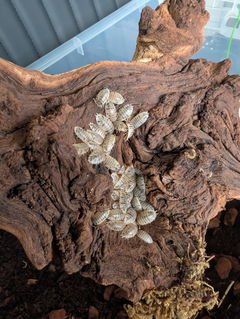
Colony density tip: Counter-intuitively, L. subcincta actually seems to breed better when kept slightly crowded in smaller containers rather than spread thin across large enclosures. The proximity to food, water, and conspecifics appears to support reproductive activity. Don't over-house starter colonies; modest containers work better than spacious ones.
Important husbandry note: Skip the standing water dish. Substrate moisture and occasional misting provide all the hydration this species needs. Open water adds drowning risk for small nymphs without practical benefit.
Substrate
Substrate depth is genuinely the most important setup feature — this is a properly fossorial species that creates semi-permanent burrows:
- Peat moss or coconut coir as the foundation
- Well-rotted compost or organic topsoil (pesticide-free) mixed in
- Small amount of sand for drainage
- Decaying hardwood pieces incorporated — both food source and breeding encouragement
- Generous covering of hardwood leaf litter (oak preferred) on top — browse our accessories collection for properly prepared options
- Springtails inoculated to consume droppings and food waste, preventing mould
Substrate depth should be 8–10 cm minimum (3–4 inches). Animals form semi-permanent tunnel systems and shallow substrate properly stresses them and discourages breeding. The substrate should be just barely moist — damp but definitely not soggy.
Top layer: a generous layer of oak leaves plus cork bark and decaying wood pieces for surface cover.
Humidity and Temperature
Maintain humidity at 50–70% with a clear moisture gradient — one side damp, the other drier. This lets animals choose their preferred conditions and supports the species's natural microclimate preferences. Mist the damp side regularly but never let the substrate become waterlogged. The montane forest origin means moderate humidity works better than high humidity for this species.
Temperature should be 22–29 °C. UK room temperature at the cooler end is acceptable for maintenance; the warmer end (26–29 °C / above 80 °F) is ideal for active breeding. If breeding is the goal, supplementary warmth is worthwhile — a low-wattage heat mat on a thermostat, mounted on the side of the enclosure rather than underneath, provides ideal supplementary warmth and creates the thermal gradient animals appreciate.
Critically, for any burrowing species, never use under-substrate heating — it traps animals between heat and dry surface conditions.
Diet
Glowspot Cockroaches are omnivorous detritivores. Some keepers report them being properly pickier than L. verrucosa — occasionally ignoring fresh fruit that other roaches would devour. Don't worry if particular food items aren't eaten immediately; rotate the offerings and animals will find their preferences.
- Hardwood leaf litter — oak preferred, plus mixed hardwood. Should be always available as the dietary foundation. Browse our accessories collection for ready-prepared leaf litter.
- Rotting hardwood — actively consumed and reportedly encourages breeding behaviour
- Carotenoid-rich vegetables — carrot, pumpkin, sweet potato, courgette. Notable because dietary carotenoids directly affect male spot colour (the carotenoid-feeding tip from L. verrucosa applies here too).
- Fresh fruit in moderation — banana, orange, apple; some colonies may ignore these so don't worry if individual food items go untouched
- Insect jelly — clean and doesn't spoil; reportedly well-received for the Lucihormetica genus generally
- Protein supplements — fish flakes, soaked dog/cat kibble, dried shrimp. Important for reproducing females. Browse the protein options in our accessories collection.
- Calcium sources — cuttlebone, crushed eggshells. Supports healthy moulting. Our calcium options cover the full range.
Avoid watery foods like lettuce and celery — these can cause moulding issues without providing meaningful nutrition. Stick to firmer vegetables and quality protein sources.
Remove uneaten fresh food within 24–48 hours to prevent mould in the moderately humid setup.
Breeding
This is the section where honesty matters most. L. subcincta is genuinely a slow-breeding species — properly slower than L. verrucosa, and properly slower than most cockroaches in the hobby. Keeper reports of 12+ months from acquiring starter nymphs to seeing first offspring are normal; some keepers report waiting 17 months. If rapid colony growth is what you want, this isn't the species for you. If you're happy to invest in a long-term project, the eventual reward of the distinctive orange-headed nymphs is worth the wait.
Females are ovoviviparous — they retain egg cases internally and give birth to approximately 15 live nymphs per brood. Newborn nymphs are tiny (2–3 mm) and immediately burrow into the substrate. Nymphs progress through 6–7 moults over 6–10 months to reach maturity.
For breeding success:
- Stable temperature in the warmer half of the range (26–29 °C / above 80 °F)
- Proper moisture gradient — humidity affects moulting success, so the damp-side / dry-side setup is genuinely important
- Rotting hardwood pieces — reportedly encourages breeding alongside being eaten
- Slightly crowded conditions — counter-intuitively better than spacious enclosures
- Adequate protein for reproducing females
- Adequate substrate depth (8–10 cm minimum) for burrow construction
- Minimal disturbance — patience is genuinely required
The high level of observed parental care is worth noting — adults appear to maintain and defend semi-permanent burrows where young develop, and some keepers report leaf-dragging behaviour suggesting active substrate engineering. These behaviours aren't typical of cockroaches generally and contribute to the species's biological interest even if they slow apparent colony expansion.
How Glowspots Differ from Headlight Cockroaches
Since both Lucihormetica species are in our catalogue, a brief side-by-side comparison helps keepers choose. Both share the genus's defining features — male pronotum spots, calm temperament, burrowing lifestyle, ovoviviparous reproduction, UV fluorescence (and the same bioluminescence myth). The meaningful differences:
Wing colour: pale ivory in L. subcincta vs brown in L. verrucosa. Pronotum texture: smooth in subcincta vs warty/bumpy in verrucosa (hence the "Warty Glowspot" common name for verrucosa). Adult size: subcincta is slightly smaller (24–28 mm vs ~30–40 mm). Nymph appearance: subcincta nymphs are maroon-black with distinctive orange heads, while verrucosa nymphs are shiny black with orange markings on the thorax. Breeding speed: subcincta is properly slower — 12+ months to first broods vs faster reliable breeding in verrucosa. Difficulty: verrucosa is easier (more forgiving of conditions); subcincta is slightly more demanding.
If you're new to Lucihormetica, the Headlight Cockroach is the recommended starting point — easier to keep, faster to breed, and lower-risk. If you've already had success with verrucosa and want a new challenge from the same genus, subcincta is the logical next step. For collectors building a focused display, both species together give the full genus experience.
Who Should Buy Glowspot Cockroaches?
Ideal for:
- Experienced Lucihormetica keepers with successful L. verrucosa colonies wanting to expand into the genus
- Collectors building a focused Lucihormetica display alongside the Headlight Cockroach
- Patient long-term project keepers — the 12+ month wait to first broods is genuine
- Anyone wanting a calm handleable ornamental roach
- Keepers interested in observed parental care behaviour and substrate engineering
- Display enthusiasts drawn to the carotenoid-coloured male spots and UV fluorescence feature
- Keepers in cooler UK homes where the montane origin makes UK room temperature properly suitable
Not ideal for:
- First-time roach keepers — start with the easier Headlight Cockroach instead
- Anyone expecting actual bioluminescence — the spots fluoresce under UV but don't glow on their own
- Anyone wanting rapid colony growth or feeder production
- Display-focused keepers wanting constantly visible animals — they're properly burrowed most of the time
- Setups without proper substrate depth (8 cm minimum)
- Keepers wanting fast results — this is genuinely a long-game species
Realistic Expectations
The bioluminescence story is the same as for L. verrucosa. We've covered this above, but it's worth repeating clearly: the spots do not glow in the dark on their own. In captivity, in the wild, or in any properly documented scientific setting. The "headlight" / "glowspot" names describe the visual appearance under normal lighting — properly striking yellow-orange spots against a dark background. They look like miniature headlights, not because they emit light, but because the colour contrast resembles car headlights. The UV fluorescence is the only genuine glowing behaviour, and it requires a UV torch.
The slow breeding is genuine, not exaggerated. New keepers occasionally assume "slow breeding" means "several months instead of weeks" — for L. subcincta, it can mean a year or more. If you're buying starter nymphs in spring, don't expect to see your own offspring before the following spring at the earliest. Plan for the long timeline; don't panic if months pass without visible breeding activity.
The picky feeding is real. Some L. subcincta colonies properly ignore fresh fruit and other foods that other roaches would devour. This is documented across multiple keeper accounts and isn't a sign of a sick colony. Offer varied foods, accept that not all will be eaten, and remove uneaten portions before they mould. Leaf litter and rotting wood are the reliable dietary anchors; fresh foods are supplementary and optional.
Nymphs look genuinely different from adults. The maroon-to-black colouration with bright orange heads is properly distinctive and unlike the appearance of any other roach in our catalogue. New keepers occasionally don't recognise nymphs as the same species; they are. The colouration develops through moults — adult colouration emerges gradually as nymphs approach maturity.
The semi-permanent burrows are interesting biology. Unlike many burrowing roaches that just opportunistically dig down whenever they want cover, L. subcincta appears to construct and maintain specific burrow systems. The reported leaf-dragging behaviour — adults moving substrate materials into burrow areas — is genuinely unusual for cockroaches. Don't disturb established burrow areas during maintenance; you're disrupting more biological complexity than just hiding spots.
The carotenoid-feeding tip works. Like its sister species, L. subcincta male spots deepen in colour with carotenoid-rich diet. The effect isn't immediate — it develops through successive moults — but established carotenoid-rich diets produce visibly deeper-coloured spots compared to nutritionally adequate but carotenoid-poor diets. For keepers wanting maximum visual impact from their males, feed carrot, pumpkin, and sweet potato consistently.
Adults can climb glass. Slow temperament doesn't mean inability to climb. Don't underestimate the escape risk — secure lids and ideally smooth-surface barriers inside the rim are standard practice. Nymphs cannot climb smooth surfaces, so escape risk is properly limited to the adult stage, but it's genuine when it applies.
This is a long-term collection species, not a productive colony. The combination of slow breeding, modest brood sizes, and slow development means L. subcincta is properly a long-term collection animal rather than a productive breeding line. The right framing is that you're maintaining a slowly self-sustaining display colony of a properly interesting species rather than building stock for sale or feeder use.
Use collapsible tabs for more detailed information that will help customers make a purchasing decision.
Ex: Shipping and return policies, size guides, and other common questions.