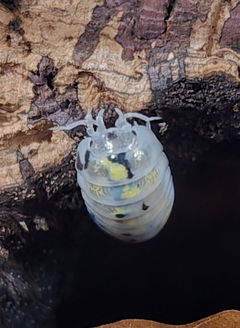
Headlight Cockroaches (Lucihormetica Verrucosa)
Care Info:
- Free shipping over £65
- Low stock - 1 item left
- Backordered, shipping soon
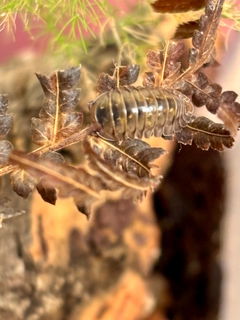
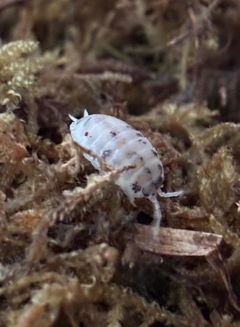
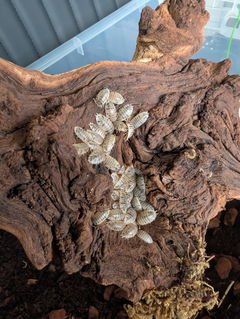
The Headlight Cockroach is one of the more genuinely intriguing species available in the UK hobby — a medium-sized South American roach distinguished by two prominent yellow-orange spots on the pronotum of adult males, set against a dark body. The spots look properly like miniature car headlights against the dark exoskeleton, which is exactly how the species earned its common name. Combined with its calm temperament, accessible price, and easy husbandry, this is one of the right entry points into ornamental cockroach keeping — particularly for keepers who appreciate distinctive sexual dimorphism and want something a bit different from the standard Hisser or Dubia.
This is part of our wider cockroach collection and works well alongside our other display roaches — the metallic Emerald Cockroach and Sapphire Flower Cockroach for keepers building a visually varied display, or the larger Cuban Cockroach as a similarly approachable starter species. The Headlight Cockroach sits in the genuinely useful middle ground — properly interesting visually without the premium price or demanding husbandry of the metallic species.
One honest framing point up front, and it matters. The species is widely advertised as "bioluminescent" — and we want to be clear that the current scientific evidence does NOT support this claim. The spots are autofluorescent (they glow blue-green under UV light, like our Hawaiian Glow Millipede), but they don't bioluminesce in the dark on their own — not in captivity, and not in the wild either. A cheap UV torch produces a properly striking effect; without UV illumination, you have attractive yellow-orange spots rather than glowing ones. The "symbiotic bacteria cause bioluminescence" story is a long-standing myth that's been investigated and disproven, but we won't blame keepers who still believe it — the misinformation is widespread. To set things up properly from the start, browse our accessories collection for substrate components, leaf litter, and other items this species needs.
Quick Care Summary
- Scientific Name: Lucihormetica verrucosa (Brunner von Wattenwyl, 1865)
- Common Names: Headlight Cockroach, Warty Glowspot Roach, Glowspot Cockroach
- Family: Blaberidae (subfamily Blaberinae)
- Origin: South America — Venezuela and Colombia primarily
- Adult Size: 30–40 mm (3–4 cm); females slightly larger than males
- Lifespan: 1–2 years as adults; total egg-to-adult development around 6–9 months
- Difficulty: Easy — forgiving, beginner-friendly, and hardy
- Temperature: 22–28 °C; warmer end (25–28 °C) supports faster development and better breeding
- Humidity: Moderate — 60–70% with substrate maintaining a moisture gradient
- Ventilation: Moderate to high — important for preventing stagnation
- Climbing: Adults can climb smooth surfaces (glass, plastic); nymphs cannot
- Flying: Wings present but flight ability is limited; not strong fliers
- Activity: Primarily nocturnal; spends most time burrowed during daylight hours
- Appearance: Dark brown to black body with white margin around dorsal plates; males show two prominent yellow-orange (occasionally red) "headlight" spots on the pronotum; females lack the spots entirely
- Sexual dimorphism: Properly pronounced — males identifiable at a glance by the headlight spots; females slightly larger overall
- Spot colour variation: Spot colour varies from whitish-yellow to deep orange to red, depending on carotenoid content of the diet — feeding carrots, pumpkin, or other carotenoid-rich foods deepens the spot colouration
- UV fluorescence: Spots fluoresce blue-green under UV light; this is autofluorescence (similar to many invertebrates), not bioluminescence
- Reproduction: Ovoviviparous — females retain egg cases internally and give birth to live nymphs
- Rarity: Common in international culture; accessible in the UK
What Makes Headlight Cockroaches Special
The sexual dimorphism is genuinely striking. Most roach species show only subtle differences between males and females; in L. verrucosa, the difference is properly dramatic. Adult males display two prominent yellow-orange spots on the pronotum (the plate covering the back of the head), set against a dark brown to black body. Adult females are plain by comparison — entirely dark, with no spots whatsoever. The visual difference is significant enough that keepers can sex animals at a glance once they've reached adulthood, which makes the species genuinely useful for observing courtship and mating behaviour.
The carotenoid-linked colour expression. Multiple studies (Beckert et al. 2017, Greven & Zwanzig 2013) have confirmed that the spot colour in male L. verrucosa varies based on dietary carotenoid intake. Males fed properly carotenoid-rich diets (carrot, pumpkin, sweet potato, sweet peppers) develop deeper orange or red spots; males on carotenoid-poor diets retain whitish-yellow spots. This means the visible colour expression of your male animals is properly within your control as a keeper — a small but genuinely interesting aspect of the species's biology.
The UV fluorescence is real. While the spots don't glow in the dark on their own (more on this below), they do auto-fluoresce when illuminated by ultraviolet light — producing a properly visible blue-green glow that's striking under a UV torch. This shares the same display logic as our Hawaiian Glow Millipede: an inexpensive UV torch turns the animals into a visual display, while standard lighting shows them as they normally appear. The fluorescence is a real and observable feature, even if it's been historically misdescribed.
The calm temperament. Headlight Cockroaches are properly docile compared to most cockroach species. They don't dart, don't panic when handled, and don't mob food in the way fast feeder species do. For keepers nervous about typical cockroach behaviour (the rapid movement, the freeze-and-dash response to disturbance), this species is one of the easier introductions. Adults will tolerate brief handling without becoming agitated — they're slow movers by nature, not just when undisturbed.
The accessible entry point. At a properly modest price per nymph, Headlight Cockroaches deliver real visual interest at a budget-friendly tier. The husbandry skills directly transfer to other Blaberidae species, and the dramatic sexual dimorphism gives genuine display value even at modest colony sizes. For keepers exploring ornamental cockroaches before committing to expensive metallic species, this is a low-risk experiment.
The fossorial lifestyle. Like many Blaberidae, L. verrucosa are fossorial — burrowing animals that spend the majority of their time underground. This is either a feature or a drawback depending on what you want from a roach. As display animals they're properly cryptic; as bioactive substrate-cyclers they're genuinely useful, contributing to substrate turnover and waste processing in larger vivarium setups. Don't expect constant visible activity — but do appreciate the underground biological work they do.
About the Name and the Bioluminescence Myth
A few notes on the species, its history, and a popular misconception worth addressing directly.
- Lucihormetica verrucosa: The scientific binomial. The genus name Lucihormetica derives from Latin "lux" (light) plus "hormetica" (a related cockroach genus), reflecting the assumed luminescent properties when the genus was first described. The species epithet "verrucosa" means "warty" in Latin, referring to small bumps on the exoskeleton.
- Original description: Brunner von Wattenwyl, 1865 — under a different genus name; later moved to Lucihormetica when the genus was erected in 1999 by Zompro and Fritzsche, who described the species's spots as bioluminescent organs.
- The bioluminescence claim: The 1999 original description assumed the pronotal spots were bioluminescent. A 2012 paper (Vršanský et al.) on the related species L. luckae proposed that the spots glow to mimic toxic click beetles (Batesian mimicry). This claim received critical pushback (Merritt 2013) on grounds that no actual bioluminescence had been demonstrated experimentally. Subsequent research (Greven & Zwanzig 2013; Beckert et al. 2017) confirmed via microscopic examination that L. verrucosa spots are NOT bioluminescent — they contain no light-producing organs.
- What the spots actually do: The spots autofluoresce when illuminated by UV light, producing a visible blue-green glow under a UV torch. This is a passive optical phenomenon (cuticular fluorescence) shared by many invertebrate species, fundamentally different from bioluminescence (which is active light production by living tissue). The autofluorescence is also affected by carotenoid content of the diet — higher carotenoid intake correlates with deeper spot colouration and slightly different fluorescence properties.
- The "symbiotic bacteria" myth: Some hobby sources claim the bioluminescence in wild Lucihormetica is caused by symbiotic bacteria that aren't present in captive-bred colonies. This is not supported by scientific evidence. The Vršanský and Chorvát rebuttals to Merritt's critique relied on anecdotal observations rather than demonstrable measurements. As of current scientific consensus, the spots don't glow in the dark — in captivity, in the wild, or in any properly-documented setting.
- The genus context: Lucihormetica contains 12 species, all from South America (Ecuador, Venezuela, Colombia, Brazil). All show the same male pronotal spots, all show autofluorescence under UV, and none have been demonstrated to bioluminesce. The genus name itself is a historical artefact of the initial (incorrect) bioluminescence hypothesis.
Setting Up the Enclosure
A 5–10 litre plastic container or glass terrarium suits a starter colony of 5–10 Headlight Cockroaches. Wider is better than taller — this is a burrowing species that uses floor space more than vertical space. Plastic tubs with secured ventilated lids work well, as do glass terrariums with mesh-topped lids.
Escape-proofing matters for adults. Despite limited flight ability and a generally calm temperament, adult L. verrucosa can climb smooth surfaces including glass and plastic. Use a properly tight-fitting lid; consider a thin smooth climbing barrier (petroleum jelly or smooth plastic strip) around the inside rim of the enclosure as additional insurance. Nymphs cannot climb smooth surfaces, so escape risk is primarily an adult-stage concern.
Ventilation should be moderate to high. The species isn't humidity-demanding in the way Eucorydia or Cubaris are; good airflow helps prevent the stagnation that encourages mould in any humid setup. Mesh-covered ventilation holes distributed across opposing sides of the enclosure work well. Cross-ventilation is the right design principle.
Provide surface hides even for this burrowing species. Cork bark slabs in horizontal orientations, decaying hardwood pieces, and lotus pods all support the limited surface activity. Browse our accessories range for cork bark and natural cover options. Don't overload the surface with cover; Headlight Cockroaches will use the substrate as their primary habitat regardless of how much above-ground structure you provide.
Important husbandry note: Skip the standing water dish. Substrate moisture and occasional misting provide all the hydration this species needs. Open water adds drowning risk for small nymphs without practical benefit.
Substrate
Substrate depth is genuinely the most important setup feature — this is a properly fossorial species that needs proper burrowing room:
- Coconut fibre or coco coir as the foundation
- Organic topsoil (pesticide-free) mixed in
- Sphagnum moss mixed throughout for moisture retention
- Composted hardwood leaf litter mixed in and layered generously on top — browse our accessories collection for properly prepared options
- Decaying hardwood pieces incorporated for nymph cover and supplementary food
- Springtails inoculated into the substrate to consume droppings and food waste, preventing mould
Substrate depth should be 8–10 cm minimum (3–4 inches) — this isn't optional, it's essential. Shallow substrate stresses the species genuinely and reduces breeding rates. Adult and nymph animals spend the majority of their time underground, and burrowing room directly affects colony health.
Top layer: a generous covering of hardwood leaf litter plus cork bark and decaying wood pieces for surface cover.
Humidity and Temperature
Maintain humidity at 60–70% with a clear moisture gradient — one side of the enclosure damper, the other drier. This lets animals choose their preferred conditions and reduces stress. Mist one side every 2–3 days, allowing the dry side to remain genuinely drier. The species tolerates a range of humidity conditions, which is part of why it's beginner-friendly — exact percentages matter less than maintaining a gradient.
Temperature should be 22–28 °C. UK average room temperature is at the cooler end of this range; supplementary warmth supports faster development and better breeding rates. The warmer end (25–28 °C) is ideal for active breeding and population growth; the cooler end works fine for steady maintenance.
For breeding-focused setups, a low-wattage heat mat on a thermostat, mounted on the side of the enclosure rather than underneath, provides ideal supplementary warmth. Side-mounted heating creates a thermal gradient and avoids overheating the substrate where animals spend most of their time. Critically, for any burrowing species, never use under-substrate heating — it traps animals between heat and dry surface conditions.
Diet
Headlight Cockroaches are detritivores with properly modest appetites — they're not the voracious feeders that Dubia or Hisser colonies can be. Don't expect them to demolish food overnight:
- Hardwood leaf litter — oak, beech, magnolia. The dietary mainstay and should be always available. Browse our accessories collection for ready-prepared leaf litter.
- Decaying hardwood and bark — actively consumed and used as cover
- Carotenoid-rich vegetables — carrot, pumpkin, sweet potato, sweet peppers, butternut squash. Notable because dietary carotenoids directly affect the male spot colour — feeding these foods produces deeper orange or red spots on adult males.
- Other vegetables — cucumber, courgette, leafy greens
- Fresh fruits in moderation — apple, banana, orange. Replace within 24–48 hours.
- Protein supplements — fish flakes, dog/cat kibble, dried shrimp. Offered occasionally rather than as a staple. Browse the protein options in our accessories collection.
- Calcium sources — cuttlebone, crushed eggshells. While Headlight Cockroaches aren't as calcium-demanding as some invertebrates, calcium availability supports healthy moulting. Our calcium options cover the full range.
Feed sparingly — the species's modest appetite means uneaten food sits around longer than for voracious species. Remove uneaten fresh food within a day or two to prevent mould and pest issues in the humid setup.
The carotenoid feeding tip: if you want to enhance the spot colouration on your adult males, feed carrots, pumpkin, or sweet potato consistently. The colour change isn't immediate (it develops through moults), but established carotenoid-rich diets produce noticeably deeper-coloured spots. Conversely, carotenoid-poor diets keep the spots in the whitish-yellow range.
Breeding
L. verrucosa breeds reasonably well in captivity, though they're not rapid reproducers like Surinam Cockroaches or Cuban Cockroaches. Females are ovoviviparous — they retain egg cases internally and give birth to live nymphs rather than depositing oothecae externally.
Courtship is genuinely observable. Males approach females and use their antennae and palps to stimulate receptivity. Successful mating sequences can last approximately an hour. Females become sexually receptive about 20 days after their final moult, once their exoskeleton has fully hardened. The combination of pronounced sexual dimorphism plus extended observable courtship makes the species's reproductive biology more visible than for many roaches.
For breeding success:
- Stable temperature in the warmer half of the range (25–28 °C)
- Adequate substrate depth (8–10 cm minimum) for gravid females
- Consistent moderate humidity with proper moisture gradient
- Varied diet including carotenoid-rich vegetables (which support both spot colour AND general health)
- Plenty of cover — both burrowing substrate and surface hides
- Minimal disturbance — frequent enclosure intervention slows breeding
- Mixed-age colony — given the 6–9 month development cycle, maintaining nymphs alongside adults supports continuous turnover
Nymphs are tiny when born and burrow immediately into the substrate. Growth is steady but not rapid — expect several months before juveniles reach maturity. The slow development is the main reason this species isn't used as a feeder despite being theoretically suitable.
Who Should Buy Headlight Cockroaches?
Ideal for:
- Beginner ornamental cockroach keepers looking for an accessible, hardy species
- Display enthusiasts drawn to dramatic sexual dimorphism — males look genuinely different from females
- Anyone interested in UV-fluorescent invertebrates (similar appeal to the Hawaiian Glow Millipede)
- Keepers wanting a calm, slow-moving species rather than fast darting roaches
- Bioactive vivarium setups where burrowing detritivores contribute to substrate processing
- Long-term project keepers comfortable with modest colony growth and slow development
- Anyone exploring cockroach keeping on a budget
Not ideal for:
- Anyone expecting actual bioluminescence — the spots fluoresce under UV but don't glow on their own
- Display-focused keepers wanting constantly visible animals — they're properly burrowed most of the time
- Feeder-focused colonies — slow development and modest brood sizes make them inefficient feeders
- Setups without proper substrate depth (8 cm minimum)
- Keepers without escape-proofing for the climbing adult stage
Realistic Expectations
The bioluminescence story is wrong. We've discussed this above, but it's worth restating clearly: the spots do not glow in the dark. They never have, in captivity or in the wild, as far as scientific investigation has been able to demonstrate. The "headlight" name describes their appearance under normal lighting — two prominent contrasting spots against a dark background, looking like miniature car headlights. They're visually striking but not luminescent. If you're buying with the expectation of seeing your roaches glow at night without UV illumination, you'll be disappointed. If you're buying for the visual aesthetic of the spots themselves (and the UV fluorescence as a bonus feature), you'll get exactly what's promised.
The UV fluorescence IS real, however. Under a UV torch (the same kind that works with our Hawaiian Glow Millipede), the spots autofluoresce blue-green and become properly striking. A cheap UV torch from a pet shop or online retailer produces the effect immediately. The combination of normal-lighting visual interest and UV-illumination spectacle makes the species genuinely engaging across two different observation modes.
The males are the show. The dramatic sexual dimorphism means that in a mixed-sex colony, only the adult males display the headlight spots. Adult females are plain dark brown to black. Juveniles of both sexes are dark and shiny without spots — males develop the spots only after their final moult. If you're buying a small starter group and want to see the spots quickly, prioritise older nymphs (often slightly orange-marked, indicating proximity to adult moult) over very young animals.
They burrow. A lot. The fossorial lifestyle means that even in a well-maintained enclosure, you'll often see no animals at all on casual inspection. They emerge primarily at night to feed; daytime observation typically reveals an empty-looking enclosure with all the animals safely underground. This isn't a problem — it's just how the species lives. Set up the enclosure expecting an underground colony that emerges briefly at night, and the species delivers exactly what you'd expect.
Colony growth is slow. Combined small-to-moderate brood sizes plus 6–9 month nymph development plus 1–2 year adult lifespan means population growth is properly measured rather than explosive. Don't expect rapid colony expansion; expect steady, manageable population dynamics across multiple years.
The carotenoid spot tip is genuine. If you want maximally-coloured males, feed carotenoid-rich vegetables consistently — carrot, pumpkin, sweet potato, sweet peppers. The colour develops gradually through moults, so don't expect immediate change, but established carotenoid-rich diets produce visibly deeper-coloured spots compared to nutritionally varied but carotenoid-poor diets.
They're slow, calm, and almost handleable. Compared to typical roaches (rapid, panicky, hard to catch), Headlight Cockroaches are properly docile. Adults can be briefly handled without significant stress — they're slow movers and don't escape quickly even when given the opportunity. This isn't a primary handling species like a tarantula, but it's one of the more handleable roaches available.
Adults can climb glass. Don't underestimate this. The species is slow-moving, but adults are entirely capable of scaling smooth vertical surfaces. Don't rely on the slow temperament as substitute for proper escape-proofing — secure lids and ideally a smooth-surface barrier inside the rim are standard practice.
Use collapsible tabs for more detailed information that will help customers make a purchasing decision.
Ex: Shipping and return policies, size guides, and other common questions.