Centurion Porcelain Cockroach

Centurion Porcelain Cockroaches (Gyna Centurio)

Care Info:

Origin icon ORIGIN
WEST & CENTRAL AFRICA
Temperature icon TEMP
24-30 ℃
Humidity icon HUMIDITY
40-60 %
Length icon LENGTH
25-35 mm
Difficulty icon DIFFICULTY
EASY
Rarity icon RARITY
COMMON
Regular price£16.50
/
Tax included. Shipping calculated at checkout.

Quantity
  • Free shipping over £65
  • Low stock - 1 item left
  • Backordered, shipping soon

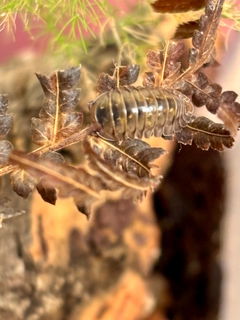
The Centurion Porcelain Cockroach is one of the more visually distinctive species available in the UK hobby — a medium-sized West African roach with smooth wings showing splashes of cream, maroon, and brown that give the species its "porcelain" reputation. The aesthetic is genuinely different from the bold patterns of the Domino Cockroach or the metallic iridescence of the Sapphire Flower Cockroach — softer, more painterly, and properly elegant when adults are fully developed. Combined with live-bearing reproduction and prolific brood sizes, this is one of the more rewarding ornamental roaches to keep once you've sorted out the escape-proofing.

This is part of our wider cockroach collection and represents one of the more available species in the Gyna genus — the broader group of African porcelain roaches that includes the classic G. lurida Porcelain Roach, the larger G. caffrorum Chrome Roach, and the famous pink G. capucina. G. centurio sits in the genuinely useful middle ground of the genus: visually attractive without the demanding husbandry of capucina, more interesting in colouration than lurida, and more accessible than the larger caffrorum. For keepers wanting an entry point into the Gyna genus, this is the right starting species.

One honest framing point up front. Adult Gyna centurio can both climb and fly. The flight isn't constant — they don't buzz around the enclosure — but disturbance, lid-opening, or warm temperatures can trigger short erratic flights. This is a genuine practical concern that requires proper escape-proofing rather than a minor preference. The good news: nymphs cannot climb or fly, and even escaped adults can't survive UK household conditions long-term. To set things up properly from the start, browse our accessories collection for substrate components, leaf litter, and other items this species depends on.

Quick Care Summary

  • Scientific Name: Gyna centurio (Dohrn, 1888)
  • Common Names: Centurion Porcelain Cockroach, Centurion Roach, Chrome Porcelain Roach, Gambia Roach (historical hobby name)
  • Family: Blaberidae (subfamily Gyninae); genus established by Brunner von Wattenwyl, 1865
  • Genus context: Gyna contains 31 accepted species, all native to Africa; collectively known as "porcelain roaches" for their smooth elegant wing appearance
  • Origin: West and Central Africa — Cameroon and the Democratic Republic of the Congo confirmed; broader West/Central African distribution likely
  • Adult Size: 25–35 mm; females slightly larger and broader than males
  • Lifespan: Adults live 4–5 months only; females tend to live longer than males
  • Development: Nymphs mature in 4–6 months through several moults; males typically mature before females
  • Difficulty: Easy to medium — forgiving overall, but the escape-proofing requirements (climbing and flight) need proper attention
  • Temperature: 24–30 °C; warmer end supports faster development. Below 24 °C significantly slows growth and breeding
  • Humidity: Moderate — 40–60% air humidity (not tropical-style high humidity); substrate kept moderately damp
  • Ventilation: Good airflow is important, but ventilation holes must be properly mesh-covered or sized to prevent adult escape
  • Climbing: Adults climb smooth surfaces — escape risk is genuine
  • Flying: Adults can fly — short erratic flights particularly when startled or warm
  • Activity: Most active evening/night; nymphs and gravid females burrow extensively, adult males more surface-active
  • Appearance: Adults show smooth porcelain-like wings with cream, maroon, and brown splashed patterning; flattened oval body shape typical of Gyna; nymphs darker and plainer
  • Reproduction: Ovoviviparous — females retain egg cases internally and give birth to live nymphs
  • Brood size: Large — up to ~200 nymphs reported per female lifetime; produced in several smaller litters rather than all at once. Females likely produce only one internal ootheca per lifetime
  • Rarity: Moderate in international culture; reasonably available in UK hobby

What Makes Centurion Porcelain Cockroaches Special

The porcelain aesthetic is genuinely the genus's calling card. The smooth elegant wing shape combined with the cream-maroon-brown splashed patterning produces an aesthetic that looks more like decorative ceramics than insects. Adult G. centurio are properly attractive in a way that often surprises new keepers — they don't look like the cockroaches most people imagine when they hear the word. The "chrome" descriptor in the alternative name reflects the slightly metallic sheen of the wings under good lighting. For keepers wanting visually distinctive ornamental roaches, the genus delivers.

The live-bearing reproduction. Like all Gyna, G. centurio is ovoviviparous — females retain egg cases internally and give birth to live nymphs rather than depositing oothecae. The practical implications matter: no oothecae to incubate or worry about drying out, no separate developmental stage requiring different conditions, and the satisfying experience of "suddenly noticing tiny nymphs in the substrate." For keepers used to oothecae-laying species like the Domino Cockroach, the live-bearing approach feels properly different.

The prolific brood size. G. centurio is one of the more productive ornamental roaches available — up to approximately 200 nymphs per female lifetime, produced in several smaller litters over time. This makes the species rewarding for keepers who want to actually see colony expansion rather than just maintain a static group. The trade-off is the short adult lifespan (4–5 months) and the timing issue where males often mature before females — start with a properly-sized starter group (10+ animals) to ensure overlapping maturation dates.

The Gyna cluster. Within international cockroach culture, the Gyna genus is one of the more popular ornamental groups. Beyond G. centurio, the genus includes the classic G. lurida Porcelain Roach (yellowish-tan adults, exceptionally prolific, the hobby staple), the larger G. caffrorum Chrome Roach (more colourful, with more surface-active nymphs), and the famously pink G. capucina Pink Roach (visually striking but more demanding, females are properly stress-sensitive). For collectors building a focused Gyna display, G. centurio is one of the easier and more reliable species to start with — visually attractive, prolific, and forgiving compared to the more demanding members of the genus.

The "Gambia" historical name. The species was sold in early hobby distribution under the trade name Gyna sp. "Gambia" before being formally identified as G. centurio. The "Gambia" name is now mostly historical — the species isn't actually known to occur in Gambia — but you may still see the older name in some sources. Properly current hobby usage is "Centurion" or "Centurion Porcelain."

The visible adults vs hidden nymphs. The species's biology produces a useful display dynamic: nymphs spend nearly all their time burrowed underground (you won't see much of them), while adult males in particular are properly surface-active and visible. The colony cycles between "underground nymph mass" and "visible adult display" phases as different individuals mature and decline. For keepers who appreciate observable lifecycle dynamics, this rhythm is genuinely engaging.

About the Name and Taxonomy

A few notes on the species's nomenclature.

  • Gyna centurio: Described by Dohrn in 1888. The genus name "Gyna" derives from Greek "gyne" (woman); the species epithet "centurio" references the Latin for "centurion" — possibly chosen to reflect the bold patterned appearance of adults.
  • Family Blaberidae, subfamily Gyninae: The species sits within the large family Blaberidae alongside many other ornamental hobby roaches (including Lucihormetica species and Panchlora nivea). The subfamily Gyninae specifically contains the African porcelain roaches.
  • Genus established: Brunner von Wattenwyl, 1865, with G. capucina (the Pink Roach) as the type species. The 31 currently accepted species are all African in origin, with several in international hobby culture.
  • "Gambia" trade name: Historical hobby name from before the species was formally identified as G. centurio. The species isn't documented from Gambia itself — the trade name likely reflected the port of origin or supplier rather than actual native range.
  • "Centurion" vs "Centurion Porcelain": Both names refer to the same species. International hobby usage varies; the "Porcelain" qualifier emphasises the genus connection and visual aesthetic, while "Centurion" alone is shorter. Either name is fine.
  • Common name "Chrome Porcelain": Sometimes confused with G. caffrorum which is also called the "Chrome Roach." The two species are visually distinguishable — G. caffrorum is larger and has more contrasting colouration; G. centurio has the softer cream-maroon-brown pattern.

Setting Up the Enclosure

A 4–10 litre plastic container suits a starter colony of 5–10 Centurion nymphs; scale up as the colony grows. Glass terrariums work fine but typically require more careful escape-proofing than plastic tubs with secure clip-locked lids. Wider is generally better than taller — this is a fossorial species where nymphs and gravid females spend their time underground.

Escape-proofing is the critical setup feature. Adults can climb smooth surfaces and can fly short distances. The right combination of features:

  • A properly tight-fitting lid with no gaps
  • Fine mesh on all ventilation holes (sized to prevent adult escape — adults are 25–35 mm so any opening larger than ~5 mm needs mesh)
  • A barrier of petroleum jelly or silicone grease around the inside upper rim of the enclosure
  • Caution when opening the enclosure — consider doing so inside a larger container or in a closed room where escapees can be recaptured

The good news on escape risk: even if an adult escapes, UK household conditions are too cool and dry for long-term survival. Don't panic if one gets out; just recapture as quickly as possible and tighten enclosure security.

Provide moderate surface structure. Cork bark slabs in horizontal and vertical orientations work well — adult males will use them for climbing and exploration, while females and nymphs use them as cover. Don't overload the enclosure with vertical décor; leave open floor space for substrate access. Browse our accessories range for cork bark and natural cover options.

Important husbandry note: Skip the standing water dish. Substrate moisture and occasional misting provide all the hydration this species needs. The moderate humidity preference (40–60%) means open water can actually create excess humidity.

Substrate

Substrate depth matters genuinely for this species — nymphs and gravid females burrow extensively:

  • Coconut fibre (coir) as the foundation
  • Organic topsoil or peat moss (pesticide-free) mixed in for nutritional content
  • Composted hardwood leaf litter mixed throughout and layered generously on top — oak, beech, magnolia. Browse our accessories collection for properly prepared options.
  • Decaying hardwood pieces mixed in — provides supplementary food and substrate variety
  • Cork bark pieces on the surface for hides
  • Springtails inoculated to consume droppings and food waste, preventing mould

Substrate depth should be 5–8 cm minimum. Maintain a moisture gradient — one side damper than the other — to give females a choice of conditions for egg deposition while keeping the dry side genuinely dry. Avoid sand; it's not suitable for this species.

Top layer: a generous covering of hardwood leaf litter plus cork bark for surface cover.

Humidity and Temperature

Maintain air humidity at a properly modest 40–60% — much lower than tropical roach species. The West/Central African origin includes both tropical and somewhat drier seasonal habitats; G. centurio is adapted to moderate rather than constant high humidity. Don't try to maintain rainforest conditions; this species does better with moderate humidity and adequate airflow.

Substrate moisture is separate from air humidity. Keep one side of the substrate moderately damp (damp to the touch, not soggy) while allowing the other side to remain drier. The damper areas are where females will give birth to nymphs. Mist as needed to maintain substrate moisture; don't waterlog.

Temperature should be 24–30 °C, with 26–30 °C ideal for faster development and active breeding. UK average room temperature is below the species's preferred range and noticeably slows growth and reproduction — supplementary warmth is worthwhile for productive colonies.

A low-wattage heat mat on a thermostat, mounted on the side of the enclosure rather than underneath, provides ideal supplementary warmth. Side-mounted heating creates a thermal gradient and avoids overheating substrate where burrowing nymphs spend most of their time. Critically, for any fossorial species, never use under-substrate heating — it traps animals between heat and dry surface conditions.

Be aware that higher temperatures also make adults more flighty. The trade-off between optimal breeding rates and manageable flight behaviour is real; many keepers settle on the middle of the range (26–27 °C) as a practical compromise.

Diet

Centurion Porcelain Cockroaches are omnivorous and properly voracious eaters compared to many ornamental roach species:

  • Hardwood leaf litter — oak, beech, magnolia. Essential staple; should always be available. Browse our accessories collection for ready-prepared leaf litter.
  • Decaying hardwood — actively consumed as food and used as cover
  • Fresh fruit — properly well-received: banana, apple, peach, orange, berries. Particularly important for this species which genuinely loves fruit.
  • Vegetables — carrot, courgette, sweet potato. Replace within 24–48 hours.
  • Protein supplements — fish flakes, fish food pellets, dog/cat kibble, bee pollen. Offered occasionally — overprotein can encourage cannibalism in stressed colonies. Browse the protein options in our accessories collection.
  • Insect/beetle jelly — clean, doesn't spoil, well-received
  • Calcium sources — cuttlebone, crushed eggshells. Supports healthy moulting. Our calcium options cover the full range.

Avoid citrus fruits (potentially harmful) and avoid overfeeding protein (can encourage cannibalism in food-stressed conditions). Don't use deep food bowls — small nymphs may not be able to access them; scatter food on the substrate surface or use very shallow dishes.

Remove uneaten fresh food within 24–48 hours to prevent mould and mite issues. The voracious appetite means uneaten food is usually limited, but particularly fruit-heavy offerings can decay quickly in the warm setup.

Breeding

Centurion Porcelain Cockroaches breed prolifically once basic conditions are met. Females are ovoviviparous — they retain egg cases internally and give birth to live nymphs rather than depositing oothecae. The brood size is properly substantial: up to approximately 200 nymphs per female lifetime, produced in several smaller litters over time rather than all at once. Females likely produce only one internal ootheca per lifetime, with nymphs released over multiple birthing events.

For breeding success:

  • Stable temperature in the warmer half of the range (26–30 °C)
  • Maintain substrate moisture gradient — gravid females need access to damper substrate for birthing
  • Adequate substrate depth (5–8 cm minimum) for nymph burrowing after birth
  • Plenty of food — well-fed females produce more offspring; hungry colonies can resort to cannibalism
  • Don't overcrowd severely — G. centurio tolerates moderate crowding but extreme overpopulation can cause sudden die-offs
  • Springtails inoculated to manage waste during the rapid colony expansion
  • Don't disturb gravid females excessively — stress can cause females to abort their developing internal ootheca

Important timing note: Males typically mature before females, and adults only live 4–5 months. In small starter colonies, this can create timing issues where males die before females are ready to mate. The fix is starting with a properly-sized group (10–15+ animals) to ensure overlapping maturation dates. Smaller groups risk losing breeding momentum if the sex-ratio-mature-timing combination doesn't align.

How Gyna centurio Compares to Other Gyna Species

For collectors choosing between or building a focused Gyna collection, a brief comparison of the genus's hobby members.

G. centurio (this species, Centurion or Chrome Porcelain Roach): easy to keep, prolific, smooth cream-maroon-brown wing patterning, good starting species for the genus.

G. lurida (the classic Porcelain Roach): the hobby staple, yellow-tan adult colouration, exceptionally prolific breeding, one of the easiest Gyna species. If you're prioritising breeding productivity over distinctive colouration, this is the alternative starting point.

G. caffrorum (Chrome Roach): larger species with more contrasting and colourful adults; nymphs are more active and visible than other Gyna species. Good choice for keepers wanting more visible juvenile activity.

G. capucina (Pink Roach): properly distinctive pink colouration is the genus's most visually striking species, but more demanding. Females are stress-sensitive and prone to aborting broods under poor conditions; not recommended as a first Gyna species.

For first-time Gyna keepers, G. centurio or G. lurida are the right entry points. Once you've successfully maintained either, the more demanding species become reasonable next steps.

Who Should Buy Centurion Porcelain Cockroaches?

Ideal for:

  • Keepers wanting beautiful display roaches with distinctive patterned wings
  • Anyone interested in live-bearing cockroach species — the ovoviviparous reproduction is one of the genus's strongest features
  • Keepers who want properly prolific breeding potential — large broods rapidly establish colonies
  • Display enthusiasts comfortable managing climbing and flying species
  • Collectors looking to enter the Gyna genus
  • Bioactive vivarium setups where fossorial detritivores contribute to substrate processing

Not ideal for:

  • Keepers without proper escape-proofing — the climbing and flying combination is a genuine consideration, not a minor preference
  • Anyone uncomfortable with insects that can fly
  • Keepers wanting constantly visible animals — nymphs and females burrow extensively, only adult males are reliably surface-active
  • Setups that can't maintain 24–30 °C consistently — breeding slows dramatically below 24 °C
  • Tropical-style setups with very high humidity — this species prefers moderate humidity (40–60% air)

Realistic Expectations

The flying ability is genuinely something to plan for. New keepers occasionally underestimate the flight risk because adults aren't constantly flying — they don't buzz around the enclosure like fruit flies. But lid-opening, sudden disturbance, or warm enclosure temperatures can trigger short erratic flights, and a properly-secured enclosure is non-negotiable. Treat the escape-proofing setup as the primary husbandry requirement rather than a minor detail.

The adult lifespan is short. 4–5 months as adults is properly brief by ornamental roach standards. Combined with the timing issue (males mature before females), small starter colonies can lose breeding momentum if the math doesn't align. The fix is starting with a reasonable group size (10+ animals) and providing the warmer temperatures needed for faster maturation.

The 200-nymph brood claim is per lifetime, not per litter. Hobby sources sometimes describe the brood size as "up to 200 nymphs" without context; this is the total approximate output across multiple smaller birthing events over a female's lifetime, not a single brood. Don't expect 200 nymphs to appear at once; expect ongoing production of smaller litters over several months.

Nymphs are hidden. The fossorial juvenile behaviour means new keepers buying nymph starter cultures often see little activity for months. The nymphs are properly burrowed in substrate; they're feeding, growing, and developing, just not visibly. Trust that the colony is there and let the eventual adult emergence confirm what's happening below the substrate.

The colour develops at the final moult. Like the Domino Cockroach, the visually distinctive adult colouration emerges only at the final adult moult. Juvenile G. centurio are darker and plainer; the cream-maroon-brown wing pattern develops as part of becoming an adult. Don't expect the porcelain aesthetic from juveniles.

Avoid citrus and limit protein. Two specific dietary cautions: citrus fruits are potentially harmful and should be avoided; excessive protein can encourage cannibalism in stressed colonies. Stick to non-citrus fresh fruit (banana, apple, peach are particularly well-received) and offer protein supplements occasionally rather than as a staple.

They tolerate moderate crowding but not extreme. Unlike some Gyna relatives that are properly stress-sensitive, G. centurio handles moderate crowding reasonably well. However, severe overpopulation can cause sudden colony die-offs — monitor colony size as the prolific breeding fills the enclosure, and be prepared to thin numbers or upgrade enclosure size as needed.

The "Gambia" name doesn't reflect the actual origin. If you research older hobby sources, you'll find this species sold as Gyna sp. "Gambia" rather than G. centurio. The species isn't actually documented from Gambia — the trade name appears to be a historical artefact of early supply chains. Cameroon and the Democratic Republic of the Congo are the confirmed native ranges.

UK escape isn't an environmental risk. If an adult does escape, UK household conditions are too cool and dry for the species to survive long-term. Unlike some warm-climate roaches that can establish in heated indoor environments, Gyna species require properly tropical conditions for ongoing survival. Recapture as quickly as possible, but don't worry about establishing wild populations.

Use collapsible tabs for more detailed information that will help customers make a purchasing decision.

Ex: Shipping and return policies, size guides, and other common questions.
You may also like


Recently viewed